Review · LAZIO
Ghosts, Legends & Mysteries of Rome Tip-Based Walking Tour
Rome after dark has a different personality. This 90-minute walking tour leads from Castel Sant’Angelo to Campo de’ Fiori through stories of executions, poisoners, corrupt popes, witches, assassins, and ghosts. It is less a parade of famous monuments than a nighttime look at the crimes and fears tucked behind Rome’s grand facades.
I like two things right away: the guide connects the stories to real streets and buildings, and the tone is lively rather than solemn. Guides including Ivan, Leonardo, Simone, and Simon are praised for strong storytelling, quick humor, and answering questions face to face. The main consideration is the short length. Some stories may feel like a series of dark episodes rather than one carefully building narrative.
Key points to know before you book
- Castel Sant’Angelo to Campo de’ Fiori: The route links major sights with lesser-known stories instead of focusing on standard sightseeing facts.
- True crime and folklore together: Expect executions, Giulia Tofana’s poison, inquisitions, witches, ghosts, and urban legends.
- Dark humor is part of the deal: The guide may use politically incorrect jokes, so this suits adults comfortable with a blunt style.
- Tip-based pricing: The advertised booking price is low, but you should plan on giving the guide a tip, often around €10 or more per person.
- English and Spanish tours: The live tour is offered in both languages, with guides changing by departure.
- A useful evening plan: The route finishes at Campo de’ Fiori, a handy place to continue with dinner, drinks, or gelato.
Why Rome’s darker side works so well at night
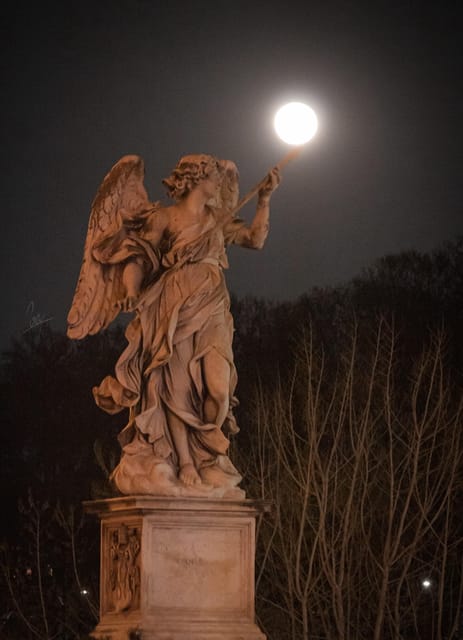
Rome is full of polished monuments, but its past was rarely polished. Power struggles, public punishment, religious persecution, poison, and political violence shaped the city as much as emperors and artists did.
That makes this tour a good counterpoint to the Colosseum, Roman Forum, and Vatican. You are not being asked to admire another grand facade while someone recites dates. Instead, you get the human stories that make a street corner feel uneasy: who lived there, who died there, who was punished there, and which tale may have grown in the telling.
The tour’s dark humor matters. Tales of execution and murder can become heavy, especially when several are told in a row. A guide such as Ivan or Leonardo appears to keep the mood moving with jokes, questions, and expressive delivery. That does not make the subject less serious. It gives you room to listen without feeling trapped in a grim lecture.
You should know the tone before booking. The description openly promises politically incorrect humor and history with no filters. If you prefer gentle folklore, children’s ghost stories, or a strictly academic presentation, this may feel too blunt. If you enjoy crime stories and unsettling local lore, the approach is likely a good fit.
More Ghost Story Tours in Italy
- Venice Ghost Stories, Legends and Anecdotes Tour
★ 4.0 · 846 reviews - Venice: Mysterious Tales of Ghosts and Murders
★ 4.9 · 636 reviews - Rome: Small Group Rome’s Dark Side – Ghosts & Legends Tour
★ 4.9 · 343 reviews
Starting beside Castel Sant’Angelo
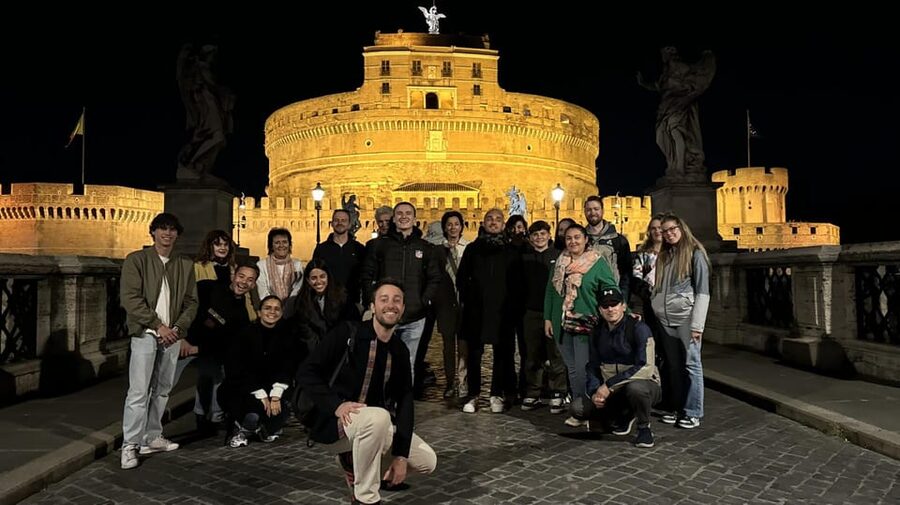
Meet in front of Castel Sant’Angelo, beside Ponte Sant’Angelo. The castle is an excellent starting point because it already looks theatrical after sunset. Its round mass, high walls, and connection to the river give the opening stories an immediate sense of place.
The first section lasts about 15 minutes and includes a photo stop, sightseeing, and guided storytelling. You will not be taking a full inside tour of the castle. The value is in hearing about its darker associations while standing outside one of Rome’s most imposing structures.
Castel Sant’Angelo began as a mausoleum and later served as a fortress and papal refuge. The tour uses the site as an entry into stories involving power, punishment, and secrecy. The exact tale selection can vary by guide, but expect the castle to frame the night rather than occupy it for the entire walk.
Arrive ready to start on foot. The meeting point is specific, but the area can be busy with pedestrians and evening visitors. If your phone is useful for navigation, keep the confirmation details available and allow enough time to locate the bridge and castle entrance.
The short stops between the castle and the river streets
After Castel Sant’Angelo, the group moves through several brief stops. Some are listed only as short visits or secret stops, with five to ten minutes of guided explanation at each. That format is important: this is a moving storytelling walk, not a series of long monument visits.
At the unnamed stops, the guide fills in episodes that are easy to miss during a daytime tour. You may hear about people linked to religious persecution, violent deaths, or strange local legends. The point is not to inspect a museum object. It is to look at an ordinary building, lane, or square and attach a disturbing story to it.
The two secret stops are especially useful for people who already know Rome’s headline sights. They give the walk a sense of discovery without requiring a separate ticket or interior visit. The tradeoff is that the experience depends heavily on the guide’s delivery. A strong storyteller can make a plain doorway memorable. A less engaging presentation would leave you with a list of names and grim events.
The pace seems designed to keep you moving while still allowing time for questions. One advantage of not using headphones, as noted by a participant, is the more direct contact with the guide. You can face the storyteller, ask for clarification, and stay connected to the group instead of listening to a recorded voice.
The Fountain of the Mask and Rome’s theatrical details
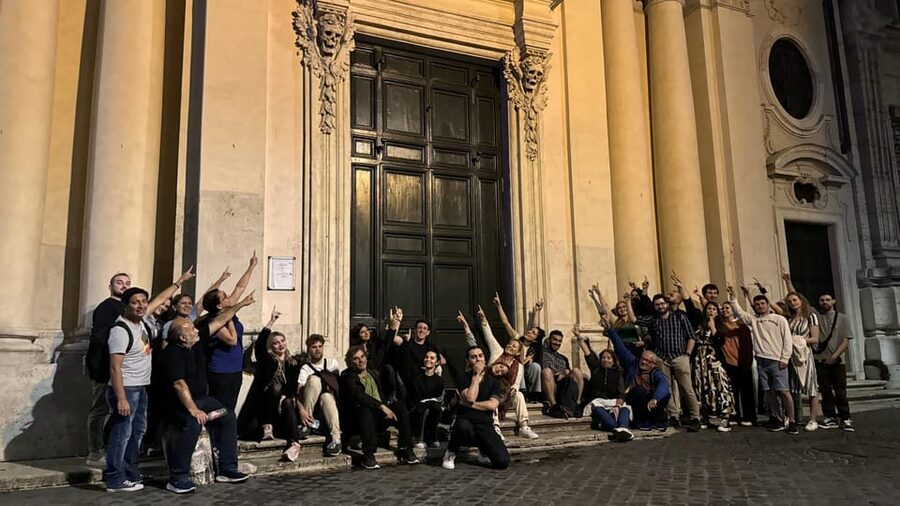
The Fountain of the Mask receives a short stop of about five minutes. It is the sort of detail that works well on this route because Rome’s fountains often have stories and symbols that pass unnoticed when you are hurrying toward a major piazza.
Here, the fountain becomes part of the tour’s visual rhythm. You pause, hear the associated tale, then continue. Do not expect a long art lecture or a detailed architectural study. The attraction is the contrast between an attractive public feature and the darker material connected to it.
This is one reason you should take the tour after seeing some of central Rome in daylight. You will recognize the city’s beauty, then notice how easily the same streets can suggest secrecy at night. The tour changes your attention more than it changes the city itself.
More Ghost Story Tours in Rome
- Ghosts Legends and Mysteries of Rome Walking Tour
★ 5.0 · 149 reviews - Rome’s Dark Side Ghosts and Legends Tour
★ 5.0 · 93 reviews
Farnese Palace and the machinery of power
The stop at Farnese Palace lasts about five minutes. The palace is a natural setting for stories about powerful families, political maneuvering, church authority, and the people who suffered when those forces collided.
You can expect the guide to use the building as a backdrop rather than offer an interior visit. The walk is about what happened around power, not about touring palace rooms. That keeps the route moving, but it also means anyone wanting detailed Renaissance art or architecture should plan a separate visit.
This section helps place the more sensational tales in context. A poisoner or assassin does not exist in a vacuum. Rome’s violent stories often involve social rank, religious authority, money, and access. Even when the delivery is funny, the setting reminds you that these were real systems affecting real people.
Giulia Tofana, witches, and the city’s criminal folklore
One of the most memorable subjects is Giulia Tofana, an infamous Roman poisoner. Her story brings the tour’s themes together: crime, secrecy, gender, fear, and the blurred line between documented events and later legend.
The route also covers witches, heretics, and the Inquisition. These topics are valuable because they show a side of Rome that standard monument tours usually leave out. You hear how accusations and religious authority could become tools of punishment, and how stories of forbidden practices could survive long after the original events.
The phrase history with no filters is a fair guide to the mood. This is not a sanitized account designed to protect you from unpleasant details. At the same time, the tour is not presented as a forensic investigation. Some subjects belong to the realm of urban legend, and the storytelling style may move between confirmed events and folklore.
Pay attention to how the guide presents certainty. A good storyteller will make the distinction clear enough for you to understand what is documented and what belongs to Rome’s tradition of rumor and ghost lore. The experience works best when you enjoy both categories without demanding that every ghost story be proven.
Campo de’ Fiori, executions, and the final stop
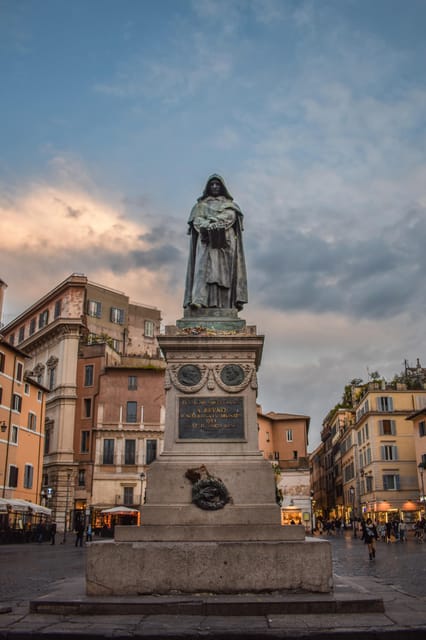
The walk ends at Campo de’ Fiori after about 10 minutes of guided attention. This piazza is one of the most fitting places in Rome to finish a tour about public punishment and violent history.
During the day, Campo de’ Fiori is known for its market and lively social atmosphere. At night, its history feels more visible. The square is strongly associated with public executions, and the guide uses that setting to bring together the themes of brutality, religion, power, and spectacle.
Ending here gives the tour a clear geographic finish, even if the storytelling does not always build toward one dramatic climax. One fair criticism is that the episodes can feel loosely connected. You may hear that a person lived in one place, committed or suffered something terrible, and then move on to another story without a single grand conclusion.
I see that as a limitation of the format rather than a fatal flaw. The route is designed as a collection of dark Roman stories. If you want a tightly plotted historical narrative, this may feel scattered. If you like short, self-contained tales linked by location, Campo de’ Fiori makes a strong ending.
The square is also practical. Afterward, you can use the guide’s food, drink, gelato, and restaurant suggestions. One guide reportedly gives a full list of local places at the end, which is useful because the tour finishes in an area where you may want to continue the evening.
What the guide’s style means for your experience
The guide is the main attraction. The same route can feel flat with a timid speaker and electric with someone who knows how to hold a group. The strongest guide names associated with this experience include Ivan, Leonardo, Simone, Simon, and Max.
Ivan is repeatedly described as funny, sincere, energetic, and good at keeping people involved. Leonardo is praised for charisma, clear explanations, and a talent for making grim material entertaining. Simone is described as passionate and able to explain crimes at the places where they occurred. Simon is noted for friendliness, humor, and handling questions easily.
Guides vary, so you should not book expecting one specific person unless the reservation system guarantees it. Still, the pattern is clear: storytelling is valued more than formal lecturing. You will likely get a guide who uses humor, asks the group to stay involved, and adjusts the pace as the walk continues.
Group size can affect the experience. One person found a larger group made it harder for everyone to speak up. Others appreciated a smaller group and a comfortable pace. Because the tour includes street-side storytelling, being able to hear clearly matters more than it would inside a quiet museum.
The route does not use headphones, according to one detailed account. That can be a plus if you like a face-to-face tour and want to ask questions. It can also mean you need to stay close to the guide, especially in crowded streets or when several groups are nearby.
Is the $3.77 price really the full cost?
The listed booking price of $3.77 per person is best understood as a reservation price, not the complete expected payment. This is a tip-based tour, so the guide works for tips rather than a standard fixed tour fee.
Plan your budget around the tip. The suggested range is usually about €10 to $50 per person, and one practical account specifically advises bringing at least €10 in cash. The amount is yours to decide, but you should not treat the very low booking price as the final cost of a guided evening in Rome.
That payment model can be excellent value if you enjoy the route and the guide gives you a memorable evening. A 90-minute walk with local storytelling, unusual locations, and food suggestions may cost less than many fixed-price tours. It also lets you judge the experience before deciding what it was worth.
The model requires a little honesty from you. If you reserve, attend, and enjoy the tour, budget for a fair tip. Bring cash so you are not scrambling at the end. The advertised price makes trying the experience easy, but the guide’s income depends on the payment afterward.
Who will enjoy this Rome night walk
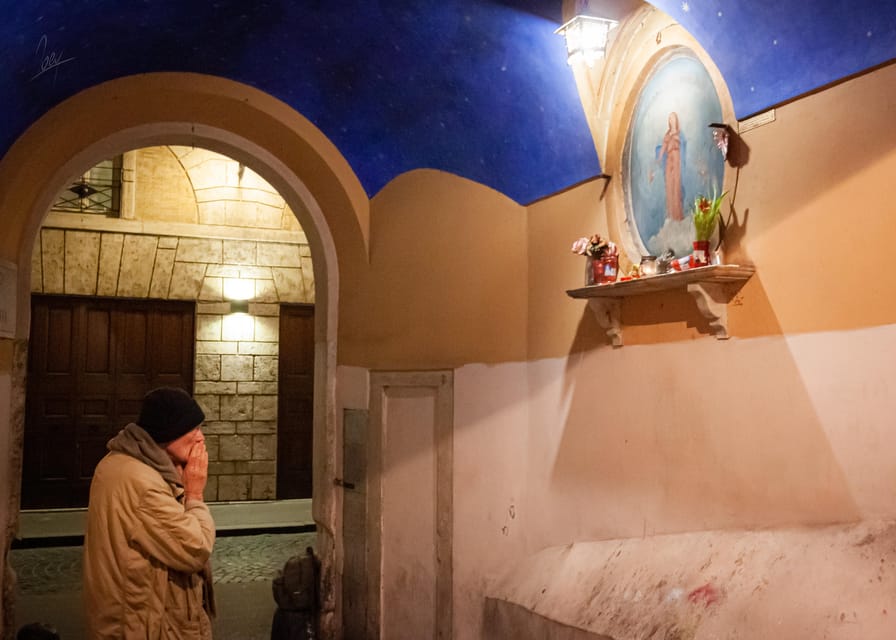
I would choose this tour for an adult or older teen who wants a break from standard Roman sights. It suits you if you like true crime, ghosts, religious intrigue, assassins, poisoners, and stories that make familiar streets look different.
It is also a good choice for repeat visitors. You may have already seen the Colosseum and Vatican Museums, yet still walk past the Fountain of the Mask or Farnese Palace without knowing the darker associations. The route adds atmosphere without asking you to spend another half day indoors.
Families should consider the tone carefully. The subject matter includes executions, brutality, and terrible crimes, while the humor may be politically incorrect. The tour is not presented as a children’s ghost walk.
You should also choose it if you value a guide’s personality. The strongest parts depend on timing, humor, audience contact, and the ability to make a short stop feel important. It is less suitable if you want exact academic detail, long monument visits, or a tightly ordered account of Rome from beginning to end.
English and Spanish departures are available. The tour lasts 1.5 hours, and you can cancel up to 24 hours ahead for a full refund. Starting times vary, so check the available departure when booking.
Should you book Ghosts, Legends & Mysteries of Rome?
Book it if you want Rome after dark, a string of unsettling stories, and a guide who can make crime and folklore entertaining without pretending the city was always noble or beautiful. The route from Castel Sant’Angelo to Campo de’ Fiori is well chosen, and the tip-based format offers strong value when the guide is as engaging as Ivan, Leonardo, Simone, Simon, or Max.
Skip it if dark humor bothers you, if you need a strict division between fact and legend, or if 90 minutes feels too short for a major historical tour. For everyone else, bring cash for the tip, wear comfortable shoes, stay close enough to hear, and leave room afterward for dinner or a drink around Campo de’ Fiori.
FAQ
Where does the Ghosts, Legends & Mysteries of Rome tour start?
The meeting point is directly in front of the entrance to Castel Sant’Angelo, by Ponte Sant’Angelo.
Where does the tour finish?
The walk finishes at Campo de’ Fiori.
How long does the tour last?
The tour lasts 1.5 hours.
What languages are available?
The live tour is offered in English and Spanish.
Is this a fixed-price tour?
No. It is a tip-based, pay-what-you-want tour. You reserve a place, then decide what to give the guide at the end.
How much should I budget for the tip?
The usual tip is stated as between €10 and $50 per person. One practical recommendation is to plan on at least €10 per person and bring cash.
What subjects does the tour cover?
The tour covers haunted places, executions, urban legends, witches, heretics, the Inquisition, corrupt popes, assassins, and Giulia Tofana, the infamous poisoner.
Can I cancel the booking?
Yes. You can cancel up to 24 hours in advance for a full refund.
More Ghost Walking Tours in Italy
- Rome: Paranormal Night Walking Tour & Secret Backstreets
★ 4.9 · 1,921 reviews - Rome: Haunted City Night Walking Tour
★ 4.9 · 616 reviews - Haunted Rome Ghost Night Walking Tour
★ 5.0 · 495 reviews - Venice: The Ghost & Legends Walking Tour
★ 4.0 · 206 reviews
Just added in Italy
- Venice: The Ghost & Legends Walking Tour★ 4.0 · 206 reviews
- Ghosts Legends and Mysteries of Rome Walking Tour★ 5.0 · 149 reviews
- Rome’s Dark Side Ghosts and Legends Tour★ 5.0 · 93 reviews
- Rome Secrets: Dark History & Tasty Bites Tour★ 5.0 · 37 reviews
- Tipsy Tour: Guided Bar Crawl In Florence with Dark History★ 5.0 · 271 reviews
- Rome: Small Group Rome’s Dark Side – Ghosts & Legends Tour★ 4.9 · 343 reviews
- Rome: Guided Bar Crawl with Drinks & Dark History★ 4.9 · 444 reviews
- Haunted Rome Ghost Night Walking Tour★ 5.0 · 495 reviews
Ghost Stories & Local Legends, compared.

Ghost Walking Tour Where Legends Come To Life
Read our review →
Ghosts, Legends, Medieval Underground & Dungeon Tour
Read our review →
Ghosts and Legends of the Old Town Evening Tour
Read our review →
Prague Ghost and Legend of Old Town Walking Tour
Read our review →
Ghosts and Legends Nighttime Guided Walking Tour
Read our review →
Gothic Quarter Ghosts and Legends Walking Tour
Read our review →