
Review · PIEDMONT
Madame, Saints and Witches: The Women who shaped Turin’s history
Turin’s women emerge here as political players, philanthropists, lovers, suspected witches, and ghosts. I like the way the walk puts royal power and ordinary fears in the same story, from the Savoy madames to legends tied to witchcraft. I also like that the route finishes at Piazza della Consolata, giving you a useful new place to explore after the tour.
The main thing to note is the timing. The activity information gives both 1.5 hours and 2 hours, so check the confirmed start details when you book. The tour is in Italian, and some material remains in its original language, which may limit the experience if you do not understand Italian.
Key points to know
- Begin at Palazzo Madama: Meet in front of the entrance on Piazza Castello, a central and easy-to-find starting point.
- Meet Turin’s royal women: Hear about the Savoy madames and their role in court strategy and politics.
- Expect scandal and mystery: The Countess of Verrua, Bella Rosina, and a ghostly palace story add darker turns.
- See women through many roles: Giulia di Barolo brings philanthropy into a route otherwise filled with court intrigue and legend.
- Follow a family-friendly route: The storytelling is designed to teach while keeping younger visitors interested.
- Finish at Piazza della Consolata: The endpoint gives you a different part of central Turin to continue exploring.
Starting with Turin’s royal women at Palazzo Madama
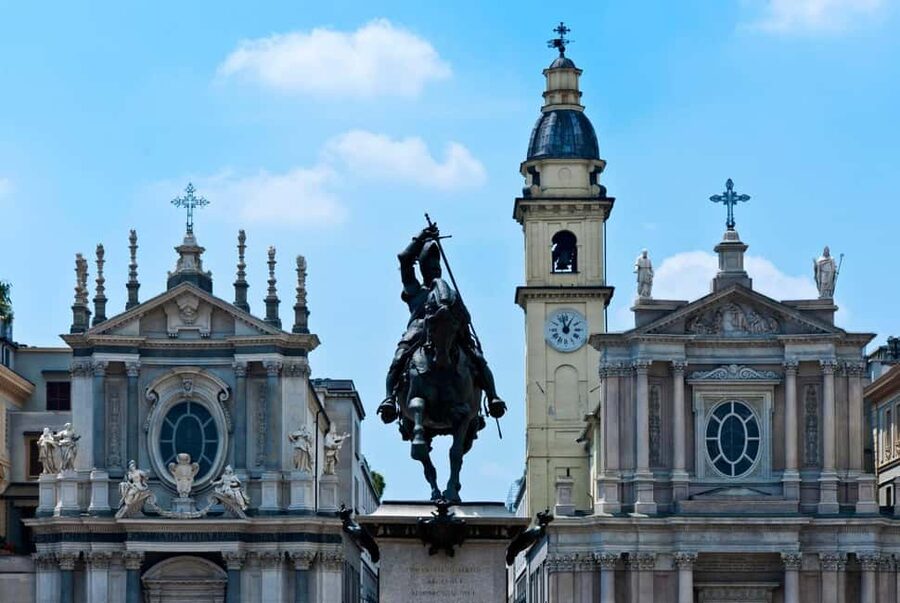
Your walk begins at Palazzo Madama, in front of the entrance on Piazza Castello. This is a sensible meeting point. It places you in the heart of Turin, surrounded by major buildings and open space, so you can arrive early without having to search through a maze of side streets.
The setting also fits the subject. Palazzo Madama is tied to Turin’s royal and political world, making it a natural place to begin a story about women who influenced Savoyard power. You are not starting with a general introduction to the city. You are starting with the women who moved through its courts, palaces, and public life.
The royal madames are presented as strategists in Savoyard politics, not simply as decorative figures attached to powerful men. That distinction matters. Court women often worked through family ties, alliances, correspondence, ceremony, and access. The tour uses their stories to show how political influence could operate even when formal authority belonged mainly to men.
You should expect a guide-led walk rather than a museum visit. The included service is a local licensed guide, and no separate admission to a museum or palace is listed. The focus is on places in the city and the stories connected to them.
More Witch Tours in Italy
- New – Maleficia: Inquisition, Torture and Witchcraft between the centuries
★ 4.0 · 13 reviews - Milan: Myths, Legends, and Witches Dark Side Walking Tour
★ 4.4 · 7 reviews - Mysterious Mantua: a history of magic, murder, and witchcraft
★ 3.6 · 3 reviews
Court intrigue, forbidden passions, and the Countess of Verrua
The route then moves into the less polished side of Turin’s ruling circles. The Countess of Verrua is one of the controversial figures included in the story, and her place in the tour signals that this is not a standard royal sightseeing walk.
Court history is often presented as a tidy line of kings, treaties, and buildings. This experience takes a more personal route. Passions, loyalties, jealousy, and reputation become part of the historical picture. That can make the city easier to remember, since a name connected to a scandal usually stays with you longer than a list of dates.
You will hear about forbidden passions and court intrigue, but the available details do not specify every stop or the exact incidents covered. Keep that in mind if you are hoping for a highly detailed academic lecture. The appeal is the combination of place and story, with the guide connecting Turin’s streets to women whose lives carried political or social consequences.
The Italian-language format is important here. If you understand Italian, you will receive the full effect of the guide’s storytelling and any original-language material. If you do not, the atmosphere and city walk may still be enjoyable, but the detailed meaning of the stories will be harder to follow.
Bella Rosina and the private side of royal Turin
Bella Rosina adds another human angle to the route. Her story belongs to the world of personal relationships, status, and public judgment, showing how a woman’s position could be shaped by her connection to the court.
This is one reason I would choose this walk after seeing Turin’s major royal sights. Grand squares and palaces can tell you where power was displayed. Stories about women such as Bella Rosina help explain how private life, romance, and social rank affected the people inside those buildings.
The tour’s title points to both saints and witches, but the actual experience seems to hold no single view of women. Some appear as political operators. Others are remembered through scandal, charity, religious devotion, or rumor. That range gives the walk its shape.
Still, you should not expect a complete account of every important woman in Turin. The route selects stories that fit its themes of power, mystery, and controversy. It is best viewed as a focused introduction to the female figures attached to central Turin, not as a full survey of women’s history in Piedmont.
Giulia di Barolo and the work of charity
Giulia di Barolo brings a different tone to the walk. Her philanthropic work shows women acting in public life through charity and social support rather than through a royal court or scandalous reputation.
That contrast is valuable. Without her story, the route might feel too focused on palace intrigue and supernatural tales. Giulia di Barolo reminds you that influence can also come through practical work for the wider community. Her inclusion gives the walk a stronger sense of the many ways women shaped Turin.
The tour presents her philanthropic efforts as part of the city’s story, connecting personal initiative with places you pass on foot. You may find this section especially useful if you are interested in how women created a public role for themselves through charitable activity.
Because the walk is family-friendly, this material should work well for mixed-age groups. Children may respond most to the ghost and witch stories, while adults can pay closer attention to the social and political background. The guide’s job is to keep those layers together without turning the walk into a dry lecture.
More history tours in Italy
- Rome: Guided Bar Crawl with Drinks & Dark History
★ 4.9 · 444 reviews - Tipsy Tour: Guided Bar Crawl In Florence with Dark History
★ 5.0 · 271 reviews - Rome Secrets: Dark History & Tasty Bites Tour
★ 5.0 · 37 reviews - Rome After Dark Mysteries Myths and Haunted History
★ 5.0 · 14 reviews
Ghost stories inside a palace
The supernatural thread becomes clearer with the tale of a ghost said to wander the halls of Giulia di Barolo’s palace. This is the sort of story that changes how you look at a building. A palace is no longer only a formal residence or historic address. It becomes a place carrying memory, rumor, and unresolved questions.
The wording matters: this is a ghost story and a local legend, not a claim that a haunting has been proven. Treat it as part of Turin’s tradition of storytelling. The route uses the tale to add atmosphere and to show how women’s lives continued in popular memory after their deaths.
I like this balance of fact and legend, provided you know what kind of experience you are booking. If you want only documented political history, the ghost material may feel less substantial. If you enjoy the way legends attach themselves to old buildings, it will give the walk a more playful edge.
The title’s mention of witches points in the same direction. You will encounter legends of witchcraft as part of the city’s darker stories. The information provided does not identify specific witchcraft sites or cases, so you should not expect a fixed list of named witches or a theatrical reenactment. This is a guided historical walk with legends woven into the route.
The surprising story of la Carlina
Another unusual subject is Charles Emmanuel II, known as la Carlina. The name itself suggests a story that does not fit neatly into the usual image of a male ruler, and the tour presents it as a surprising part of Turin’s past.
This section appears designed to challenge easy assumptions about identity, presentation, and how historical figures are remembered. It also reinforces the walk’s main idea: women’s history is not limited to queens and saints. It can include figures who complicate accepted roles and invite questions about how court life was recorded.
The available information does not give the full explanation of la Carlina, so the guide’s interpretation will be central. Listen closely to how the story is framed, especially if this is the part that interests you most. The name is a strong reason to ask for clarification during the walk if you are comfortable speaking Italian.
A central Turin route with a useful finish
The walk ends at Piazza della Consolata. Starting at Piazza Castello and finishing at the Consolata area keeps the experience in central Turin and makes it practical to pair with other sightseeing.
You do not need to arrange transport between the stops. The activity is a walking tour, and the city center setting makes it easy to continue on foot afterward. The endpoint also gives you a chance to pause and decide what you want next, rather than ending at the same place where you began.
The route is listed as wheelchair accessible. That is useful, though the supplied details do not describe the pavement, slopes, or any possible access limits at individual stops. If you use a wheelchair, confirm the current route directly when booking, especially since the itinerary passes through historic central streets.
Arrive 10 minutes early. Visits start on time, and a late arrival could mean missing the opening story at Palazzo Madama. The meeting address is Palazzo Madama, in front of the entrance to Piazza Castello, 10123 Turin.
What the $22 price gives you
At $22 per person, the price is reasonable if you want a focused, guide-led introduction to Turin’s women and legends. You are paying for a licensed local guide and a route built around stories that are not always obvious from the city’s grand architecture.
The value is strongest for a first or second visit to Turin. If you have already seen the main squares and want a fresh way to read them, the tour gives familiar places a new subject. It also saves you the work of finding scattered stories about the royal court, Bella Rosina, Giulia di Barolo, witches, and palace legends on your own.
The price is less compelling if you are looking for interior visits, museum entry, or a long historical lecture. None of those are listed as included. This is a compact walking experience, and its value depends on how much you enjoy guided storytelling.
The booking terms are flexible. You can cancel up to 24 hours before the activity for a full refund, and you can reserve now and pay later. Those options help if your Turin schedule is still changing.
Who should book this walk
I would recommend this tour to you if you enjoy city history told through people rather than monuments alone. It is a good fit for visitors who want royal politics, social history, romance, charity, religious themes, and local legends in one short route.
Families may also find it a useful choice. The subject matter includes ghosts and witches, but the experience is described as family-friendly and built to combine learning with fun. Adults can follow the political and social details while younger visitors listen for the mysterious parts.
Italian speakers will get the clearest experience because the live guide speaks Italian. Some content is shown in its original language, so anyone booking without Italian should consider that carefully. The walk may still provide a good look at central Turin, but the stories are the main attraction, and language matters.
I would not make this your only Turin tour if you have never learned the basic outline of the city. It is focused on women and unusual stories rather than a broad introduction to major monuments, food, museums, and Savoy history. Pair it with a general city walk or independent sightseeing if you have time.
Should you book Madame, Saints and Witches?
Book it if you want to see Turin through women, rumors, power, and personal stories rather than through royal buildings alone. The $22 price is fair for a licensed guide and a focused route, especially if you speak Italian and enjoy local legends.
Skip it if you need an English-language tour, a museum visit, or a fully documented academic treatment of every figure. Also confirm the duration before booking, since the information gives both 1.5 hours and 2 hours.
For the right audience, this is a smart way to give central Turin a new cast of characters. You finish at Piazza della Consolata with more than a list of monuments. You leave with stories about the women who used power, survived gossip, served the public, inspired legends, and remained part of the city’s memory.
FAQ
Where does the tour begin?
The meeting point is Palazzo Madama, in front of the entrance on Piazza Castello, 10123 Turin, Italy.
Where does the tour end?
The walk ends at Piazza della Consolata.
How long does the tour last?
The activity information lists a duration of 1.5 hours, while the detailed tour information gives a duration of 2 hours. Check the confirmed timing when booking.
What language is the tour in?
The live tour guide speaks Italian. Some content is shown in its original language.
Is the tour wheelchair accessible?
Yes, the activity is listed as wheelchair accessible.
Can I cancel for a refund?
Yes. You can cancel up to 24 hours in advance for a full refund. You can also reserve now and pay later.
Just added in Italy
- Your evening in Venice – Legends&Ghosts&Aperitif★ 4.7 · 79 reviews
- Venice Ghost Tour: Haunted Palaces & Secret Canals★ 4.8 · 3 reviews
- Venice: Legends, Anecdotes and Ghost Stories Walking Tour★ 4.1 · 137 reviews
- Venice: Ghosts & Murders – Mysterious Tales of San Marco Area★ 4.5 · 80 reviews
- Venice Ghost & Legends Walking City Tour★ 3.5 · 83 reviews
- Venice Ghostly Legends Explore on Foot★ 5.0 · 2 reviews
- Venice: Ghosts and Legends Evening Private Walking Tour★ 4.5 · 6 reviews
- New – Maleficia: Inquisition, Torture and Witchcraft between the centuries★ 4.0 · 13 reviews
Witch Trial & Witchcraft Tours, compared.
Wicked Awesome Tours: Witch Trial History and Salem Haunts!
Read our review →
Best Salem Witch Trials Historical Walking Tour
Read our review →
Browse the lists this tour appears in