
Review · VENICE
New – Maleficia: Inquisition, Torture and Witchcraft between the centuries
Venice’s Palazzo delle Prigioni gives this small exhibition its real force. Between the 15th and 18th centuries, this was tied to the machinery of Venetian justice, and the displays focus on documents, objects, and torture instruments connected with witchcraft accusations and the Inquisition. The Casanova connection adds a familiar name to a grim subject.
I like the low price of $11.56 and the short one-hour format, which fits neatly between larger Venice sights. I also like the chance to see original material alongside reproductions, rather than getting only a theatrical presentation. The main drawback is practical: finding the correct entrance may be confusing, since the building’s signage can point to another exhibition and the operator may not have a visible sign outside.
Key points at a glance
- Historic setting: The exhibition is inside the Palazzo delle Prigioni on Riva degli Schiavoni, near Venice’s major central sights.
- Focus on justice: Displays cover Inquisition records, witchcraft accusations, punishment, and instruments used by the Venetian Republic.
- Casanova connection: Giacomo Casanova is included among the famous people accused of magic and occult practices.
- One-hour visit: The compact length works well for a short cultural stop, though it may feel brief if you want extensive historical explanation.
- Guide matters: A guide can add much more context, while an audio guide is available in some arrangements and may be worth seeking.
- Small groups: The activity allows a maximum of 15 people, helping keep the visit manageable inside the historic building.
Entering the Palazzo delle Prigioni
The experience begins at Circolo Artistico, Palazzo delle Prigioni, at Riva degli Schiavoni 4209. This is a central Venice location, close to the water and within easy reach of public transportation. You return to the same place at the end, so there is no complicated route to follow.
The setting is more than a convenient shell. A palace once connected with imprisonment and state punishment gives the subject a physical edge. You are not simply reading about courts and torture in a modern gallery. You are standing in a building associated with the same broad system of justice that the exhibition explains.
Allow a little extra time to locate the entrance. The exterior signage can be unclear, and one building sign may appear to refer to a different exhibition. A company flag or obvious tour sign may not be visible, so keep the full address and mobile ticket ready on your phone.
That small bit of planning matters in Venice. The city’s narrow streets, multiple entrances, and busy waterfront can make a five-minute search feel longer than it should. If you arrive early, check the building name and address carefully rather than assuming the first exhibition sign is the right one.
More Witch Tours in Venice
- Bewitched Walking Tour of Salem
★ 5.0 · 1,895 reviews - The Salem Witch Walk
★ 4.5 · 1,301 reviews - Edinburgh: Witches & Haunted History Walking Tour
★ 4.8 · 1,290 reviews
What the one-hour visit covers
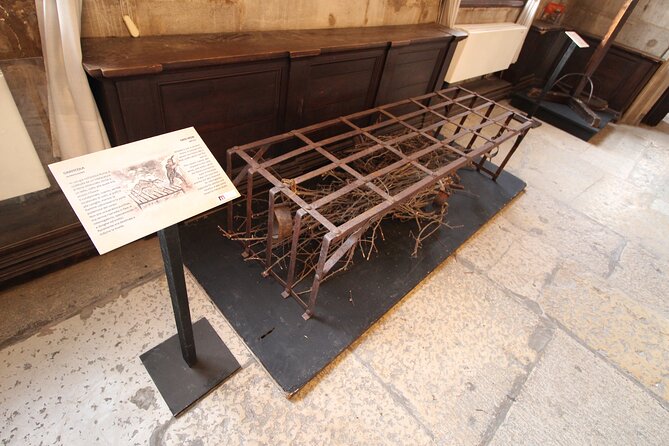
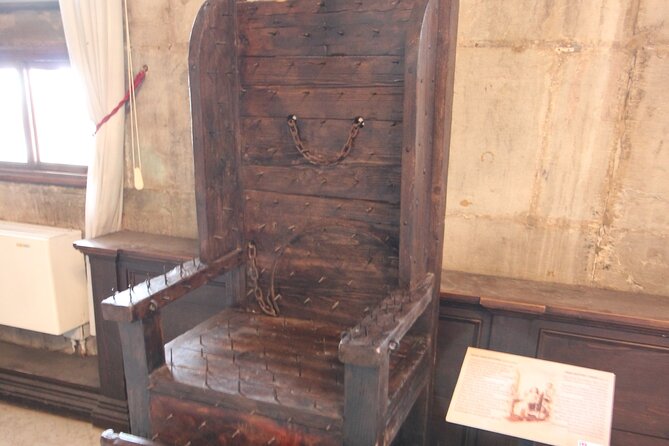
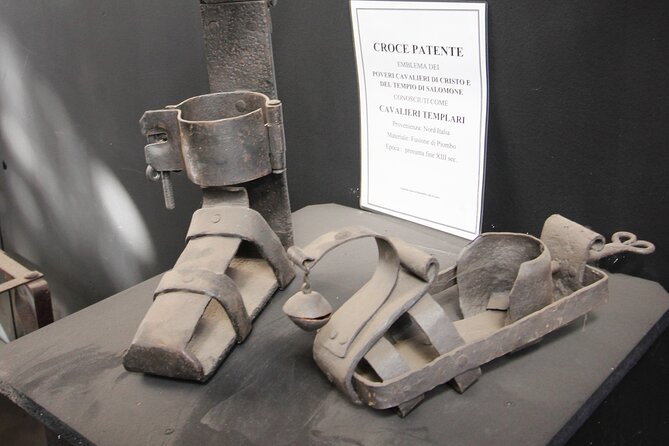
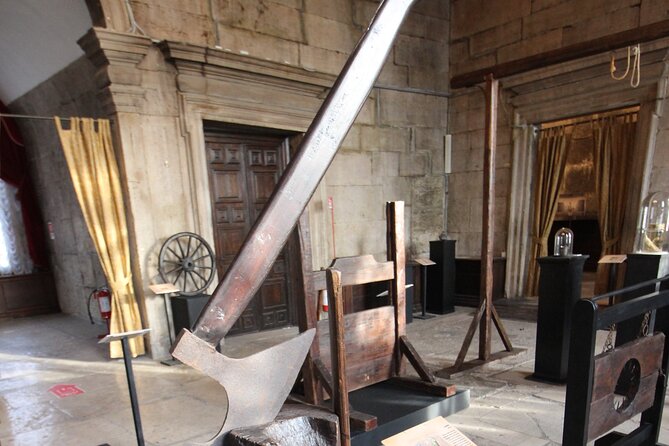
The display follows the broad story of Inquisition justice and witchcraft accusations in Venice from the 15th through the 18th centuries. It uses original documents, objects, and reproductions to show how the authorities investigated suspected magic and punished people accused of harmful spells or occult practices.
The material appears designed as an introduction rather than a full study of Venetian law. You will get a short look at the methods used to obtain confessions, the tools associated with punishment, and the fears that shaped accusations of witchcraft.
That distinction is important. The exhibition does not offer a detailed treatment of witchcraft alone. References to witchcraft form part of a larger account of interrogation, imprisonment, and punishment. If your main interest is the social history of women accused of sorcery, you may find the treatment more limited than expected.
The displays can still prompt useful questions. What counted as evidence? How could a confession be obtained? How did fear of magic fit within the legal system? The objects are most effective when you pause over those questions instead of treating the visit as a quick display of gruesome equipment.
Original documents and instruments of justice
The most distinctive part of the visit is the combination of ancient documents and physical instruments. Documents used by the Holy Office help show how authorities recorded and pursued accusations. The reproductions make it possible to present objects linked to torture and punishment without suggesting that every item on display is an untouched original.
For you, the value lies in seeing the legal process and the physical consequences together. A document can feel remote. An instrument of punishment makes the subject immediate. Put side by side, they show that persecution depended on both paperwork and force.
The tone is sober rather than light entertainment. The exhibition asks you to think about the suffering of people condemned to death or torture, not simply admire dramatic objects. Some displays may be difficult for younger visitors or anyone sensitive to depictions of punishment.
The presentation is relatively compact. You should not expect room after room of detailed interpretation. Instead, think of it as a focused historical introduction that gives you a framework for understanding the darker side of the Serenissima Republic.
The Casanova connection
Giacomo Casanova gives the exhibition a strong human link. He is remembered for romance, travel, and escape, but here he appears in connection with accusations of magic and occult activity.
That detail helps show that suspicion was not limited to anonymous women accused of evil spells. The authorities could also target well-known figures whose conduct or interests seemed to cross accepted boundaries. Casanova’s appearance in the story adds a surprising wrinkle to what might otherwise feel like a narrow account of witch trials.
Do not expect a full Casanova biography. His role is a pointed example within the larger exhibition. If you are already visiting the nearby sights associated with Venice’s political and prison history, this connection gives you one more reason to pay attention to the displays.
Same streets, a very different kind of fright:
- Venice Ghost Stories, Legends and Anecdotes Tour
★ 4.0 · 846 reviews - Venice: Ghost Tour to Rialto and San Marco Square
★ 3.8 · 659 reviews - Venice: Mysterious Tales of Ghosts and Murders
★ 4.9 · 636 reviews - Venice: The Ghost & Legends Walking Tour
★ 4.0 · 206 reviews
Why a guide can change the experience
The exhibition can be visited in about an hour, but the amount you take from it may depend heavily on interpretation. A guide can explain how the rooms were used, connect the objects to Venetian law, and lead you through the places associated with incarceration and torture.
One highly praised guided visit was described as engaging and informative. That matches the subject: the objects alone may raise questions that a guide can answer quickly. A guided option is particularly useful if you want to understand the difference between the Inquisition, the Holy Office, and the wider justice system of the Venetian Republic.
An audio guide may also help. One visitor specifically regretted not having one, since the labels alone did not provide enough detail. Check what your booking includes before you arrive. If the visit is self-guided, expect a quieter and more independent experience, but do not assume every object will explain itself fully.
The available information does not provide guide names, so I cannot point you toward a particular person. If a guide is offered on your date, ask at the entrance whether the guided visit is included or requires a separate arrangement.
What the displays do well, and where they fall short
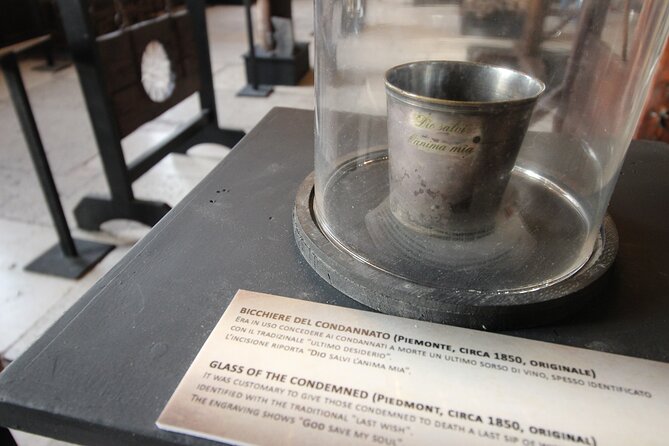
The strongest feature is the atmosphere created by the historic building and the subject matter. The exhibition makes a short visit feel connected to the actual workings of Venetian authority. You see how accusations could move from rumor to investigation, confession, and punishment.
The display also works well for people who prefer a direct introduction. You do not need several hours or a specialist background. The material gives you a basic account of torture methods and Inquisition-era justice, then leaves room to think about the human cost.
The limitation is its scale. This is a small museum-style experience, not a major museum with extensive galleries and layers of interpretation. One hour is enough for the visit, but it may feel short if you want a detailed discussion of witchcraft, Venetian politics, or the personal stories of those accused.
The balance between original items and reproductions also deserves attention. Original documents offer a close link to the period, while reproductions allow the exhibition to show instruments and materials that would otherwise be unavailable. If you expect every object to be an untouched historical artifact, adjust that expectation before entering.
Price, timing, and overall value
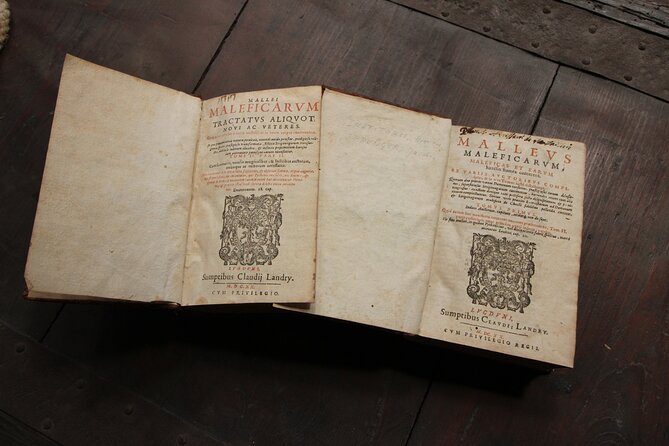
At $11.56 per person, this is one of the easier Venice activities to fit into a day without making a major dent in your budget. The price is strongest when you treat the visit as a compact historical stop in a central location.
Value depends on your expectations. For a brief look at a historic prison setting, Inquisition documents, and torture-related objects, the cost is reasonable. For a long guided lesson with extensive historical detail, it may feel less generous.
The one-hour duration is useful in a city where you are likely to have a crowded schedule. You can place this visit before or after other central sights without giving up half a day. The small group limit of 15 people should also help keep the experience more controlled than a large walking group.
The average booking point is about 10 days before the visit. That suggests you do not need to plan far ahead, though confirming the entrance details in advance is wise. Mobile ticketing keeps the booking simple, but it does not solve the signage problem, so save a screenshot of the address and voucher.
Who should book this experience?
I would recommend it to you if you enjoy compact museums, unusual historic buildings, and the less polished side of Venice. It suits adults and older children who can handle difficult subjects and want more than canals, churches, and grand palaces.
It is also a good choice for anyone interested in the history of law, religious authority, imprisonment, or the treatment of alleged witches. The Casanova reference makes it appealing to visitors who already have an interest in Venice’s famous personalities.
You may want to skip it if you are looking specifically for a major witchcraft exhibition. The witchcraft material is present, but the main subject is broader: Inquisition practices, torture, imprisonment, and justice between the 15th and 18th centuries.
I would also think twice if you dislike unclear meeting arrangements. The building signage has caused confusion, and the lack of a strong operator sign can make the start less smooth. Bring the exact address, arrive with time to spare, and ask inside if you are unsure.
Cancellation and practical details
You receive confirmation when booking, and the mobile ticket can be shown on your phone. The activity operates with a maximum of 15 people, and cleaning measures are used at customer touchpoints.
Most people can participate, and the site is near public transportation. The ticket is refundable if you cancel at least 24 hours before the scheduled start time. Cancellations or changes made inside that 24-hour window are not refunded or accepted.
On certain dates, day visitors staying outside Venice may need to pay a separate €5 access fee to enter the city. Check the official Venice access-fee website before your trip to see if your date applies and if you qualify for an exemption.
Should you book Maleficia?
Book it if you want a short, inexpensive visit with a serious subject and a memorable setting. The Palazzo delle Prigioni adds genuine atmosphere, and the mix of documents, reproductions, and justice instruments gives you a useful introduction to Venetian persecution and punishment.
Go with realistic expectations. This is not a large museum, and witchcraft is only one part of the story. The visit is likely to be most rewarding with a guide or audio guide, since interpretation can turn a quick display into a clearer account of how accusation and torture worked.
At $11.56, I see it as a sensible add-on to a day in central Venice, especially for history-minded visitors. Just arrive prepared for unclear signage and confirm exactly where the entrance is before your visit.
FAQ
How long does the Maleficia experience last?
The visit lasts approximately one hour.
Where does the experience begin and end?
It begins and ends at Circolo Artistico, Palazzo delle Prigioni, Riva degli Schiavoni 4209, 30122 Venice.
What does the exhibition focus on?
It covers Inquisition practices, witchcraft accusations, ancient documents, torture-related objects, and justice instruments used by the Venetian Republic between the 15th and 18th centuries.
Is Giacomo Casanova included in the exhibition?
Yes. Casanova is included as a famous person accused of engaging in magic and occult practices.
How many people can join the activity?
The activity has a maximum capacity of 15 people.
Can I cancel for a full refund?
Yes. You can cancel for a full refund up to 24 hours before the scheduled start time. Cancellations made less than 24 hours in advance are not refunded.
Just added in Venice
- Your evening in Venice – Legends&Ghosts&Aperitif★ 4.7 · 79 reviews
- Venice Ghost Tour: Haunted Palaces & Secret Canals★ 4.8 · 3 reviews
- Venice: Legends, Anecdotes and Ghost Stories Walking Tour★ 4.1 · 137 reviews
- Venice: Ghosts & Murders – Mysterious Tales of San Marco Area★ 4.5 · 80 reviews
- Venice Ghost & Legends Walking City Tour★ 3.5 · 83 reviews
- Venice Ghostly Legends Explore on Foot★ 5.0 · 2 reviews
- Venice: Ghosts and Legends Evening Private Walking Tour★ 4.5 · 6 reviews
- Ghosts of Venice – Discovering the Unknown★ 3.0 · 63 reviews
Witch Trial & Witchcraft Tours, compared.


Wicked Awesome Tours: Witch Trial History and Salem Haunts!
Read our review →
Best Salem Witch Trials Historical Walking Tour
Read our review →
Browse the lists this tour appears in