
Review · ROME
Ancient Rome’s Dark Side: Ghosts, Murders & Imperial Blood
Julius Caesar was killed at the very spot where this walking tour begins. From there, you follow Rome’s trail of poisoned heirs, murdered emperors, cursed streets, brutal prisons, and restless ghosts until you reach the Colosseum at night. It is a clever way to see familiar ruins through their ugliest stories.
I like the small group limit of 15, which should make it easier to hear the guide and ask questions. I also like the route itself: it uses major sights such as the Roman Forum and Colosseum, but adds less obvious stops in Monti and at the Borgia Steps. The main drawback is that the tour stays outdoors, so you will not enter the archaeological sites or museums.
- Caesar’s assassination begins the evening at Largo Argentina, one of Rome’s most powerful open-air historical sites.
- Imperial scandal drives the storytelling, with tales linked to Livia, Caligula, Messalina, and Domitian.
- The route crosses central Rome at night, when the heat and daytime crowds are reduced.
- Eight stops give the walk variety, from theaters and prisons to viewpoints and old streets.
- The tour ends above the Colosseum metro station, making the final location practical for getting home.
- A moderate fitness level is needed, with some walking and a couple of sets of stairs.
Why Rome’s Dark Stories Work Best After Sunset
This is not a standard ancient Rome tour focused on dates, building techniques, and military victories. Its subject is what happened behind the marble: assassination, family betrayal, political fear, execution, curses, and stories of the dead refusing to leave.
That focus gives the route a clear mood without making it a haunted-house show. The guide connects documented Roman events with later ghost legends, letting you decide how much weight to give each tale. The best moments should come when the setting and story reinforce each other, such as hearing about Caesar while looking across the ruins where he was killed.
The 8 p.m. start is useful in Rome. Summer afternoons can be hard on a walking tour, and the evening brings cooler air. You also get a different view of the monuments, with the ancient stones taking on a darker tone under the streetlights.
I would not book this as your only introduction to ancient Rome. You need some daylight time inside places such as the Colosseum, Roman Forum, or Palatine Hill to understand their scale. But as a second look, this walk adds drama and connects several parts of the city that you might otherwise pass without stopping.
Largo Argentina: Starting Where Caesar Fell
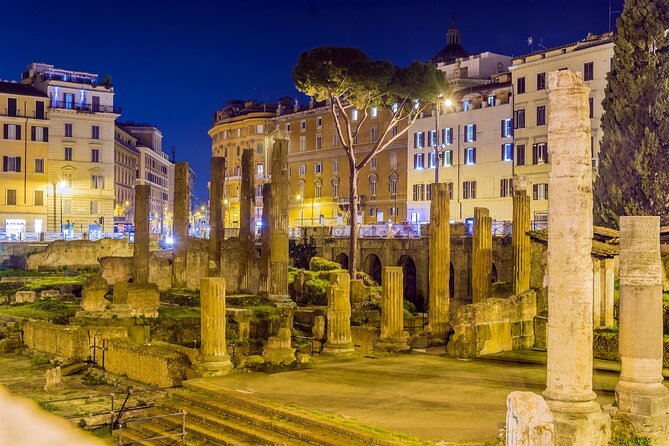
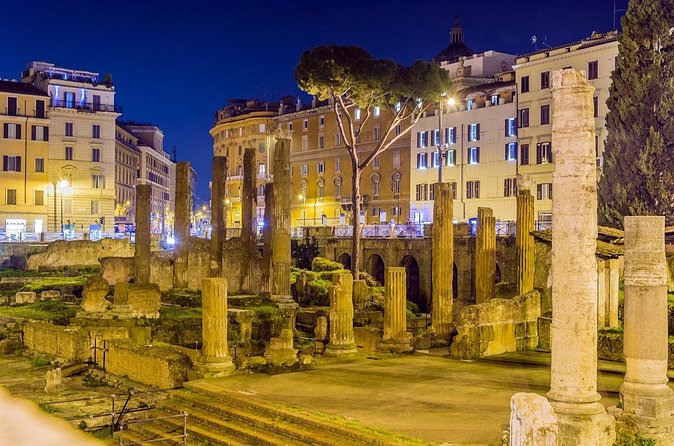
The meeting point is Largo di Torre Argentina, a short walk from many central Rome sights. The area contains the remains of four Republican-era temples, but its most famous connection is the murder of Julius Caesar in 44 BCE.
You do not enter an indoor site here. Instead, you look down toward the ruins while the guide sets up the political crisis around Caesar’s death. The story includes the attack itself, the confusion that followed, and the belief that Caesar’s ghost returned to trouble the men who betrayed him.
This is a strong opening because the location is exact enough to give the story force. Rome can sometimes feel like a collection of scattered ruins. Here, the guide turns an open excavation into a place with a clear human event attached to it.
Allow about 10 minutes at this stop. Since admission is not required, the tour can focus on the story rather than ticket lines.
More Dark History Tours in Italy
- Rome: Guided Bar Crawl with Drinks & Dark History
★ 4.9 · 444 reviews - Rome: Small Group Rome’s Dark Side – Ghosts & Legends Tour
★ 4.9 · 343 reviews - Rome’s Dark Side Ghosts and Legends Tour
★ 5.0 · 93 reviews
Teatro di Marcello and the Poisoned Imperial Household
The walk continues to the Teatro di Marcello, one of Rome’s oldest surviving theaters. Its curved stone remains are easy to appreciate from outside, and they offer a change from the temple ruins at Largo Argentina.
The subject here is Livia, the powerful wife of Augustus. She has long been linked with stories of political calculation and alleged poison, including the claim that she removed rivals to clear the way for her son’s succession. The important word is alleged. Ancient accounts about imperial families often mix political fact, rumor, and hostile gossip.
That uncertainty is part of the value. You are not simply handed a clean murder mystery with every detail proven. Instead, the guide can show how Roman power worked through marriage, inheritance, reputation, and fear.
The stop lasts about 10 minutes and remains outside. If you want to see a performance space from within, this tour will not provide it. Its purpose is the story of imperial ambition, with the theater as a dramatic setting.
Capitoline Hill and the Shadow of Caligula
At Capitoline Hill, you look toward the Roman Forum and Palatine Hill. These views matter because the Palatine was tied to the imperial household, including emperors such as Caligula.
Caligula’s reputation has been shaped by ancient writers who described cruelty, extravagance, and madness. The tour follows the story to his assassination and the later claims that his ghost haunted the palace halls.
This stop works best as a viewpoint. You get a sense of how close the political center of Rome was to the public spaces below. The hill also adds some height to the route, so pay attention to your footing and expect a little effort.
The walk is not described as strenuous, but it does require a moderate level of fitness. Some stairs appear along the route. If you are comfortable walking through central Rome for two hours, you should find the physical side manageable, but this is not a seated storytelling session.
The Tullianum: Rome’s Prison Beneath the Streets
The Carcer Tullianum, also called the Tullianum prison, brings the tour to one of its harshest subjects. The route pauses beside the entrance and steps associated with political prisoners, traitors, and enemies of the state.
The stories here concern prisoners held underground, some of whom were strangled and denied a proper burial. That detail shifts the mood from palace intrigue to the cold machinery of Roman punishment.
You should note that the tour does not include entry to archaeological sites or museums. You will see the area from outside rather than descend into the prison. Still, the location gives the guide a place to explain how Rome treated people who threatened state power.
This is one of the stops where the dark theme feels most grounded. Ghost stories may be memorable, but the real cruelty of imprisonment and the lack of burial already provide plenty of weight.
More Dark History Tours in Rome
- Rome Secrets: Dark History & Tasty Bites Tour
★ 5.0 · 37 reviews - Rome’s Dark Side: Ghosts, Scandals and Crypts – Small Group Tour
★ 5.0 · 28 reviews - Haunted Rome & True Crime: The Cenci Curse Game
★ 4.5 · 27 reviews - COMBO: Rome’s Capuchin Crypts Tour & Rome’s Dark Side Ghost Tour
★ 5.0 · 21 reviews
Via dei Fori Imperiali and Domitian’s Fatal Prophecy
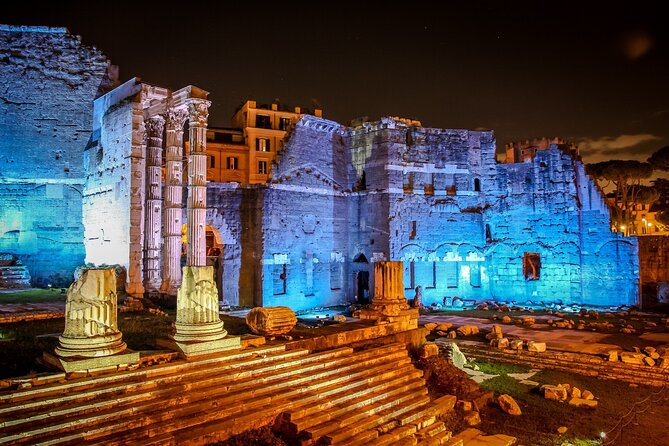
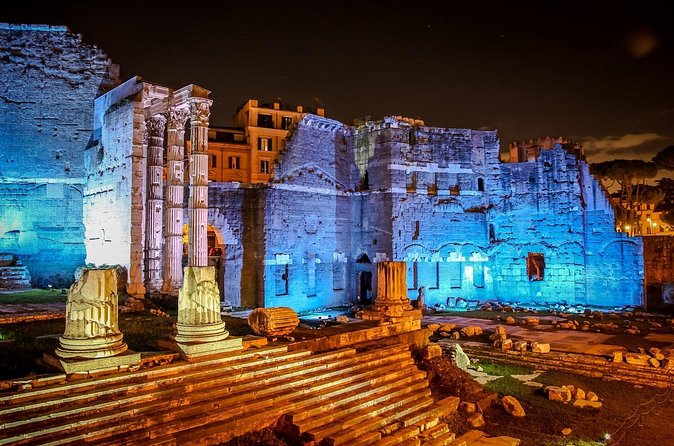
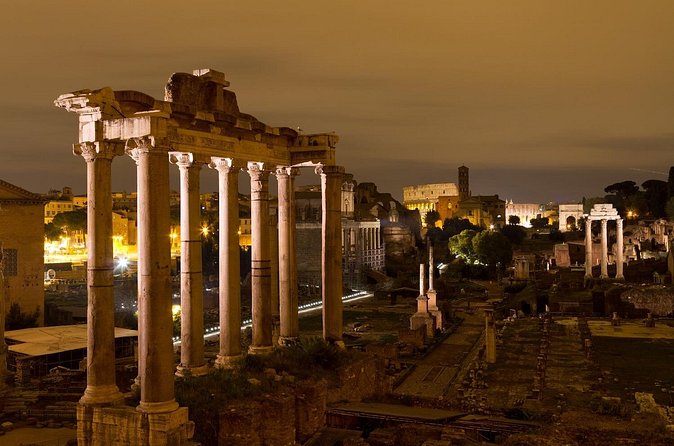
Along Via dei Fori Imperiali, the guide turns to Emperor Domitian and the part of the imperial forum linked with his rule. His story combines political anxiety with a prophecy about the hour of his death.
According to the tale, Domitian tried to avoid the predicted moment, only to be murdered at that very hour. Afterward, his name was erased from public memory through the Roman practice known as damnatio memoriae. The story also includes servants who feared his ghost.
This stop shows how Roman rulers controlled more than armies and monuments. They also tried to control memory. Erasing a name did not necessarily erase a reputation, and the story of Domitian’s predicted death made his attempt at control seem futile.
The route through the forums is visually strong, though you should keep your expectations clear. This is an outdoor walk beside the ruins, not a guided entry into the Forum. If you want close views of the forum’s interior remains, plan a separate daytime visit.
Monti and the Old Suburra
The Monti neighborhood provides one of the route’s most different settings. It was once associated with the Suburra, a rough and disreputable district in ancient Rome.
Here the subject is Messalina, the wife of Emperor Claudius. Ancient stories claim that she went into the streets at night in disguise or under unusual circumstances, and her ghost is said to linger in the area.
This part of the tour adds a street-level view of Roman life. The imperial court was not sealed away from the city’s gossip, vice, and danger. The contrast between palace power and the old Suburra makes the story more memorable than another stop focused only on emperors and monuments.
The Monti section lasts about 15 minutes, the longest stop on the route. That gives the guide more room to explain the neighborhood and Messalina’s place in Roman scandal. The setting should also make this feel less like a parade of famous ruins and more like a walk through an old urban district.
The Borgia Steps and a Street Cursed by Violence
Near the Scalinata dei Borgia, the tour recalls the ancient Vicus Sceleratus, or Street of Crime. The story concerns a Roman princess who drove her chariot over the body of her murdered father.
It is a grim tale, but it also introduces an important Roman belief: acts of violence could stain or curse an entire street. That idea gives the route a useful shift from individual murder to communal memory. A road was not only a route from one place to another. It could carry the moral weight of what happened there.
This stop lasts about 10 minutes. It is another example of why the experience can appeal to anyone who has already seen the famous monuments. You are not just collecting bigger ruins. You are hearing how Romans understood guilt, place, family, and the supernatural.
Ending Above the Colosseum
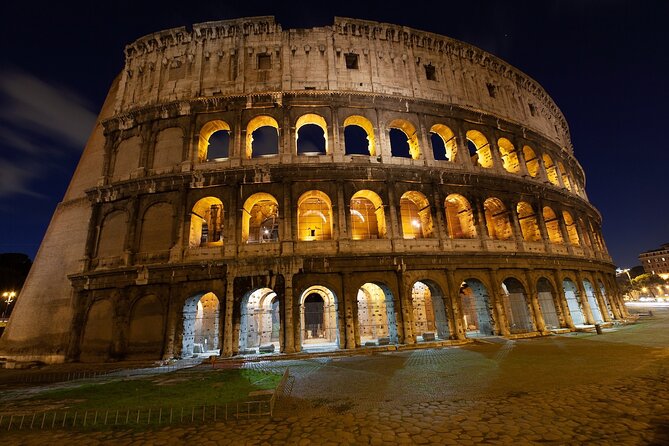
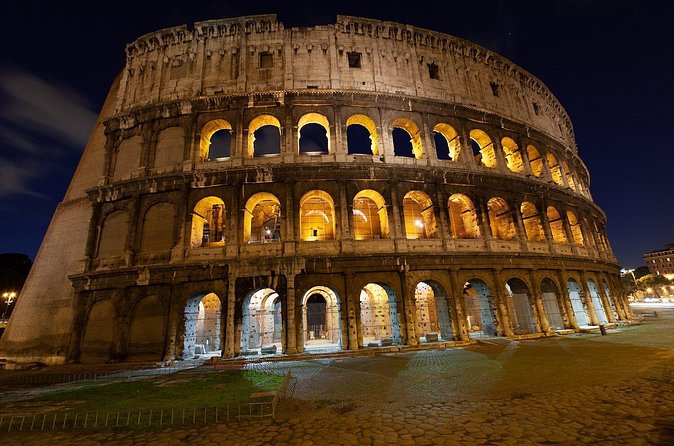
The final stop is a view over the Colosseum. The arena was built through imperial conquest and filled with spectacles involving gladiators and prisoners. The tour asks you to consider whether the countless people who died there, often without proper burial or peace, might still haunt the place.
The Colosseum is a fitting ending because it gathers many of the tour’s themes in one view: imperial power, public violence, political theater, and the treatment of human beings as symbols of state control.
You do not enter the Colosseum. The walk ends at Largo Gaetano Agnesi, above the Colosseo metro stop, after roughly two hours. That is a useful finish because the location is easy to identify and gives you a practical way to continue your evening.
How Much Value Do You Get for $30.10?
At $30.10 per person, this is a fair price for a two-hour guided walk in central Rome, especially with a maximum of 15 people. You are paying for the guide’s storytelling, route planning, and local context rather than admission tickets.
The value is strongest if you enjoy guided interpretation. Anyone can walk past Largo Argentina, the Capitol, or the Colosseum, but it takes a good storyteller to connect those places through one theme. The route also includes locations you might not put on a first-time Rome list, particularly the Monti and Borgia Steps sections.
The price is less appealing if you mainly want monument access. Entry to archaeological sites and museums is not included, and every stop is outdoors. You should budget separately for daytime visits to the Colosseum, Roman Forum, Palatine Hill, or other paid sites if those are priorities.
An optional stop is made for snacks and drinks. Food and beverages are not included, so carry what you need if you do not want to buy something during the walk.
Who Should Book This Night Walk?
I would suggest it to you if you:
- Like ancient politics, family intrigue, and crime stories.
- Have already seen some of Rome’s major monuments and want a new angle.
- Prefer a small group to a large city tour.
- Want to walk after sunset and avoid the worst daytime heat.
- Enjoy ghost legends presented alongside historical context.
- Can walk for two hours and manage some stairs.
Families can enjoy it, though the subject matter includes murder, execution, poison, and death. One parent described it as a particularly memorable experience for a daughter, but every family should decide if the dark themes fit its children.
Guides such as Ivana bring much of the personality to the evening. The strongest feedback about the experience centers on guides who mix academic study of ancient Rome with a relaxed, engaging delivery. Ask questions when you can. A small group makes that more realistic than a crowded street tour.
Practical Details Before You Go
The tour is offered in English and begins at 8 p.m. at Largo di Torre Argentina. Confirmation is provided at booking, and the start and finish are both near public transportation.
Wear comfortable shoes. The route is a walking tour with some stairs, and central Rome’s stone surfaces can be uneven. You should also dress for the evening weather, since the whole experience takes place outdoors.
Free cancellation is available up to 24 hours before the start time for a full refund. Changes or cancellations made inside that 24-hour window are not accepted for a refund.
Should You Book Ancient Rome’s Dark Side?
Book it if you want Rome to feel less like a checklist of monuments and more like a city shaped by fear, ambition, violence, and rumor. The $30.10 price is reasonable for a two-hour, small-group walk, and the night timing adds comfort and atmosphere.
Skip it if you need to enter the ruins or prefer a traditional art and architecture tour. For everyone else, this is a smart evening choice, especially after a daytime visit to the Colosseum or Forum. You will see familiar Rome, but the stories will make the stones feel much less familiar.
FAQ
Where does the tour start?
It starts at Largo di Torre Argentina in central Rome.
What time does the tour begin?
The start time is 8 p.m.
Where does the tour end?
It ends at Largo Gaetano Agnesi, above the Colosseum metro stop.
How long does the tour last?
The walking tour lasts approximately two hours.
What language is the tour offered in?
It is offered in English.
How much does the tour cost?
The listed price is $30.10 per person.
Are site admission tickets included?
No. The tour takes place outdoors and does not include entry to archaeological sites or museums.
How large is the group?
The group has a maximum of 15 people.
Is the tour physically demanding?
A moderate level of physical fitness is recommended. The route includes walking and some stairs.
Can I cancel for a full refund?
Yes. You can cancel at least 24 hours before the experience start time for a full refund.
Just added in Rome
- Rome Secrets with Dark History and Tasty Bites Tour Experience★ 4.5 · 3 reviews
- Ghost & Legends in Night Rome Walking Tour★ 5.0 · 36 reviews
- Experience Rome in this Mysterious Ghost Tour★ 3.5 · 3 reviews
- Rome: Private Night Ghost Walking Tour★ 5.0 · 38 reviews
- Haunted Rome & True Crime: The Cenci Curse Game★ 4.5 · 27 reviews
- Ghosts and Crimes of Rome Night Walk★ 5.0 · 61 reviews
- Haunted Rome: Eternal City Night Walking Tour★ 5.0 · 38 reviews
- Rome After Dark Mysteries Myths and Haunted History★ 5.0 · 14 reviews
Dark History & True Crime Tours, compared.
Adults-Only New Orleans Ghost, Crime, Voodoo, and Vampire Tour
Read our review →
Dark Secrets of the Old Town Ghost Walking Tour
Read our review →
New Orleans Adults-Only True Crime and Ghost Walking Tour
Read our review →
Genteel and Bard’s Savannah Dark History and Ghost Encounter Walking Tour
Read our review →
Buda Castle District Dark History, Legends and Vampire Night Tour
Read our review →
Edinburgh Ghost Tour: Mysteries, Legends and Murders
Read our review →Browse the lists this tour appears in