
Review · MADRID
Inquisition, The Executioner, Witches, Expulsion Jews and Muslims
Madrid’s old center carries a dark story beneath its grand churches and handsome squares. This 2-hour-15-minute walking tour links the Spanish Inquisition with the treatment of Christians, Jews, and Muslims, then follows the trail through investigations, torture, public trials, executions, and the long aftermath.
I like the route for two clear reasons: it uses real central Madrid locations rather than keeping the subject in a museum, and it connects past religious persecution with questions about current religious conflict. I also like that guides such as Jackie and David Onion use printed material, teaching tools, and dramatic storytelling to keep a difficult subject understandable.
The main consideration is the subject itself. This is not a light city stroll, and some parts cover torture, burning at the stake, beheading, and the garrote. The tour has also had a last-minute cancellation when no replacement guide was available, so keep a little flexibility in your schedule.
Key points before you book
- The walk begins at Plaza Mayor and ends near the Royal Palace, at Plaza de la Armería.
- The tour connects three religions, with special attention to Jewish and Muslim life and persecution in Spain.
- You hear about the full Inquisition process, including accusations, investigation, torture, confessions, and public trials.
- Plaza de la Cruz Verde covers executions in blunt detail, including hanging, beheading, the garrote, and burning at the stake.
- The final stops look at the legacy of the Inquisition, including Vatican Archives, the Church’s pardon, and the 1974 garrote execution.
- The price is unusually low, but tips are not included and are the normal way to value the guide’s work.
A dark Madrid walk from Plaza Mayor
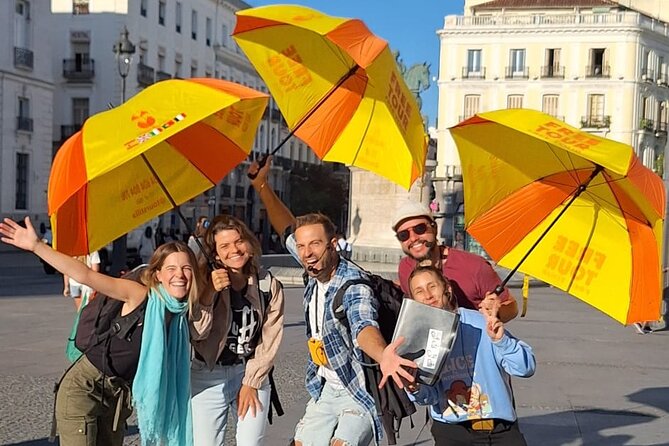
Meet at Plaza Mayor, one of Madrid’s most familiar public spaces. From there, the route moves through the old center on foot, using churches, squares, and historic buildings as the setting for a story that shaped Spanish society for centuries.
The route is divided into short stops, usually 10 to 20 minutes each. That pacing matters. You are not parked in one place for a long lecture, and the steady movement helps keep a difficult topic from becoming too heavy. At the same time, the stops are brief enough that the guide has to explain ideas clearly and stay focused.
The walk ends at Plaza de la Armería, beside the Royal Palace complex. From the starting point in Plaza Mayor, the route to the end is listed as about a 10-minute walk, and Ópera Metro station is roughly three minutes from the meeting point. You should wear comfortable shoes, since the experience takes place outdoors and involves walking between several central locations.
The activity is offered in English and uses a mobile ticket. Service animals are allowed, and most people can take part. The stated group limit is up to 30 people, while the price description refers to groups of up to 15, so check the exact group arrangement when booking.
More Witch Tours in Spain
- Seville: City of Queens, Nuns, Sex Work & Witches
★ 4.3 · 27 reviews - Gran Canaria: Green Witchcraft in the Magic Island
★ 4.9 · 26 reviews - Tour of the Inquisition and Witchcraft in Toledo
★ 3.3 · 13 reviews
Iglesia de Santa Cruz and the three faiths
The first stop is Iglesia de Santa Cruz, where the guide sets up the central subject: the Spanish Inquisition and its relationship with Christianity, Islam, and Judaism.
This is an important opening because the tour is not simply about a list of punishments. It looks at how religious identity was judged, challenged, and controlled. You can expect the guide to frame the Inquisition within the relationship between the three monotheistic faiths, rather than presenting the story as a simple battle between good and evil.
The stop lasts about 15 minutes. That is enough time for a clear introduction, but not enough for a full academic treatment of every political and religious shift. If you want a detailed scholarly study, you will need more reading afterward. For a walking tour, though, this opening gives you the basic terms needed for the later stops.
Plaza de la Provincia and the machinery of accusation
At Plaza de la Provincia, the focus turns to the work of the executioner and the process used by the Inquisition. The guide covers investigation, torture, and confessions.
This is one of the most useful parts of the route because it shows how persecution operated as a system. The topic is not only the final punishment. It is also the pressure applied before a verdict, the role of accusations, and the way confessions could be obtained.
You should expect a serious tone here. The stop lasts 15 minutes, so the guide cannot explain every legal detail, but the subject gives you a practical sense of how fear entered daily life. It also helps you understand why the later discussion of public trials and executions mattered so much. Punishment was not hidden away. It could become a public lesson.
Casa de la Carnicería and the spectacle of public faith
The next stop, Casa de la Carnicería, turns to autos-da-fé, often described in English as public acts or ceremonies of faith. The guide discusses the major trial and the most famous painting associated with the subject.
This stop adds a public and theatrical side to the story. The Inquisition did not operate only through private questioning. Its ceremonies could present religious authority, guilt, and punishment before a crowd. The mention of a major trial and a famous painting gives the guide a way to connect the ideas to a visual record.
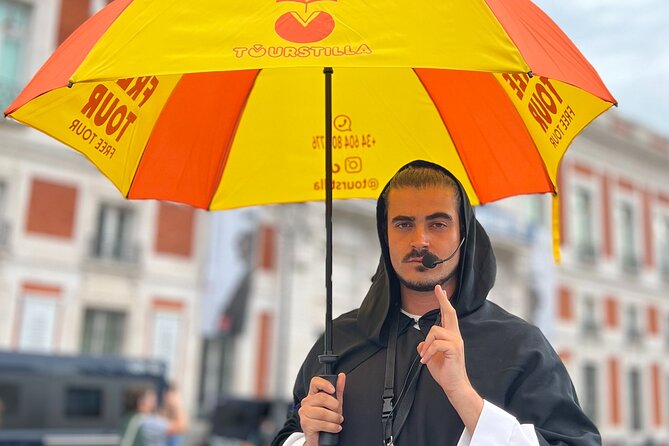
You may find this stop especially helpful if you learn best through images and scenes. Printed material and teaching tools are used along the way, so the explanation is not based only on spoken information. The stop lasts about 15 minutes, which keeps the discussion moving but leaves limited time for close analysis of the painting itself.
Same streets, a very different kind of fright:
- Barcelona: Gothic Quarter Ghosts and Legends Walking Tour
★ 4.7 · 1,443 reviews - Madrid Oscuro: Torture, Ghosts, Crimes and Legends
★ 5.0 · 1,363 reviews - Seville Evening Historical Tour with Haunted History
★ 5.0 · 626 reviews - Barcelona Ghosts & Legends Tour
★ 4.5 · 548 reviews
Basilica de San Miguel and the problem of false identity
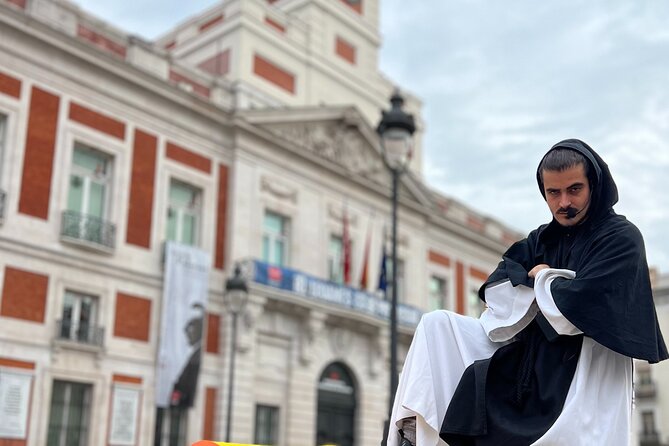
At Basilica de San Miguel, the subject becomes more specific and more troubling. The guide explains how authorities tried to identify a false Jew or a false Moorish person, then discusses proclamations of the Edicts of Faith and false allegations.
This part shows how suspicion could become a category of its own. A person might be judged not only by declared belief but by behavior, ancestry, custom, or an accusation from someone else. The tour uses this stop to explain how religious policing could reach into ordinary life.
The phrase false allegations is particularly important. It points to the danger of a system in which accusations could carry enormous weight. You are not simply hearing about official doctrine here. You are hearing about the human cost of rumor, fear, and forced conformity.
The stop lasts 15 minutes. That makes it a strong introduction to the subject, but again, not a complete study of the legal or social records. I would treat the guide’s explanation as a framework for understanding Madrid, then follow up with museum or archive visits if the topic takes hold.
Casa Cisneros and the names behind the system
Casa Cisneros provides a short stop of about 10 minutes focused on two historical figures: Cisneros and Torquemada.
The value here is personal context. Large institutions can feel distant, so attaching the story to named figures helps you follow the competing roles and powers involved. The guide compares Cisneros with Torquemada, giving you a way to distinguish important personalities rather than treating the Inquisition as one faceless machine.
Because this is the shortest stop, expect a concise comparison rather than a biography of either man. The guide’s teaching tools should help keep the names from blurring together, especially if you are taking the tour early in a longer Madrid visit and are still getting your bearings.
Plaza de la Cruz Verde and the punishments
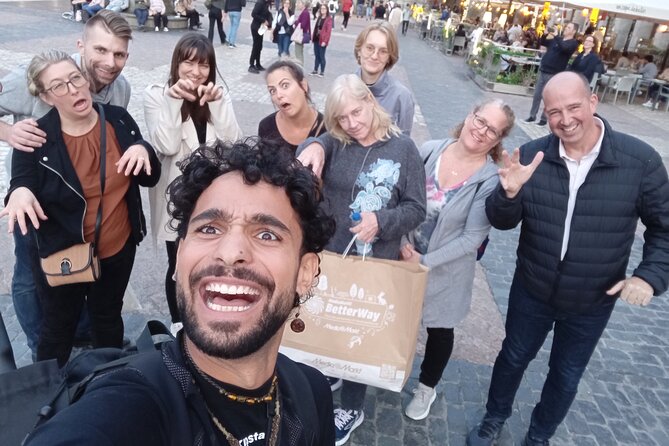
Plaza de la Cruz Verde is the most graphic point on the walk. Here the guide explains the symbol of the Inquisition, how punishments were carried out, and the different forms of execution associated with the period.
The subjects include:
- The gallows
- Beheading
- Garrote vil
- Burning at the stake
- A reference to Bruges
The stop lasts around 20 minutes, giving the guide more time than at several earlier locations. That extra time is needed because the discussion covers both the symbolism and the practical methods of execution.
You should know what you are signing up for. The language here is direct, and the subject may not suit children or anyone who prefers to avoid graphic historical material. Still, this stop has a serious purpose. It shows how punishment was used not only to kill but also to warn the wider public.
Garrote vil receives special attention later in the route, so this stop also prepares you for the final discussion of the last execution connected with that method. The repeated reference gives the tour a clear thread instead of treating each square as an isolated story.
Almudena Cathedral and the long aftermath
The tour then reaches Catedral de Santa María la Real de la Almudena. This is the longest and most wide-ranging stop, lasting about 20 minutes.
Here the guide brings in the Vatican Archives, John Paul II, and the pardon of the Catholic Church. The discussion also covers the end of the Inquisition and the question of its last execution. The tour identifies 1974 as the year of the last execution with garrote vil.
The stop then returns to the legacies of Jews and Muslims in Spain. That return is valuable because the story does not end when the institution ends. Religious persecution can leave cultural, family, and political effects long after official procedures disappear.
You should listen closely to the wording around the last execution. The stop asks about the last execution of the Inquisition, then separately gives 1974 as the last execution with garrote vil. Those are related but not identical claims, and the distinction may matter if you are interested in historical precision. The guide can explain how the two points fit together.
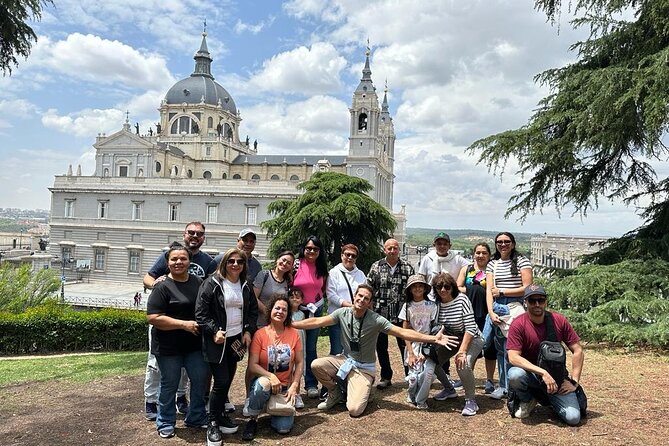
Almudena Cathedral also gives the route a strong visual marker near the end. You are still outdoors on a city walk, but the setting shifts from small squares and old buildings to one of Madrid’s major religious landmarks.
Plaza de la Armería and a modern closing question
The final stop is Plaza de la Armería, where the guide discusses current religious conflicts, holy wars, the lasting legacies of the past, and a closing reflection.
This ending keeps the walk from becoming a sealed-off story about medieval or early modern Spain. You are asked to consider how religious identity, power, and conflict still operate today. The guide does not simply finish with a date and send you on your way.
The final 20 minutes are useful for sorting through what you have heard. The earlier stops focus on procedures and punishments, while this one asks what remains. That makes the ending more reflective than dramatic.
It also leaves you in a practical location. Plaza de la Armería is about 10 minutes from the starting point, and Ópera Metro station is close to Plaza Mayor. You can continue exploring central Madrid after the walk without making a special transport plan.
What the low price really means
The listed price is $3.61 per group of up to 15 people. That is an unusually small charge for more than two hours with a local guide, printed material, and teaching tools.
The price should be understood as a low-cost or free-tour model. Tips are not included, and the tour specifically asks you to value the guide’s effort at the end. A gratuity is optional, but it is an important part of how this format works. Bring enough cash or be ready to tip through whatever method the guide explains.
The value depends heavily on the guide. Jackie has been noted for making the subject easy to follow, while David Onion has been described as using dramatic skill to keep the group engaged. David also explained the normal tipping process tactfully and without pressure. That detail matters because some visitors dislike aggressive tipping requests.
The low price also makes this a sensible choice for a short Madrid visit. You get a focused look at a subject that is easy to miss when you spend your time around the Royal Palace, Plaza Mayor, and major art museums. You should not expect entry to monuments, food, or drinks. No paid site entries are required for the route.
Who will get the most from this walk
I would recommend this experience to you if you enjoy political, religious, or social history and want to see the places connected with the story. It also suits anyone who prefers a guide to provide context while the city itself becomes the setting.
It may appeal to art and architecture fans as well, since the route uses churches, squares, and historic buildings. The focus, however, is the story rather than close architectural inspection. You will hear about a famous painting, but this is not an art tour.
Families should make a careful choice. Most people can participate, but the material includes torture and executions. Older teenagers with an interest in history may find it useful, while younger children may find the content too intense.
The tour is also a good fit for solo visitors and small groups. The stated maximum is 30 people, so the experience may not feel intimate at the upper limit. Still, the short stops and use of visual teaching aids should help you follow along.
Practical points before you reserve
Confirmation is provided at booking, and the experience offers free cancellation up to 24 hours before the start time. If you cancel less than 24 hours in advance, you will not receive a refund, and changes made inside that period are not accepted.
The route is offered in English. It starts at Plaza Mayor in central Madrid and finishes at Plaza de la Armería. Since the itinerary is entirely a walking route between central sites, plan around the full 2 hours and 15 minutes rather than treating it as a quick introduction.
The experience is often reserved well ahead of time, with an average booking lead time of about 31 days. That suggests you should reserve early if your Madrid dates are fixed, especially if you want a particular day.
One practical warning is the reported last-minute cancellation caused by a guide becoming unavailable without a replacement. This appears to be an occasional risk rather than the normal pattern, but it is worth keeping in mind if the tour is tied to a tight schedule.
Should you book it?
Book this tour if you want a focused, serious look at the Spanish Inquisition through Madrid’s streets, and if you value a strong guide more than paid admission to a major monument. The connections between the three religions, the explanation of the investigation process, and the discussion of Jewish and Muslim legacies give the walk more substance than a simple ghost-story tour.
Skip it if torture and execution are not subjects you want during your holiday, or if you need a fully academic treatment with extensive time at each site. For everyone else, the price makes it an easy addition to a Madrid itinerary. Just allow the full 2 hours and 15 minutes, wear comfortable shoes, and remember that the guide’s tip is the real payment for this unusually inexpensive experience.
FAQ
Where does the tour begin?
The tour begins at Plaza Mayor in central Madrid, Spain.
Where does the tour finish?
It finishes at Plaza de la Armería, near the Royal Palace area. The end point is about a 10-minute walk from Plaza Mayor.
How long does the experience last?
The tour lasts approximately 2 hours and 15 minutes.
What language is the tour offered in?
The tour is offered in English.
What is included in the experience?
A local guide, printed material, and teaching tools used during the route are included. You also receive a link with personalized recommendations for things to do in Madrid and ongoing personalized attention from the guide after the tour.
Are food, drinks, or site admissions included?
Food and drinks are not included. Paid entries to sites are not required for this walking route.
How many people can join the tour?
The activity information gives a maximum of 30 participants. The price description refers to a group of up to 15 people, so check the group terms when booking.
Can I cancel for a full refund?
Yes. You can cancel for a full refund up to 24 hours before the experience start time. Cancellations or changes made less than 24 hours before the start time are not refundable.
Just added in Spain
- Tour of the Inquisition and Witchcraft in Toledo★ 3.3 · 13 reviews
- Gran Canaria: Green Witchcraft in the Magic Island★ 4.9 · 26 reviews
- Seville: City of Queens, Nuns, Sex Work & Witches★ 4.3 · 27 reviews
- Paranormal Seville Tour in Spanish★ 4.5 · 33 reviews
- Seville Paranormal Small-Group Walking Tour★ 5.0 · 133 reviews
- Barcelona Dark History Night Walking Tour With Drinks★ 5.0 · 153 reviews
- Barcelona El Raval Dark History Walking Tour★ 5.0 · 70 reviews
- Barcelona’s Dark History Night Tour★ 5.0 · 181 reviews
Witch Trial & Witchcraft Tours, compared.
Wicked Awesome Tours: Witch Trial History and Salem Haunts!
Read our review →
Best Salem Witch Trials Historical Walking Tour
Read our review →
Browse the lists this tour appears in