
Review · LAZIO
Rome After Dark: Ghosts & Medieval Backstreets Tour
Rome’s prettiest streets take on a harder edge after sunset. This two-hour ghost walk leads you from Campo de’ Fiori through stories of executions, torture, poison, betrayal, and restless souls, ending at Castel Sant’Angelo.
I like the strong historical focus, especially the tale of Giordano Bruno and the stop at Santa Maria dell’Orazione e Morte. I also like the intimate group format and the fact that the guide tells the stories on foot, where the events happened. The main drawback is that this is not a haunted-house attraction with theatrical effects. It is a history walk with dark legends, and the shared route is not suitable for wheelchair users.
Key points at a glance
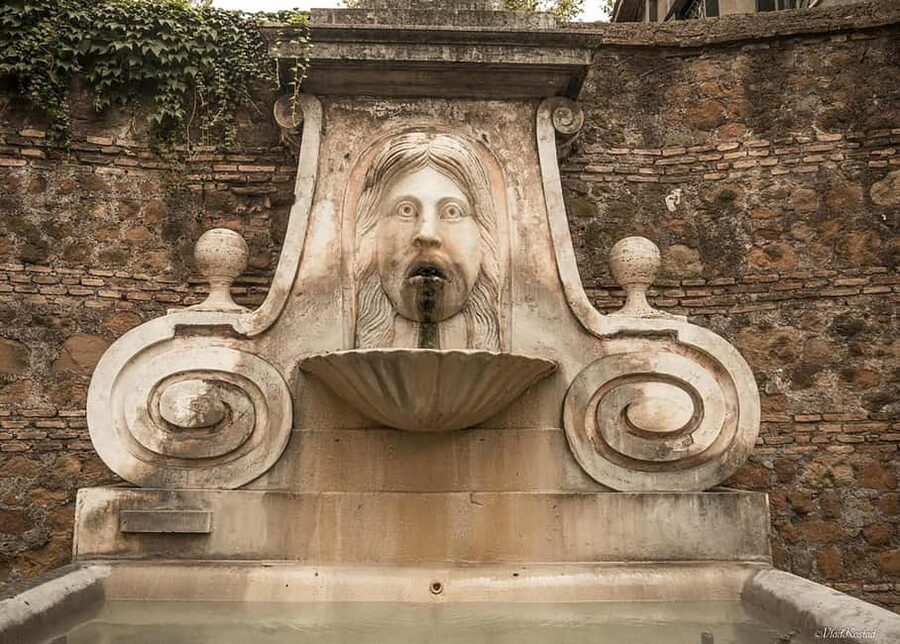
- Giordano Bruno’s fiery end: Begin at his statue in Campo de’ Fiori and hear why the philosopher was executed there.
- A church decorated with skulls: Santa Maria dell’Orazione e Morte gives the tour one of its most striking and unsettling stops.
- Rome’s criminal past: Stories touch on executions, an infamous executioner, a poisonous perfumery, and an old prison.
- A dramatic final stop: Castel Sant’Angelo brings together imperial power, prison cells, torture, and executions.
- A practical evening walk: The tour lasts two hours, runs in English, and requires no transport between stops.
- Flexible booking: You can cancel up to 24 hours ahead for a full refund and reserve now with payment later.
Why Rome after dark changes the story
Rome is hard to surprise in daylight. You have fountains, churches, ruins, and grand palaces competing for your attention at every turn. At night, the same streets become quieter and more suggestive. A narrow lane can feel less like a shortcut and more like a place where someone once waited with a knife.
That change in mood is the real reason to book this tour. The guide does not simply point out old buildings. You hear how Rome’s power worked through punishment, religious control, imprisonment, and public fear. The supernatural stories add atmosphere, but the human events are often more disturbing.
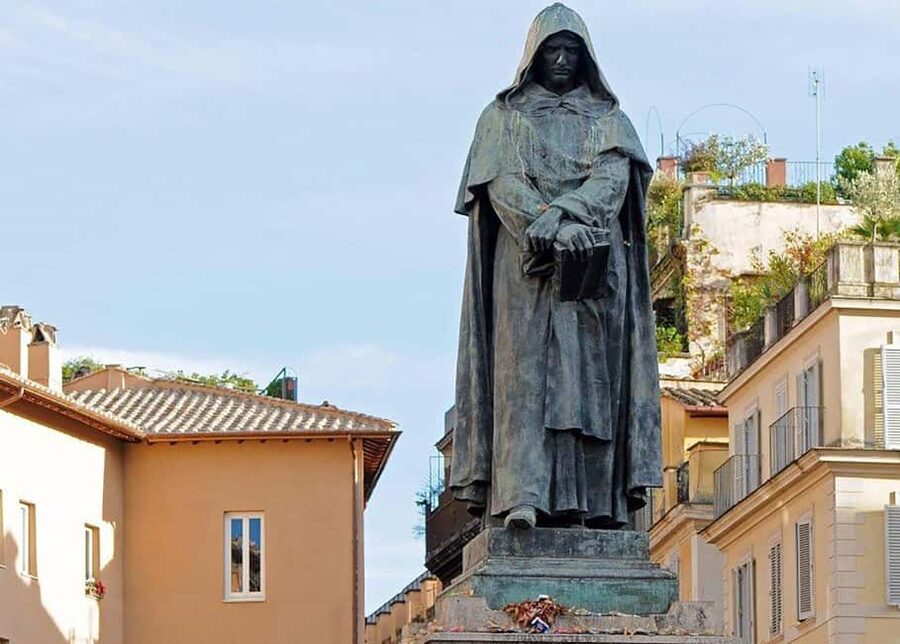
I especially like that the route begins in a familiar public square rather than at an isolated meeting point. Campo de’ Fiori is easy to find in central Rome, and the guide waits beside the Giordano Bruno monument with a yellow flag. Arrive with enough time to locate the statue, since a busy square can make a person and flag easy to miss.
This is a shared walk for an intimate group of scare-seekers. The exact group size is not stated, so you should not assume a private tour. Still, the small-group format should make it easier to hear the guide and ask questions than on a large city sightseeing walk.
More ghost tours in Rome
- Rome: Paranormal Night Walking Tour & Secret Backstreets
★ 4.9 · 1,921 reviews - Haunted Rome Ghost Tour – The Original
★ 4.5 · 668 reviews - Rome: Haunted City Night Walking Tour
★ 4.9 · 616 reviews
Campo de’ Fiori and Giordano Bruno’s punishment
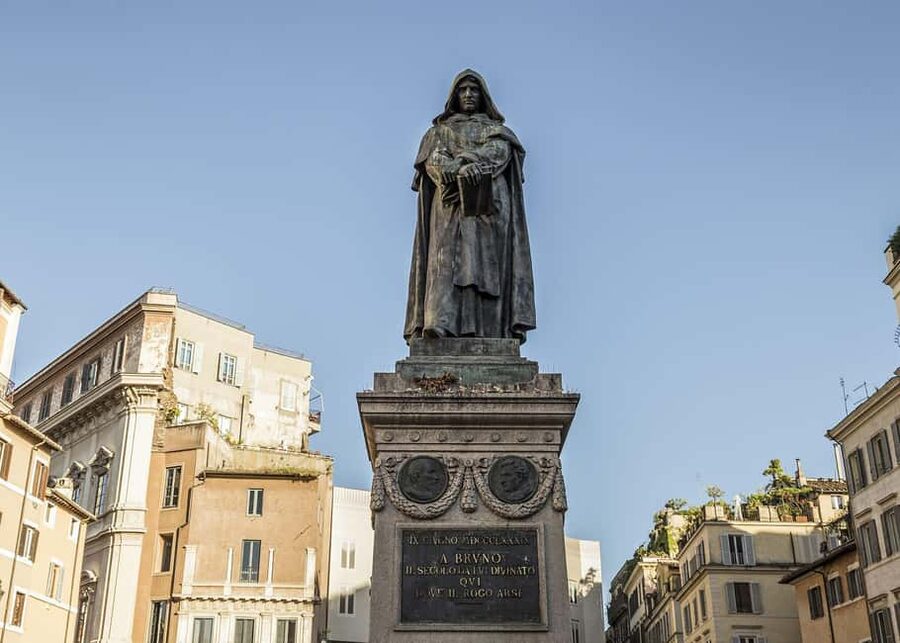
The opening stop gives the tour its clearest historical anchor. Campo de’ Fiori is lively during the day, but the statue of Giordano Bruno recalls a far darker use of the square.
Bruno was a philosopher whose ideas challenged church authority. In 1600, he was executed by burning in this very square. You hear about his trial, his refusal to abandon his views, and the religious intolerance that shaped his fate.
This is one of the tour’s strongest moments because the story is tied to a precise location. You are not hearing a vague tale about something that happened somewhere in Rome. You are standing beside the monument, in the place associated with Bruno’s final punishment.
The stop also sets expectations. This tour is not only about ghosts. It uses supernatural legends to examine real violence and old systems of justice. If you prefer Roman history with a grisly edge, that balance should suit you. If you want jump scares or actors in costume, this opening may feel too serious.
Medieval lanes, betrayal, and Rome’s forgotten corners
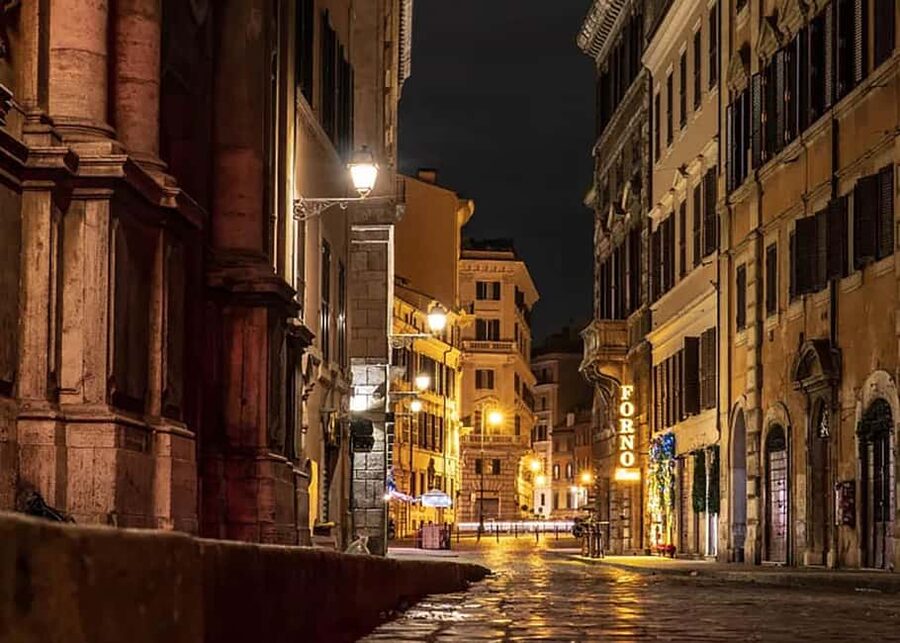
From Campo de’ Fiori, the route moves through the medieval center. Expect cobbled streets and a slower pace, with the guide using the setting to explain tales of murder, betrayal, and secrets.
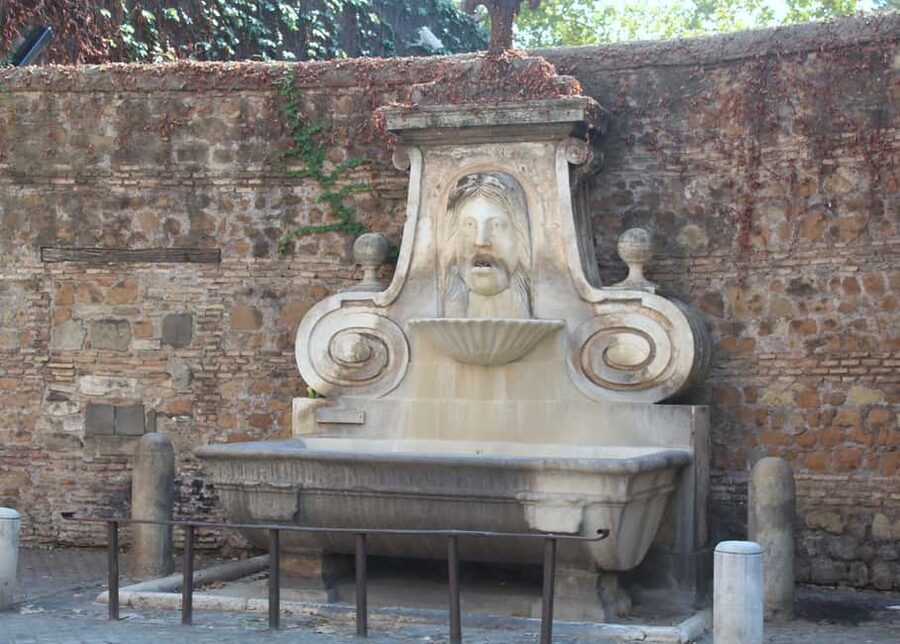
The itinerary includes stops at Ponte Sisto and the Fountain of the Mask. These are not presented as standard sightseeing stops, so their value comes from the stories attached to them. You may find yourself looking at familiar stonework in a new way once you know what sort of crimes and legends have gathered around it.
The route is best understood as a connected walk rather than a series of major indoor attractions. You will spend much of the two hours outside, listening as the guide links one dark episode to the next. That makes comfortable shoes essential. Rome’s old center has uneven paving, and the tour continues in all weather.
Bring water, an umbrella, and clothing suited to the forecast. Sunscreen and a hat are also advised, even though the tour takes place after sunset, since conditions can change before the walk begins. In colder weather, dress warmly. In hot weather, carry a cape or shawl to cover bare shoulders inside a church.
Santa Maria dell’Orazione e Morte and the skulls of Rome
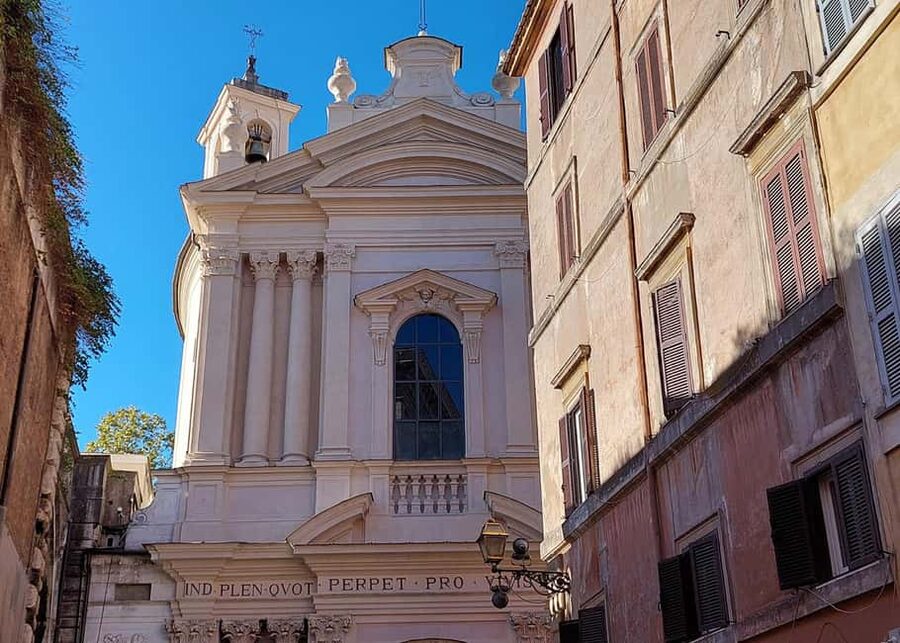
The visit to Chiesa di Santa Maria dell’Orazione e Morte is likely to be the most visually memorable church stop. Its name translates roughly as Saint Mary of Prayer and Death, and its decoration includes human skulls.
The church connects the tour’s ghostly mood with Rome’s old concern for the dead. You hear about the people remembered there and the belief that their presence still lingers. The setting does much of the work: a church associated with death, visited at night, is naturally more unsettling than a daytime monument packed with tour groups.
This is also where you need to respect the setting. It remains a church, not a stage set. Dress properly and bring something to cover bare shoulders during warmer months. The guide will explain the site, but the atmosphere depends on visitors keeping their voices and behavior appropriate.
The supplied itinerary names this church twice, so the exact structure of the stop may include more than one part of the visit or a repeated location marker. Do not expect two separate churches based on the published route. The important point is that Santa Maria dell’Orazione e Morte receives special attention.
Same streets, a very different kind of fright:
- Haunted Rome Ghost Night Walking Tour
★ 5.0 · 495 reviews - Rome: Guided Bar Crawl with Drinks & Dark History
★ 4.9 · 444 reviews - Rome: Small Group Rome’s Dark Side – Ghosts & Legends Tour
★ 4.9 · 343 reviews - Ghosts, Legends & Mysteries of Rome Tip-Based Walking Tour
★ 4.7 · 284 reviews
A secretive order and Rome’s unsettling religious stories
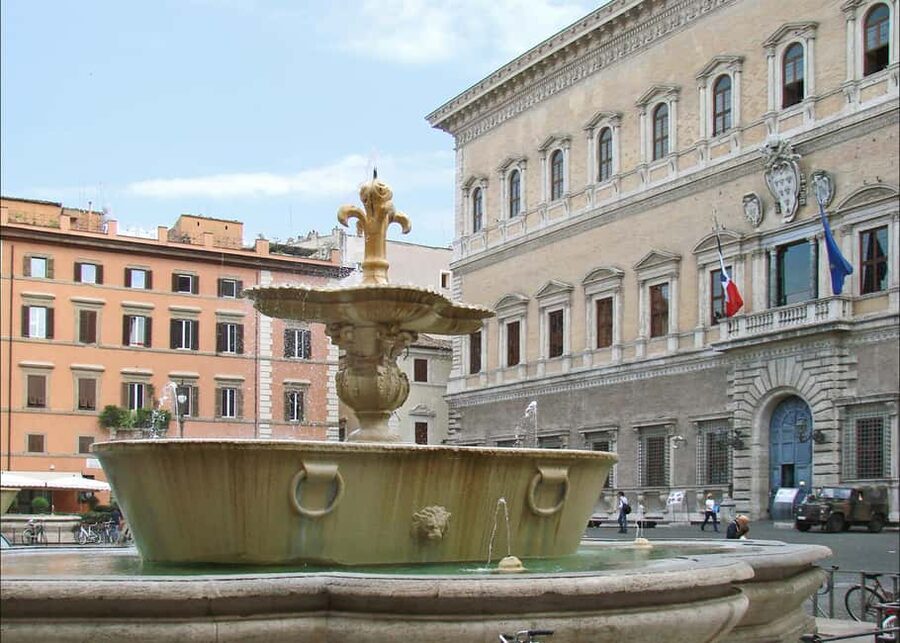
Another part of the route concerns the former home of a secretive order of monks. The stories linked to the monks involve mysterious practices and dark rituals.
This section should appeal to anyone who likes the line between documented history and legend. The tour presents the order as part of Rome’s hidden past, but not every supernatural claim should be treated as proven fact. I recommend listening for the difference between what is historically established and what has grown through rumor over time.
That distinction makes a ghost tour more rewarding. You can enjoy the eerie details without accepting every haunting as literal. The best guides give you enough context to make that judgment for yourself.
No individual guide name is provided, but the tour is led in English by a fluent live guide. One French-language comment describes the guide as passionate and the visit as instructive and enjoyable, while an English-language comment calls it very informative and interesting. Those comments suggest that storytelling and explanation matter more here than theatrical performance.
The executioner’s childhood home and Rome’s culture of punishment
The tour then turns to the childhood home of one of Rome’s most notorious executioners. His early life in a world shaped by death and punishment is used to explain how he became feared across the city.
This is an unusual subject for a city walk. You are not just hearing about victims or famous rulers. You are also considering the person who carried out official executions and the role such a figure played in public life.
The stop should interest you if you want to understand how punishment functioned as spectacle. Executions were not hidden administrative acts. They were part of the city’s social and religious world, and the fear they produced helped authorities maintain control.
The drawback is that this material can be grim. Stories of executions and torture are central to the tour, so it is not a good match for children or anyone who dislikes graphic historical subjects. The description does not set a minimum age, so families should use their own judgment.
The old prison, the poisonous perfumery, and death by desire
The walk continues past the ruins of a notorious prison. The guide recounts the fate of prisoners and condemned people who passed through its walls, along with stories of cries and lingering spirits.
Because you view the ruins from outside, do not book this expecting a full prison interior visit. The appeal is the location and the account of what happened there. A fragment of stone can be enough when the guide explains how the place once functioned.
The poisonous perfumery offers a different kind of horror. Here, beauty and vanity became dangerous. Women seeking attractive cosmetics are said to have used toxic products that led to death.
This story broadens the tour beyond religious persecution and formal execution. It shows how danger could enter ordinary life through products associated with appearance and desire. It also gives the guide a chance to discuss the darker side of old commerce and domestic life.
The precise address and surviving remains of the perfumery are not specified, so you should not expect a clearly marked museum-style attraction. Treat it as a story connected to the route, not as a standalone shop visit.
Castel Sant’Angelo, Rome’s grand finale
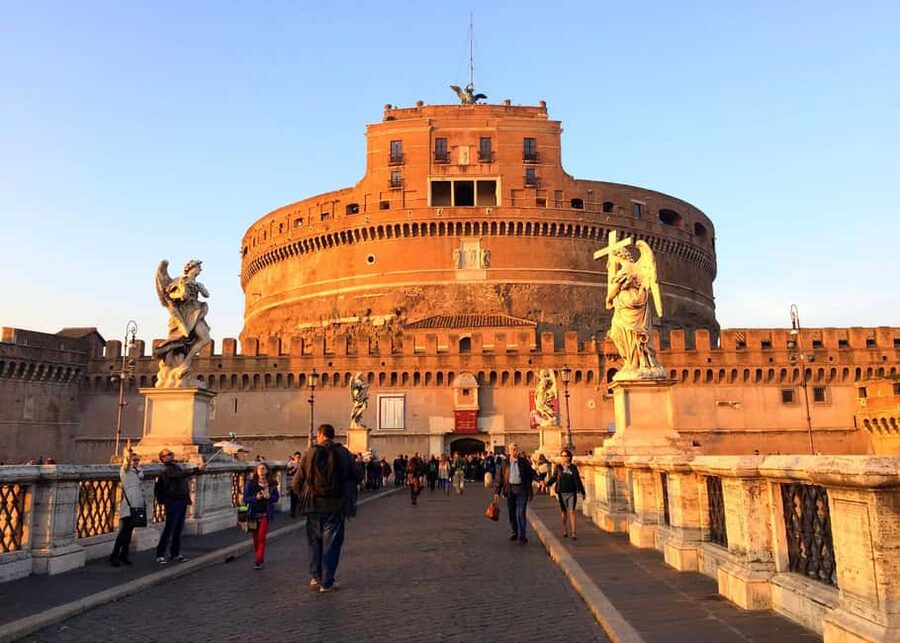
The tour reaches its dramatic final point at Castel Sant’Angelo. Originally built as the mausoleum of Emperor Hadrian, the structure later became a fortress, prison, and place of torture and execution.
Its changing purpose makes it an ideal ending. The building connects imperial Rome with the city’s medieval and later history. By the time you reach it, the earlier stories about condemned prisoners, executioners, and haunted churches have a single imposing backdrop.
The tour focuses on the people who suffered inside and around the fortress, along with the souls said to remain there. You should expect a guided exterior experience unless your booking clearly says otherwise. The supplied details describe arriving at Castel Sant’Angelo, not an interior visit or admission ticket.
This ending works well for photographs and orientation. It also gives you a useful location from which to continue your evening in Rome, though the tour information says the route returns to Campo de’ Fiori. Since no transport is included, you are walking between the stops and should plan your evening around the full route rather than scheduling a tight activity immediately afterward.
What the $82 price means
At $82 per person, this is not a cheap casual walk. The value depends on how much you want a focused English-language story tour rather than a general introduction to Rome.
You are paying for a live guide, a carefully themed route, and access to places that make the stories feel immediate. The walk combines Campo de’ Fiori, Ponte Sisto, the Fountain of the Mask, Santa Maria dell’Orazione e Morte, the old prison area, and Castel Sant’Angelo. You do not pay for transport, food, drinks, or listed entrance tickets.
I think the price makes the most sense for a first or second visit when you already know Rome’s famous monuments and want a different angle. It is less convincing if you are seeking major indoor sights, archaeological detail, or a long tour with many admissions included.
The published rating is 4.8 from four reviews, including strong comments about the guide’s informative and passionate storytelling. That is encouraging, but it is still a small sample. I would treat it as a sign that the format is working well for some people, not as a guarantee that every guide or group will deliver the same mood.
Weather, clothing, and practical planning
The tour runs in all weather. Rome’s evening conditions can shift, so bring an umbrella and water. Comfortable walking shoes matter more than stylish footwear on cobbled streets.
Carry a passport or ID card, as requested for the activity. Keep your WhatsApp number current when booking so support can contact you if needed.
The tour is in English only. It is shared rather than private, and wheelchair users should not book because the route is not suitable for wheelchairs. If you have limited mobility but do not use a wheelchair, ask the provider for current route details before paying, since the information does not describe the paving or exact walking distance.
Start times vary, so check availability for your date. Same-day or overnight bookings may be moved to the following day if seats are unavailable. A selected time can also be rescheduled to another time on the same day for logistical reasons or ticket-office overbooking. Avoid booking another activity immediately before or after this one.
You can cancel up to 24 hours ahead for a full refund, and the reserve-now, pay-later option gives you some flexibility while your Rome plans are still changing.
Who should book this Rome ghost walk?
I would choose this tour if you like history told through places, enjoy a little uncertainty between fact and legend, and want to walk central Rome after dark. It suits adults and older teens who can handle stories about murder, torture, executions, and death.
It is also a good choice for repeat visitors. The route takes you away from the usual Colosseum and Vatican script and shows how much grim material lies behind Rome’s polished churches and grand squares.
I would skip it if you want a relaxed food walk, a private experience, a wheelchair-friendly route, or a tour centered on interiors and admission tickets. I would also avoid stacking it between two tightly timed activities. The walk needs room for weather, cobblestones, and storytelling.
Should you book it?
Book this tour if the idea of hearing about Giordano Bruno beside his execution site, entering a church marked by skulls, and ending near Castel Sant’Angelo sounds more appealing than another standard monument tour. The strongest feature is the connection between real locations and dark stories.
At $82, it is best viewed as a specialized evening experience, not a bargain sightseeing circuit. You are buying atmosphere, a live English guide, and a two-hour look at Rome’s criminal and supernatural past. Bring sensible shoes, dress for the weather, and expect serious history with ghostly seasoning rather than a theatrical scare show.
FAQ
Where does the tour begin?
Meet in the center of Campo de’ Fiori, beside the Giordano Bruno monument. The guide holds a yellow flag.
How long does the tour last?
The tour lasts two hours.
What language is the tour conducted in?
The live tour guide speaks English.
Does the tour include transportation?
No. Transportation to and from the meeting point is not included, and the experience is a walking tour.
Is the tour shared or private?
It is a shared tour with a group of other participants.
What locations are included?
The route includes Campo de’ Fiori, the Giordano Bruno monument, Ponte Sisto, the Fountain of the Mask, Santa Maria dell’Orazione e Morte, and Castel Sant’Angelo. It also includes stories connected with an old prison, a poisonous perfumery, and an executioner’s childhood home.
Can wheelchair users join?
No. The tour is not suitable for wheelchair users.
What should I bring?
Bring a passport or ID card, comfortable shoes, water, and an umbrella. Dress warmly in colder weather, and carry something to cover bare shoulders when entering a church in warmer months.
Can I cancel for a refund?
Yes. You can cancel up to 24 hours in advance for a full refund.
Can I reserve now and pay later?
Yes. The booking option allows you to reserve your place and pay later.
Just added in Rome
- Rome Secrets with Dark History and Tasty Bites Tour Experience★ 4.5 · 3 reviews
- Ghost & Legends in Night Rome Walking Tour★ 5.0 · 36 reviews
- Experience Rome in this Mysterious Ghost Tour★ 3.5 · 3 reviews
- Rome: Private Night Ghost Walking Tour★ 5.0 · 38 reviews
- Haunted Rome & True Crime: The Cenci Curse Game★ 4.5 · 27 reviews
- Ghosts and Crimes of Rome Night Walk★ 5.0 · 61 reviews
- Rome’s Dark Side: Ghosts, Scandals and Crypts – Small Group Tour★ 5.0 · 28 reviews
- Haunted Rome: Eternal City Night Walking Tour★ 5.0 · 38 reviews
Rome Ghost Tours, compared.
Paranormal Night Walking Tour & Secret Backstreets
Read our review →

Small Group Rome’s Dark Side – Ghosts & Legends Tour
Read our review →
Ghosts, Legends & Mysteries of Rome Tip-Based Walking Tour
Read our review →
Browse the lists this tour appears in