
Review · TURIN
Ghosts of Turin: Hidden Spell Exploration Game
Turin’s darker side comes into focus on this self-guided city game, which links old execution grounds, Roman ruins, royal squares, mysterious doors, and eerie legends. You follow clues on your phone instead of trailing behind a guide, so the experience feels part walking tour, part treasure hunt, and part escape room.
I like the freedom to start whenever you want and pause when a café, church, or unexpected street corner catches your eye. I also like the price, about $8.11 per person, which is low for a private activity lasting around 90 minutes. The main concern is technical: one booking could not be activated, and support did not resolve the problem at the time.
Key points at a glance
- Turin’s Black Heart: Begin at Piazza Statuto, a square tied to a Roman burial ground, executions, and a deadly tunnel project.
- A phone-led mystery: The Questo app provides clues and directions from one stop to the next.
- Eleven central Turin stops: The route includes the Consolata sanctuary, Palatine Gate, Piazza Castello, Piazza San Carlo, and the Po River.
- Flexible timing: Start at any hour, stop for a break, and resume later.
- Offline play: You do not need an internet connection during the activity after it is ready on your phone.
- Low-cost private fun: Your group plays alone, with no physical guide and no fixed meeting time.
Starting with Turin’s Black Heart at Piazza Statuto
The game begins in Piazza Statuto, a fitting place for a route about Turin’s sinister side. This broad square was once associated with a Roman necropolis and later with a French execution site. It also carries the memory of a terrible fire in 1983.
At its center, a fountain honors workers who died while digging the Fréjus Rail Tunnel. That combination of burial ground, executions, disaster, and memorial gives the square its nickname, Turin’s Black Heart.
Your first task is not a lecture. You look around, find the answer to a clue, and enter it into the app. This matters because the game makes you observe the place instead of simply walking past it. Details on a monument or building become part of the challenge.
I would allow a few extra minutes here before starting. Piazza Statuto is the kind of place where the story changes how you see the surroundings. It is also the first test of the game’s format. If you enjoy solving clues, you will quickly get into the rhythm. If you prefer a clear spoken explanation, the app may feel spare.
More Self-Guided Ghost Tours in Italy
- Florence Inferno: Dante’s Haunted Exploration Game and Tour
★ 4.5 · 33 reviews - Florence Haunted Secrets: Echoes of the Dead Exploration Game
★ 4.0 · 9 reviews - Ghosts of Catania Exploration Game and Tour
★ 4.5 · 2 reviews
The Consolata sanctuary and Turin’s religious mysteries
From Piazza Statuto, directions lead you toward the Santuario della Consolata, formally the Church of the Virgin of the Consolation. Locals often call it La Consola. The sanctuary sits near the meeting point of Via Consolata and Via Carlo Ignazio Giulio.
This stop brings a different mood. The opening location is tied to death and disaster, while the Consolata introduces Turin’s religious side. You search the area for the answer that sends you onward and reveals the next piece of the story.
The activity does not promise an interior tour, and you should not expect a reserved entrance or a formal explanation of the artwork. Its value here is the setting. The church becomes a puzzle location, and the puzzle encourages you to notice the building and its surroundings.
This is a good point to pause if you want to look inside, provided the sanctuary is open when you arrive. The game gives you control over the pace, but any visit inside remains subject to opening conditions that are not specified for this activity.
Rondò della Forca, where Turin’s darker reputation continues
The route then reaches Rondò della Forca, one of the better-known places connected with Turin’s esoteric tourism. The name refers to the area where several roads meet, including present-day Valdocco, Principe Eugenio, and Regina Margherita, along with Via Cigna.
The location is not far from Piazza Statuto, so this section keeps you in the city’s northern center before moving toward the Roman and royal landmarks. The game uses the area’s grim associations to continue its central theme.
Here, the challenge again asks you to inspect your surroundings. That sounds simple, but it changes the way you walk. Instead of treating the route as a straight transfer from one monument to another, you are looking for a visual answer.
I would keep your phone charged and your screen brightness high enough to read clues outdoors. The app is the guide, map, clue sheet, and answer box all at once. That is convenient, but it also means the phone is essential.
Palatine Gate and Turin’s Roman past
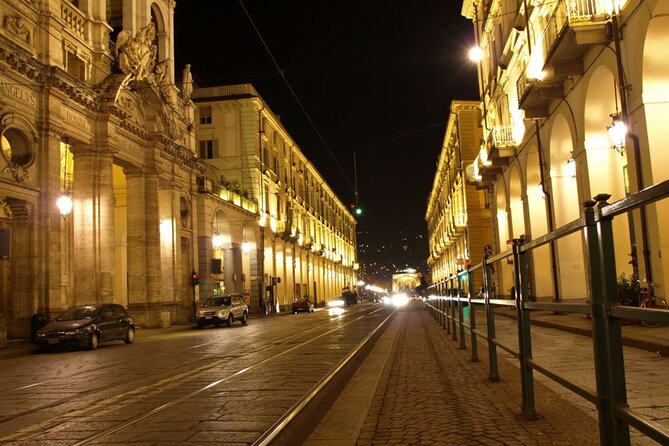
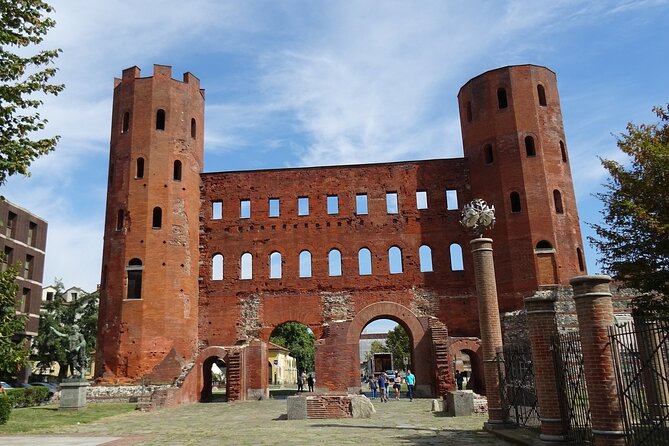
Palatine Gate is one of the strongest historical stops on the route. It is the main surviving sign of Turin’s Roman phase and one of the best-preserved Roman gateways dating from the first century BC. The nearby remains of the ancient theater form part of the Archaeological Park, opened in 2006.
This is where the game gains real historical weight. Turin is often associated with elegant arcades, Savoy palaces, and grand squares, but Palatine Gate takes you much further back. The Roman gateway gives the route a solid physical link to the city’s earliest known urban story.
The challenge asks you to find an answer at or around the site. That works well here because the gate has visible architectural details that reward a careful look. You do not need a museum guide to understand that this was once a major entrance, but the game adds a reason to inspect it closely.
The drawback is that a clue-based visit will not replace the Archaeological Park or a full archaeological explanation. Think of this as a lively introduction, not a detailed Roman history lesson.
More ghost tours in Italy
- Rome: Paranormal Night Walking Tour & Secret Backstreets
★ 4.9 · 1,921 reviews - Venice Ghost Stories, Legends and Anecdotes Tour
★ 4.0 · 846 reviews - Haunted Rome Ghost Tour – The Original
★ 4.5 · 668 reviews - Venice: Ghost Tour to Rialto and San Marco Square
★ 3.8 · 659 reviews
Palazzo Madama and the power of Piazza Castello
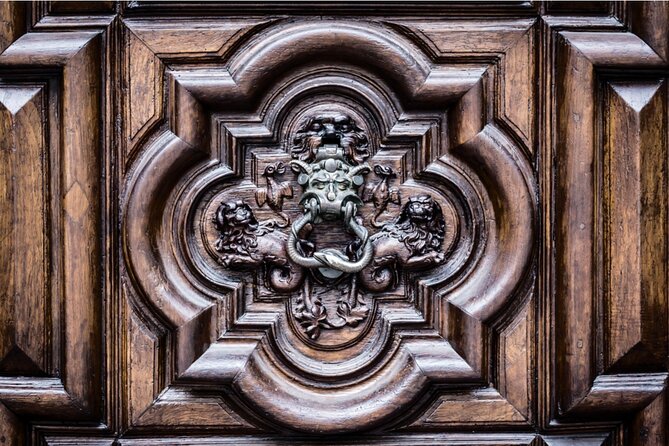
Next comes Palazzo Madama, a building with a long political and architectural life. It began in the 13th century and took its name from the widows of 17th-century dukes of Savoy. The building later housed the Sardinian Senate from 1848 to 1860 and the Italian Senate from 1861 to 1864. Today, it contains the Museum of Ancient Arts.
Palazzo Madama sits in Piazza Castello, Turin’s central square of museums, theaters, and cafés. The contrast is part of the pleasure of the route. A place that now feels open and civic once belonged to courts, senators, and changing governments.
You solve another observation task here before the app sends you onward. I like this part because the square gives you room to look up, compare façades, and take in the larger setting. You are not rushed by a group schedule.
Piazza Castello can also be the busiest part of the route. If you stop in the middle of the square to study your phone, step aside so you do not block foot traffic. The activity is private, but the city around you is not.
The unusual door of Palazzo Trucchi di Levaldigi
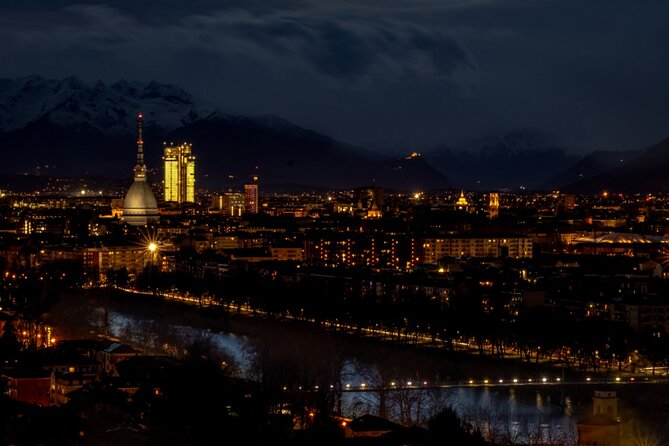
The route includes Palazzo Trucchi di Levaldigi, best known for its large wooden door. The door was commissioned in the 17th century by the Earl of Trucchi di Levaldigi.
This is exactly the sort of detail a standard sightseeing walk can miss. You may pass a doorway without knowing why it matters. Here, the clue directs your attention to a specific feature and turns an ordinary pause on the street into a small discovery.
Do not expect a long stop. The attraction is concentrated in one architectural detail, and the game’s task is designed to keep the route moving. I would treat this as a quick visual puzzle rather than a major sightseeing visit.
That pacing helps the activity fit into a short afternoon. It also means the route depends on your curiosity. The more time you spend looking at façades and street details, the more rewarding the game becomes.
Piazza San Carlo and the grand Baroque center
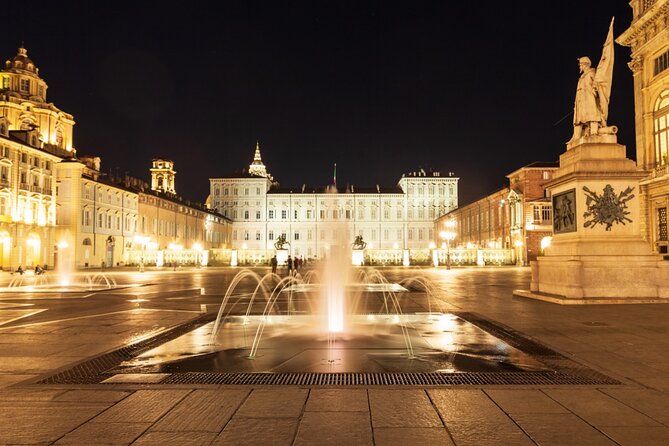
Piazza San Carlo offers one of Turin’s most polished city scenes. The square was laid out during the 16th and 17th centuries and is a notable example of Baroque design. Its name honors Charles Borromeo, though it was once called Piazza Reale, Piazza d’Armi, and Place Napoleon.
The square is a useful pause in the route because it gives you a strong sense of Turin’s planned center. Its history reflects changes in royal power, military use, and French influence. The game keeps the explanation concise, then asks you to find another answer in the square.
I like the way the activity connects the spooky theme with ordinary urban beauty. Turin’s darker stories do not sit apart from the elegant center. They are attached to the same squares, streets, churches, and monuments you would visit on any first trip.
Piazza San Carlo is also a sensible place to take a break. The activity lets you pause and resume later, so you do not need to solve every clue in one continuous push.
Via Po, the university, and historic café culture
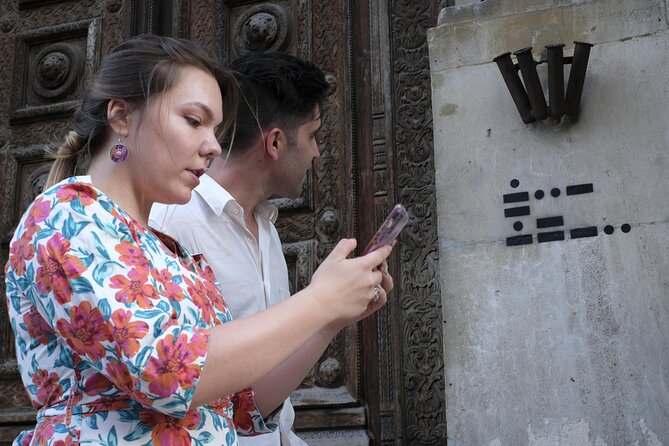
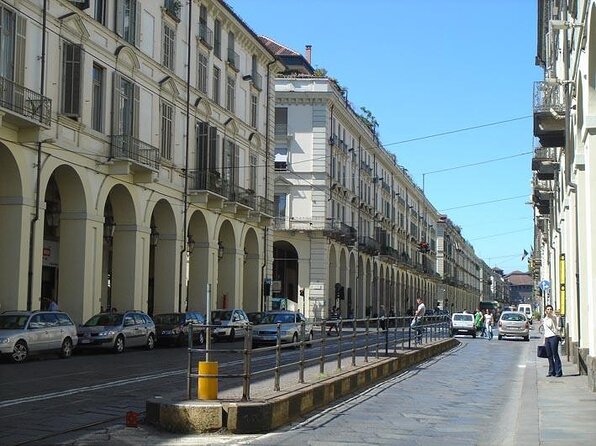
The route returns to Piazza Castello and takes in Via Po, one of the important arcaded streets leading from the square. The street was built by Amedeo di Castellamonte in 1868 and includes notable buildings such as the first University of Turin building and the historic Caffè Fiorio.
Turin’s arcades are practical as well as attractive. They give you shelter from sun and rain while you walk, and they create a clear connection between the major city spaces. On this part of the game, the architecture becomes the setting for another clue.
This section is less about one dramatic monument and more about how Turin works as a city. You see the relationship between square, street, university, and café. If you enjoy urban design, this may be one of the more satisfying stretches.
The app’s directions are especially useful here. Central Turin has a straightforward plan, but a phone-led route still saves you from guessing which street comes next. You can follow the instructions without joining a group or keeping up with someone else’s pace.
A Baroque church before the Po
Another stop is a church built between 1648 and 1656 to a design by Carlo Morello. It began as a single-nave church without exterior arcades. From 1683, the choir grew and two side chapels were added.
The interior later gained important works, including a main altar by Bernardo Vittone, an altar and balustrade for the Chapel of Our Lady of Sorrows by Francesco Martinez, and a wooden processional support associated with Beaumont, Giuseppe, and Stefano Maria Clemente.
The supplied details do not identify this church by name, so I would not book the activity expecting a specific famous church tour. What you can expect is another clue stop tied to Turin’s Baroque religious art.
This part may appeal most to people who enjoy finding lesser-known details in a city center. It is not a substitute for an art specialist. Still, the short historical notes give you a reason to notice the interior and the way the building changed over time.
Ponte Vittorio Emanuele I and the finish by the Po
The route ends at Ponte Vittorio Emanuele I, the oldest existing bridge in Turin. It crosses the Po and has long been an important gateway into the city. From the 15th through the 19th centuries, this crossing played a major role in movement into Turin.
Ending by the river gives the game a clear sense of completion. You begin with Piazza Statuto’s uneasy reputation and finish at a bridge tied to entry, departure, and the city’s wider connections.
The bridge is also described as one of Turin’s most beautiful and important crossings. After the concentrated streets and squares of the center, the river provides a change of scale. Your final task brings the route to a natural close rather than simply stopping at another palace door.
The advertised duration is about one hour and 30 minutes. Your actual time can vary because you control the pace, take breaks, and decide how much time to spend at each stop.
What the $8.11 price really buys you
At about $8.11 per person, this is inexpensive for a private activity in central Turin. The price covers the digital game, directions, clues, and the historical stories built into the route. It does not cover a physical guide, museum entry, food, or any special access to the churches and monuments.
That low cost makes sense for independent visitors who want structure without paying for a traditional private walk. It is also useful for couples, families, or small groups who like solving problems together.
The value is weaker if you want detailed historical commentary or the chance to ask questions. A human guide can explain why a building matters, adjust the pace, and point out details that the app does not include. Here, you receive a set route and game prompts, then make the experience your own.
Group discounts are available, which could make the price even more appealing for a larger party. The activity is private, so only your group takes part in the game.
Phone setup, timing, and the main risk
The activity is available every day of the year and can be started at any time within the listed hours, from midnight to 11:30 p.m. It is described as permanently available around the clock, with no fixed appointment and no physical meeting with a guide.
You receive confirmation at booking. The Questo app then guides you step by step from Piazza Statuto to Ponte Vittorio Emanuele I. You should follow its directions closely, since the route is designed around moving from one clue to the next.
Offline play is a useful feature. You do not need an internet connection while exploring, which helps if your mobile service is unreliable or you want to avoid using data. You still need a working phone and must be able to access and activate the game before beginning.
That activation step is the clearest practical warning. One person had trouble starting the game, contacted support through Viator chat, and was given an English phone number that did not answer. The support response later asked the customer to contact Questo directly at [email protected]. I would save that address before setting out and activate the game early enough to deal with a problem.
Free cancellation is available if you cancel at least 24 hours before the start time. Within 24 hours, the payment is not refunded, and late changes are not accepted.
Who should choose this Turin experience?
I would choose this game if you enjoy independent sightseeing, short puzzles, and city stories with a spooky edge. It suits people who want a route but dislike fixed departure times, large groups, or a guide speaking continuously for an hour and a half.
It also works well for families and friends who like to compare answers. Most people can participate, service animals are allowed, and the route is near public transportation.
I would be more cautious if you want a polished, fully narrated tour or if your phone is unreliable. The rating is 3.5 from eight ratings, and the only detailed experience provided describes a failure to activate the game. That does not prove the activity will fail, but it makes preparation important.
Should you book Ghosts of Turin?
Book it if the mix of Turin’s darker stories, independent walking, and phone-based puzzles sounds more appealing than a standard guided tour. For $8.11, you get a flexible route through major central sights and several unusual details, including Piazza Statuto’s grim past, the Palatine Gate, the Trucchi di Levaldigi door, and the Po River crossing.
Skip it if you want a live historian, rich explanations at every stop, or guaranteed hands-on support at the moment you arrive. If you do book, charge your phone, save the Questo support email, and activate the game before you begin. With those precautions, this is a good low-cost way to give a familiar Turin walk a darker, more playful shape.
FAQ
How long does Ghosts of Turin take?
The activity lasts approximately one hour and 30 minutes. You can take a break and resume later, so your total outing can be longer.
Where does the game begin?
It begins at Piazza Statuto in Turin.
Where does the game end?
It ends at Ponte Vittorio Emanuele I, the bridge over the Po River.
Do I need an internet connection while playing?
No. The experience is designed for offline play while you explore.
Is there a physical tour guide?
No. The Questo app provides directions, clues, and the game content.
Can I start at any time?
Yes. The activity is available every day and lets you start at any hour within the listed opening period of midnight to 11:30 p.m.
What is the cancellation policy?
You can receive a full refund if you cancel at least 24 hours before the start time. Cancellations or changes made within 24 hours are not refunded or accepted.
Just added in Italy
- Your evening in Venice – Legends&Ghosts&Aperitif★ 4.7 · 79 reviews
- Venice Ghost Tour: Haunted Palaces & Secret Canals★ 4.8 · 3 reviews
- Venice: Legends, Anecdotes and Ghost Stories Walking Tour★ 4.1 · 137 reviews
- Venice: Ghosts & Murders – Mysterious Tales of San Marco Area★ 4.5 · 80 reviews
- Venice Ghost & Legends Walking City Tour★ 3.5 · 83 reviews
- Venice: Ghosts and Legends Evening Private Walking Tour★ 4.5 · 6 reviews
- Venice Ghostly Legends Explore on Foot★ 5.0 · 2 reviews
- New – Maleficia: Inquisition, Torture and Witchcraft between the centuries★ 4.0 · 13 reviews
Self-Guided Ghost Hunts, compared.
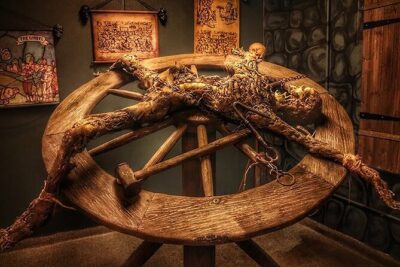
Medieval Torture Museum Ticket with Audio Guide and Ghost Hunting
Read our review →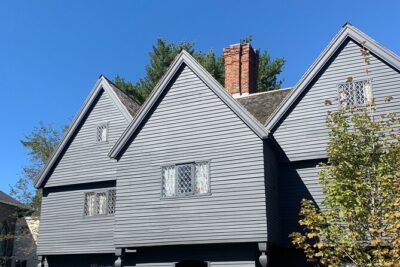
Self-Guided Smartphone Ghost Walking Tour in Salem
Read our review →
Glasgow Ghost Hunt: The Soul That Got Away Exploration Game
Read our review →
Ultimate Historic Salem and Witch Trials Self-Guided Walking Tour
Read our review →
Self Guided Haunted Walking Tour in Portsmouth APP/GPS/EMF Reader
Read our review →
Cologne Haunted Quest: The Witch Self-Guided Tour
Read our review →Browse the lists this tour appears in