Review · SALEM
Best Salem Witch Trials Historical Walking Tour
Salem’s witch-trial story is not confined to one museum. It unfolds across ordinary streets, restaurant buildings, office blocks, cemeteries, and vanished homes. This 90-minute walk connects those scattered places with the stories of people such as Bridget Bishop, Giles Corey, Betty Parris, Judge Jonathan Corwin, and Sheriff George Corwin.
I like two things right away: the tour gives you a clear downtown route of about one mile, and it puts names and personal stories to events that can otherwise feel like a jumble of dates. I also like the mix of surviving buildings and lost sites, since the guide explains what once stood where modern Salem now stands.
The main drawback is easy to understand but important to know: much of the 1692 setting is gone. You will often stand outside a modern building while hearing about an old jail, courtroom, or home. Some people find that fascinating; others expect a tour packed with preserved interiors and may feel the talk becomes repetitive.
Key points before you book
- The Witch House is the only surviving Salem building with direct ties to the 1692 trials.
- The tour lasts about 90 minutes and covers roughly one mile on foot.
- You hear personal stories about victims, accusers, judges, jailers, and officials.
- Several stops mark vanished sites, including the court and witchcraft jail.
- Guides can bring the past to life, with Bob receiving especially warm praise for his storytelling.
- October brings heavy traffic, crowds, and difficult parking, so arrive early.
What this Salem walking tour is really trying to do
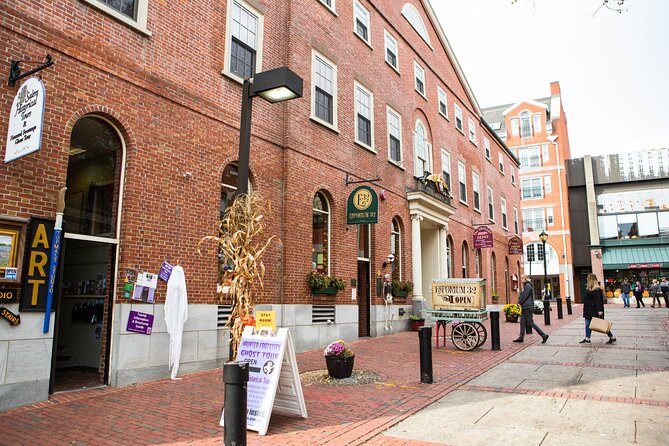
This is not a haunted-house attraction or a theatrical reenactment. It is a history walk through central Salem, built around locations connected to the witchcraft panic of 1692.
The guide discusses the social setting, the people involved, and the way fear turned neighbors against neighbors. You hear about accusations, arrests, property seizures, courtroom decisions, imprisonment, and executions. The strongest part of the experience is its human scale. Instead of treating the trials as a spooky Salem legend, the tour brings attention to the accused people and the damage done to their families.
The guide may use old images or pictures from books to show buildings that have disappeared. That helps, but you should still expect plenty of standing outdoors and listening. The advertised stops are possibilities rather than a guaranteed sequence. The guide chooses the order and may cover as many locations as time and group pace allow.
That flexibility matters. The tour has a maximum of 40 people, and the guide needs to keep the group together on narrow sidewalks and busy downtown streets. It also explains why one person may hear more detail about one location while another group moves more quickly.
More Ghost Walking Tours in Salem
- Salem Voodoo, Vampires, and Ghosts Guided Walking Tour
★ 5.0 · 1,931 reviews - Bewitched Walking Tour of Salem
★ 5.0 · 1,895 reviews - Requiem for Salem Walking Ghost Tour
★ 4.5 · 562 reviews
Starting at 8 Central Street
You meet at the Salem Historical Tours office at 8 Central Street. Look for a guide holding a recognizable sign, and arrive 15 minutes early. Tour times are 10 a.m., 1 p.m., and 4 p.m.
The starting point is practical because you begin in central Salem, close to many sights you may want to visit afterward. The tour returns to the downtown area, and the guide can point you toward your next destination.
There is no hotel pickup or drop-off. Parking is not included, and finding a space can be difficult. October is especially demanding, with Halloween crowds, street activity, and slow traffic. Give yourself more time than your navigation app suggests.
The Witch Trials Memorial and the victims of 1692
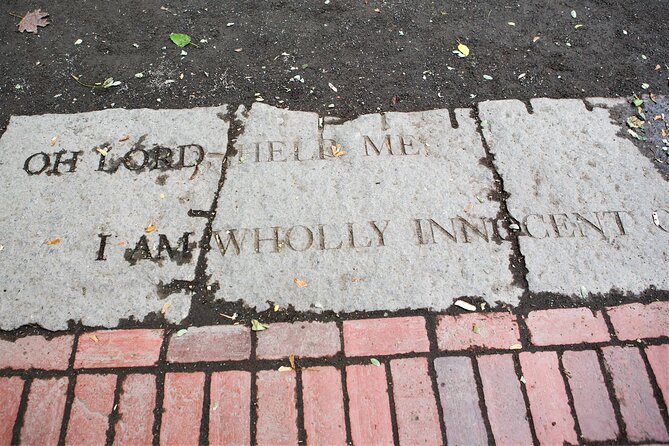
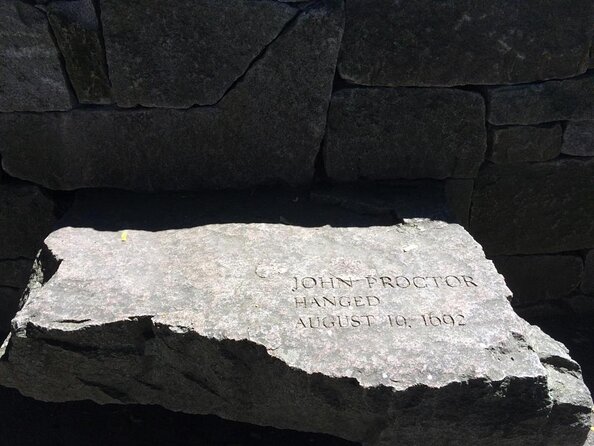
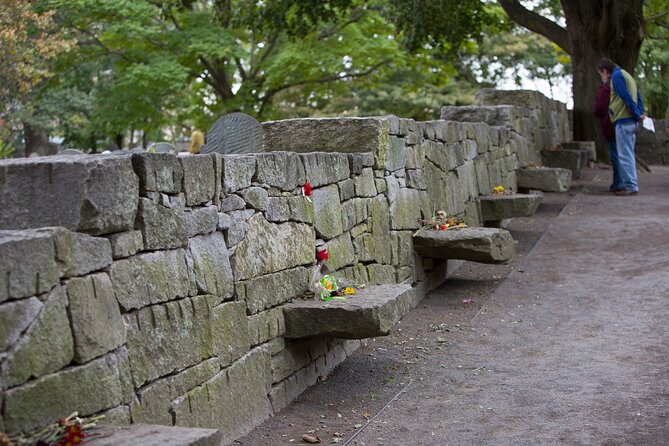
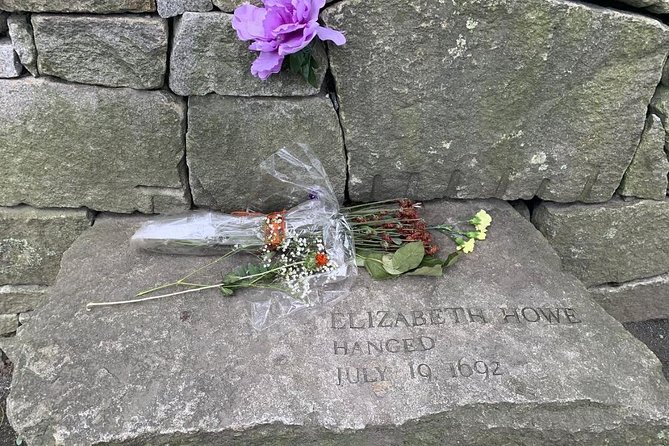
The Salem Witch Trials Memorial is one of the most affecting stops. Dedicated in 1992, it uses stone walls and bench-like openings to honor the 20 people who died during the trials.
Each bench names a victim and records how and when that person died. The design creates a quiet place for reflection, and the guide explains the memorial’s symbolism while sharing individual stories.
This is where the walk can shift from general background to personal history. You are not simply hearing that 20 people were killed. You are hearing names and circumstances. That makes the story harder to dismiss as an old superstition or a strange local legend.
One point to clarify before booking: the guide may explain the memorial without leading you through every part of it. If you want time to read all the names or walk through the site on your own, plan to return after the tour.
Rockafellas and the former First Church site
Rockafellas is now a restaurant in the Daniel Low and Company building, but the location once held the First Church of Salem and the city meeting house.
The stop is useful because it shows how the trials were tied to the center of civic and religious life. This was not an isolated event occurring far from town. Meetings, accusations, religious fears, and legal decisions were part of the community’s daily world.
You generally hear about the historical importance from outside. Admission to the restaurant is not included, and the tour does not turn into a meal stop. If you plan to eat here, make a separate reservation or visit later.
More Ghost Walking Tours in the USA
- Salem’s Spooky Spectres Walking Ghost Tour
★ 4.5 · 272 reviews - The Ghosts of Salem Walking Tour
★ 4.5 · 261 reviews - Self-Guided Smartphone Ghost Walking Tour in Salem
★ 4.5 · 225 reviews - New Orleans Premier Ghost, Voodoo and Vampire Walking Tour
★ 4.5 · 12,856 reviews
The Joshua Ward House and George Corwin
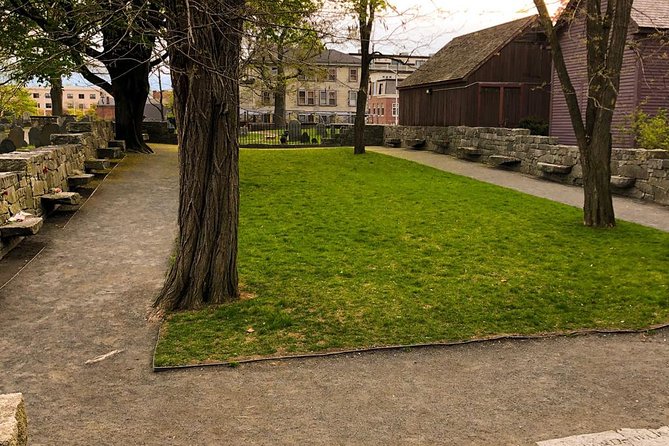
The Joshua Ward House is now the Merchant Hotel. The tour uses this location to discuss the home of George Corwin, the High Sheriff of Essex County in 1692.
Corwin signed arrest and execution warrants. He also took personal property from accused people, and the tour explains allegations that he tortured prisoners in his home. This is one of the walk’s darker sections, since it focuses on the machinery that turned accusations into arrests and punishment.
The building you see today is not the original house connected with those events. That distinction is important. You are visiting the location, not stepping into a preserved trial-era interior. For some people, that contrast between modern Salem and the historical account is the point. For others, it may feel less satisfying than seeing an original structure.
The Witch House and Judge Jonathan Corwin
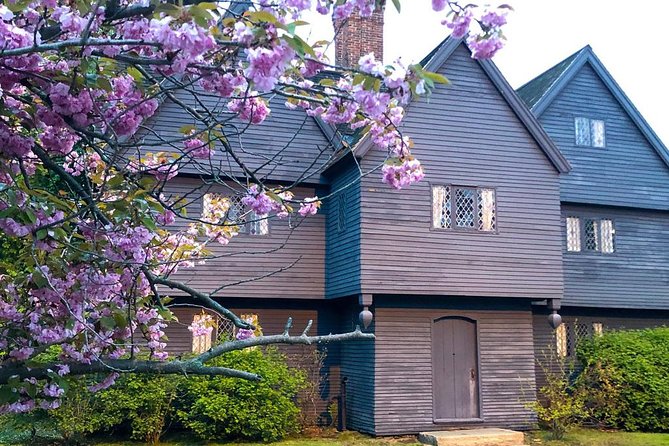
The Witch House is the tour’s clearest physical link to 1692. It is the only remaining Salem building with direct ties to the witch trials, and it dates to the 1660s.
The house belonged to Judge Jonathan Corwin, who met there with Judge Hathorne to discuss accusations and decide who might be considered a witch. The building gives the story a physical anchor. After hearing about vanished jails and demolished homes, you finally see a structure from the period itself.
The walking tour does not include admission to the Witch House. If you want to go inside, buy a separate ticket and allow extra time. Even if you only view it from outside, this is a useful stop for understanding how closely legal authority and private life were connected in colonial Salem.
Betty Parris and the beginning of the panic
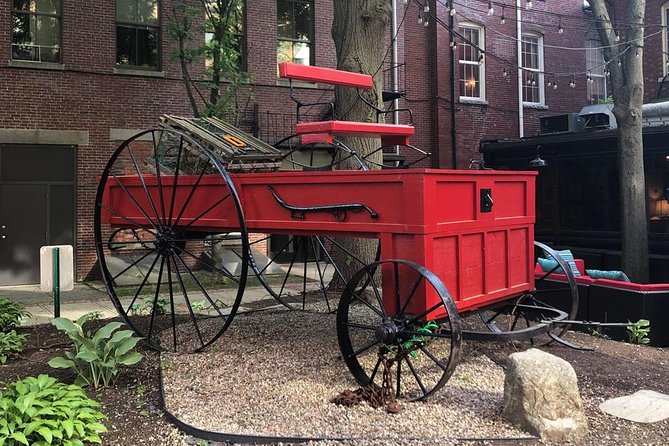
The Salem YMCA now occupies the Sewall Street area. The street name recalls Judge Stephen Sewall, who served on the Witchcraft Court.
The guide discusses Betty Parris, the nine-year-old daughter of Reverend Parris, who was moved to this area in July 1692. Her cousin also figures in the story of how the accusations began. The original house is gone, but the location helps connect the first reports of strange behavior with the larger crisis that followed.
This stop is valuable if you want more than a list of court cases. It focuses on how the panic gathered force through children, family networks, religious authority, and neighborhood suspicion.
Bridget Bishop at Lyceum Hall
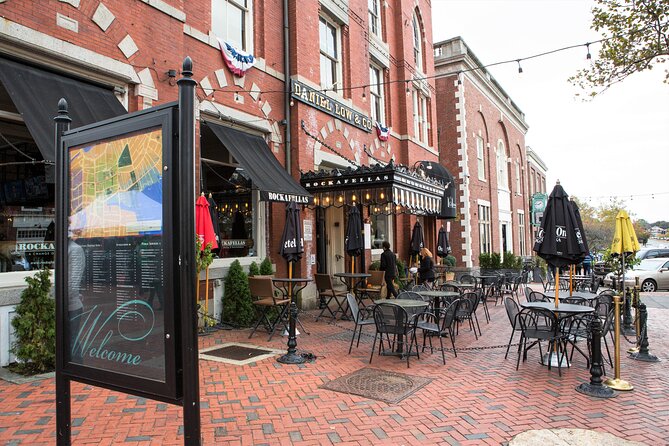
Turner’s Seafood operates in Lyceum Hall, on land once owned by Bridget Bishop and her husband Edward.
Bridget was the first woman executed during the 1692 trials. Her arrest, trial, and execution took only eight days, a grim example of how quickly the process could move once suspicion hardened into a formal charge.
The stop does not take you into the restaurant as part of the tour, and admission is not included. Still, the location makes Bishop’s story feel close to present-day Salem. You may later return for a meal, but the historical explanation comes first.
The Witch Dungeon Museum and the cost of imprisonment
The Witch Dungeon Museum is not directly connected to the original 1692 trials, but the tour uses it to explain the jail system and the conditions prisoners faced.
Accused people were held in cramped spaces described as being about the size of a phone booth or closet. They also had to pay for their own imprisonment. That detail tells you something about the period’s legal system: incarceration was not simply a government expense imposed on the authorities.
The guide may also point out the pillories, or stocks, which offer a photo opportunity. The museum itself is not included in the tour price. Consider this stop an explanation of the prison process rather than a visit to an authentic witch-trial jail.
From Samantha Stevens to the Witchcraft Court
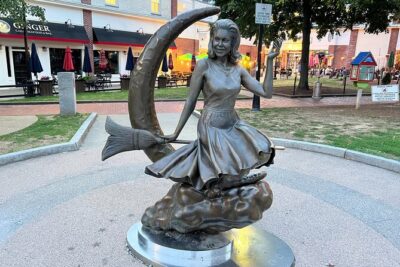
The Bewitched statue of Elizabeth Montgomery adds a lighter, stranger note. Montgomery played Samantha Stevens, the fictional witch in the television series Bewitched. Some episodes were filmed in Salem, and the guide explains the connection, along with the curious fact about whose land holds the statue.
It is an amusing pause in a serious walk, and it shows how Salem has built a modern identity around both actual history and popular culture. You can take a picture here, but the statue is not evidence of the 1692 events.
The Salem Masonic Building marks another important location. The Witchcraft Court, formally called the Court of Oyer and Terminer, met in the middle of Washington Street in front of the present building. Most of the trials took place there, with additional proceedings in January 1693.
The guide explains some of the court’s worst decisions. In one case, a jury found an accused person innocent, but the judges rejected that decision. This helps show how little protection an accused person could expect once the court accepted the premise that witchcraft was present.
The former jail on St. Peter Street
At 50 St. Peter Street, the tour marks the former witchcraft jail. The jail itself is gone, but the location provides a way to discuss the people held there, including Giles Corey.
Corey is remembered for being crushed during interrogation after refusing to enter a plea. Some prisoners died in jail, adding another layer of suffering beyond the formal executions.
Again, the value is in the explanation rather than the building. If you want a tour that takes you inside an original jail, this will not meet that expectation. If you want to understand where the jail stood and hear how prisoners were treated, the stop adds useful context.
What the guides do well, and where the tour can vary
The quality of this experience depends heavily on the guide. Strong guides use names, dates, old images, and clear storytelling to put the events into order. Bob is singled out for turning the people of the 1600s into vivid characters while still keeping the story grounded. Other guides have been praised for answering questions, maintaining a fair pace, and making sure the group can keep up.
The weaker version of the experience can feel like a string of anecdotes without enough chronology. If you want a clear beginning, middle, and end, ask early for the larger timeline: how the accusations began, how the court gained power, and how the trials ended.
You should also ask questions when a place interests you. The company encourages questions, and this is the best way to steer attention toward the memorial, court site, jail, or another stop you want to understand better.
Is $30 a fair price?
At $30 per person, the tour is reasonably priced for a 90-minute guided walk, especially if you arrive with little knowledge of the Salem Witch Trials. You are paying for local interpretation, the route between sites, and the guide’s ability to connect modern addresses with vanished buildings.
The value drops if you already know the story well or want to enter several historic buildings. Admission fees, food, parking, and restrooms are not included. You may spend more after the walk if you visit the Witch House, Witch Dungeon Museum, or other paid attractions.
I see the tour as a useful orientation rather than a complete day of Salem history. It gives you a framework, then lets you choose which places deserve more time.
Walking conditions and who will enjoy it
The walk covers about one mile, but you will spend much of the 90 minutes standing and listening. Salem has narrow and uneven sidewalks, brick surfaces, cobblestones, and stairs. October crowds and vendors can make movement harder.
Most people can participate, and service animals are allowed. Children must have an adult with them. If you have mobility concerns, remember that the route can be difficult even though the distance is modest.
I would recommend this tour to first-time Salem visitors, families with older children, history fans, and anyone who wants the witch trials explained through real people and places. It is less suited to you if you need constant visual access to preserved buildings, dislike outdoor talks, or expect a theatrical ghost tour.
Should you book the Salem Witch Trials walking tour?
Book it if you want a compact introduction to Salem’s 1692 crisis and can accept that many important sites no longer survive. The best moments come from the personal stories, the Witch House, the memorial, and the explanation of how ordinary downtown locations connect to the court, jail, and accusations.
Skip it if your main goal is a museum-style visit with interiors at every stop. You can follow Salem’s yellow trail for free, but a good guide adds names, context, and details that a sign cannot provide.
Arrive early, wear shoes suited to uneven streets, and treat the walk as a starting point for the rest of your day. With a strong guide, especially someone with Bob’s storytelling skill, $30 buys a useful human guide to a difficult chapter of Salem’s past.
FAQ
How long is the Salem Witch Trials walking tour?
The tour lasts approximately 90 minutes and covers about one mile on foot.
Where does the tour begin?
It begins at the Salem Historical Tours office at 8 Central Street, Salem, Massachusetts.
Where does the tour end?
The walk returns to the downtown area. The guide can direct you toward your preferred next destination.
What time does the tour depart?
Tours depart at 10 a.m., 1 p.m., and 4 p.m. You should arrive 15 minutes before departure.
Is admission to the Witch House included?
No. Admission to the Witch House is not included in the $30 tour price.
Does the tour include hotel pickup or parking?
No. Hotel pickup, hotel drop-off, and parking are not included.
Are restrooms available during the tour?
No public restrooms are provided as part of the experience.
Can children participate?
Yes, but children must be accompanied by an adult.
What happens if it rains?
The tour operates in all weather conditions. Dress appropriately for the forecast and expect to walk and stand outdoors.
More Witch Tours in the USA
- Salem Ghost Tours: Witches & Wicked Whispers
★ 4.2 · 436 reviews - Salem Witch Museum Admission Ticket
★ 3.9 · 417 reviews - Salem: 1692 Witchcraft Trials Walk
★ 4.2 · 271 reviews - Williamsburg Ghosts, Witches and Pirates Tour
★ 4.5 · 584 reviews
More Witch Tours in Salem
- The Salem Witch Walk
★ 4.5 · 1,301 reviews - Wicked Awesome Tours: Witch Trial History and Salem Haunts!
★ 5.0 · 1,032 reviews - Salem Ghost Tour: Witches & Wicked Whispers
★ 4.5 · 571 reviews - Salem Uncovered: The Salem Witch Trials Tour
★ 4.5 · 471 reviews
Just added in Salem
- Self-Guided Smartphone Ghost Walking Tour in Salem★ 4.5 · 225 reviews
- The Ghosts of Salem Walking Tour★ 4.5 · 261 reviews
- Salem’s Spooky Spectres Walking Ghost Tour★ 4.5 · 272 reviews
- Salem: 1692 Witchcraft Trials Walk★ 4.2 · 271 reviews
- Salem Uncovered: Dark Stories of Salem Tour★ 4.5 · 307 reviews
- Black Cat Ghostly Night Tour in Salem★ 5.0 · 344 reviews
- Salem Booze and Brews Haunted Pub Crawl by US Ghost Adventures★ 4.5 · 413 reviews
- Salem Ghost Tours: Witches & Wicked Whispers★ 4.2 · 436 reviews
Witch Trial & Witchcraft Tours, compared.

Wicked Awesome Tours: Witch Trial History and Salem Haunts!
Read our review →