
Review · BARCELONA
Barcelona El Raval Dark History Walking Tour
Barcelona’s El Raval is not the polished postcard city of Gaudí facades and beach promenades. It is a neighborhood of old hospitals, narrow streets, social struggle, late-night clubs, churches, crime stories, and striking street art. This two-hour walk uses that rougher past to show you a side of Barcelona most first-time visitors miss.
I like two things right away. The route has a clear story, moving from hidden charitable institutions and notorious crimes to medicine, religion, nightlife, industry, and public art. I also like the small group limit of 15, which matters when a guide is telling detailed stories on busy city streets. The main consideration is tone: this is a dark-history tour, so some subjects may be grim rather than easygoing.
Key points to know before booking
- Six stops in about two hours: Each listed stop receives roughly 20 minutes, giving the walk a steady pace without turning into a quick photo stop.
- A different Barcelona: You see El Raval, Sant Pau del Camp, Avenida del Paralelo, and Tres Xemeneies rather than sticking to the city’s best-known sights.
- Crime and social history together: The stories include the Vampire of the Raval, the foundling wheel, hospital autopsies, and Barcelona’s old nightlife districts.
- Small-group format: No more than 15 people take part, a useful size for questions and clear storytelling.
- Strong guide element: Guides named in the experience include Eoghan, Zeynep, Callum, Cal, and Andres. Eoghan is especially noted for humor, passion, and practical suggestions for food and further sightseeing.
- Easy booking terms: The cost is $33.42 per person, with free cancellation up to 24 hours before the start time.
Why El Raval makes a good dark-history walk
El Raval can feel like several neighborhoods packed into one. Its streets hold religious buildings, former medical institutions, workers’ districts, nightlife venues, immigrant history, and present-day art. That mix gives the tour more substance than a simple parade of spooky tales.
The dark material is not limited to ghosts. You hear about poverty, unwanted infants, criminal violence, autopsies, social rights, and the less respectable side of urban life. That broader frame is important. It helps you see how Barcelona changed, rather than treating the past as a collection of sensational stories.
The walk also appears to keep its mood approachable. Guides such as Eoghan, Cal, Callum, Zeynep, and Andres are described as friendly, clear, patient, and good at keeping a group involved. Eoghan, in particular, is praised for his sense of humor and his love for Barcelona. That balance can make difficult material easier to absorb.
You should still expect a few uncomfortable subjects. The tour’s title is not just a marketing flourish. The itinerary includes a notorious criminal, a foundling wheel, and a former hospital associated with autopsies. If you prefer architecture, food, or light historical anecdotes, another walking tour may suit you better.
More Dark History Tours in Spain
- Barcelona: Dark History Night Walking Tour
★ 4.8 · 344 reviews - Barcelona’s Dark History Night Tour
★ 5.0 · 181 reviews - Barcelona Dark History Night Walking Tour With Drinks
★ 5.0 · 153 reviews
Starting near Sant Pere Nolasc Mercedaris
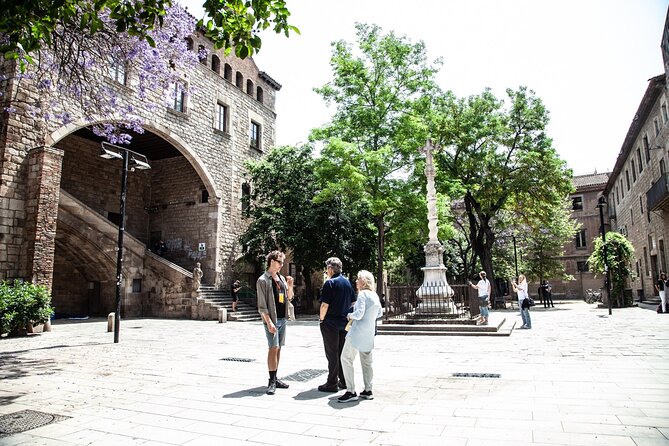
The meeting point is Parròquia de Sant Pere Nolasc Mercedaris at Plaça de Castella, 6, in Ciutat Vella. This gives the tour an immediate connection to Barcelona’s religious and urban past, rather than beginning at a major attraction designed for sightseeing crowds.
From there, the route heads toward the Fundació Privada Casa de Misericòrdia de Barcelona. The walk is conducted with a mobile ticket, and confirmation is received at booking. The tour is near public transportation, which makes the start practical if you are staying elsewhere in central Barcelona.
Give yourself enough time to locate the church and guide. The supplied information does not state a meeting buffer, so you should check the booking details for the exact start time and arrive early. A two-hour walk is short enough to fit into a busy day, but late arrival could mean missing the opening explanation.
The foundling wheel at Casa de Misericòrdia
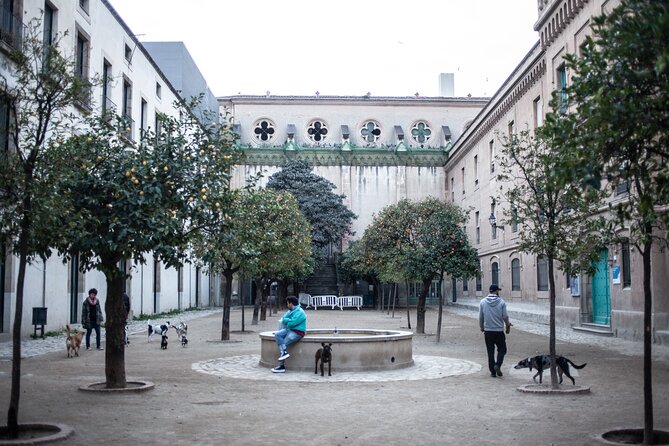
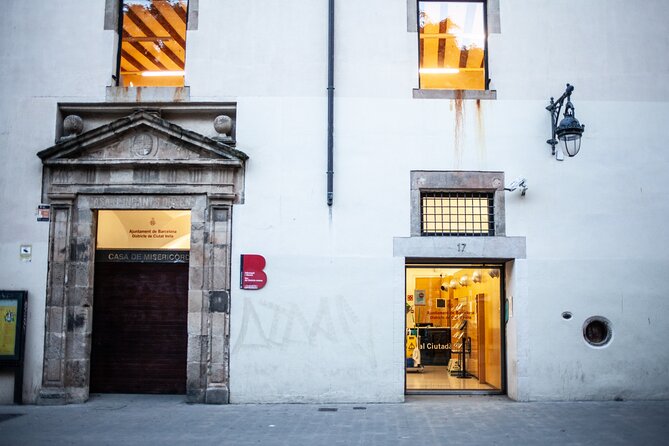
The first stop focuses on Barcelona’s old foundling wheel for unwanted infants. It is described as being hidden in plain sight, which sets the tone for the entire experience: important pieces of the city’s past are present, but easy to walk past without knowing what you are seeing.
This stop adds a social-history layer from the beginning. Rather than treating El Raval only as a district of crime and nightlife, the guide introduces questions about poverty, family life, charity, and the difficult choices facing people in earlier Barcelona.
You will not pay an entry fee at this stop. The point is the explanation and the place itself, not an indoor attraction. I would expect the guide to spend about 20 minutes here, enough time to explain the foundling wheel and place it in the story of the neighborhood.
Carrer de Joaquín Costa and the Vampire of the Raval
Next comes Carrer de Joaquín Costa, once associated with the figure known as the Vampire of the Raval. The tour presents this person as Barcelona’s own Jack the Ripper, so this is likely one of the more sensational sections of the walk.
The value here is not simply hearing about a villain. The street setting connects the story to the modern neighborhood, allowing you to see how a regular-looking city block can carry a disturbing past. It is a strong example of the tour’s approach: history appears in ordinary places rather than behind museum glass.
If crime stories make you uneasy, this is a useful point to consider before booking. The experience is designed to tell unsettling stories, and this stop is clearly central to that promise. If you enjoy true-crime history presented in a walking format, it will likely be one of the most memorable sections.
More Ghost Walking Tours in Spain
- Barcelona: Gothic Quarter Ghosts and Legends Walking Tour
★ 4.7 · 1,443 reviews - Seville: Paranormal and Legends Guided Walking Tour
★ 4.7 · 336 reviews - Seville Paranormal Small-Group Walking Tour
★ 5.0 · 133 reviews
Medicine, autopsies, and the former Hospital de la Santa Creu
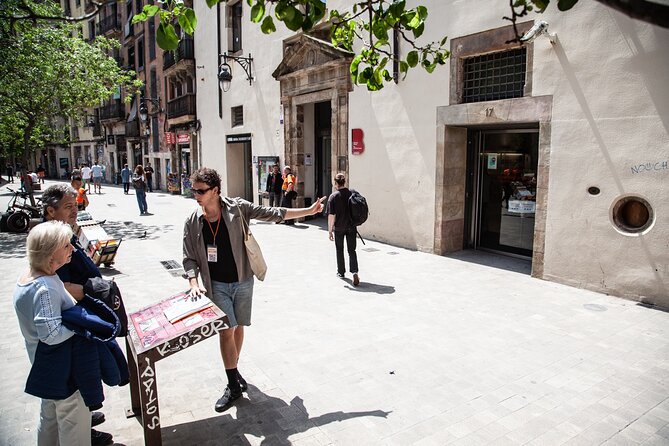
The third stop is the Real Academia de Medicina de Cataluña, part of the former Hospital de la Santa Creu. The site is linked with autopsies, giving the tour a medical and scientific angle.
This stop helps prevent the route from becoming a string of criminal legends. Hospitals reveal how the city dealt with illness, death, medical study, and public welfare. The former hospital also shows how institutions shaped El Raval for centuries.
The listing does not include admission to an interior visit, and all six stops are marked as free. You should therefore expect to see and discuss the location from the walking route, not take part in a separate museum tour. The guide’s explanation is the main attraction.
The sequence works well. After hearing about crime on Carrer de Joaquín Costa, you move into a place connected with the formal study of death. It is grim, but it gives the tour a wider view of how Barcelona understood the body and public health.
Sant Pau del Camp, Barcelona’s oldest church
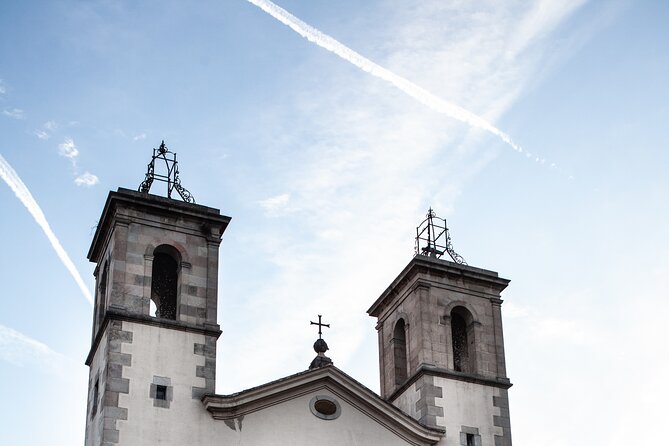
Sant Pau del Camp is one of the route’s most important architectural stops. It is presented as Barcelona’s oldest church and was once a monastery with a violent history.
Here, the tour shifts from street crime to religion, architecture, and conflict. That change of subject gives the two-hour walk some needed variety. You are not hearing one long story about criminals. You are following the layers of a neighborhood that has changed hands, roles, and reputation over time.
The church is also a useful reminder that El Raval is not only gritty or modern. Its religious buildings reach back much farther than the bars, clubs, and street art associated with the district today. The contrast between an old church and the surrounding city streets is part of what makes this route worthwhile.
As with the other stops, the information provided does not promise an interior tour or an admission ticket. The visit is best understood as a guided exterior stop with historical context. If entering churches is important to you, check the conditions on the day rather than assuming access is included.
Avenida del Paralelo and the old Chinese district
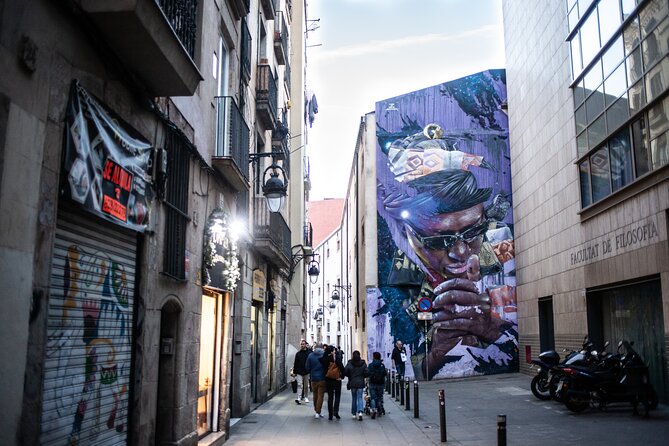
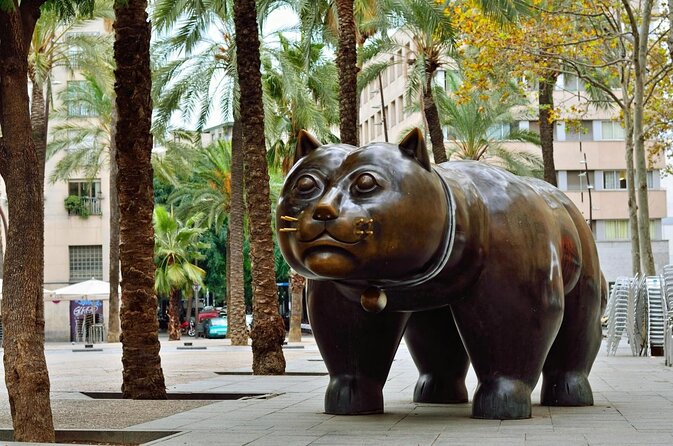
The route continues to Avenida del Paralelo, described as the Chinese district and a hub of Barcelona’s seedier 20th-century nightlife. This brings in entertainment, migration, clubs, and the city’s after-dark culture.
That subject is valuable because nightlife often changes a neighborhood’s identity as much as politics or religion. The guide connects the avenue with a less polished chapter of Barcelona, showing how the city’s public face differed from the one presented in formal tourist brochures.
The phrase Chinese district is part of the tour’s historical framing. The experience information does not provide more detail about the district’s communities or exact boundaries, so you should treat the guide’s explanation as the main source of context at this stop.
For many people, this will be one of the more atmospheric parts of the route. You are moving from old institutions into a section shaped by theaters, clubs, and late-night activity. It also helps explain why El Raval has long attracted artists, outsiders, and people looking for a less conventional side of the city.
Tres Xemeneies and Barcelona’s industrial past
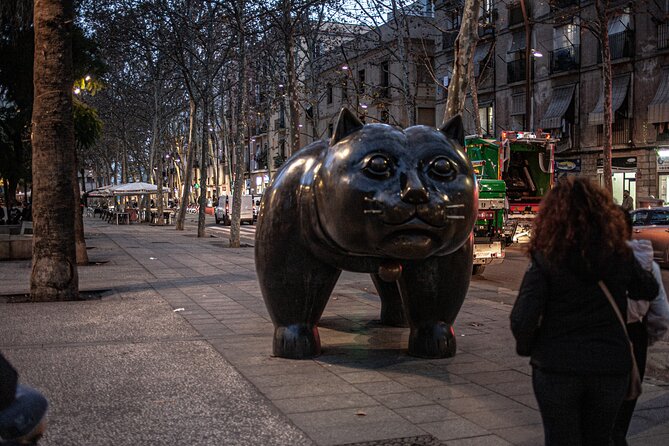
The walk ends at Jardins de les Tres Xemeneies, or the Gardens of the Three Chimneys, on Avenida del Paral·lel, 49. The area was once a center of industrial Barcelona and is now known for graffiti art.
This is a smart finishing point. The tour begins with hidden institutions and dark stories, then ends in a public space where the city’s industrial past has been reworked through art. The final stop gives you something visual and lively after the heavier material earlier in the route.
The gardens are also useful for anyone interested in Barcelona’s street-art culture. The information describes them as a top place for graffiti art lovers, so you should allow a little attention for the walls and public art rather than treating the ending as a simple drop-off point.
The tour ends at Plaça de Les Tres Xemeneies. That is practical if you want to continue exploring the Paralelo area, but the experience does not include lunch, refreshments, or onward transportation. Plan your next stop before you arrive if you have a tight schedule.
How the two-hour format affects the experience
The route lists six stops, each with about 20 minutes of discussion. That accounts for the full two-hour duration, though time spent walking between locations is also part of the experience. The result should feel focused rather than sprawling.
I like this format for a first introduction to El Raval. You get enough time at each place to understand why it matters, but you do not spend half a day on one neighborhood. The tradeoff is that some subjects may receive only a basic introduction. If you want detailed architectural study, church interiors, or a full account of Barcelona’s medical history, you will need additional reading or a separate visit.
Wear comfortable shoes and expect to remain on foot for the duration. The tour is designed for most people to participate, and service animals are allowed. Still, the supplied information does not promise step-free access at every stop, so anyone with specific mobility needs should confirm details before booking.
Guide style and the value of a small group
The guide can shape this experience more than any single building. Eoghan is repeatedly singled out for his storytelling, humor, warmth, and love of Barcelona. Zeynep and Zaynab are named in connection with clear explanations and useful sightseeing. Callum is described as attentive to the whole group, while Cal is noted for helping people feel safe and welcome in an area that guidebooks can make sound intimidating. Andres is associated with thoughtful local history.
Guide assignments can change, so you should not book on the assumption that one particular person will lead your departure. Still, the range of names and comments points to a tour built around personal storytelling rather than a rehearsed audio script.
The limit of 15 people is a real benefit. A guide can keep introductions personal, answer questions, and make sure people at the back can hear. Small groups also make it easier to pause at a narrow street or busy square without blocking the whole route.
The experience has a 4.9 rating from 70 reviews and a 99 percent recommendation figure. Those numbers suggest strong satisfaction, especially with the guides, but they do not remove the need to match the subject matter to your interests.
Is $33.42 a fair price?
At $33.42 per person, the price is reasonable if you value local explanation and access to places you would probably pass without context. You are paying for about two hours with an experienced local guide, not for entry to major attractions or a meal.
The route has no listed admission charges, so the value rests almost entirely on the guide’s research, storytelling, and ability to connect six very different stops. That is common for neighborhood walking tours. If the guide is good, an ordinary street corner can become the most memorable part of your afternoon. If you prefer ticketed monuments and formal exhibits, the price may feel less satisfying.
The tour is usually booked 21 days in advance on average. That is a useful sign to reserve ahead during a busy Barcelona visit, especially if you want a particular date. Free cancellation applies up to 24 hours before the start time. Cancellations or changes inside that window are not accepted for a refund, and the tour requires a minimum number of people. If the minimum is not reached, you are offered another date or experience, or a full refund.
Who should book this El Raval walk?
I would choose this tour if you want to understand Barcelona beyond the major sights. It suits you especially well if you enjoy urban history, crime stories, old churches, social issues, nightlife history, and street art in one compact route.
It also works well near the beginning of a Barcelona visit. Guides can offer suggestions for places to eat and other things to do, and the route helps you get your bearings in an area you might otherwise skip. You will leave with a better sense of how El Raval fits into the city.
You may want something else if you want a gentle, family-centered introduction, a Gaudí-focused route, or a tour built around interiors and admission tickets. The dark subjects are part of the experience, not a minor side note.
Should you book it?
Book this walk if you want Barcelona’s less polished story, told on the streets where it happened. The combination of the foundling wheel, the Vampire of the Raval, the former hospital, Sant Pau del Camp, old nightlife districts, and Tres Xemeneies gives the route a strong arc.
For $33.42, the best value comes from the guide. Eoghan, Zeynep, Callum, Cal, and Andres are among the guides associated with the experience, and the descriptions of their style point to clear storytelling, humor, patience, and useful local advice. Just bring comfortable shoes and an appetite for unsettling history.
FAQ
How long does the Barcelona El Raval Dark History Walking Tour last?
The tour lasts approximately two hours. It includes six main stops, with about 20 minutes listed for each one.
How many people can join the tour?
The maximum group size is 15 people. This keeps the walk smaller than a large city sightseeing group.
Where does the tour start and end?
The tour starts at Parròquia de Sant Pere Nolasc Mercedaris, Plaça de Castella, 6, in Ciutat Vella. It ends at Plaça de Les Tres Xemeneies, at the Gardens of the Three Chimneys on Avenida del Paral·lel.
What is included in the price?
The price includes an experienced local guide and a mobile ticket. Lunch is not included.
Is the tour suitable for most people?
The experience information states that most people can participate. Service animals are allowed, and the route is near public transportation. Specific access details for every location are not provided.
Can I cancel for a full refund?
Yes. You can cancel up to 24 hours before the experience start time for a full refund. Cancellations or changes made less than 24 hours before the start time are not accepted for a refund.
More history tours in Spain
- Seville Evening Historical Tour with Haunted History
★ 5.0 · 626 reviews - Savannah History and Haunts Candlelit Ghost Walking Tour
★ 5.0 · 3,235 reviews - Stockholm: Ghost Walk and Historical Tour
★ 4.7 · 2,685 reviews - New Orleans Small-Group Haunted History Carriage Tour
★ 4.5 · 2,289 reviews
Just added in Spain
- Inquisition, The Executioner, Witches, Expulsion Jews and Muslims★ 5.0 · 85 reviews
- Gran Canaria: Green Witchcraft in the Magic Island★ 4.9 · 26 reviews
- Seville: City of Queens, Nuns, Sex Work & Witches★ 4.3 · 27 reviews
- Tour of the Inquisition and Witchcraft in Toledo★ 3.3 · 13 reviews
- Paranormal Seville Tour in Spanish★ 4.5 · 33 reviews
- Seville Paranormal Small-Group Walking Tour★ 5.0 · 133 reviews
- Barcelona Dark History Night Walking Tour With Drinks★ 5.0 · 153 reviews
- Barcelona’s Dark History Night Tour★ 5.0 · 181 reviews
Dark History & True Crime Tours, compared.
Adults-Only New Orleans Ghost, Crime, Voodoo, and Vampire Tour
Read our review →
Dark Secrets of the Old Town Ghost Walking Tour
Read our review →
New Orleans Adults-Only True Crime and Ghost Walking Tour
Read our review →
Genteel and Bard’s Savannah Dark History and Ghost Encounter Walking Tour
Read our review →
Buda Castle District Dark History, Legends and Vampire Night Tour
Read our review →

Edinburgh Ghost Tour: Mysteries, Legends and Murders
Read our review →Browse the lists this tour appears in