
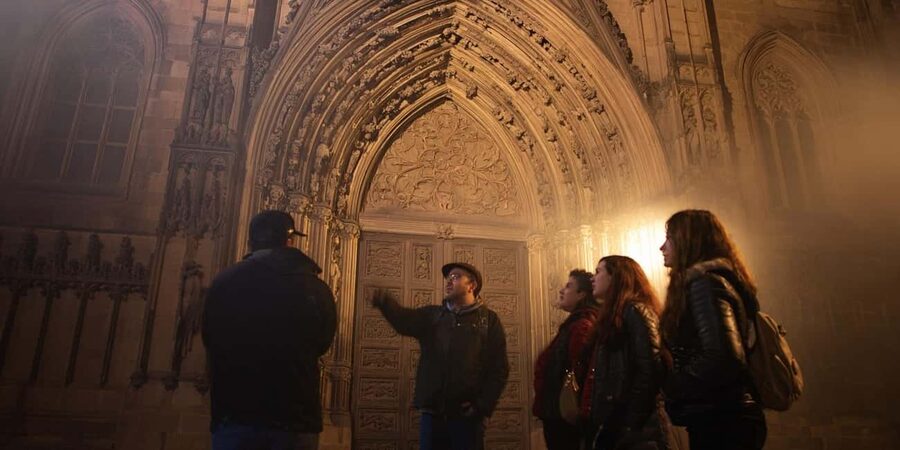
Review · CATALONIA
Barcelona: Ghosts of a Dark Past Walking Tour
Barcelona’s darkest stories are not ghost tales. They are the documented accounts of torture, public punishment, political violence, and ordinary people caught in systems they could not control. This two-hour walk through the Gothic Quarter connects medieval fear with the later brutality of dictatorship, giving you a more serious look at the city than a standard sightseeing tour.
I like the focus on real events rather than invented scares, and I like the way the tour reaches beyond the usual medieval material. You hear about the Spanish Inquisition and witch trials, but also about anticlerical violence, assassinations, and Franco’s regime. The story of Henriqueta Martí, known as the Vampire of Barcelona, adds a grim true-crime chapter.
The main drawback is the subject matter. Torture, executions, child victims, political repression, and religious violence are not light evening entertainment. You also need comfortable shoes for uneven streets, and the extra €1 for the guide headset is payable at the start.
Key Points to Know Before You Go
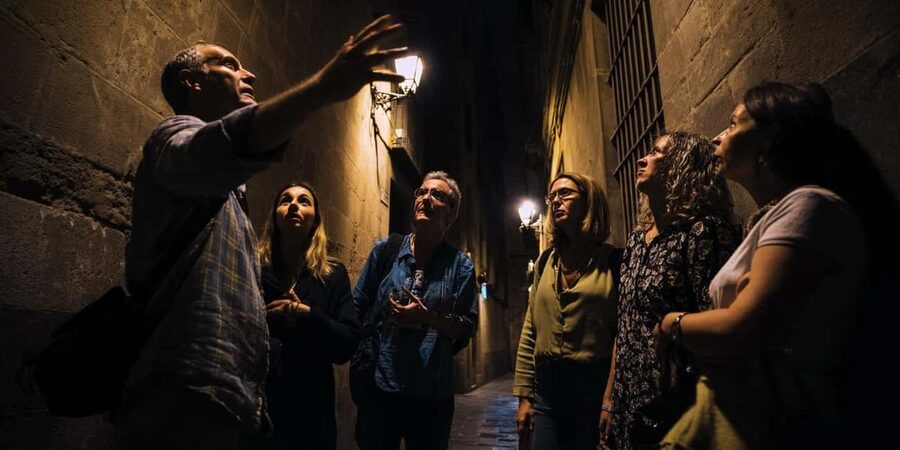
- Henriqueta Martí’s case: Hear the true-crime story of Barcelona’s infamous Vampire of Barcelona.
- A history tour with a darker focus: The route covers the Inquisition, witchcraft trials, church burnings, assassinations, and Franco’s dictatorship.
- Gothic Quarter after dark: Explore narrow streets and lesser-known corners connected with punishment, fear, and political conflict.
- Serious storytelling: The tour avoids ghost theatrics and uses documented history as its source of drama.
- Small practical cost: The €21 price does not include the €1 guide-radio headset.
- Best for mature history fans: The tour is not suitable for children under 12 and may be difficult for people with mobility or heart concerns.
Why Barcelona’s Real Horrors Make a Better Ghost Tour
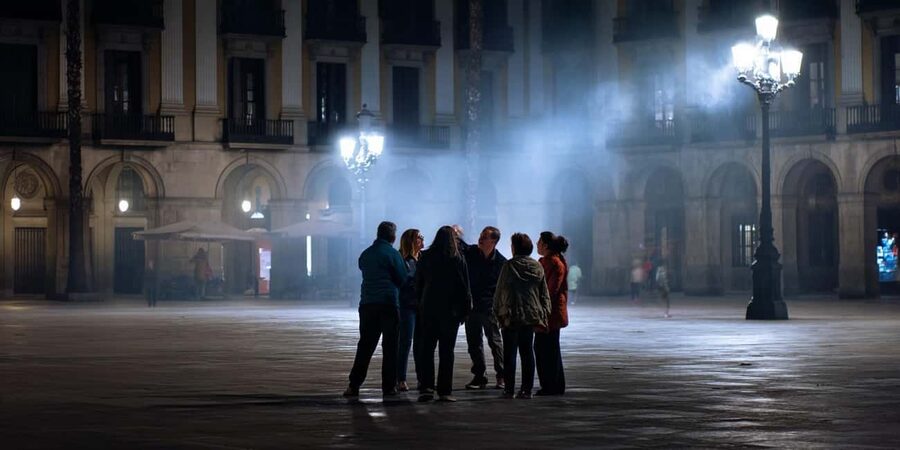
Barcelona is an easy city to admire from the outside. You see Gaudí, sunny squares, tiled façades, and busy markets. This walk asks you to look at what those streets have also carried: religious fear, public punishment, political struggle, and silence imposed by force.
That change in focus is the tour’s main strength. You are not asked to believe in spirits or follow a costumed storyteller through a string of legends. Instead, your guide uses historical events to show how fear worked in real life. A tribunal, a rumor about witchcraft, a burning church, or a political killing could shape an entire neighborhood.
I find this approach more useful than a standard ghost walk because it gives Barcelona’s dark stories a cause and a context. You learn not only what happened, but also how superstition, religion, class, and government power helped make it possible.
The tone is still intended to be engaging. The guide brings the material to life with vivid anecdotes and explanations, but the experience is not presented as a haunted attraction. If you want jump scares or theatrical effects, this is the wrong choice. If you want history that happens to be disturbing, it is a strong fit.
More Ghost Walking Tours in Spain
- Barcelona: Gothic Quarter Ghosts and Legends Walking Tour
★ 4.7 · 1,443 reviews - Barcelona: Dark History Night Walking Tour
★ 4.8 · 344 reviews - Barcelona Dark History Night Walking Tour With Drinks
★ 5.0 · 153 reviews
Meeting the Guide at Plaça de Catalunya
The tour begins on the sidewalk in front of the Foot Locker on Plaça de Catalunya. Look for a guide holding a white umbrella, which gives you a clear visual marker in one of Barcelona’s busiest central areas.
This meeting point is practical, but Plaça de Catalunya can be crowded and noisy, particularly in the evening. Give yourself enough time to find the correct side of the square rather than arriving at the last minute. The starting point also makes the tour easy to combine with an evening meal or another central Barcelona activity.
The guide speaks English. Onno is one of the guides associated with the tour, and the feedback about his delivery highlights a friendly manner, clear speech, and strong command of the material. That matters here. The route passes through narrow streets where it can be hard to keep up, and the stories require more than a few memorized dates.
A guide-radio headset costs €1 per person and is paid at the start. It may seem like a small extra, but it serves a useful purpose on a walking tour through the Gothic Quarter. You can hear the explanation while moving between stops instead of crowding close to the guide.
Entering the Gothic Quarter’s Punishment Grounds
The first major part of the walk takes you into the Gothic Quarter, where the medieval street plan creates the right setting for stories about public fear and punishment. The narrow lanes and uneven surfaces are not decoration added for the tour. They are part of the old city fabric you are walking through.
The route explores corners linked with public executions, burnings, and other punishments. The exact stops can vary with the guide and the conditions, so you should think of this as a connected historical walk rather than a fixed museum tour. The value comes from placing the stories in the city itself.
You may find that the physical setting makes the subject feel more immediate. A square that now serves as a pleasant place to walk can carry a far more troubling past. A quiet alley can suggest how easily public life, religious authority, and punishment once overlapped.
This portion is also where good guiding matters most. Simply pointing at an old wall would not tell you much. The stronger approach is to explain who held power, how accusations were made, and why public punishment served as a warning to everyone watching.
The Gothic Quarter has polished, heavily visited areas as well as quieter lanes. This tour aims to steer your attention away from postcard Barcelona and toward details that ordinary sightseeing often skips. Do not expect every corner to look visibly sinister. Much of the effect comes from learning what took place in familiar-looking spaces.
The Inquisition, Heresy, and Fear of Witchcraft
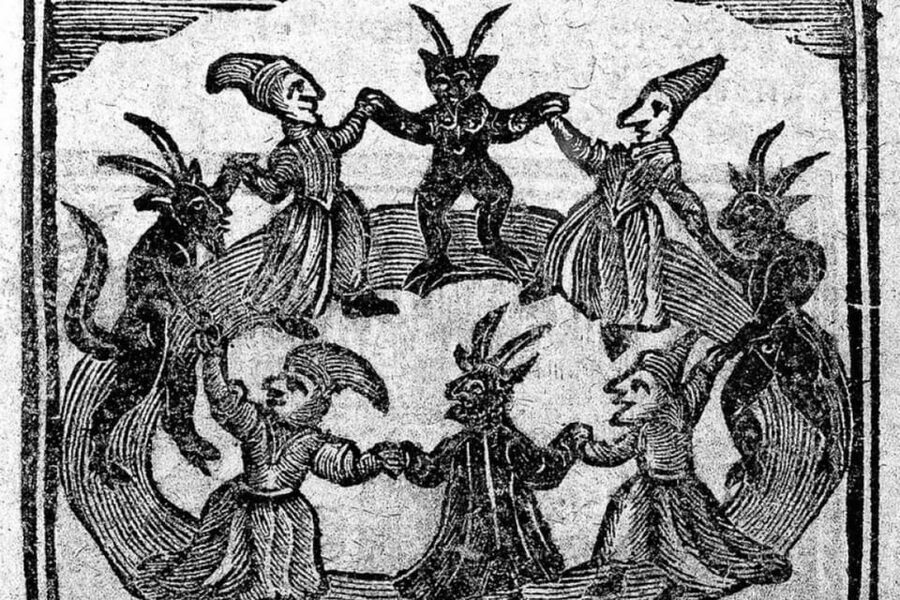
The Spanish Inquisition and medieval witch trials form a major part of the tour. These subjects are often reduced to a list of gruesome acts, but the more useful lesson is how institutions turned belief and suspicion into tools of control.
You hear about accusations of heresy, witchcraft, and demonic possession, along with the harsh methods used to suppress them. The tour also looks at the social beliefs behind these accusations. In periods when illness, bad weather, death, or strange behavior had no clear explanation, blaming a person could feel easier than admitting uncertainty.
That does not make the systems less cruel. It helps explain why they gained force. The people accused were not simply characters in a spooky tale. They were often ordinary citizens vulnerable to rumor, fear, and official power.
I appreciate that the tour places witchcraft beside the Inquisition instead of treating each as a separate horror story. Together, they show how religious authority and popular superstition could reinforce each other. You gain a clearer sense of how a charge could grow from local suspicion into a formal punishment.
This material may be upsetting, particularly if you prefer your evening activities to remain light. The tour is recommended for people interested in true crime, dark tourism, and history, and it is not suitable for children under 12.
More Ghost Walking Tours in Barcelona
- Barcelona El Raval Dark History Walking Tour
★ 5.0 · 70 reviews - Barcelona Ghosts of a Dark Past Gothic Walking Tour
★ 5.0 · 55 reviews - Barcelona: El Born Ghost Walking Tour.
★ 4.0 · 54 reviews - Barcelona: El Born Ghost Walking Tour
★ 3.8 · 47 reviews
Henriqueta Martí, the Vampire of Barcelona
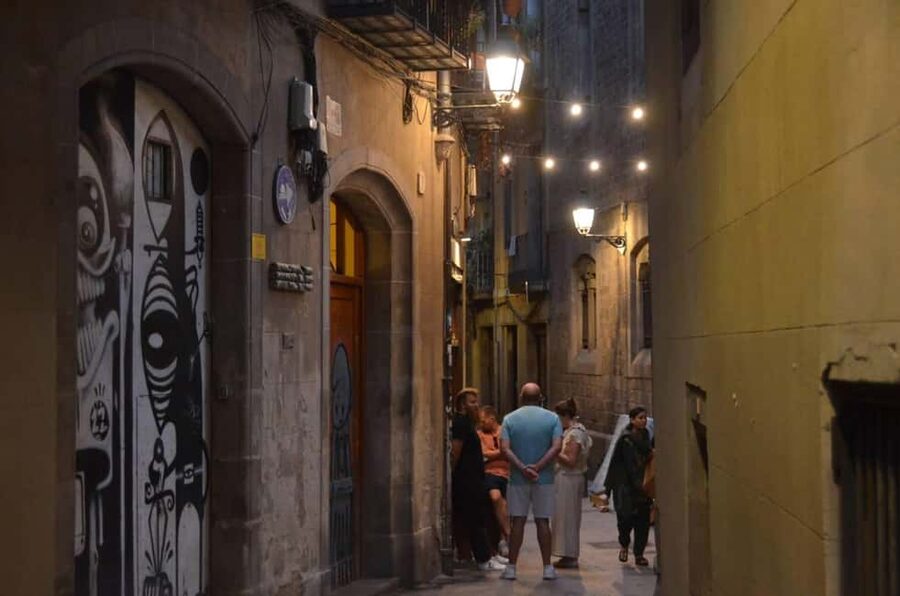
The most unusual chapter is the story of Henriqueta Martí, the early 20th-century figure remembered as the Vampire of Barcelona. Her case horrified the nation and gives the tour a true-crime focus that differs from the medieval sections.
The title is dramatic, but the tour treats the story as a real case rather than as proof of anything supernatural. That distinction is important. You are not being asked to follow a vampire legend through the Gothic Quarter. You are hearing about a person, alleged crimes, and the public reaction that followed.
The story is especially effective because it creates a bridge between Barcelona’s older fears and the modern city. Witchcraft accusations belong to an age of superstition and religious authority, while Martí’s case belongs to a period with newspapers, public scandal, and a more modern appetite for sensational crime.
The guide’s job is to keep the story from becoming cheap spectacle. Jessica specifically praised the way the guide combined gruesome anecdotes with historical explanation, and singled out the vampire story as particularly intriguing. That balance is the reason this section works for people who enjoy true crime but still want more than a crime-story retelling.
You should expect disturbing details. If you are sensitive to stories involving violence or vulnerable victims, this may be the point where you decide the tour is too heavy for a relaxed night out.
Churches, Political Violence, and Assassinations
The route then moves beyond religious tribunals and individual crime to the city’s history of anticlerical violence, church burnings, and political assassinations. This broader section keeps the tour from becoming a collection of isolated horrors.
Barcelona’s political conflicts could be intense, and churches sometimes became targets during periods of unrest. Political killings also show how violence was tied to power and ideology, not only to personal crime. The guide explains these events as part of the city’s wider struggles rather than presenting them as random shocks.
This is where you may gain the most from a local history specialist. A short tour cannot explain every political movement in full, but a skilled guide can show you how street-level events fit into a larger fight over religion, authority, workers, and government.
The subject also calls for careful wording. Stories about political and religious violence can be flattened into heroes and villains, but the better approach is to show how different groups understood their actions. The tour’s advertised focus on truth and nuance suggests that it aims for that balance.
Do not expect a long lecture. The experience lasts two hours, and the group must keep walking. The best use of the time is to listen for the links between stops: how fear becomes policy, how anger becomes violence, and how later governments use memory and silence.
Franco’s Dictatorship and the People Left Behind
The final historical reach is Franco’s dictatorship, bringing the tour into the 20th century and closer to living memory. This is an important choice. Barcelona’s dark past did not end with medieval courts or early modern superstition.
The guide discusses how Franco’s regime shaped the lives of ordinary Barcelonans and how oppression affected the city. That shift changes the feeling of the walk. You move from stories that can seem distant and almost legendary to political control that belongs to the modern era.
The tour also considers how parts of the past were erased or left unspoken. That is valuable because dark history is not only about what happened at the time. It is also about what later generations are allowed to remember.
You should not expect a full course on the Spanish Civil War or Francoist Spain in two hours. The route can offer context and memorable examples, but it cannot cover every political group, date, or consequence. If this period is your main interest, use the walk as an introduction and seek a longer museum or history visit afterward.
Still, ending with dictatorship gives the evening a useful shape. The tour begins with medieval fear and moves toward modern state power. You leave with a sense that Barcelona’s difficult chapters are connected by recurring questions about authority, punishment, resistance, and memory.
What the Two-Hour Format Feels Like
Two hours is a good length for this kind of walk. It gives the guide time to build a story without turning the evening into a full-day history course. You will spend the time on foot, moving through the Gothic Quarter and stopping for explanations.
The route includes uneven surfaces, so comfortable walking shoes are essential. Bring water, especially if you have already spent the day sightseeing. The tour is wheelchair accessible according to the activity information, but the same information warns that it involves uneven surfaces and says it may not suit people with mobility impairments. I would confirm the route’s current conditions before booking if accessibility is important to you.
The experience is also listed as unsuitable for pregnant women and people with heart problems. That may reflect the walking and the demanding subject matter, but the supplied information does not explain the exact reason. If either applies to you, check directly before reserving.
Flash photography is not allowed. This is easy to follow and fits the tone of the experience. You should pay attention to the guide rather than treat the route as a photo stop at every corner.
Is €21 Good Value?
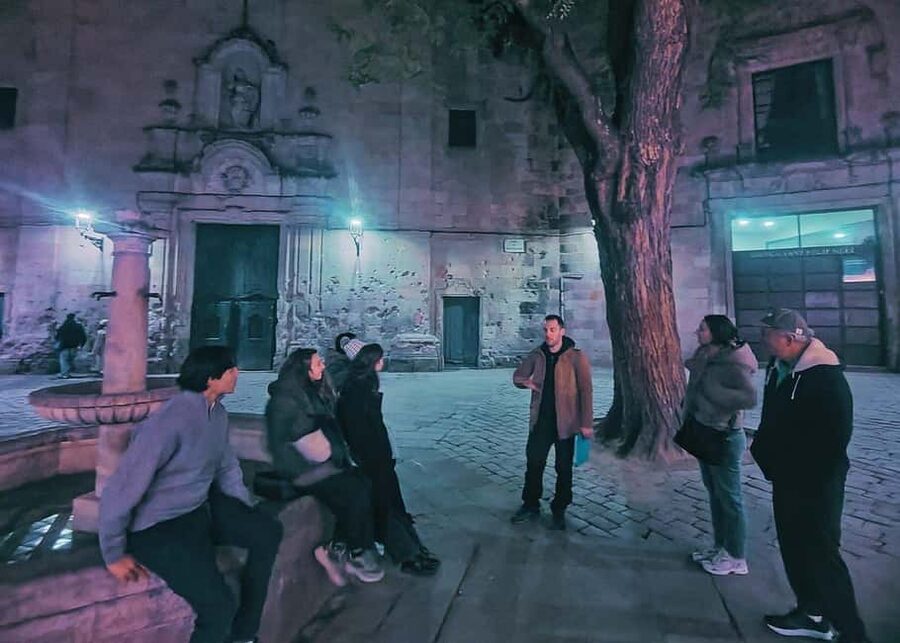
At $21 per person, the tour is reasonably priced for a two-hour guided walk in central Barcelona. You are paying for a live English-speaking guide, researched storytelling, and a route that adds historical meaning to streets you could otherwise pass without noticing.
The extra €1 headset cost is minor, but include it in your budget. The headset is not included in the advertised price and must be paid at the start. The total remains modest compared with longer guided tours or paid attractions.
The value depends on your interests. If you want a broad introduction to Barcelona’s art, architecture, or food, this is not the best use of two hours. If you already know the main sights and want a focused look at subjects left out of standard city tours, the price makes sense.
The rating is based on 10 reviews, all at five out of five. That is encouraging, though still a small sample. The praise centers on the guide’s delivery, the informative content, the evening setting, and the unusual material. I would place the strongest emphasis on those points, since they match what this tour is designed to provide.
Free cancellation up to 24 hours in advance and the option to reserve now and pay later also reduce the risk when your schedule is still changing.
Who Should Book This Dark History Walk?
You should book it if you enjoy:
- True crime presented with historical context
- Medieval religious fear and witch-trial history
- Barcelona’s Gothic Quarter after dark
- Political history, including Franco’s dictatorship
- Storytelling that is serious rather than theatrical
- Small-group or personal walking experiences, if available at your chosen time
The tour is a good match for solo visitors, couples, and small groups who want a shared subject to discuss afterward. It is also useful if you have already seen Barcelona’s major landmarks and want a different way to understand the city.
You should skip it if you want a cheerful evening activity, dislike graphic historical material, or have trouble walking on uneven streets. Families with children under 12 should choose another tour, and anyone with mobility, pregnancy, or heart concerns should check suitability before booking.
My Verdict: Book It for History, Not Hauntings
I recommend this tour to readers who want Barcelona’s difficult past explained plainly and brought into the streets where it unfolded. The strongest features are the unusual subject matter, the Gothic Quarter setting, and the guides’ ability to connect gruesome stories with wider social and political forces.
Book it for the Spanish Inquisition, the witch trials, Henriqueta Martí, and the move from medieval punishment to Francoist oppression. Do not book it expecting ghosts, staged scares, or a gentle introduction to the city.
At $21, plus the €1 headset, it offers good value for two focused hours. Wear sound shoes, bring water, arrive early at Plaça de Catalunya, and be ready for serious material. If that sounds like your kind of evening, this is a memorable way to see Barcelona beyond its postcard surface.
FAQ
Where does the Barcelona dark history tour start?
It starts on the sidewalk in front of the Foot Locker on Plaça de Catalunya.
How will I recognize the guide?
The guide will carry a white umbrella.
How long does the tour last?
The walking tour lasts two hours.
What language is the tour offered in?
The live tour guide speaks English.
Is the guide headset included?
No. The guide-radio headset costs €1 per person and is paid at the start of the tour.
What subjects does the tour cover?
It covers the Spanish Inquisition, witch trials, public punishments, Henriqueta Martí, anticlerical violence, church burnings, political assassinations, and Franco’s dictatorship.
Is the tour suitable for children?
No. It is not suitable for children under 12.
Can I cancel for a full refund?
Yes. You can cancel up to 24 hours in advance for a full refund.
Just added in Barcelona
- Walking Tour Mysteries and Legends of Barcelona and its Ghosts★ 5.0 · 3 reviews
- Dark History and Legends Night Walk of Gothic Quarter★ 5.0 · 2 reviews
- Barcelona: El Born Ghost Walking Tour.★ 4.0 · 54 reviews
- The Gothic Trail – Ghosts of Barcelona Exploration Game★ 4.5 · 33 reviews
- Witch Hunt on Montjuïc: Self-Guided Puzzle Quest in Barcelona★ 4.5 · 9 reviews
- Barcelona Ghosts and Legends Gothic Quarter Tour★ 5.0 · 152 reviews
- Barcelona Ghosts of a Dark Past Gothic Walking Tour★ 5.0 · 55 reviews
- Barcelona: Gothic Quarter Tour Dark History & Ghosts Tour★ 4.8 · 64 reviews
Ghost Walking Tours, compared.
New Orleans Premier Ghost, Voodoo and Vampire Walking Tour
Read our review →
Ghost Walking Tour Where Legends Come To Life
Read our review →
Savannah History and Haunts Candlelit Ghost Walking Tour
Read our review →
Ghosts of Charleston Night-Time Walking Tour with Unitarian Church Graveyard
Read our review →
New Orleans Haunted Ghost, Voodoo & Vampire Walking Tour
Read our review →Browse the lists this tour appears in