
Review · SALEM
Secrets of Salem Hidden Dark History Tour
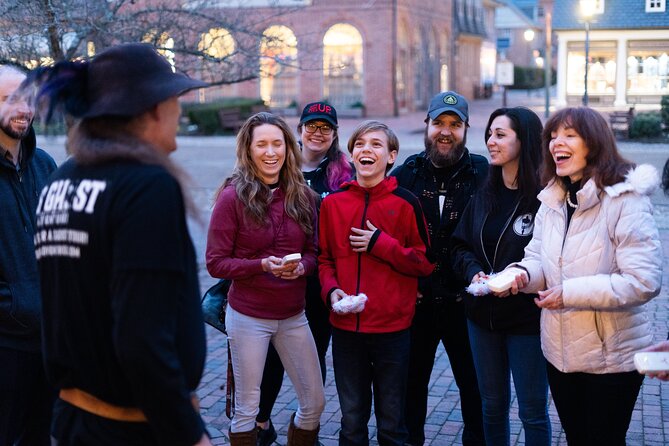
Salem’s witch trials are only the beginning. This two-hour walk connects the 1692 hysteria to old rivalries, political grudges, family tragedies, literary history, and ghost stories around downtown. I like the way it treats Salem as a real town with complicated characters, not just a Halloween set.
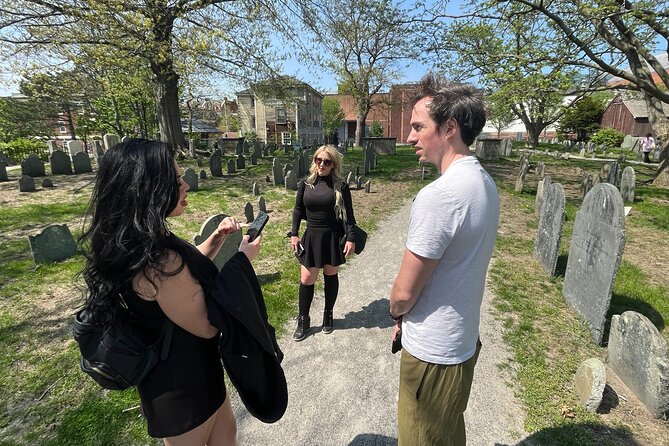
Two things work especially well here: the small maximum of 20 people, which helps you hear the guide, and the mix of serious history with lighter local tales. Guides such as Mason, Danielle, and John are praised for clear storytelling and personal knowledge of the area. The main drawback is simple: you will walk for much of the two hours, and one reported meeting-point mix-up shows why you should check your confirmation closely before setting out.
Key points to know before you book
- The witch trials are placed in a wider story: You learn about the feud between Salem Town and Salem Village, not just the courtroom drama of 1692.
- Several stops have direct links to the trials: Judge Jonathan Corwin’s home, George Corwin’s connection, and the old cemetery give the subject a strong sense of place.
- The tour covers more than witchcraft: Expect stories about British Loyalists, Nathaniel Hawthorne, architecture, local scandal, and a television connection.
- The walk is easy but not short: Allow about two hours on foot and wear comfortable shoes.
- Guides make a major difference: Mason, Danielle, John, and Sam are singled out for humor, local detail, and strong command of Salem’s past.
- The ending is convenient: The walk finishes at the historic Hawthorne Hotel on Washington Square.
Why this Salem walk is more than a witch-trial tour
Salem can be hard to sort out on your own. The city has colonial buildings, maritime history, literary landmarks, witch-trial attractions, ghost walks, and modern shops all packed into a compact area. This tour gives you a thread to follow.
The central subject is the Salem witch hysteria of 1692, but the guide keeps asking a useful question: what conditions allowed the crisis to grow? The rivalry between Salem Town and Salem Village offers part of the answer. Local tension, religious pressure, fear, and personal conflict made accusations far more dangerous than they might have been in calmer times.
I appreciate that approach. You are not simply shown a place where something happened and handed a spooky anecdote. You get a sense of how grudges and institutions shaped events. The result is more useful than a string of ghost stories, even though the tour leaves room for those too.
The walk is offered in English, lasts about two hours, and uses a mobile ticket. There is no transportation, so you should think of this as a downtown walking route rather than a sightseeing ride. The group is capped at 20 people, a sensible size for narrow sidewalks and historical stops where you need to gather around the guide.
More Dark History Tours in the USA
- Salem Uncovered: Dark Stories of Salem Tour
★ 4.5 · 307 reviews - Adults-Only New Orleans Ghost, Crime, Voodoo, and Vampire Tour
★ 5.0 · 6,545 reviews - New Orleans Adults-Only True Crime and Ghost Walking Tour
★ 5.0 · 1,666 reviews
Starting at Salem’s old municipal building
The meeting point is 210 Essex Street. One early stop is Salem’s oldest original municipal building, built in 1816 and now available for private functions.
The building matters because it takes you beyond the colonial period. Salem’s story did not stop with the witch trials. By beginning around an early civic building, the guide can show how the town developed its public institutions and how later Salem grew around its earlier past.
This is also a good reminder that the tour is not limited to 1692. You will hear about the city’s earliest years, but the route keeps moving through different periods. If you came expecting a narrow ghost walk, that broader scope may surprise you in a good way.
The building itself is not described as an interior visit, so expect to learn from the guide outside rather than spend a long time inside. That is typical of a walking tour, but it means the quality of the explanation matters more than access to rooms.
Setting the facts straight at the witch-trial museum
The witch-trial museum stop gives you an overview of the events of 1692 and the role of mass hysteria in American history. This is likely the most direct introduction to the subject, especially if you have heard a jumble of Salem legends but lack the basic timeline.
I like having this context early in the route. The later houses and cemetery make more sense once you understand who the judges, sheriffs, accusers, and accused people were. The guide can then point out how a building fits into the larger sequence instead of treating every address as an isolated mystery.
The museum is presented as a place to learn the facts, so this portion should appeal to visitors who want history alongside atmosphere. It also helps keep the tour from turning the suffering of the accused into entertainment alone. Salem’s witch trials involved real executions and serious abuses of power, and the walk gives those failures proper attention.
You should not expect a long museum visit to replace the walking tour. The experience is built around outdoor stops and spoken history, with the museum serving as one part of the route.
Entering the home of Judge Jonathan Corwin
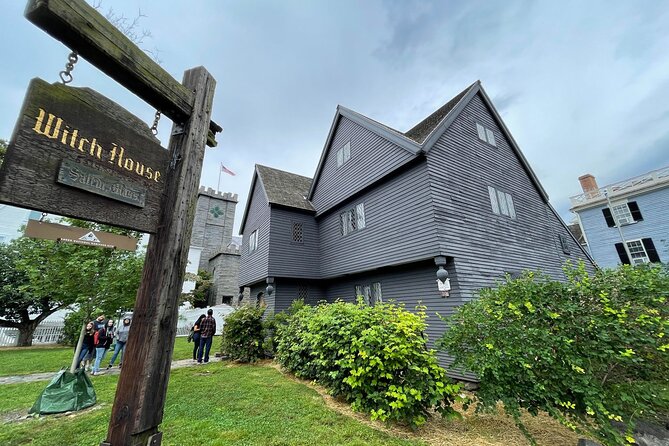
One of the strongest stops is the house of Judge Jonathan Corwin. It dates to the period of the witch trials and is described as the only surviving Salem house with direct ties to them.
Corwin served as a judge during the trials, so this is not just an old home with a vague connection to Salem’s past. It gives the story a clear human setting. The guide can discuss the decisions made by officials and the miscarriages of justice that followed.
This is where the tour’s darker subject becomes more serious. The phrase witch hunt can sound abstract when used in modern conversation. Standing near a house linked to a judge involved in the 1692 proceedings makes the abuse of accusation and authority feel more concrete.
The stop is also useful for separating fact from folklore. Salem has no shortage of stories about curses, ghosts, and hidden secrets. A good guide can tell you what is documented, what is disputed, and what belongs mainly to local legend. Guides Mason, Danielle, and John are repeatedly praised for doing their homework and adding unusual details without losing the main story.
More Dark History Tours in Salem
- Edinburgh: Dark Secrets of the Old Town Ghost Walking Tour
★ 4.6 · 1,671 reviews - Genteel and Bard’s Savannah Dark History and Ghost Encounter Walking Tour
★ 5.0 · 1,546 reviews - Buda Castle District Dark History, Legends and Vampire Night Tour
★ 4.5 · 1,240 reviews - Paris: Dark History and Ghostly Guided Walking Tour
★ 4.7 · 1,000 reviews
Hearing the tragedy of Nathaniel Ropes
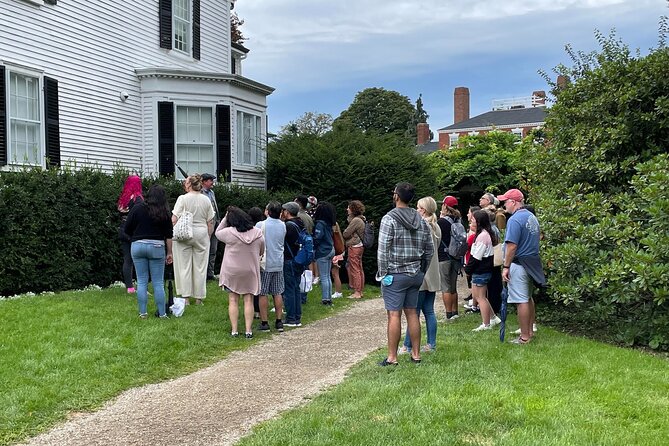
The next historic house shifts the subject from witch trials to political conflict. Built roughly a century after Salem’s founding, and about 30 years after the trials, the house was later sold to Nathaniel Ropes.
Ropes was a strong British Loyalist. As tensions rose near the end of his life, he faced the anger of his own town. The guide tells the story of the backlash and the tragedies connected with the house.
This stop adds needed variety. If every address involved witchcraft, the route would become repetitive. Instead, you see how Salem’s troubles continued into another era, with loyalty, revolution, and public opinion shaping private lives.
I also like the architectural angle here. One guide was praised for discussing both Salem’s buildings and its witch-trial past. You may not leave knowing every design detail, but you will see the city’s houses as places where political and family stories unfolded, not as pretty backdrops.
Hawthorne, books, and the Salem Athenaeum
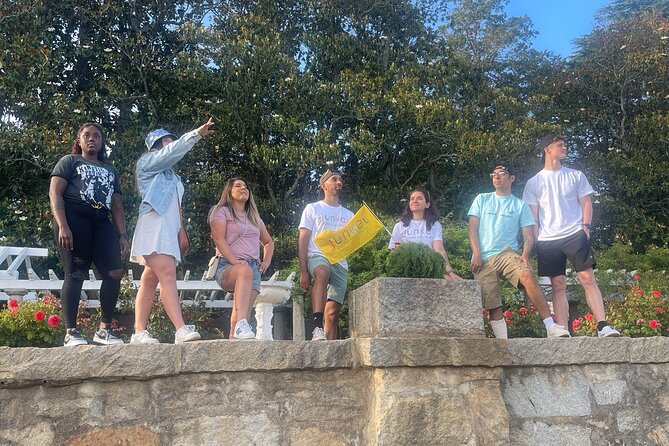
Salem’s literary side appears at the Athenaeum. The institution formed from the libraries of two separate societies, and Nathaniel Hawthorne once served as its head during the 1800s.
That connection is easy to miss if you visit Salem only for witch-trial sites. Hawthorne’s writing, including The Scarlet Letter, is closely tied to the moral weight and old anxieties of New England. His link to the Athenaeum gives the tour a chance to show how Salem’s past continued to influence writers and readers long after 1692.
The stop also broadens the idea of what counts as a dark story. Salem’s past is not only about ghosts and executions. It includes guilt, reputation, judgment, and the way old events linger in public memory. Those themes connect naturally to Hawthorne.
Do not expect a literary lecture lasting the whole stop. The Athenaeum is one piece of a varied route, and the guide keeps the pace moving.
Meeting George Corwin, the sheriff behind the fear
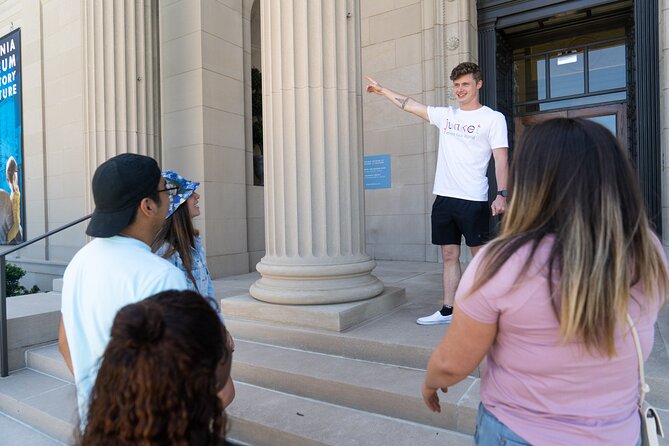
Another house site is tied to George Corwin, nephew of Judge Jonathan Corwin. George served as Salem’s sheriff during the witch trials and was said to be especially cruel toward people accused or convicted of witchcraft.
This is an important distinction. The judge and sheriff represent different parts of the system that carried the trials forward. One helped decide cases, while the other enforced the process. Hearing about both helps you understand how fear became official action.
The story also shows why family connections matter in Salem. The Corwin name appears more than once, but the two men occupied different roles. A guide who explains those links saves you from confusing the people involved, which is easy to do when several historic names repeat across the route.
This stop should appeal to anyone who wants the harder facts of the trials. It is less about a spooky sensation and more about the behavior of people who held power over the accused.
Pausing at the old cemetery
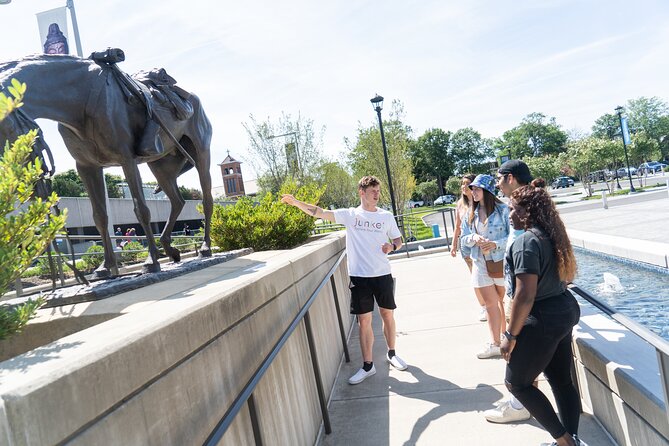
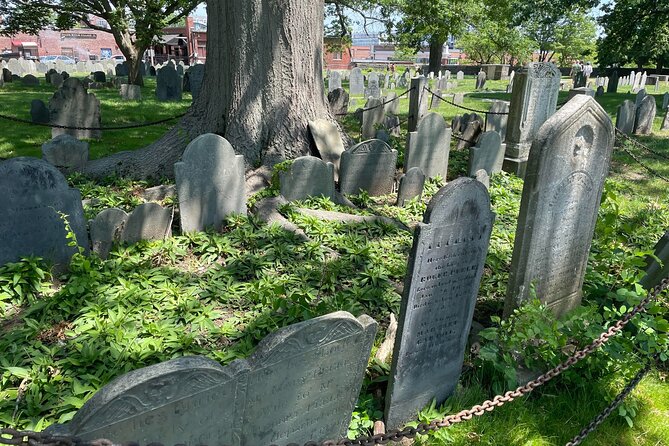
The cemetery, established in 1637, is one of the oldest in the United States. The second wife of Giles Corey and Judge Jonathan Corwin are buried there.
The site gives the tour a change of pace. After several houses and civic landmarks, you reach a place where Salem’s past is literally underfoot. The guide can connect the graves to the people you have already encountered, which makes the names and relationships easier to remember.
The cemetery also brings in Salem’s ghost lore. Stories tell of people seeing Judge Corwin’s ghost among the graves. You can enjoy that part as folklore while keeping the documented history in view. That balance is one of the tour’s strengths: the spooky material adds atmosphere, but the route does not depend on pretending every tale is proven.
Cemeteries can have uneven ground and may be less comfortable for anyone with mobility limits. The stated requirement is moderate physical fitness, so you should plan for a walking experience rather than a sit-down history program.
Finding scandal beyond the 1692 story
One later home on the route has no direct connection to the witch trials. It was built more than a century afterward, yet it carries its own secrets and scandal.
That stop helps prevent a common mistake: assuming every old Salem building must relate to witchcraft. The city’s later residents created their own dramas. By including a house with a separate story, the guide shows how Salem kept producing tales of conflict and secrecy across the centuries.
For me, this is the kind of addition that makes the route feel less formulaic. You get the famous subject, but you also see how a city’s reputation grows from many layers of history. The exact details depend on the guide’s telling, so pay attention to the local context rather than waiting only for a supernatural payoff.
Finishing at the Hawthorne Hotel
The tour ends at the Hawthorne Hotel, 18 Washington Square West. Named for Salem’s famous son Nathaniel Hawthorne, the hotel also has a connection to the 1970s television series Bewitched, which filmed an episode there.
It is a fitting finish. The route has moved from civic buildings and colonial-era stories through witch-trial figures, political conflict, literature, and local folklore. The Hawthorne Hotel gives you one last reminder that Salem’s identity has been shaped by both real history and popular culture.
The endpoint is useful for planning the rest of your day. You finish near Washington Square rather than being returned to the starting point, so you should be prepared to continue from there. The start and finish are both in central Salem, but they are not the same address.
Guides, group size, and the value of local detail
The guide can make or break a history walk. Here, Mason is praised for growing up in the area and adding personal touches. Danielle is praised for charisma, humor, and command of Salem’s past. John is repeatedly described as fun, friendly, and full of small details, while Sam is noted for giving a solid overview of the city.
Those names are useful when you book because they show the range of the guiding style. You may get a local perspective, a more theatrical storyteller, or a guide who leans toward broad history. The common thread is preparation and enthusiasm.
A group limit of 20 is another real advantage. It is small enough for questions and easier listening, though the experience can still feel social rather than private. One guide also made a point of keeping a small group apart from larger tour groups, which can matter in busy Salem.
The tour has a 4.7 rating from 55 ratings, with 93 percent recommending it. That is a strong signal, but it should not hide the one serious practical warning: a booked participant reported waiting at the stated meeting point without finding the guide, while the operator said the group met elsewhere and the tour ran. Check your confirmation, arrive early, and verify the meeting address before the start time.
Is $32 a fair price for two hours?
At $32 per person, the tour sits in a reasonable range for a guided two-hour city walk. You are paying for a professional guide, researched history, and a route that links several locations instead of asking you to piece Salem together alone.
The value is strongest if you want interpretation. You could walk past many of these buildings for free, but you would not automatically know which Corwin was involved in the trials, why the Ropes house matters, or how Salem Town and Salem Village fed the crisis.
The price is less attractive if you want substantial interior access or a fully theatrical ghost experience. Several stops are outdoor explanations, and transportation is not included. You are buying a guided narrative and local context, not admission to a series of museums.
Free cancellation is available if you cancel at least 24 hours before the start time. Cancellations made within 24 hours are not refunded, and changes in that period are not accepted.
Who will enjoy this walk most?
I would choose this tour if you want Salem’s witch trials explained with context and a few eerie touches. It suits couples, friends, and families with older children or teenagers who can manage two hours on foot.
It is especially useful early in a Salem visit. The guide’s recommendations and explanations can help you decide which sites deserve more time afterward. The route also works for repeat visitors because it goes beyond the most familiar witch-trial material.
You may want something else if you dislike walking, want a private tour, or care mainly about entering historic interiors. The tour is in English, uses a mobile ticket, and requires moderate physical fitness. Service animals are allowed, and the route is near public transportation.
Should you book the Secrets of Salem tour?
Book it if you want a clear, lively introduction to Salem’s darker past without reducing the city to haunted-house theater. The best parts are the direct witch-trial connections, the Corwin family stories, the cemetery, and the shift into Loyalist, literary, and modern popular culture.
I would give yourself a little extra time before the start, confirm the meeting point at 210 Essex Street, and wear comfortable shoes. If you do that, the $32 fee is a fair way to put Salem’s difficult stories in order and see why the city’s past remains so compelling.
FAQ
How long is the Secrets of Salem Hidden Dark History Tour?
The tour lasts approximately two hours.
Where does the tour begin?
It begins at 210 Essex Street, Salem, Massachusetts 01970.
Where does the tour end?
The tour ends at the historic Hawthorne Hotel, 18 Washington Square West, Salem, Massachusetts 01970.
Is transportation included?
No. Transportation is not included. This is a walking tour.
What language is the tour offered in?
The tour is offered in English.
How large is the tour group?
The tour has a maximum of 20 travelers.
Is the tour suitable for people with limited mobility?
The stated requirement is a moderate physical fitness level. The experience involves quite a bit of walking, so it may not suit everyone with limited mobility.
What is the cancellation policy?
You can receive a full refund if you cancel at least 24 hours before the start time. Cancellations or changes made less than 24 hours before the experience are not accepted and are not refunded.
More history tours in Salem
- Wicked Awesome Tours: Witch Trial History and Salem Haunts!
★ 5.0 · 1,032 reviews - Best Salem Witch Trials Historical Walking Tour
★ 4.0 · 743 reviews - Salem History & Haunt Walking Tour
★ 4.5 · 81 reviews - Ultimate Historic Salem and Witch Trials Self-Guided Walking Tour
★ 4.5 · 67 reviews
Just added in Salem
- Salem: Voodoo, Vampires, and Ghosts Guided Walking Tour★ 4.8 · 206 reviews
- [ESP] History of Salem Witch Trials★ 4.0 · 5 reviews
- Witch Costume Photo Shoot – Witch Cottage theatrical set★ 5.0 · 149 reviews
- Witch City Broom Making Workshop in Salem★ 5.0 · 105 reviews
- Wandering Witches★ 4.5 · 33 reviews
- Ultimate Historic Salem and Witch Trials Self-Guided Walking Tour★ 4.5 · 67 reviews
- Vampire Ghost Adventures and Haunted Objects Walking Tour★ 4.5 · 34 reviews
- Private Walking Salem Legends Tour Professional Guide★ 5.0 · 3 reviews
Dark History & True Crime Tours, compared.

Adults-Only New Orleans Ghost, Crime, Voodoo, and Vampire Tour
Read our review →
Dark Secrets of the Old Town Ghost Walking Tour
Read our review →
New Orleans Adults-Only True Crime and Ghost Walking Tour
Read our review →
Genteel and Bard’s Savannah Dark History and Ghost Encounter Walking Tour
Read our review →
Buda Castle District Dark History, Legends and Vampire Night Tour
Read our review →

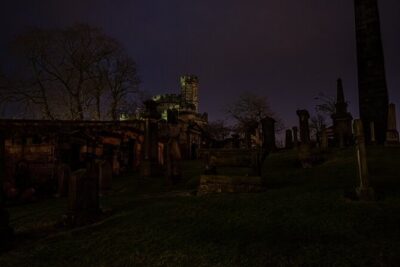
Edinburgh Ghost Tour: Mysteries, Legends and Murders
Read our review →Browse the lists this tour appears in