
Review · MYSTIC
Mystic Moonlit Graveyard Ghost Tour
At night, Whitehall Cemetery becomes a classroom with a chill. You walk among old stones while your guide connects local families to Native American history, colonial wars, abolitionism, true crime, disease, and ghost lore. The setting is not a polished attraction. It is an old burial ground surrounded by modern businesses, which gives the tour a slightly odd but very real sense of place.
I like the way the tour ties ghost stories to documented local history, instead of treating the cemetery as a string of jump scares. I also like the guides’ strong storytelling style. Kim, Sierra, Riley, AJ, Jason, and others are described as animated, warm, and good at keeping a group involved. The main drawback is the setting itself: the cemetery can be dark, buggy, and uneven, and the 1-hour-45-minute walk may feel rushed if you want time to study every grave.
Key points to know before booking
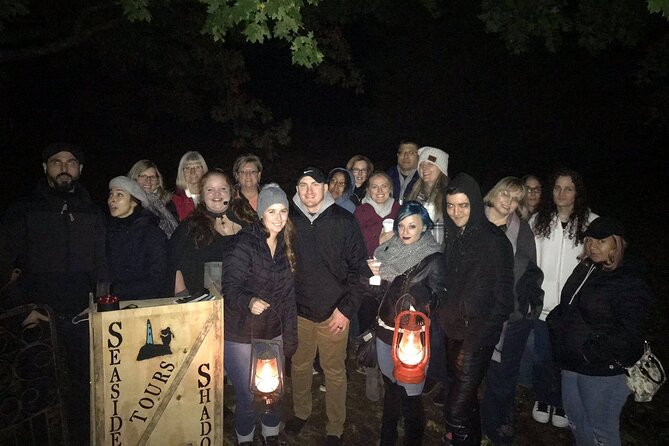
- Whitehall Cemetery is the entire setting: You stay in the graveyard rather than walking through downtown Mystic.
- The tour blends fact and folklore: Expect family history, war stories, burial customs, and paranormal accounts in the same walk.
- Guides carry the evening: Kim, Sierra, Riley, AJ, and Jason have all led engaging tours, with humor and strong storytelling.
- Bring bug spray in warm months: The cemetery’s location near the Mystic River can mean mosquitoes.
- Plan for darkness and uneven ground: A flashlight is useful, and you should watch your footing.
- The price is $30 per person: For nearly two hours of guided stories, that is fair if you want a focused historical ghost walk.
What kind of ghost tour is this?
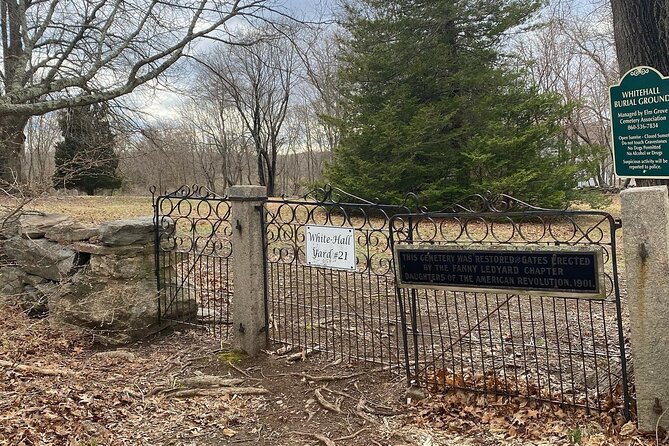
This is a cemetery tour, not the classic downtown Mystic walk. That distinction matters. You will not spend the evening moving from shop to shop or hearing spooky stories about the town’s streets. You will remain at Whitehall Cemetery, examining graves and listening to stories tied to people buried there.
The mood is part historical talk, part campfire storytelling, and part paranormal investigation. Some tales involve spirits, ghostly touches, white figures, or strange photographs. Other sections deal with war, enslavement, women’s lives, privateers, disease, and changing burial customs. I like that mix because the cemetery feels less like a stage set and more like a place where real people lived, suffered, and were remembered.
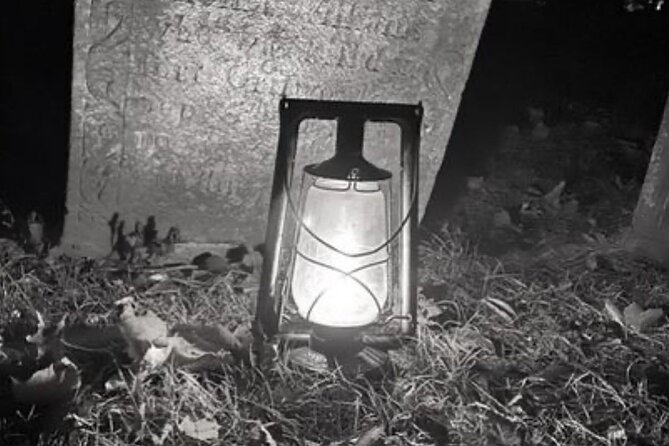
The guides also add humor. One guide used a lantern and stayed in character, while another kept the group engaged with jokes and questions. The tone is spooky, but it is not intended to be relentlessly frightening. Families can enjoy it if children can follow the rule not to touch graves or objects.
More Cemetery Tours in the USA
- Ghosts of Charleston Night-Time Walking Tour with Unitarian Church Graveyard
★ 4.5 · 2,835 reviews - Savannah Ghosts & Gravestones Trolley Tour
★ 4.0 · 2,723 reviews - Cemetery and Ghost BYOB Bus Tour in New Orleans
★ 4.5 · 2,685 reviews
Starting at Whitehall Cemetery
The meeting point is Whitehall Cemetery in Mystic, Connecticut. Free parking is available, and the cemetery is described as easy to find. The tour ends at the same place, so you do not need to arrange a pickup or navigate back through town at the end of the night.
The tour lasts about 1 hour and 45 minutes. That is long enough to cover ten stops without feeling like a quick walk past a few headstones. It also means you should dress for the conditions. Summer can bring mosquitoes, and the ground may be difficult to see at night. A flashlight is a smart addition, even if your guide carries a lantern.
The tour runs rain or shine according to the operating information, though the cancellation terms also note that poor weather can lead to a rescheduled date or refund if the operator cancels. The practical takeaway is simple: do not book this expecting a weatherproof indoor activity. Check the conditions, wear suitable shoes, and understand that your own cancellation is non-refundable.
Stop one: cemetery rules, old stones, and ghost photography
The opening section covers the basic rules of the graveyard, the history of Whitehall Cemetery, and tips for taking photographs at night. This is a useful beginning because it sets limits before the stories get going.
The no-touch rule matters. Old stones and grave features can be fragile, and a respectful visit is part of the point. The photography discussion also gives you a way to assess unusual images later. One person reported capturing a white shape, while another photograph showed an orb. The group tried to find ordinary explanations, but no explanation was certain.
That is the right attitude for this kind of tour. You can enjoy the strange image without being told that every blur is a spirit. The guide gives you a reason to look closely while leaving room for your own judgment.
Stop two: Captain John Gallup and colonial conflict
The Captain John Gallup and Gallup family stop broadens the tour beyond ghost stories. You hear about Native American and colonial history, early wars, stolen ships, paranormal encounters, and New England grave markings.
This section helps explain why old cemeteries can reveal more than names and dates. The markings, layout, and family groupings offer clues about the values and fears of earlier communities. Stories of conflict and stolen ships add a hard edge to the past, while the ghost accounts connect those events to the present-day setting.
For me, this is where the tour earns its price. You are not simply told that a grave is haunted. You are given a story about the person, the era, and the wider events around them.
Same streets, a very different kind of fright:
- New Orleans Premier Ghost, Voodoo and Vampire Walking Tour
★ 4.5 · 12,856 reviews - Chicago: Gangsters and Ghosts Walking Tour
★ 5.0 · 7,155 reviews - Adults-Only New Orleans Ghost, Crime, Voodoo, and Vampire Tour
★ 5.0 · 6,545 reviews - Salem’s Best Ghost Tour
★ 4.5 · 4,186 reviews
Stop three: the Woodbridge family and women’s history
The Woodbridge family stop brings in women’s history, a child ghost, abolitionism, founding fathers, privateers, and local encounters with the supernatural. That is a lot of ground for one stop, but the mix shows how family stories can connect to major national themes.
The abolitionism material gives the cemetery a moral and political dimension. Privateers and founding-era figures add drama, while the child ghost story shifts the mood back toward the personal and unsettling.
This stop should appeal to you if you want more than haunted-house effects. The stories are rooted in people and families, not just anonymous apparitions. The drawback is that some subjects are emotionally heavier than standard ghost-tour fare, especially when children, slavery, and death are part of the discussion.
Stop four: Joseph Wheeler, disease, and vampire lore
The Joseph Wheeler stop covers the American Revolution, abolitionism, true crime, mystery, corpses, disease, and vampires. It sounds like the tour’s most dramatic section, and it moves into some of the darker fears attached to death and burial.
The disease material gives context to old burial practices. Before modern medicine, illness could move through a community quickly, and the appearance of a body after death could be misunderstood. That background makes vampire stories more interesting. They reflect real anxiety about disease, corpses, and the uncertain line between life and death.
This section may be too grim for very young children, though the tour is generally family-friendly when children can follow the rules. If you like the connection between folklore and public fear, this will likely be one of the most memorable stops.
Stop five: the Dean family and children’s graves
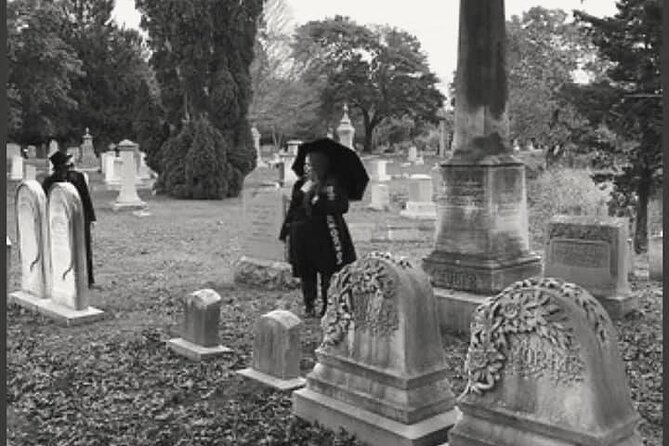
The Dean family section focuses on children’s ghosts, French Canadian history, and unusual grave markings. The tone here can be poignant as well as spooky.
Family cemeteries often show the painful reality of earlier mortality rates, and children’s markers can make that history immediate. The French Canadian material also widens the story beyond the best-known colonial families. You get a glimpse of migration and local community life through the people buried at Whitehall.
I would approach this stop with some sensitivity. The stories may be presented with humor and atmosphere, but the subject matter involves real loss. It is one reason the tour works better as historical storytelling with ghost elements than as pure entertainment.
Stop six: Thomas Williams and the American Revolution
Thomas Williams brings in the Revolutionary War, Fort Griswold, tragedy, spirit encounters, haunted battlefields, and notorious traitors. This section gives the tour a strong regional connection to the Revolution and its local consequences.
Fort Griswold is tied to one of the area’s darker wartime memories, and the stop uses that history to explain why battlefields and burial grounds attract ghost stories. The theme is familiar, but the local connection gives it weight. You are not hearing a general tale about haunted soldiers. You are hearing how regional conflict still shapes local memory.
The traitor stories add moral tension. Ghost tales often work best when they involve guilt, betrayal, or unfinished business, and this stop uses those themes without losing its historical footing.
Stop seven: Quash and Hannah Williams
The Quash and Hannah Williams stop is one of the most important parts of the walk. It covers Black history, emancipation, the history of enslavement, and Native American history, along with paranormal photography.
This material gives the cemetery a broader human story. A tour focused only on captains, generals, and prominent families would offer a narrow view of Mystic. By including Black history and enslavement, the walk asks you to consider who was remembered, who was overlooked, and how freedom changed local lives.
The paranormal photography element returns the tour to its playful side. You may be invited to look for unusual shapes or light in your own pictures, but the history remains the stronger reason to pay attention.
Stop eight: the Lady in White
The Lady in White is the tour’s local legend stop. It deals with folklore, omens, and a ghost story that has likely been retold because it is easy to picture and hard to settle.
Figures in white appear in ghost traditions across many places, but the local setting gives this version its character. The story works best after you have spent time learning about the cemetery and its families. By this point, you have enough context to understand why a particular figure might become attached to a place.
This section is likely to please paranormal fans, but it is also a good reminder that folklore changes as people repeat it. You can enjoy the story without treating every detail as proven fact.
Stop nine: a spooky surprise and burial customs
The ninth stop is described as a spooky surprise involving burial practices and requirements. Details are intentionally kept back, so you should expect the guide to create a moment of suspense rather than simply explain the next grave.
The subject of burial requirements gives the surprise a useful historical base. Customs around death are shaped by religion, public health, family wishes, and local law. They can seem strange now, but they often made sense in their own time.
This is also the point where the tour leans most clearly into theatrical presentation. If you want a quiet cemetery lecture, you may find the surprise a little campy. If you enjoy audience participation and old-fashioned ghost-tour showmanship, it should be fun.
Stop ten: ending where you began
The final stop brings the group back to the meeting point and wraps together the stories, history, and paranormal themes. Since the tour stays in one cemetery, the ending is easy to manage. You do not have to find your way back through unfamiliar streets after dark.
One useful feature of this format is continuity. The guides can keep returning to the same physical setting, so the cemetery itself becomes familiar as the stories build. You may leave knowing the names of several families and having a clearer sense of how war, migration, race, religion, and death shaped Mystic.
The guides make or break the night
The strongest praise for this tour concerns the guides. Kim is described as engaging, funny, and well versed in local culture. Sierra is praised for her energy, teaching, and clear delivery. Riley is described as friendly and good at both history and storytelling. AJ is noted for creating a strong atmosphere, while Jason is described as polished and courteous.
Those names matter because this is a spoken experience. The graveyard does not provide a set of modern displays or written panels. Your understanding depends on how well the guide tells the story, handles questions, keeps the group together, and manages the dark ground.
The best guides seem to balance humor with respect. Campy jokes are part of the appeal for some people, while others may prefer a more serious tone. The experience is also limited by group size, with up to 50 people allowed. A smaller group can feel more personal, but a full group may make it harder to hear or get close to a particular grave.
Is $30 a fair price?
At $30 per person, I consider this a fair buy for a nearly two-hour guided evening, especially if you value local history as much as ghost tales. You are paying for preparation, storytelling, access to a focused site, and a structured route through material you would not easily assemble on your own.
The value drops if you expect a high-production haunted attraction with dramatic effects. This is an outdoor cemetery walk. Its strengths are the guide, the stories, the setting, and the connection between fact and folklore.
The booking information also says admission ticket free in the itinerary details, while the listed tour price is $30 per person. I would treat the $30 amount as the price to budget for, and confirm the final total when booking.
Who should book this tour?
I would choose this tour for couples, families with older children, and friends who enjoy local history with a spooky edge. It also suits anyone who has already seen Mystic’s shops and waterfront and wants a different side of town.
You should skip it if you dislike cemeteries, mosquitoes, darkness, uneven ground, or stories about death and disease. It is also not ideal if you want a downtown walking tour. The operator offers a separate one-mile Downtown Mystic Ghost Tour, and the Whitehall Cemetery walk is a different format.
Bring bug spray in summer, a flashlight, and shoes you can walk in comfortably. Keep your hands off the graves, stay alert to the ground, and give yourself the full 1 hour and 45 minutes.
Should you book the Mystic Moonlit Graveyard Ghost Tour?
Book it if you want real local history wrapped in ghost lore, not a parade of cheap scares. The stories range from Captain John Gallup and Fort Griswold to emancipation, French Canadian families, child ghosts, burial customs, and the Lady in White.
I would be especially inclined to book when Kim, Sierra, Riley, AJ, or Jason is leading, based on the strong descriptions of their storytelling. Still, the setting will not suit everyone. It can be dark, buggy, and somewhat stark, with commercial buildings nearby.
For $30, this is a good evening choice for a curious visitor who wants Mystic after sunset, provided you arrive prepared for an outdoor cemetery and accept that the ghost stories come with history, humor, and a little uncertainty.
FAQ
Where does the Mystic Moonlit Graveyard Ghost Tour begin?
The tour begins at Whitehall Cemetery in Mystic, Connecticut, ZIP code 06355.
Where does the tour end?
The activity ends back at the meeting point at Whitehall Cemetery.
How long does the tour last?
The tour lasts approximately 1 hour and 45 minutes.
How much does the tour cost?
The listed price is $30 per person.
What language is the tour offered in?
The tour is offered in English.
Is parking available?
Free parking is available at the cemetery.
Does the tour run in bad weather?
The operating information says the tour runs rain or shine and is not normally canceled for weather. The cancellation terms also state that if the operator cancels because of poor weather, you may be offered another date or a full refund.
Is the tour suitable for children?
Most people can participate, and the experience can suit families. Children should be able to follow the rule not to touch graves or objects.
Can I get a refund if I cancel?
No. Your booking is non-refundable and cannot be changed if you cancel or request an amendment. If the operator cancels because the minimum number is not met, you may be offered another date or experience, or a full refund.
Just added in the USA
- Dreaded Dead Descent of the District: DC Ghost Tour★ 4.2 · 186 reviews
- Phantoms of the Potomac: Old Town Alexandria Ghost Tour★ 4.0 · 56 reviews
- Alexandria Ghosts Spirits & Spirits Haunted Pub Crawl★ 5.0 · 26 reviews
- Haunted Alexandria Booze and Boos Ghost Walking Tour★ 5.0 · 157 reviews
- Ghost and Graveyard Tour★ 5.0 · 187 reviews
- Tombstone Ghost Tours: Ghosts and Gunslingers of the Wild West★ 4.5 · 147 reviews
- The Dead Men’s Tales Walking Ghost Tour in Tombstone★ 4.5 · 123 reviews
- Haunted Tampa Booze and Boos Ghost Walking Tour – Ybor City★ 4.5 · 147 reviews
Cemetery & Graveyard Tours, compared.
Haunted Underground Vaults and Graveyard Tour
Read our review →
Ghosts of Charleston Night-Time Walking Tour with Unitarian Church Graveyard
Read our review →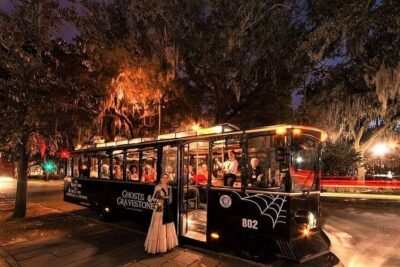
Cemetery and Ghost BYOB Bus Tour in New Orleans
Read our review →
New Orleans Dead of Night Ghosts and Cemetery Bus Tour
Read our review →
Haunted Vaults and Graveyard Walking Tour in Edinburgh
Read our review →Browse the lists this tour appears in