
Review · LONDON
Jack the Ripper – What About the Women?
Jack the Ripper tours often turn a group of murdered women into props for a killer’s legend. This walk takes the harder, more worthwhile route: it puts Martha Tabram, Polly Nichols, Annie Chapman, Mary Jane Kelly, Elizabeth Stride, and Catherine Eddowes back at the center of the story. You’ll hear about their work, homes, hardships, and the society that left poor women exposed to danger.
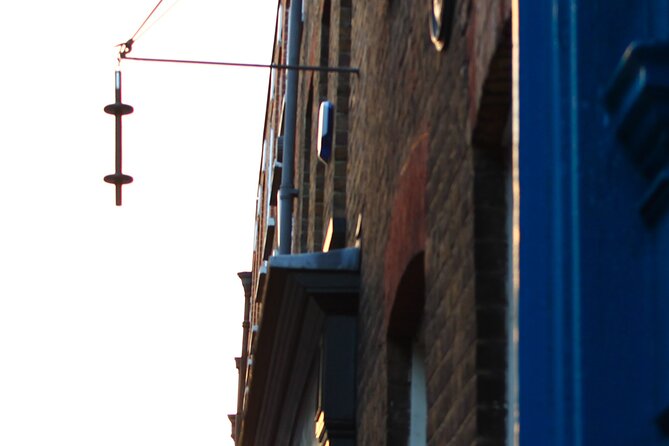
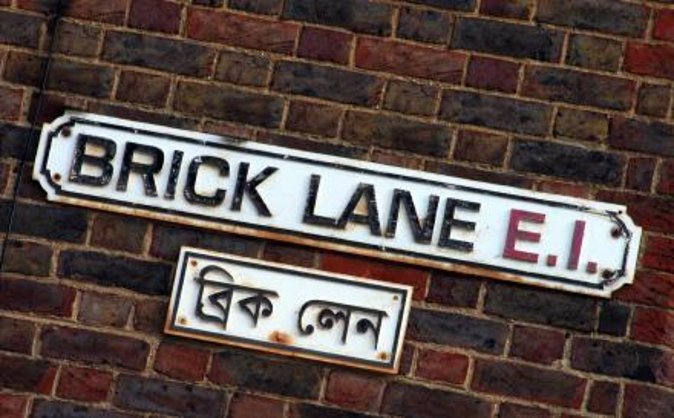
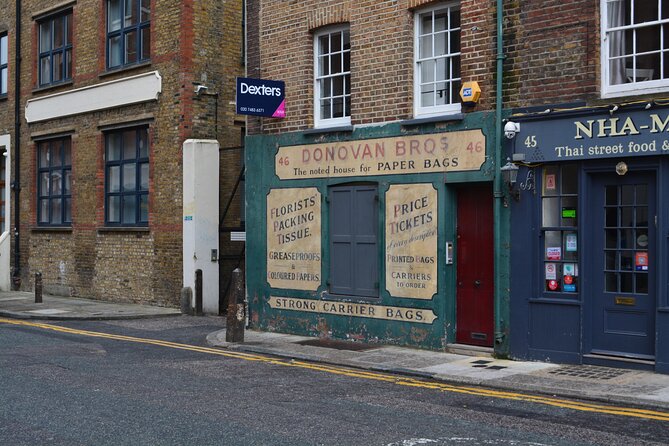
I like two things right away. First, the route connects the crimes to real social conditions, including dosshouses, workhouses, addiction, and limited help for the poor. Second, it brings you through East London at night, past Brick Lane, Spitalfields Market, old brewery buildings, street art, and places still used by local charities. The main consideration is that this is a walking tour with frequent stops, not a theatrical crime show, so anyone seeking gruesome detail or a focus on the murderer may find it too restrained.
Key points to know before you book
- Victim-first storytelling: The tour gives attention to the women’s lives instead of building up Jack the Ripper’s myth.
- A two-hour East London walk: The route links Aldgate, Whitechapel, Brick Lane, Spitalfields, Petticoat Lane, and Mitre Square.
- Guides with a strong local focus: Cecily and Ellie are noted for clear, warm presentations and a firm grasp of the area.
- No grisly pictures: The subject is serious, but the presentation focuses on people and social conditions rather than murder scenes.
- A small-group setting: The maximum group size is 20, which helps keep the walk personal and makes questions easier.
- Good value at $34.28: You get a guided look at several important East End locations for about two hours, with no separate admission fees at the stops.
Why this Whitechapel walk feels different
The most important choice here is the point of view. You are not asked to admire a criminal mastermind or follow a trail of gore. Instead, you learn how ordinary women lived in Victorian East London and how poverty, unstable housing, addiction, and weak protection shaped their final years.
That shift matters. The women were often reduced to labels, especially the repeated claim that all of them were prostitutes. The tour questions that shorthand and gives you a clearer sense of their individual lives. You hear about family trouble, migration, work, homelessness, and the daily search for food and shelter.
Cecily is especially good at making the material human and clear. Ellie also brings strong knowledge of the women and the district. Both are described as friendly, engaging guides who answer questions without losing sight of the people at the heart of the tour.
The tone is serious but not lurid. You will hear where bodies were found and understand the setting, but the focus is not on graphic descriptions. That makes the walk suitable for mature families, including older children and teenagers who can handle a discussion of poverty, violence, and death.
More Jack the Ripper Tours in London
- London: The Original Jack the Ripper Walking Tour
★ 4.7 · 7,833 reviews - London Jack the Ripper Guided Tour with Ripper-Vision
★ 4.5 · 4,840 reviews - London: Jack the Ripper Small Group Tour
★ 4.7 · 3,159 reviews
Starting at Aldgate and Whitechapel Road
Meet outside Aldgate station on Aldgate High Street at 6:30 pm. This is a practical starting point because it is close to public transportation and easy to find, but give yourself a little extra time to locate the guide and get settled before the group moves off.
The first section takes about 20 minutes along Whitechapel Road. Here, the guide introduces Martha Tabram and Polly Nichols while explaining the conditions faced by working-class people in the Victorian East End.
This is where the tour builds its foundation. Rather than treating poverty as background scenery, it explains the accommodation available to people with little money. You’ll hear about dosshouses, workhouses, spikes, and other forms of temporary shelter. These were not simply old-fashioned buildings. They shaped where people slept, how safe they were, and how easily they could disappear from public attention.
The guide also points out charities that still work in the area today. That link between past and present gives the opening section extra weight. You are not just looking at a crime scene from 1888. You are standing in a district where poverty and support services remain part of public life.
The first stop is one of the stronger parts of the walk because it explains the setting before naming the killer’s legend. You begin to see why the East End was a difficult place for poor women, rather than accepting the old idea that the murders happened in a strange, almost theatrical quarter of London.
Brick Lane, Polly Nichols, and the immigrant East End
The walk continues toward Brick Lane, with a stop at the former site of the pub where Polly Nichols spent her final night. The guide uses this place to explain more about her life and the problems of alcohol and addiction in the Victorian period.
This section should appeal to you if you want social context rather than a simple sequence of murder locations. Alcohol was tied to many parts of working-class life, including public houses, temporary lodging, poverty, and the need to cope with difficult circumstances. The tour treats addiction as part of a wider set of pressures, not as a moral shortcut for judging Polly.
The Brick Lane Mosque offers another change of focus. Here, the guide explains immigration into the East End and the cultural changes that shaped the area. The building itself reflects the district’s layered identity and helps you understand that Victorian Whitechapel was never a single, fixed community.
Brick Lane today is known for food, shops, art, and nightlife, but the walk asks you to look beneath the modern scene. You’ll see how different generations and communities have used the same streets. That contrast is one reason the evening timing works well, although the area can feel busy and distracting compared with quieter parts of the route.
Truman Brewery and Annie Chapman’s final days
At Spitalfields, the tour visits the former Truman Brewery, once described as the largest brewery in the world. Its scale helps explain the industrial force of the East End and the work that drew people into the district.
Nearby is 29 Hanbury Street, where Annie Chapman was found on September 8. The guide then connects the location to Annie’s life and the personal heartbreak she experienced. The emphasis remains on who she was, rather than using the address as a dramatic backdrop.
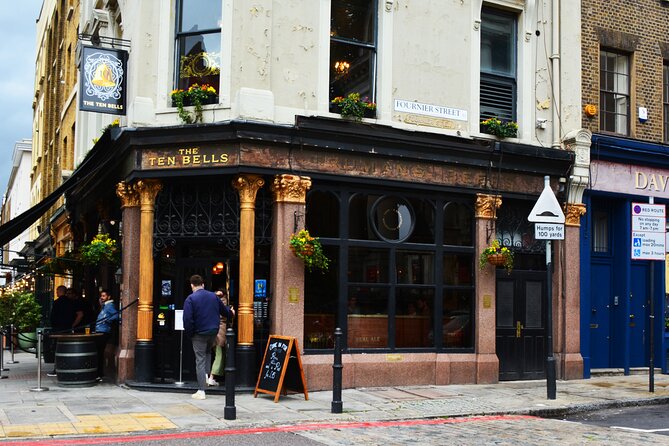
Around the corner, the Ten Bells pub provides another useful piece of context. The guide discusses Annie and explains how the pub was once renamed the Jack the Ripper pub before the Reclaim the Night movement helped push it back to its historic name, the Ten Bells.
That detail says a lot about modern attitudes toward true crime. Naming a pub after a murderer turns real suffering into a brand. Restoring the old name was a small but meaningful way to reject that treatment. The tour makes the point without turning the stop into a lecture.
This part of the walk can be emotionally heavy, especially when the focus shifts from the location of Annie’s death to her personal losses. Still, that is precisely why it works. You leave with more than a famous address. You have a fuller picture of a woman whose life is often buried beneath the killer’s nickname.
Same streets, a very different kind of fright:
- Ghost, Ghouls and Gallows Tour : Guided Tour with Boat Ride
★ 4.5 · 3,212 reviews - London Jack The Ripper Guided Walking Tour
★ 5.0 · 3,131 reviews - London: Comedy Horror Ghost Tour on a Bus
★ 4.4 · 2,084 reviews - London: Jack the Ripper Tour with Immersive Ripper Vision
★ 4.5 · 1,840 reviews
Old Spitalfields Market and Mary Jane Kelly
Old Spitalfields Market opened in 1887, the year of Queen Victoria’s Golden Jubilee and one year before the Whitechapel murders began. The guide uses the market to show the sharp contrasts of the Victorian era.
Markets were places of trade, work, and social contact, but the wider period also contained severe poverty and limited choices for women without secure income. Standing in a market that has changed many times makes the contrast easy to grasp. Modern shops and food stalls occupy a place shaped by much older working lives.
The route then moves along Crispin Street to the former site of a refuge for working-class people that appears to have offered practical help. This is a valuable counterpoint to the harsher lodging houses and workhouses discussed earlier. It shows that some aid was organized in ways that genuinely improved people’s lives.
Across the street is the former site of Mary Jane Kelly’s residence. Kelly was the last of the women connected with the murders and remains the most mysterious figure in the group. The guide explains what is known while avoiding the temptation to fill gaps with speculation.
That restraint is important. Jack the Ripper stories have collected rumors for more than a century, and Mary Jane Kelly’s life has attracted plenty of invention. This tour keeps the attention on the evidence and on the limited information available about her.
Petticoat Lane and the working East End
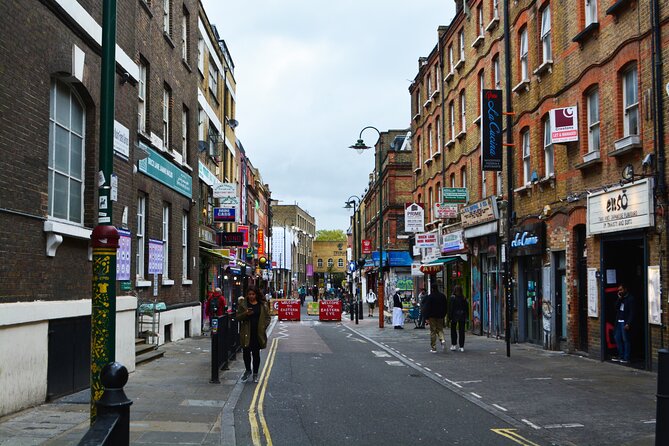
The short stop at Petticoat Lane takes only about five minutes, but it adds another piece to the district’s economic story. The area was once the heart of the East End textile industry.
You get a quick sense of how clothing, markets, workshops, and low-paid labor shaped local life. It is a brief pause, not a full lecture, so do not expect a long exploration of the textile trade. Its value comes from placing the murders within a working neighborhood rather than treating the streets as a collection of isolated crime sites.
The route also gives you the chance to notice the mix of old and new East London. Guides point out details such as street art, local restaurant signs, and buildings from different periods. These small observations are easy to miss when you walk alone with your phone pointed at a map.
St Botolph’s, Elizabeth Stride, and Mitre Square
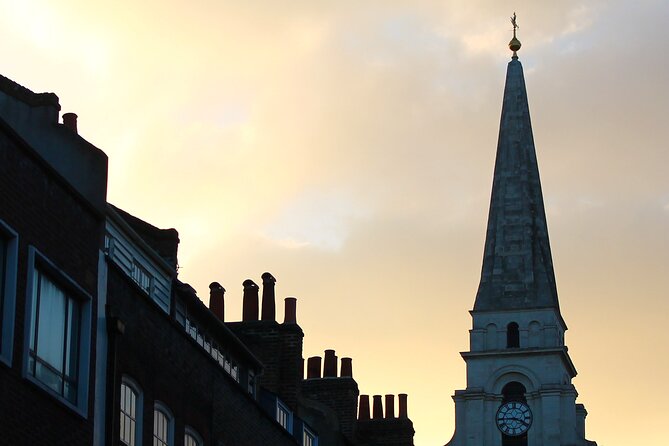
At St Botolph’s Church, also known as St Botolph’s without Aldgate, you meet the story of Elizabeth Stride. Originally from Sweden, Stride had a difficult beginning in Gothenburg before making her way to London.
Her story broadens the tour beyond a purely local account. Migration, personal upheaval, and the search for a new life were part of the East End experience. The guide gives attention to Stride’s early life and later adventures in London, helping you see her as a person who had traveled through several worlds before her death.
The walk finishes close to Mitre Square, where Catherine Eddowes was found. Eddowes came from Wolverhampton, and the guide presents her as a lively, determined woman rather than a faceless victim in a famous case.
This final section lasts about 25 minutes, making it one of the longer stops. It gives the tour room to draw together its main themes: movement into London, insecure work, housing problems, alcohol, poverty, and the way public stories can erase the people involved.
The stated end point is Spitalfields Market at 65 Brushfield Street, while the final discussion takes place close to Mitre Square. Pay attention to the guide’s directions at the end so you know exactly where the group finishes. Either way, you remain in a useful part of East London with public transportation nearby.
What $34.28 gets you
At $34.28 per person, this is a fair price for a two-hour guided walk through several important East End locations. There are no admission charges at the stops, so most of what you are paying for is the guide’s research, storytelling, route planning, and ability to connect scattered places into one clear account.
The value is strongest if you would otherwise wander around Whitechapel without knowing what you were seeing. A map can take you to Brick Lane, Spitalfields, or Mitre Square, but it will not explain why a former brewery matters, how a pub’s name changed, or how Victorian housing affected the women’s lives.
The group is limited to 20 people. That is not a private tour, but it is small enough to support questions and keep the guide from becoming a distant voice at the front of a crowd. Mobile tickets make arrival simple, and the tour is offered in English.
You should plan for about two hours of walking and standing. The route includes frequent stops, and places to sit may be available at some points, but this is still an evening walk through city streets. Comfortable shoes and clothing suited to the weather are sensible choices.
Who should book this tour?
I would choose this walk if you have read The Five by Hallie Rubenhold or want a similar victim-centered approach. The tour draws on the idea that the women deserve attention beyond the labels attached to them, while also adding the streets, buildings, and neighborhoods where their lives unfolded.
It suits adults interested in Victorian society, urban poverty, women’s history, migration, and the changing East End. It also works for families with mature children. One family with children aged 12 and 15 found the lack of gruesome imagery made the subject manageable, though you should still remember that the tour concerns murder and hardship.
It is less suitable if you want a theatrical, frightening night walk. You will not get a parade of graphic crime details, lurid photographs, or a heroic version of the murderer. The reward is a more thoughtful understanding of the women and the city around them.
Guides such as Cecily and Ellie also make a difference. Cecily is praised for speaking clearly, which may help if you have hearing difficulty or English is not your first language. Her recommendations for restaurants, pubs, and shops can also help you make use of the East End after the walk.
Should you book Jack the Ripper: What About the Women?
Book it if you want the Whitechapel murders placed in the lives of the women who died, not treated as entertainment about a famous killer. The route is easy to reach, the price is reasonable, the group size is controlled, and the guides bring care and clarity to difficult material.
Skip it if you want graphic detail, a fast-paced scare show, or a tour built around guessing the killer’s identity. For everyone else, this is a respectful way to see East London at night and understand how poverty, migration, housing, and public attitudes shaped the story. With a 5.0 rating from 39 responses and 100 percent recommendation, it has also made a strong impression on those seeking this particular approach.
Cancellation is free up to 24 hours before the 6:30 pm start. If bad weather or an insufficient number of bookings forces cancellation, you are offered another date or a full refund.
FAQ
Where does the tour start?
The tour starts on Aldgate High Street, London EC3N 1AH, outside Aldgate station.
What time does the tour begin?
The start time is 6:30 pm.
How long does the tour last?
The walk lasts approximately two hours.
Where does the tour finish?
The listed end point is Spitalfields Market at 65 Brushfield Street, London E1 6AA. The final discussion takes place close to Mitre Square.
What language is the tour offered in?
The tour is offered in English.
How much does the tour cost?
The listed price is $34.28 per person.
Is the tour available by mobile ticket?
Yes. A mobile ticket is provided.
How many people can join the tour?
The maximum group size is 20 people.
Is the tour suitable for children?
Most people can participate, and the tour does not use grisly pictures. It discusses murder, poverty, and difficult lives, so mature children and teenagers are the best fit.
What is the cancellation policy?
You can cancel at least 24 hours before the start time for a full refund. Cancellations or changes made within 24 hours are not refunded or accepted. If poor weather or an insufficient number of bookings cancels the walk, you are offered another date or a full refund.
Just added in London
- Visit Jack the Ripper in French★ 5.0 · 33 reviews
- Afternoon Jack the Ripper : Guided Tour★ 5.0 · 183 reviews
- Wicked Whitechapel: Where Now’s Jack The Ripper Audio Tour★ 5.0 · 2 reviews
- Ghosts, Gore & Other Ghasty Stories in the City of London★ 5.0 · 7 reviews
- The Ghosts of the secret alleyways of old London town★ 5.0 · 2 reviews
- The Fading Light London Ghost Walk★ 5.0 · 35 reviews
- The Haunted Pubs of Old London: Small Group Tour★ 5.0 · 38 reviews
- Self-Guided Audio Tour-Behind the shadow of evil: Jack the Ripper★ 4.0 · 2 reviews
Jack the Ripper Tours, compared.
London Jack the Ripper Guided Tour with Ripper-Vision
Read our review →
Jack the Ripper Tour with Immersive Ripper Vision
Read our review →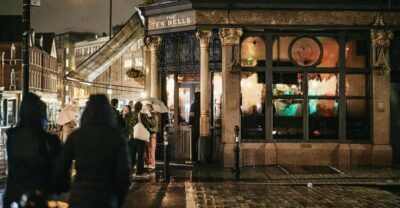
German Language : Original Jack the Ripper Tour
Read our review →
Ultimate Jack the Ripper : Guided Tour of London
Read our review →
Browse the lists this tour appears in