Review · OAHU
Honolulu Haunts and Hauntings Ghost Tour
Honolulu’s ghosts are tied to real places: a royal palace shaped by a coup, an old court where executions once took place, Hawaii’s oldest cemetery, and homes built by early missionaries. That gives this night walking tour more substance than a string of spooky punchlines.
I like the mix of Hawaiian history and local legends, and I like that the walk is short, flat, and easy to fit into an evening. Guides including Lon, Jade, Hope, and Terry have earned praise for lively storytelling and thoughtful answers. The main caution is that this is an outdoor storytelling walk, not a haunted-house attraction. You will not enter buildings, and the ghost stories can feel mild if you want major scares.
Key points to know before you book
- Royal ghosts at Iolani Palace: Hear about Hawaii’s monarchy, the 1893 coup, and the spirit said to watch over the palace grounds.
- Six historic stops: The route links palace grounds, a haunted intersection, an old building, the former Supreme Court, Kawaiahaʻo Church, and missionary homes.
- Easy city walking: The route is flat and does not cover a large amount of ground, making it a good choice if you want history without a long hike.
- Small groups can be excellent: The maximum is 35 people, but some departures have been very small, allowing more questions and personal attention.
- More history than horror: The strongest part is often the account of Honolulu and Hawaii’s past, with paranormal stories added at each site.
- Outdoor-only format: You visit the locations from public areas and do not go inside buildings to search for paranormal activity.
Why Honolulu’s past makes the ghost stories work
The best part of this experience is not simply asking if a light flickered or a shadow moved. It is the way each story is attached to a place with political, religious, or personal meaning.
Honolulu has layers of Hawaiian tradition, royal rule, missionary influence, colonial pressure, court proceedings, and modern city life. A ghost tour can flatten those subjects into spooky decoration, but this route has enough serious history to give the evening weight.
The experience costs $32 per person. For that price, I see the value in having a guide connect several central sites in one walk while adding stories you would be unlikely to find on a standard sightseeing route. You are paying for narration and local context, not admission tickets, transportation, food, or access to private interiors.
The tour is offered in English, uses a mobile ticket, and begins and ends at 447 South King Street. Since the walk lasts about an hour, it works well after dinner or alongside a daytime visit to Honolulu’s historic center. I would allow some extra time in case the guide takes questions or the storytelling runs longer than planned.
More ghost tours in the USA
- New Orleans Premier Ghost, Voodoo and Vampire Walking Tour
★ 4.5 · 12,856 reviews - Chicago: Gangsters and Ghosts Walking Tour
★ 5.0 · 7,155 reviews - Adults-Only New Orleans Ghost, Crime, Voodoo, and Vampire Tour
★ 5.0 · 6,545 reviews
Iolani Palace and the spirit of Queen Liliʻuokalani
The tour begins with one of Honolulu’s most meaningful locations: the grounds of Iolani Palace. Built around 1879, the palace was home to Hawaii’s royal family and later became the setting for the overthrow of the Hawaiian monarchy.
The central story concerns Queen Liliʻuokalani, the last reigning monarch of Hawaii. She fought for a free Hawaii until her death, and tradition says her spirit remains near the palace, watching over Honolulu.
This stop gives the tour its strongest historical anchor. Even if you are not convinced by paranormal claims, the palace grounds help explain the political upheaval that changed Hawaii. The ghost story works best here as a way to think about memory, loss, and the continuing importance of the monarchy.
You should expect to hear the story from outside rather than tour the palace interior. Some people have focused on flickering lights at the palace, but ordinary causes can explain such effects. The guide presents the atmosphere and the stories, while you can decide how much weight to give the supernatural side.
Kaua’nona’ula and stories without a famous tragedy
The next stop is an intersection associated with the name Kaua’nona’ula, translated as rain with the red rainbow. Unlike several other locations on the route, this spot is not linked to one major historic event.
Its appeal comes from reported encounters and unexplained moments. The guide uses the location to tell stories of strange experiences connected with the area, giving the walk a change of pace after the formal history of Iolani Palace.
This is also a good example of the tour’s limits. If you want every stop to have a well-documented historical incident, this one may feel lighter. It is mainly a storytelling stop, and its effect depends on the guide’s timing and delivery.
That makes guide quality important. Lon has been praised for animated, interactive storytelling, while Jade has been noted for combining island history with local lore. Hope has also been singled out for keeping a natural pace, so the group has time to listen instead of being hurried from place to place.
The white kimono story at the old building
An old Honolulu building provides one of the tour’s more familiar ghost motifs: a woman in a white kimono. Stories from workers and customers have kept the tale alive, and the account became prominent enough to appear in a news article about the tragedy said to follow an encounter with the apparition.
The guide adds this story to the site’s background rather than presenting the building as a theatrical attraction. You will hear the tale from the street and learn why people connect the location with a haunting.
This stop may appeal most if you enjoy folklore that has grown through repeated retelling. It is less satisfying if you are looking for firm proof. The tour describes documented accounts of paranormal activity, but the evidence for each story is not presented in the same way as a conventional historical record.
One practical point matters here: traffic and city noise can affect the experience. A quiet-speaking guide may be hard to hear near the street. I would stay close to the guide and ask for a repeat if needed. A previous weak experience was tied less to the subject matter than to soft delivery and difficulty hearing over surrounding noise.
Same streets, a very different kind of fright:
- Salem’s Best Ghost Tour
★ 4.5 · 4,186 reviews - Haunted Evening Horse and Carriage Tour of Charleston
★ 4.5 · 3,678 reviews - New Orleans Adults-Only Ghost, Voodoo and Vampire Tour
★ 5.0 · 3,291 reviews - Savannah History and Haunts Candlelit Ghost Walking Tour
★ 5.0 · 3,235 reviews
The former Supreme Court and the banyan trees
The former Supreme Court is one of the route’s most interesting stops because its history contains several different kinds of sorrow. The court opened in 1871 and handled cases that reached their final legal stage. Before the grounds became associated with sentences and executions, they held an orphanage.
That earlier use explains one of the more unusual stories on the walk. Sit under the banyan trees near the edge of the lot, the story goes, and you may hear children laughing as if they were still playing there.
The site also carries stories of the spirits of criminals sentenced to death in the early 1900s. The result is an unusual mixture of reported presences: children connected with the orphanage and lost souls tied to the court’s later history.
I find this stop more effective than a simple haunted building tale because the location changed purpose over time. The ghost stories reflect those layers. You get a lesson about the old legal system, a reminder of the court’s human cost, and a local legend connected with the trees.
Kawaiahaʻo Church and Hawaii’s oldest cemetery
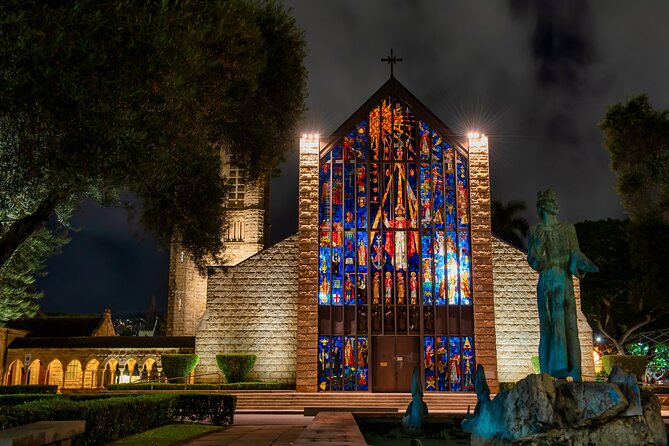
Kawaiahaʻo Church is described as the first Christian church built in Hawaii and one of the state’s oldest and most important historic sites. Its cemetery is even more central to the supernatural stories.
The grounds contain 296 gravestones, but the markers do not tell the full story of who lies beneath the soil. The number of bodies is believed to be higher than the number of visible stones, leaving a gap between the official-looking cemetery and the fuller history beneath it.
This is where the tour’s sensory stories become more prominent. You may hear about unusual smells, low whispers, and the ghost of a young boy who is said to wander among the graves.
The setting calls for care and respect. This is not a stage set. It is a religious place and a cemetery, so the guide’s reminder to treat sacred sites properly is important. Lon has been praised for making that respect part of the message rather than treating the locations as props.
For me, this stop also shows why a ghost tour can add something to a regular city walk. A daytime visit might give you the church’s architecture and general background. The evening tour adds stories about burial practices, memory, and the people who remain connected to the site in local tradition.
The missionary homes and the sound of children
The final location features two of Hawaii’s oldest homes. New England missionaries built them as they worked to spread Protestant beliefs, and the buildings now form part of a historic museum setting.
The stories here focus on women in long dresses and the sounds of children. The reports connect the quiet domestic spaces with the people who once lived and worked there.
This is a useful closing stop because it moves away from courts, executions, and royal political conflict. Instead, it brings the tour back to ordinary family life and the missionaries who helped reshape Hawaii’s culture.
You will not explore the interiors during this walk. The guide explains the history and the reported activity from outside. If you want to visit the museum itself, you will need to arrange that separately. The ghost tour gives you a reason to notice the homes, but it is not a museum admission or a guided interior tour.
What the guides add to the experience
Guide quality can make or break a storytelling walk. The strongest accounts of this tour praise guides who speak clearly, answer questions, connect with the group, and know how to make history feel personal.
Lon has been especially well received for an animated style and for mixing history with paranormal stories. Jade has been praised for explaining Hawaiian culture, colonization, and local legends in an engaging way. Hope has been noted for a calm pace and strong storytelling, while Terry has been valued for making the history worthwhile even for people who are not especially interested in ghosts.
The roster can vary, so you cannot necessarily request one of these guides. That variation also explains the unevenness of the experience. One guide may create a warm, intimate evening for a group of four or eight people. Another may tell the same stories too softly or with less confidence.
The group limit is 35, but some departures have been much smaller, including tours with only two or four people. A small group gives you more chances to ask about Hawaiian history, personal paranormal experiences, or the meaning of a place. If your group is larger, staying near the guide becomes more important.
Is the walk scary, strenuous, or suitable for children?
This is a light walking activity. The route is flat, does not cover a lot of ground, and suits anyone with a moderate level of fitness. You should still be comfortable standing and walking between several downtown sites.
The mood is spooky, but the tour is not built around jump scares. One useful way to think about it is as a historical night walk with paranormal material, rather than a horror attraction. It can work for families, and one account specifically found it suitable for children.
You will spend the evening outdoors, so plan for city conditions rather than a controlled indoor setting. Traffic, other pedestrians, and street noise can affect how clearly you hear the guide. Stay near the group, wear comfortable shoes, and keep your phone handy for the mobile ticket.
Who gets the best value from $32?
I think the $32 price is fair if you want a compact introduction to central Honolulu’s historic sites and enjoy stories that sit somewhere between history and folklore.
You get:
- About an hour of guided walking
- Six locations with distinct historical backgrounds
- English-language storytelling
- A professional guide
- All fees and taxes
- Stories based on researched history and reported paranormal activity
You do not get transportation, food, drinks, building entry, or a guaranteed paranormal encounter. Tips are not included, so budget for gratuity if the guide gives you a good evening.
I would book it early if your schedule is tight. The experience is often reserved well ahead of time, with an average booking lead time of 19 days. Free cancellation is available up to 24 hours before the start time for a full refund. Inside that window, the payment is not refunded and changes are not accepted.
Should you book the Honolulu Haunts and Hauntings Ghost Tour?
Book this tour if you want an easy evening walk that explains Honolulu through royal conflict, missionary influence, old courts, cemeteries, and ghost lore. It is a good fit for repeat visitors looking for something outside the usual beach and shopping routine, and for first-time visitors who want a short introduction to Hawaii’s past.
Skip it if you expect to enter haunted buildings, investigate paranormal activity, or feel frightened at every stop. The best reason to go is the blend of place-based history and local stories. The ghosts add atmosphere, but the real value is seeing central Honolulu as a city shaped by people, power, faith, and memory.
FAQ
How long is the Honolulu Haunts and Hauntings Ghost Tour?
The tour lasts approximately one hour. Storytelling and questions can make the evening run a little longer, so allow some extra time in your plans.
Where does the tour meet?
The meeting point is 447 South King Street, Honolulu, Hawaii 96813. The tour ends back at the meeting point.
What locations does the tour visit?
The route includes Iolani Palace grounds, Kaua’nona’ula, an old building associated with a white kimono ghost, the former Supreme Court grounds, Kawaiahaʻo Church and cemetery, and two historic missionary homes.
Does the tour enter the buildings?
No. The experience is an outdoor walking tour. You hear the history and ghost stories from the sites rather than entering buildings to look for paranormal activity.
Is the tour offered in English?
Yes. The tour is offered in English.
How many people can join the tour?
The maximum group size is 35 people. Some departures may be much smaller.
Is the walking route difficult?
The route is flat and does not cover a large amount of ground. A moderate level of physical fitness is recommended.
Can I cancel for a full refund?
Yes, if you cancel at least 24 hours before the experience begins. Cancellations made less than 24 hours before the start time are not refunded, and changes inside that period are not accepted.
Just added in the USA
- Dreaded Dead Descent of the District: DC Ghost Tour★ 4.2 · 186 reviews
- Phantoms of the Potomac: Old Town Alexandria Ghost Tour★ 4.0 · 56 reviews
- Alexandria Ghosts Spirits & Spirits Haunted Pub Crawl★ 5.0 · 26 reviews
- Haunted Alexandria Booze and Boos Ghost Walking Tour★ 5.0 · 157 reviews
- Ghost and Graveyard Tour★ 5.0 · 187 reviews
- Tombstone Ghost Tours: Ghosts and Gunslingers of the Wild West★ 4.5 · 147 reviews
- The Dead Men’s Tales Walking Ghost Tour in Tombstone★ 4.5 · 123 reviews
- Haunted Tampa Booze and Boos Ghost Walking Tour – Ybor City★ 4.5 · 147 reviews
USA Ghost Tours, compared.
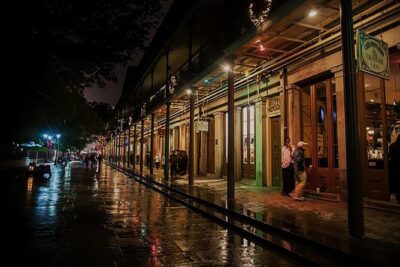
New Orleans Premier Ghost, Voodoo and Vampire Walking Tour
Read our review →

Adults-Only New Orleans Ghost, Crime, Voodoo, and Vampire Tour
Read our review →
Haunted Evening Horse and Carriage Tour of Charleston
Read our review →
New Orleans Adults-Only Ghost, Voodoo and Vampire Tour
Read our review →
Savannah History and Haunts Candlelit Ghost Walking Tour
Read our review →