
Review · AYIA NAPA
Ghost-Town Famagusta Mini Bus Tour from Protaras and Ayia Napa
Famagusta is not a normal sightseeing stop. It is a once-famous resort city frozen by the events of 1974, with empty hotels, barred streets, and a beach beside buildings that have been left to decay. This tour lets you see that strange divide up close, then adds the older walled city for a fuller picture of Famagusta.
I like the small group size, which is capped at 16 people, and I like the way the tour begins at the Derynia Cultural and Heritage Center. The short film, rooftop viewpoint, and provided binoculars help you understand what you are seeing before crossing the border. Guides such as George, Athos, and Olga have also made a strong impression by adding personal stories and humor to a difficult subject.
The main drawback is timing. The advertised visit takes about four and a half hours, but passionate guides can occasionally run well over schedule. Pickup is early, the commentary may be harder to hear from the back of the minibus, and the political story can feel one-sided unless you read a little before you go.
Key points to know before booking
- See Varosha from close range: Walk along permitted streets beside abandoned hotels and shopfronts near the Golden Sand shore.
- Start with a useful viewpoint: Derynia offers a film, rooftop views, binoculars, coffee, and refreshments before the border crossing.
- Expect a personal guide: George, Athos, Olga, and other local guides may add firsthand stories about the invasion and its effects.
- Explore two very different Famagustas: The deserted resort area is followed by the old walled city, churches, walls, and free time.
- Plan for an early start: Pickup is around 7:45 to 8:00 a.m. from Kapparis, Pernera, and Protaras, and around 8:15 to 8:30 a.m. from Ayia Napa.
- Bring the right documents and shoes: Passports are required at border control, and comfortable shoes matter for walking.
Why Famagusta feels unlike any other day trip
The striking thing here is not a single monument. It is the sight of ordinary resort life interrupted and never restarted. Behind fencing, former hotels and shops remain beside the sea, giving the place an unsettling feeling of time stopped.
The abandoned resort is part of Famagusta known as Varosha. Before the invasion, it was a popular holiday area. After the events of 1974, its residents left, and access was restricted for decades. The tour does not simply take you to a viewpoint and send you home. You cross the border, pass along the fenced resort area, walk on approved streets, and then enter the old walled city.
That combination matters. Varosha shows the human cost of division in a very direct way. The old city shows that Famagusta was important long before modern beach tourism, with fortifications, religious buildings, and centuries of trade and conflict.
I would not book this as a lighthearted beach excursion. The subject is painful, and the mood can be sad or unsettling. At the same time, the guide’s humor can make the day easier to absorb. George is often praised for mixing clear explanations with a good sense of fun, while Athos is known for personal stories connected to the events. The exact guide is not guaranteed, but the human element is a major part of the experience.
More Ghost Bus Tours in the world
- Edinburgh: Comedy Horror Ghost Bus Tour
★ 4.4 · 3,932 reviews - Comedy Horror Show: York Ghost Bus Tour
★ 4.4 · 3,032 reviews - Ghost Bus Tour of Edinburgh
★ 4.5 · 2,761 reviews
The Derynia viewpoint gives you a needed introduction
Your first stop is the Cultural and Heritage Center in Derynia, where you watch a short film showing Famagusta before the invasion. This is a useful opening because the abandoned buildings make little sense without a picture of the city as it once was.
After the film, you go to the roof of the center. Binoculars are provided, so you can look across the border toward Famagusta. From here, you are seeing the city at a distance rather than walking through it, but that first view helps you get your bearings.
You can buy a coffee or refreshments at the center. Food and drinks are not included in the tour price, so this is a practical chance to get something before the main visit. If you prefer to bring your own snack, the early pickup makes that sensible too.
The stop lasts about 20 minutes. That is enough for the film and rooftop view, but not enough for a long break. I like this short introduction because it gives the guide a clear starting point. The only limitation is that a film and a viewpoint cannot provide every detail about the political dispute. Read a little about Cyprus before you go, and the commentary will be easier to follow.
Crossing the border and approaching the abandoned resort
You need your passport for border control. This is not a minor formality, so check the document requirements before booking. Armenian, Nigerian, and Serbian passport holders are not accepted for this crossing according to the tour information.
Once across, the minibus drives beside the fence surrounding the former resort. The view changes quickly from a normal road journey to something much more unusual: empty properties, restricted areas, and hotels facing a shore that still looks inviting.
The tour then reaches the famous sandy beach. You see the deserted hotels close to the coast, though you should not expect unrestricted access to every part of the resort. The permitted route gives you a strong sense of the place without turning the visit into a free-for-all.
One detail worth keeping in mind is the contrast between the old buildings and the active beach area nearby. That contrast can feel uncomfortable. You may see people sunbathing in front of derelict hotels and fencing, while the guide explains why many Greek Cypriots find this disrespectful. It is a moment that raises questions about memory, tourism, and how a divided place is presented.
The subject deserves a respectful attitude. This is not a film set or a collection of abandoned buildings with no connection to living people. Families left homes, businesses, and property behind, and the effects remain unresolved.
Walking through Ghost Town Famagusta
The walking portion lasts about 40 minutes. You stroll along a permitted street lined with abandoned hotels, former shops, and properties that once served holidaymakers. The route continues toward the Golden Sand shore before returning.
Do not expect to wander through every road or walk freely along the entire beach. Access is limited, and the tour follows the areas open to visitors. Even so, the permitted streets give you a clear impression of how quickly a resort can become empty.
I recommend comfortable shoes. The walk is not described as strenuous, but the day also includes the old city and its walls. The combination of pavement, stops, and standing can become tiring if you wear thin sandals or shoes with little support.
This is the part that can lose its power if the commentary is weak. The first abandoned storefront is striking. Several more make the story clearer. After a while, you need context from the guide to keep looking with purpose. That is why the quality of the guide matters so much.
Athos has been especially valued for his personal connection to the events and his stories about people who lived in Famagusta. Guides with direct local experience can turn a row of empty buildings into a story about homes, work, and sudden displacement. If your guide speaks quietly or the minibus is crowded, move closer during explanations and ask questions during the walk.
More ghost tours in the world
- New Orleans Premier Ghost, Voodoo and Vampire Walking Tour
★ 4.5 · 12,856 reviews - The World Famous Underground Ghost Tour
★ 4.5 · 9,272 reviews - Chicago: Gangsters and Ghosts Walking Tour
★ 5.0 · 7,155 reviews - Edinburgh: Haunted Underground Vaults and Graveyard Tour
★ 4.6 · 6,607 reviews
The walled city adds centuries to the story
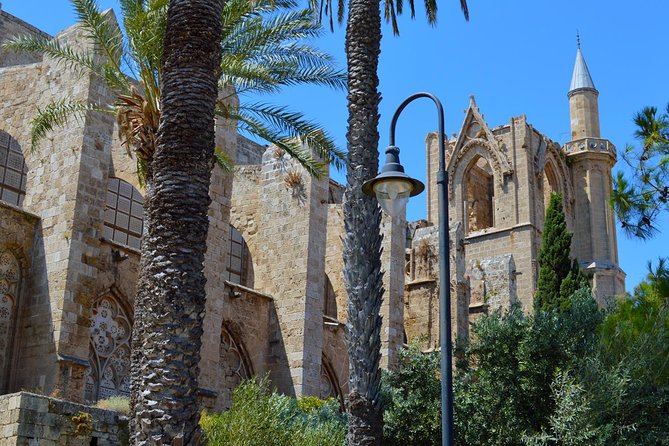
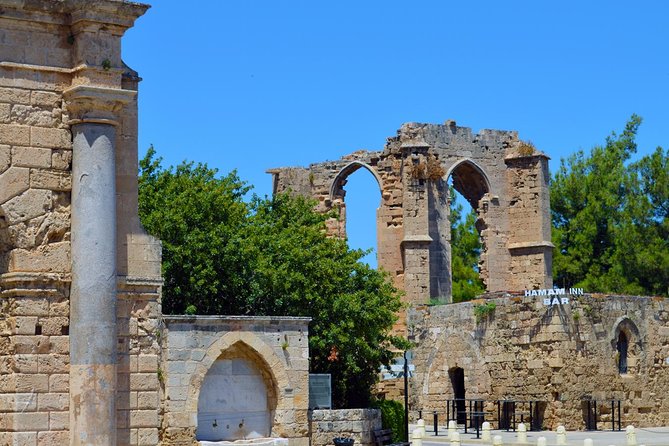
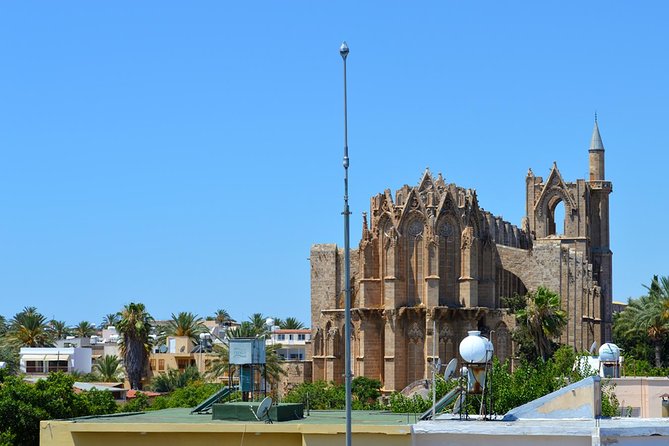
After the resort, the tour circles the moat of the old Gothic city. The walls rise above the road, and the change in setting is dramatic. You are no longer looking at a modern holiday district. You are entering a fortified city with layers of religious, military, and civic history.
The old city once contained hundreds of churches and cathedrals. The exact figure given for the tour is 365, a reminder of how important Famagusta once was. You will not visit all of them, of course, and many buildings have changed over time. The main value is seeing the city as a whole, with its walls, streets, and surviving religious architecture.
The guide leads you through the old town, then gives you free time. You can walk around, look at the cathedral, or sit with a coffee and local sweets. This pause is welcome after the more emotional visit to the abandoned resort.
The free time also makes the tour feel less rushed. You can follow the guide’s route, then choose how much more you want to see. If you are interested in architecture or religious buildings, use this hour carefully. If the morning has felt heavy, sitting down with a drink gives you time to process it.
The old city is not simply an extra stop added to fill the morning. It prevents you from seeing Famagusta only as a ghost town. The city has a long story, and the deserted hotels are one chapter, not the whole book.
What the guides add to the experience
The guide can make or break this tour. George is frequently singled out for being funny, friendly, and good at explaining a sad subject. Athos is valued for firsthand experience and detailed local stories. Olga is praised for explaining the invasion clearly and sharing personal experience. These names give you an idea of the kind of guiding available, but you cannot choose a specific guide when booking based on the information provided.
Strong guides do two jobs. First, they explain what you are seeing. Second, they help you understand how the political division affects ordinary people. That second part is why this visit can feel more meaningful than a simple drive across the border.
The balance of the explanation is worth considering. One person found the account insufficiently even-handed and wanted more background on why the war began and why Turkey invaded. I think that is fair advice. The tour presents a local Greek Cypriot perspective, and personal stories are powerful, but they are not the same as a full academic account of the conflict.
You can improve the experience by reading a short, neutral background account before pickup. Then you can listen for what the guide adds rather than trying to build the entire story from a few hours of commentary.
Sound can also matter. One person found it difficult to hear from the rear of the minibus. If you have hearing trouble, sit nearer the front and ask the guide to repeat important points. A small group helps, but a full 16-seat vehicle can still make conversation uneven.
Is the $60.49 price good value?
At $60.49 per person, the price is reasonable if you value transport, border arrangements, guiding, and the chance to visit both Varosha and the old city in one morning. Hotel pickup and drop-off are included from Ayia Napa, Protaras, Pernera, and Kapparis. You do not pay extra for fuel, parking, sightseeing, or local taxes.
The value is strongest if you do not have a car or do not want to organize the crossing yourself. You are also getting a guide who can explain the places rather than leaving you to interpret empty hotels on your own.
Food and drinks are extra. That is easy to manage, since you can buy coffee or refreshments at the Derynia center and find drinks or sweets during free time in the old city. There is no suggestion that lunch is included, so do not book expecting a full meal.
The cost may feel high compared with an open-top bus option, especially if you are traveling on a tight budget. The advantage here is the smaller group, included pickup, guided border crossing, and access to the Derynia introduction. You are paying for convenience and context, not just a seat on a vehicle.
Pickup, timing, and the practical details
Pickup is offered only in Kapparis, Pernera, Protaras, and Ayia Napa. The approximate time is 7:45 to 8:00 a.m. for Kapparis, Pernera, and Protaras, and 8:15 to 8:30 a.m. for Ayia Napa. Give the hotel name when booking so the operator can arrange the pickup.
The early start is one of the tour’s few clear inconveniences. There is no choice of multiple start times in the supplied details, and the half-day schedule begins in the morning. On the plus side, the planned duration of about four and a half hours leaves much of the day free.
Allow extra time in your personal plans. The stated duration is approximate, and one especially enthusiastic guide took nearly eight hours because the commentary ran long. That is unusual compared with the advertised schedule, but it shows why you should not book a tight afternoon flight, boat trip, or restaurant reservation immediately afterward.
The vehicle is a minibus, and group size is limited to 16. Pickup and drop-off are included, but communication about the exact pickup time has not always been perfect. If the vehicle has not arrived, contact the operator rather than assuming the tour has been canceled. Also, confirm that you are joining the Famagusta tour, since one booking error resulted in a passenger being placed on the wrong excursion.
The tour operates in all weather conditions, although poor weather can lead to cancellation with a different date or full refund. A minimum number of participants is required, and cancellation is free up to 24 hours before the start time. Changes or cancellations made within 24 hours are not accepted for a refund.
Who should book this Famagusta tour?
I would choose this tour if you want to understand Cyprus through a place that still carries the marks of political division. It suits adults, history fans, photographers interested in abandoned places, and anyone who prefers local explanation to independent sightseeing.
It can also work for families. One guide used a quiz to keep a 12-year-old engaged, and the free time in the old city gives children a change of pace. Still, the subject is serious, and younger children may not appreciate why the abandoned resort matters.
I would be cautious if you want a relaxed beach morning, dislike political discussion, or need a guaranteed return time. You should also think twice if you expect to walk freely through the entire resort. The access route is controlled, and the experience depends heavily on the guide.
Should you book it?
Book this tour if Famagusta is one of the places you most want to understand, not merely photograph. The combination of the Derynia viewpoint, abandoned resort, Golden Sand shore, old walls, and free time in the walled city gives you a fuller visit than a quick border crossing.
Go with realistic expectations. The morning may be emotional, the political explanation may reflect a particular local viewpoint, and the schedule can run long. Sit near the guide, wear comfortable shoes, bring your passport, and allow more than four and a half hours if your plans are flexible.
For $60.49, the tour offers solid value for a small group with pickup, guiding, and no extra sightseeing fees. If you want a respectful, practical introduction to one of Cyprus’s most difficult and unusual places, I would book it.
FAQ
How long does the Famagusta tour take?
The planned duration is approximately four hours and 30 minutes. The actual timing can run longer if the guide spends extra time sharing stories and historical details.
Where does pickup operate?
Pickup is available from Kapparis, Pernera, Protaras, and Ayia Napa only. If you are staying outside these areas, you should advise the operator how you will reach one of the available pickup points.
What time is pickup?
Pickup is approximately 7:45 to 8:00 a.m. from Kapparis, Pernera, and Protaras. From Ayia Napa, pickup is approximately 8:15 to 8:30 a.m.
Do I need my passport?
Yes. Passports are required for border control. Armenian, Nigerian, and Serbian passport holders are not accepted to cross the border for this tour.
Is food included?
No. Food, drinks, and refreshments are not included. You can buy coffee or refreshments at the Derynia Cultural and Heritage Center and enjoy coffee or sweets during free time in the old city.
How many people can join the tour?
The tour has a maximum group size of 16 people. Hotel pickup and drop-off are included for the stated pickup areas.
Can I cancel for a refund?
You can cancel up to 24 hours before the experience starts for a full refund. Cancellations or changes made less than 24 hours before the start time are not accepted, and poor weather or failure to meet the minimum number of participants may lead to a different date or full refund.
Just added in the world
- Ghost and Graveyard Tour★ 5.0 · 187 reviews
- Vienna: Spooky Ghost Tour in English★ 4.8 · 209 reviews
- Vienna: German Guided Ghost Tour of Spooky Vienna★ 4.9 · 113 reviews
- Dreaded Dead Descent of the District: DC Ghost Tour★ 4.2 · 186 reviews
- Hoi An Ghosts, Death, Mystery Unveiled★ 5.0 · 33 reviews
- Ho Chi Minh City: Ghost, Belief & Culture Tour on Motorbike★ 5.0 · 5 reviews
- HCM city Chinatown Landscape, Beliefs & ghost tour by scooter★ 5.0 · 22 reviews
- Hoi An Ghosts, Death, Mystery Unveiled★ 5.0 · 25 reviews
Ghost Bus & Trolley Tours, compared.


Cemetery and Ghost BYOB Bus Tour in New Orleans
Read our review →
New Orleans Dead of Night Ghosts and Cemetery Bus Tour
Read our review →Browse the lists this tour appears in