
Review · MUNICH
Executioners, whores, witches with drama
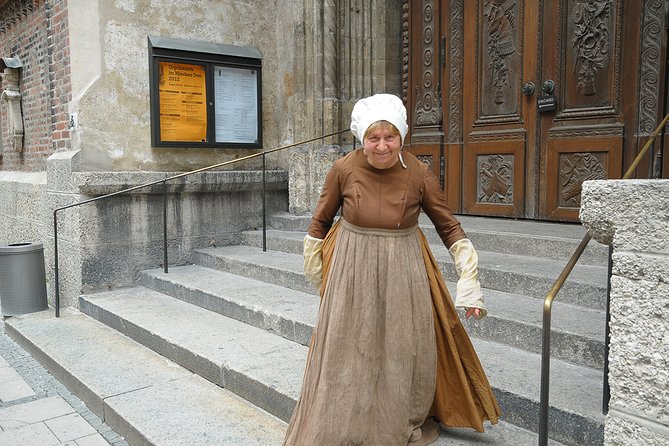
Munich’s dark past comes alive on this evening walk, where executioners, prostitutes, and witches reveal the city’s old fears, crimes, and beliefs. Costumed actors do more than pose for photos: they perform scenes built around real historical themes, including witch hunts, prostitution, and the Devil’s Pact.
I like the mix of solid historical detail and live drama, and I like that the tour stays focused on one unusual side of Munich rather than giving you another broad walk past famous buildings. The strong-voiced guides are useful in noisy streets and inside churches, too.
The main drawback is the subject matter. This is not a gentle introduction to Munich. Stories about executions, sexual exploitation, witch trials, and superstition may not suit young children or anyone looking for a light evening stroll. The 8 p.m. start also means you should be ready for a late finish.
Key points to know before booking
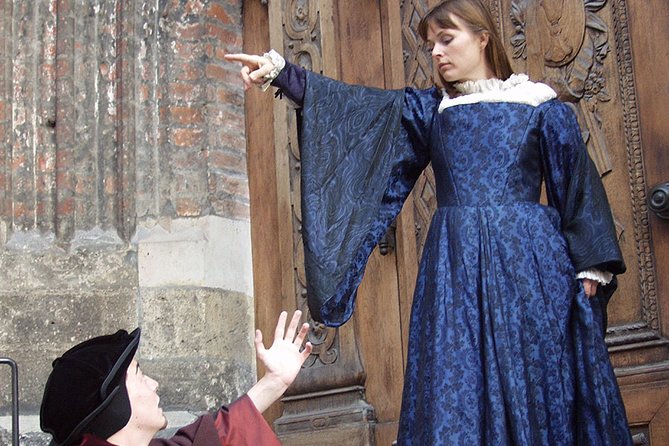
- Historical actors lead the way: Costumed performers bring old Munich characters and stories into the modern city.
- The theme is unusually dark: Expect witch hunts, prostitution, executioners, pimps, and the Devil’s Pact.
- Karlstor is the start and finish: The walk begins at Neuhauser Strasse at 8 p.m. and returns to the same meeting point.
- Plan for about two hours: One performance has run closer to two and a half hours, so avoid scheduling a tight dinner reservation afterward.
- A small group helps: The maximum group size is 30, which makes it easier to hear the guide and follow the acting.
- The price reflects live entertainment: At $33.57 per person, you are paying for a staged history walk, not just a standard city orientation.
Munich after dark, with the past brought forward
This tour takes a narrow and memorable path through Munich’s history. Instead of concentrating on rulers, grand churches, and polished squares, it looks at people who lived at the edge of respectable society. Executioners, prostitutes, and suspected witches all appear in the story, each tied to fear, punishment, survival, or public fascination.
That focus gives the walk a clear personality. I find themed history tours work best when they have a strong question at their center. Here, the question is what these three groups had in common in old Munich. The answer is stranger than you might expect: executioners were not only involved in public punishment. In Munich’s early history, they were also linked with prostitution and pimping.
The subject is serious, but the format keeps it from becoming a lecture. Professional actors in historical dress stage scenes while the guide supplies context. You get facts, but you also get faces, voices, and small moments of performance that help you remember what the facts mean.
More Witch Tours in Germany
- Munich: Witches and Executioners Guided Tour
★ 4.7 · 353 reviews - Witch Trials in Bamberg
★ 4.4 · 187 reviews - Oldenburg: “Executioners, witches & scoundrels” (crime thriller tour)
★ 4.6 · 50 reviews
Starting at Karlstor at 8 p.m.
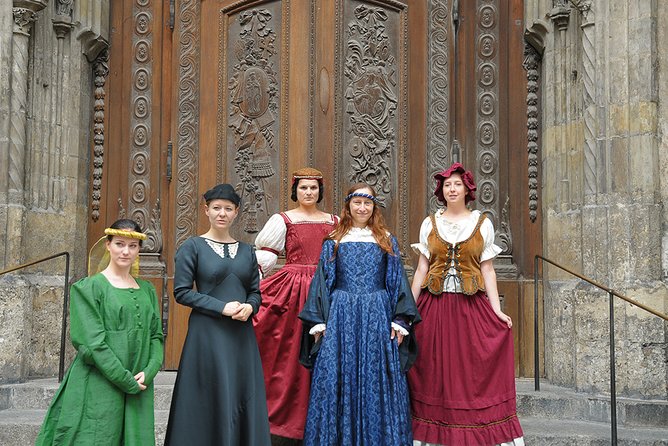
The meeting point is Karlstor, on Neuhauser Strasse in central Munich. The tour starts at 8 p.m., when the city has begun to change character and the evening setting fits the material.
Karlstor is a practical meeting point because it is near public transportation and easy to reach from central Munich. Your confirmation is supplied at booking, and the activity returns to this same location at the end. That makes the evening simpler than a walk that drops you in a different part of town.
Arrive with enough time to find the group before the start. The supplied details do not give a precise late-arrival policy, so I would not count on being able to join easily once the actors have moved into the city.
The darkness is part of the design, not a nuisance. Scenes about witchcraft, punishment, and old fears make more sense after sunset than they would in the middle of a bright afternoon. At the same time, you should dress for an outdoor city walk and be prepared to stay on your feet for around two hours.
Executioners had a role far beyond the gallows
One of the most interesting parts of the story is the role of the executioner. In old Munich, executioners worked at places linked with public punishment, including the Fragstatt and Galgenbergl. Their work marked them as social outsiders, yet their position gave them access to parts of city life that other people avoided.
The tour uses this unusual profession to open a wider discussion about society. Executioners handled punishment, but they were also connected to prostitution and pimping. That detail may sound sensational at first, yet it points to the practical realities of a city that needed certain services while shunning the people who performed them.
This is where the acting can help. A plain explanation of social outcasts may slide past you. A performer showing how an executioner was treated, or how power and shame shaped his work, gives the subject more force.
You should not expect a full academic study of medieval law or crime. The tour has a story to tell, and it selects details that work well in a live setting. If you enjoy history that sits outside the usual royal and military subjects, this angle should be a strong match.
Witches, fear, and the Devil’s Pact
Witch hunts form another major thread. The tour presents a world in which misfortune, illness, unusual behavior, and bad luck could be given supernatural explanations. Accusations could carry serious consequences, and the boundary between belief, rumor, and punishment was often thin.
The Devil’s Pact adds a theatrical center to the evening. It belongs to the world of old fears and imagination that the performers are trying to recreate. Expect drama rather than a dry explanation of religious doctrine.
The subject works best if you keep an open mind about how people once understood danger. The point is not simply that past societies were superstitious. It is that beliefs shaped decisions, laws, reputations, and lives.
I would also keep your expectations measured. The supplied information does not identify every location connected with the witch-hunt stories, so you should book this for the performance and themes rather than for a long list of named landmarks.
Same streets, a very different kind of fright:
- Munich Ghosts and Spirits Evening Walking Tour
★ 5.0 · 1,900 reviews - Gruseltour Leipzig: A Haunted Guided Tour
★ 4.5 · 1,385 reviews - Munich: Spooky Tour of Old Town in German
★ 4.6 · 1,112 reviews - Stuttgart: Guided Ghost Walking Tour
★ 4.5 · 867 reviews
Prostitution and the people Munich pushed aside
The prostitution stories add another layer to the walk. They place sexuality, money, power, and public morality into the same frame as execution and witchcraft. That combination may sound odd, but it reflects the tour’s larger interest in people who were useful to society and condemned by it at the same time.
The performers help turn those ideas into human scenes. Instead of only hearing that prostitution existed, you see how the subject can be presented through character and conflict. The tone is dramatic and sometimes provocative, so it is better suited to adults and older teenagers than to small children.
One useful feature is the balance between story and explanation. A guide remains present to connect the scenes to Munich’s past, while the actors create the emotional lift. That blend prevents the walk from becoming either a simple play or a list of dates.
If you are sensitive to historical subjects involving sex, public punishment, or accusations of witchcraft, read the title and theme carefully before booking. The content is not hidden, and the tour’s appeal depends on its darker material.
Acting makes the history easier to remember
The performances are the main reason to choose this experience over an ordinary city walk. The actors appear in historical costumes and illustrate specific fates. The stated aim is to make city history feel close, and the format supports that goal.
The acting is not just an opening flourish. It is used throughout the walk to show how people understood their world and how certain professions were treated. One performer named Juliet is singled out in the supplied comments as bringing energy to the presentation, even in modest weather.
The guide remains important. You need someone to frame the scenes, explain what is known, and keep the story moving from one subject to the next. A strong speaking voice matters in Munich’s busy center, especially when a group gathers outdoors or enters a church.
The available comments also point to a guide who could be heard clearly through city noise and in church interiors. That is a practical advantage, not a minor one. A brilliant story is of little use if you miss half the explanation.
The tour is conducted in a group of up to 30 people. That is not an intimate private walk, but it is manageable. A group of this size still gives the actors room to perform without making the experience feel like a large bus excursion.
Churches and city streets create a useful contrast
The route begins and ends at Karlstor, but the experience is not limited to one square. The supplied details indicate that parts of the presentation take place in city streets and churches. That changing setting gives the stories a stronger sense of place.
A church interior can make stories about sin, judgment, witchcraft, and the Devil’s Pact feel especially charged. Street scenes, by contrast, connect the stories with ordinary city life. You are not being asked to imagine the past in a museum room. You are standing in the modern center while actors point toward an older Munich beneath it.
Still, this is not a sightseeing walk built around a long list of major monuments. The historical settings support the stories, rather than serving as the main attraction. If your priority is seeing every famous landmark illuminated at night, choose a standard evening city tour instead.
Is $33.57 good value?
At $33.57 per person, this costs more than a basic self-guided walk but less than many large theatrical productions. The price makes sense if you value live scenes, a specialized theme, and a guide who can explain the historical setting.
You are paying for roughly two hours of organized entertainment and interpretation. The group limit of 30 helps protect the experience, and the actors add something you cannot get from a printed guidebook. The tour also offers a subject you may not encounter on a standard Munich orientation walk.
The value is weaker if you want a broad introduction to the city. You will not get equal attention to Munich’s art, food, royal buildings, or major political history. This is a focused evening story about marginal lives and dark beliefs.
It is also worth leaving room in your schedule. The advertised duration is about two hours, but one supplied account describes a two-and-a-half-hour performance. I would avoid booking a fixed dinner immediately afterward, particularly if you need to cross town.
The experience is often booked around 15 days ahead. That does not guarantee it will sell out on your dates, but it is a useful signal to reserve early if the evening time and theme are important to your plans.
Who will enjoy this walk most?
I would choose this tour for adults, older teenagers, history fans, and anyone who has already seen Munich’s main sights and wants a less polished side of the city. It also suits people who remember stories better when they are acted rather than simply explained.
The format can work well for a family with a teenager who is interested in the darker side of history. One supplied account describes it as a successful choice for a 14th birthday, with a good balance of information and fun. I would still use your own judgment about the child’s comfort with executions, prostitution, and witch hunts.
It is also a good option for a group of relatives or friends. The maximum of 30 people is large enough for a shared outing but not so large that the acting disappears in the crowd. The activity is suitable for most people, and service animals are allowed.
I would skip it if you dislike theatrical interpretation, need a fully accessible indoor program, or want a calm walk with no disturbing subject matter. The supplied details confirm that most people can participate, but they do not provide a full route description or accessibility breakdown, so ask the operator if you have specific mobility needs.
Practical details for a smoother evening
You receive confirmation when booking, and the ticket is mobile. Keep it available on your phone at Karlstor. The activity is near public transportation, so reaching the meeting point should be straightforward from central Munich.
Free cancellation is available up to 24 hours before the start time for a full refund. Changes or cancellations made less than 24 hours before the 8 p.m. start are not accepted for a refund. The operator may also cancel if the minimum number of people is not reached, in which case you are offered another date or experience, or a full refund.
Wear shoes you can walk in and clothing suited to the evening. The tour is outdoors for much of its course, and the performance can last longer than the stated two hours. Bring enough phone battery to display your mobile ticket and to avoid losing contact with your booking information.
Should you book the Karlstor night walk?
Book it if you want Munich history with a sharp edge. The unusual link between executioners and prostitution, the witch-hunt stories, the Devil’s Pact, and the use of costumed actors give this walk a clear identity.
I especially like the combination of performance and explanation. The guide’s strong voice, the historical detail, and the actors, including Juliet, help the material carry across noisy streets and church interiors. At $33.57, the experience offers fair value for a focused two-hour evening program.
Skip it if you want a general city introduction, a quiet stroll, or child-friendly history without grim subjects. For everyone else, this is a smart pick after dark, especially if you have already seen Munich’s standard sights and want to meet the city’s more troubling characters.
FAQ
Where does the tour begin?
The tour begins at Karlstor on Neuhauser Strasse, 80331 Munich, Germany.
What time does the tour start?
The scheduled start time is 8 p.m.
How long does the tour last?
The tour is scheduled to last approximately two hours. One supplied account describes an experience lasting two and a half hours, so allow extra time.
Where does the tour end?
The activity ends back at the Karlstor meeting point.
What subjects does the tour cover?
It covers witch hunts, prostitution, executioners, the Devil’s Pact, and old beliefs and fears in Munich.
Are actors part of the experience?
Yes. Actors in historical costumes perform scenes and portray people connected with Munich’s past.
How many people can join the tour?
The maximum group size is 30 people.
Can I cancel for a full refund?
Yes. You can cancel at least 24 hours before the start time for a full refund. Cancellations or changes made less than 24 hours before the start are not refunded.
Just added in Germany
- Witches, ghosts and executioners / Mystical North Hesse★ 4.4 · 4 reviews
- Nuremberg Ghosts and Gallows Evening Walking Tour in English★ 5.0 · 56 reviews
- The Original Haunted Walk of Munich in English★ 4.5 · 13 reviews
- Cologne Haunted Quest: The Witch Self-Guided Tour★ 3.0 · 38 reviews
- Gruseltour Berlin Haunted Ghost Walk 90-minute at Berlin Mitte city center★ 5.0 · 75 reviews
- Osnabrück: Witch Mania & Superstition (Adventure Tour)★ 5.0 · 2 reviews
- Mannheim, guided costume tour: Hangmen, Witches, Huguenots★ 5.0 · 4 reviews
- Leipzig Old Cemetery: 75-Minute Dark History Tour★ 4.6 · 181 reviews
Witch Trial & Witchcraft Tours, compared.
Wicked Awesome Tours: Witch Trial History and Salem Haunts!
Read our review →
Best Salem Witch Trials Historical Walking Tour
Read our review →
Browse the lists this tour appears in