
Review · ATHENS
Athens Ghost Tour
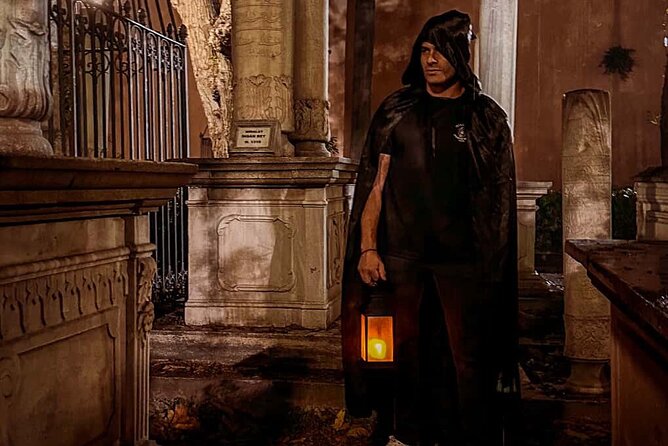
Athens has no shortage of old stones, but this tour asks you to see them through a darker lens. Over two hours, you’ll walk from the Thission cinema area through ancient ruins, Ottoman-era sites, old churches, and places linked to murder, war, execution, and the afterlife. The route mixes ghost stories with solid local history, so it works best as an evening history walk with paranormal tools rather than a nonstop scare show.
I like the way the tour reaches places you might miss on a standard Athens visit, especially the oldest house in Athens, the old Ottoman madrassa, and the lesser-known prison associated with Socrates. I also like the small-group limit of 15, along with the patient guiding style described by guests, including extra context when questions lead beyond the planned tale.
The main consideration is the tone. You’ll use equipment such as a Gauss meter and camera, but paranormal activity may be limited. One past participant found the experience too expensive for the amount of ghost activity, while others found the history and nighttime walk well worth the price. Expect some steep steps and uphill walking.
Key things to know before you book
- The route covers ten historic sites: You’ll visit the Acropolis area, Areopagus, Roman Agora, Ancient Agora, Socrates’ prison, and several old churches and neighborhoods.
- The tour is more historical than theatrical: Stories about executions, war, religion, and ancient philosophy carry as much weight as the ghost-hunting equipment.
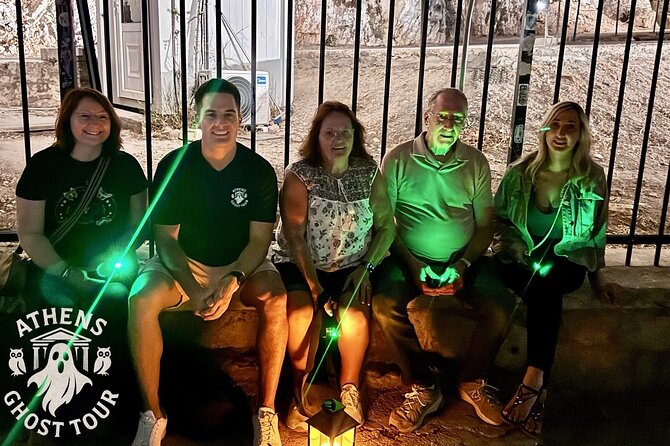
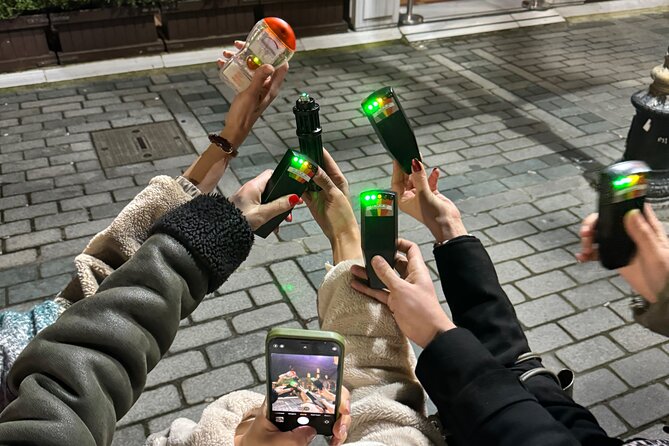
- You may use paranormal tools: A Gauss meter and camera are part of the experience, though results are not guaranteed.
- The walk begins at 8 p.m.: Meet at Thission Open Air Cinema on Apostolou Pavlou 7, then return to the same point after about two hours.
- The route is not effortless: You need moderate physical fitness, and some uphill sections and steep steps can be hard for people with limited mobility.
- The price reflects a small, specialized evening tour: At $43.62 per person, the value depends on how much you enjoy local stories and historic atmosphere, not just ghost sightings.
Athens after dark, with a longer memory
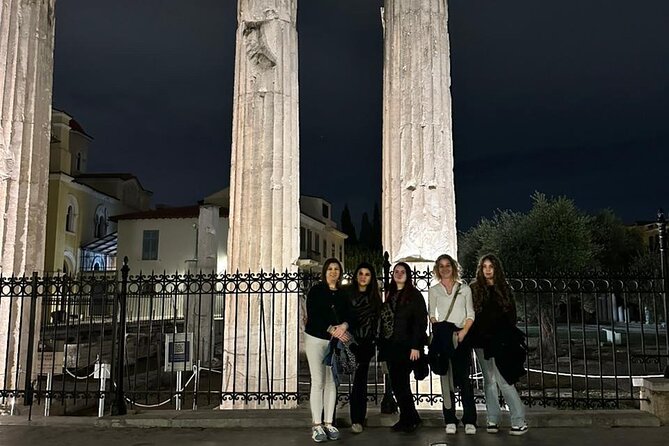
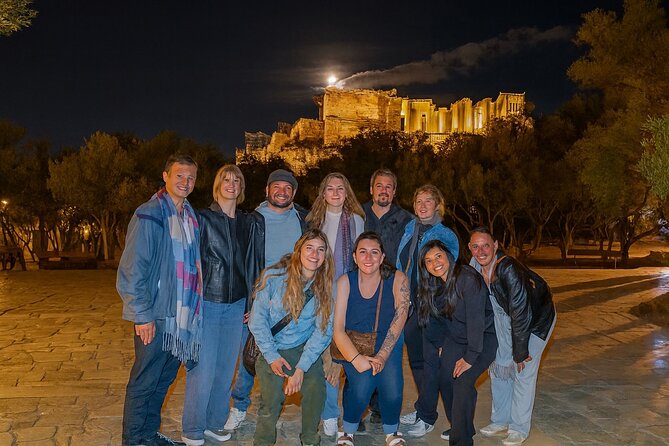
The tour begins at Thission Open Air Cinema, a practical meeting point near the pedestrian routes around the Acropolis and Ancient Agora. At 8 p.m., Athens has a different feel. The major sights are no longer presented as a tidy list of monuments. Instead, your guide connects them to personal tragedies, religious belief, political violence, and stories that have survived for centuries.
The advertised group maximum is 15 people. That matters here. A ghost walk loses some of its charm when you are trying to hear a story over a large crowd, and a small group gives you more room to ask questions. The guides have been praised for being friendly, flexible, and willing to explain the wider setting instead of rushing from one stop to the next.
The main guide has been described as American, with a Greek-speaking companion helping translate questions. The available information does not provide their names, so you should not expect a named guide guarantee when booking. English is the stated tour language.
Keep your expectations clear. This is not a haunted-house performance with actors jumping out at you. It is a walking tour built around stories, old sites, and attempts to detect unusual signals. If you want atmosphere and local context, the format makes sense. If you want constant supernatural action, $43.62 may feel high.
More ghost tours in the world
- New Orleans Premier Ghost, Voodoo and Vampire Walking Tour
★ 4.5 · 12,856 reviews - The World Famous Underground Ghost Tour
★ 4.5 · 9,272 reviews - Chicago: Gangsters and Ghosts Walking Tour
★ 5.0 · 7,155 reviews
Stenopos Kollytos and the ancient ghost story
The first stop is the area of Stenopos Kollytos, linked to what the tour presents as the oldest ghost story in the world. The tale centers on Athenodoros, a Stoic philosopher who later became tutor to Augustus, the first Roman emperor.
This is a strong opening because it sets up the tour’s main idea: ghost stories are not only about fear. They also reveal how people in different periods thought about death, reason, and the soul. Athenodoros gives the guide a way to connect Athens with the Roman world and with later ideas about haunted places.
You spend about ten minutes here. That is enough for the core tale, but not enough for a long lecture. If you like the way mythology, philosophy, and local streets overlap, this stop should catch your attention. If you want a graphic or dramatic ghost encounter right away, it may feel quiet.
The Acropolis and a buried Ottoman past
Near the front gate of the Acropolis, the tour turns to an Ottoman cemetery. Athens lived under Ottoman rule for roughly four centuries, and the story here focuses on the graves that once occupied this prominent ground.
This stop is useful because the Acropolis is often presented as a purely classical Greek monument. The cemetery story reminds you that the hill and its surroundings passed through many periods, with each era leaving traces behind. The ghost angle comes from disturbed burial ground and the lives connected to it, but the historical point is just as important.
The visit is listed as about 15 minutes. You should expect to hear the story from outside rather than treat this as an interior visit to the Acropolis. The tour does not include a standard Acropolis admission experience, so book this for the nighttime setting and interpretation, not as a replacement for a daytime Acropolis visit.
Areopagus, murder trials, and a famous Christian speech
The next stop is Areopagus, the sacred rock beside the Acropolis. In ancient Athens, it was associated with murder trials, giving the guide a natural setting for stories of guilt, judgment, and the fate of the dead.
The site also connects to a sermon by Saint Paul before the Council of the Areopagus. That gives the stop a second layer. You move from ancient legal tradition to early Christianity, with both worlds asking what justice means and what happens after death.
The rock has uneven surfaces and steps, so take care in low light. The stop lasts about 15 minutes, and the setting itself does much of the work. From here, you get a strong sense of Athens as a city where religious, political, and philosophical ideas once met in the open air.
Same streets, a very different kind of fright:
- Edinburgh: Haunted Underground Vaults and Graveyard Tour
★ 4.6 · 6,607 reviews - Adults-Only New Orleans Ghost, Crime, Voodoo, and Vampire Tour
★ 5.0 · 6,545 reviews - Prague: Ghost Walking Tour Where Legends Come To Life
★ 4.4 · 5,253 reviews - Prague: Ghosts, Legends, Medieval Underground & Dungeon Tour
★ 4.3 · 5,104 reviews
Stratonos and the soldier who protected the flag
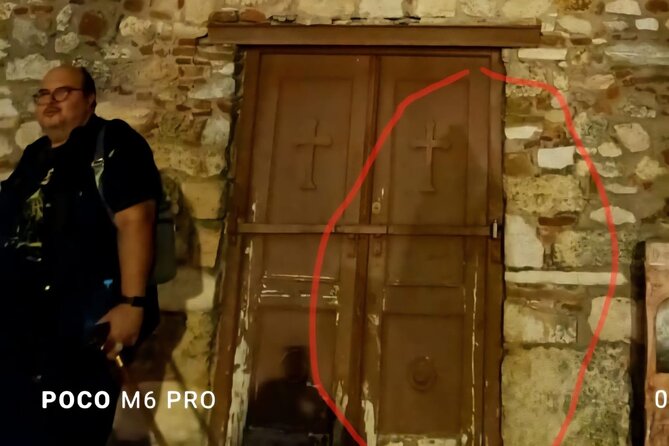
At Stratonos, the focus shifts from antiquity to the Second World War. The story concerns young Konstantinos, who fell while protecting the Greek flag during the Nazi invasion.
This is one of the tour’s more personal stories. Ancient ghosts can feel distant, but a young soldier tied to a specific act of courage brings the subject closer to the present. The guide attempts to communicate with him using the tour’s equipment, adding a modern ghost-hunting element to a wartime memory.
You’ll spend about ten minutes here. Do not expect guaranteed results from the equipment. The strongest part may be the human story and the chance to consider how a city remembers sacrifice long after the event itself.
Saint Nicholas Rangavas and the hidden monk
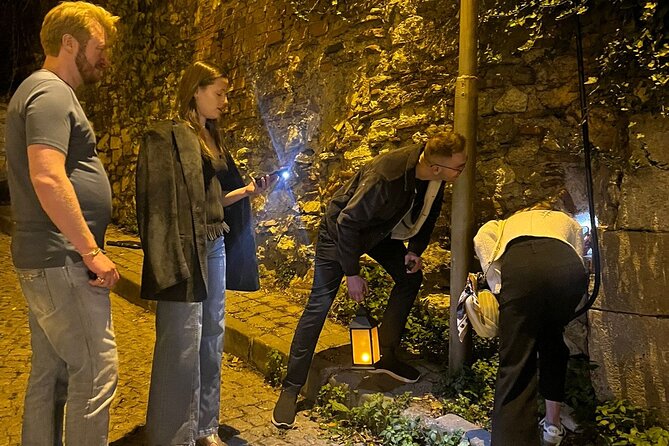
At Prytaneiou, you visit the Church of Saint Nicholas Rangavas, described as the oldest church in Athens. It was built by a relative of a Byzantine emperor and later suffered damage from a cannonball.
The darker detail involves a monk who was killed and is said to hide in the courtyard. This is exactly the kind of compact local tale that makes a walking tour worthwhile. You are not just hearing a broad statement about Byzantine Athens. You are given a building, a violent incident, and a figure connected to the place.
The stop lasts about ten minutes and is free to enter as part of the walk. As with several locations, the value comes from hearing the story in the setting itself. In daylight, the church might look like a small old building. At night, its age and narrow surroundings make the tale easier to picture.
Benizelou Mansion and Saint Philothea
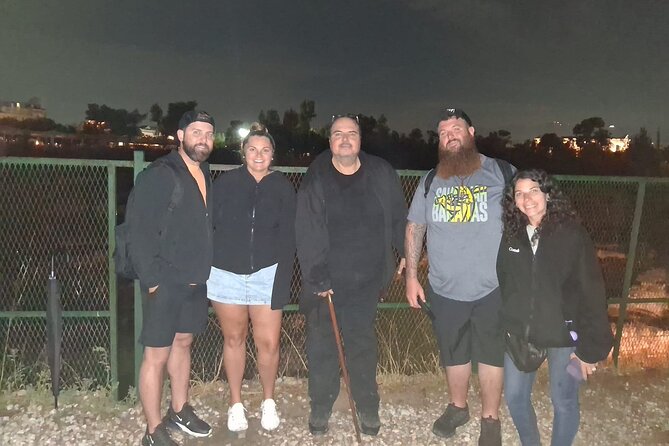
The Benizelou Mansion is described as the oldest house in Athens. It was once connected with Saint Philothea, and the tour visits the rear of the property, where a 500-year-old olive press is said to have been used as a torture device for rebellious slaves owned by the Benizelou family.
This is a troubling story, and it gives the walk a more serious edge. Ghost tours can sometimes treat suffering as a cheap scare. Here, the stop also points toward the social divisions and abuse that shaped older Athens. You should listen with the understanding that the tour is presenting a dark local tradition, not offering a museum-style historical investigation of every claim.
The stop takes about 15 minutes. One useful benefit is that you learn about a place you might not otherwise notice. A daytime return could be worthwhile if the mansion is open during your visit, but this evening activity does not promise an interior tour.
The Roman Agora and the hangman’s tree
Near the Roman Agora, the route reaches the Ottoman madrassa. It once served as a religious school for Ottoman citizens. After the Greek War of Independence, it became a prison, and a tree in the courtyard gained the grim reputation of a hangman’s tree.
The story is tied to executions of Greeks and Turks, making this another stop where the tour crosses communities and political eras. Athens’ past was not divided into neat chapters. Sacred buildings changed function, rulers changed, and places connected with learning could later become places of confinement and death.
The stop lasts about ten minutes. It is a good example of the tour’s overall method: use a familiar archaeological area as the doorway to a less familiar chapter. The ghost element is strongest if you enjoy stories about haunted objects and locations. The historical setting is likely to stay with you longer than any strange signal from the equipment.
The Ancient Agora and the Tyrannicides
At the Ancient Agora, you reach the center of old civic Athens. Temples, homes, theaters, schools, and festivals once filled this area, and the Panathenaic route passed through it.
The story here turns to the Tyrannicides, the murderous lovers who tried to end the rule of Athens’ tyrants. Their act sits between political violence and public memory. The tour uses this setting to ask how a city decides which violent figures become heroes, villains, or symbols.
You spend about ten minutes in the area. The Ancient Agora is already one of Athens’ most rewarding archaeological sites, so the nighttime visit gives you a different reason to look closely. The information provided does not promise an after-hours admission to the paid archaeological site, so consider the stop an exterior or route-based experience unless your guide tells you otherwise.
Socrates’ prison and the final words about the soul
The prison of Socrates is one of the most memorable stops because the story is so familiar, yet the setting often receives less attention than the Acropolis. Here, Socrates was left to drink hemlock after his conviction, and his final discussion with friends concerned the soul and the afterlife.
The stop offers the clearest link between ancient philosophy and the tour’s central subject. Socrates did not treat death as a simple horror story. His final words raise questions about courage, moral duty, and what may come after life. That gives the guide a chance to move beyond ghost equipment and explain why this place still matters.
You spend about ten minutes here. The walk also helps correct a common problem with Athens sightseeing: people know the name of Socrates but may not visit the place associated with his death. The route reportedly takes you to the accepted location rather than relying only on a map label that may point elsewhere.
Church of Metamorphosis and a hurried burial
The final stop is the Church of Metamorphosis, a 12th-century church whose stones are tied to stories of crime and political upheaval. The tour also connects it with the rushed burial of a Greek War of Independence hero who was murdered and thrown from the Acropolis.
This makes a fitting ending. You have moved from an ancient philosopher to Byzantine religious life, Ottoman rule, wartime death, and the struggle for Greek independence. The stories span more than 2,000 years, but they share a concern with how people remember violence and honor the dead.
The stop lasts about ten minutes. From here, the tour returns to the original meeting point. You finish with a broad view of Athens as a city built over many eras, where the same streets carry stories from classical Greece, the Byzantine period, Ottoman rule, the independence struggle, and the 20th century.
Is $43.62 a fair price?
At $43.62 per person, this is not the cheapest way to spend two hours in Athens. You are paying for a small-group evening walk, a guide, a planned route through ten locations, and the unusual addition of paranormal equipment.
The value improves if you would otherwise spend the evening wandering without a plan. The tour brings you to the old house, the Ottoman madrassa, Socrates’ prison, and small churches that can be easy to skip. It also gives you a reason to return to familiar places and see them through a different story.
The value drops if you judge the tour mainly by supernatural results. One person found little activity from the equipment and considered the cost too high. Another found the tools fun but valued the history more. That is the honest way to approach this booking: you are buying interpretation and atmosphere, with ghost detection as an uncertain extra.
Walking demands, timing, and practical advice
The route lasts about two hours and ends at Thission Open Air Cinema, where it begins. It is close to public transportation, and the mobile ticket makes the meeting arrangement simple.
You need moderate physical fitness. The route includes uphill sections and steep steps, and the low-light setting may make uneven surfaces harder to manage. Someone with limited mobility should think carefully before booking. A family with older parents completed the walk when the guide slowed the pace, but that should not be treated as a guarantee that the route will suit every person.
Wear sensible shoes and leave room for questions. The guides have been praised for adding context and responding carefully, which is important on a route covering so many periods. If you are most interested in ancient Athens, ask about Socrates, the Areopagus, and the Agora. If modern history interests you more, focus on Konstantinos and the Greek War of Independence.
The tour is offered in English. Service animals are allowed. The group size is capped at 15, and free cancellation is available until 24 hours before the 8 p.m. start time. Changes or cancellations inside that window are not accepted for a refund.
Who should book the Athens Ghost Tour?
I would book this if you enjoy local stories with a historical backbone, especially stories about old churches, prisons, executions, war, and changing religious traditions. It is also a good choice if you have already seen the major Athens sights and want an evening route that reaches less familiar corners.
I would be cautious if your main goal is a theatrical scare or a steady stream of paranormal evidence. The tour’s strongest material is its setting and storytelling. The Gauss meter and camera add interest, but they cannot promise strange readings or visible spirits.
The tour has a 4.6 rating from 14 reviews, with 93 percent recommending it. That points to a generally strong experience, but the small number of ratings and the divided opinion on value suggest you should choose it for the blend of history and ghost lore. If that mix sounds appealing, the walk offers a memorable way to see Athens after dark. If you want a pure ghost hunt, spend your $43.62 elsewhere.
FAQ
How long is the Athens Ghost Tour?
The tour lasts approximately two hours.
What time does the tour begin?
The tour starts at 8:00 p.m.
Where does the tour meet?
Meet at Thission Open Air Cinema, Apostolou Pavlou 7, Athina 118 51, Greece.
Where does the tour end?
The tour ends back at the original meeting point.
What language is the tour offered in?
The tour is offered in English.
How many people can join the tour?
The maximum group size is 15 people.
Does the tour use ghost-hunting equipment?
Yes. The experience may use a Gauss meter and camera to look for unusual signals and activity.
Is the walk physically demanding?
You should have moderate physical fitness. The route includes some uphill walking and steep steps, which may be difficult for people with limited mobility.
Can I cancel for a full refund?
Yes. You can cancel at least 24 hours before the local start time for a full refund. Cancellations or changes made less than 24 hours before the start are not accepted for a refund.
Just added in the world
- Zion: Harry Potter-Inspired Zion Ghost Tour with Sunset View★ 5.0 · 8 reviews
- Your evening in Venice – Legends&Ghosts&Aperitif★ 4.7 · 79 reviews
- York : Private Ghost Hunt★ 5.0 · 3 reviews
- York’s Haunted Heart : Ghost, Ghouls and Gallows★ 4.6 · 82 reviews
- Wraiths of the West Texas Wind: El Paso Ghost Tour★ 4.5 · 9 reviews
- Witches, ghosts and executioners / Mystical North Hesse★ 4.4 · 4 reviews
- Wraiths & Wicked Whispers: Wilmington Ghost Tour★ 4.2 · 25 reviews
- Witches, Widows, & Wraiths: Wichita Ghost Tours★ 5.0 · 2 reviews
Greece Ghost Tours, compared.
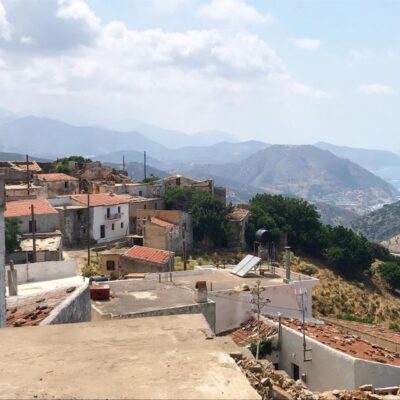
Crete: Quad Safari, Olive Mill with Tasting & Ghost Village
Read our review →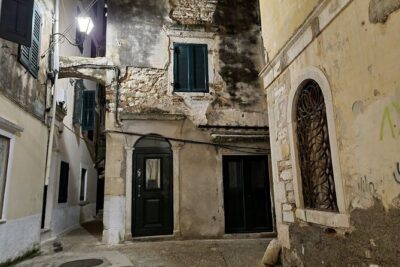
Corfu Ghost Stories, Dark Legends & Facts Night Tour
Read our review →
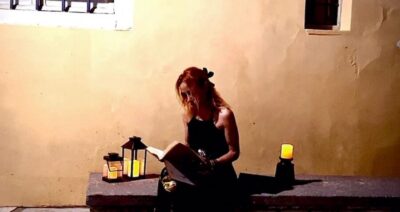
Kalamata: Paranormal Walking Tour in the historical center
Read our review →
Athens Ghost Walk: Mystical Ruins & Ancient Legends
Read our review →
Old Perithia the Ghost Town and Northeast of Corfu
Read our review →Browse the lists this tour appears in