
Review · SOUTH EAST ENGLAND
London: Jack the Ripper Tour in French
Jack the Ripper’s story is not confined to a museum display. It unfolded in the streets of Whitechapel, and this French-language walking tour takes you through the alleys, pubs, and corners tied to the case. You’ll examine the social conditions of Victorian London, the police response, the press frenzy, and the mystery behind the killer’s name.
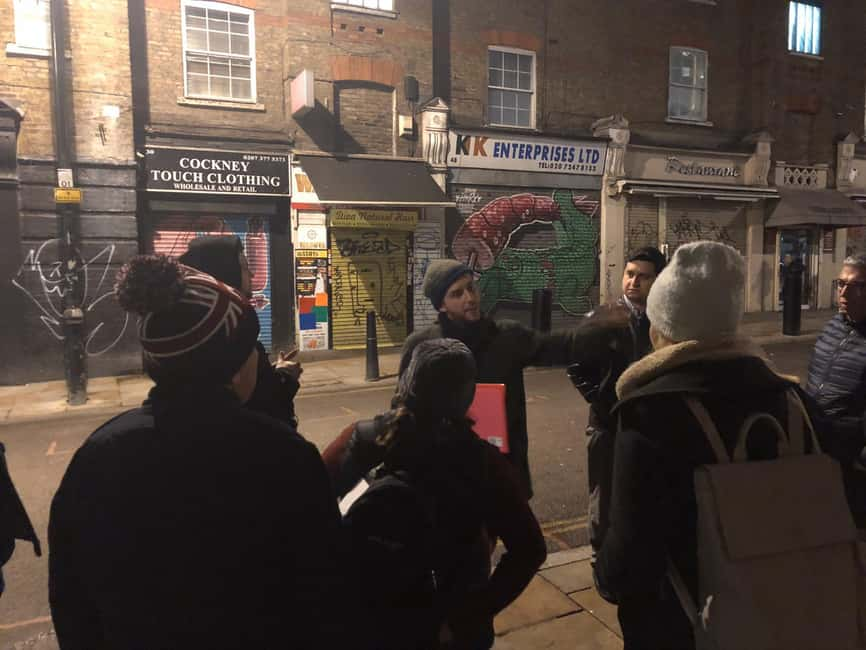
I like two things right away: the guide uses period photographs and documents, and the group stays fairly small at 15 to 20 people. That makes it easier to ask questions and follow the investigation. The main drawback is the subject matter, which is grim and unsuitable for children under 12. You’ll also want warm clothes and comfortable shoes for two and a half hours outdoors.
Key points at a glance
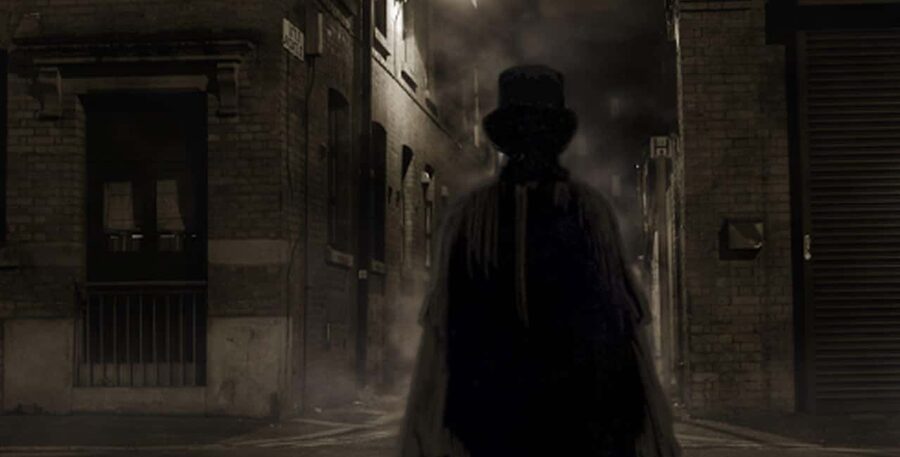
- A French-speaking Ripperologist guide: The tour is conducted in French by a native guide with a specialist focus on the Jack the Ripper case.
- Whitechapel beyond the headline: You’ll see historic streets and neighborhoods connected to the victims, the suspected killer, and the investigation.
- Period material adds context: Photographs and original documents help place the case in Victorian London rather than treating it as a simple ghost story.
- A compact walking group: With 15 to 20 people, the guide can keep the route interactive and make room for questions.
- A route through Brick Lane and Artillery Passage: The walk links famous streets with quieter lanes, including Gunthorpe Street and Fournier Street.
- A $26 walking experience: The price is reasonable if you want a focused historical tour in French, though food, drinks, and indoor attractions are not included.
Whitechapel in the autumn of 1888
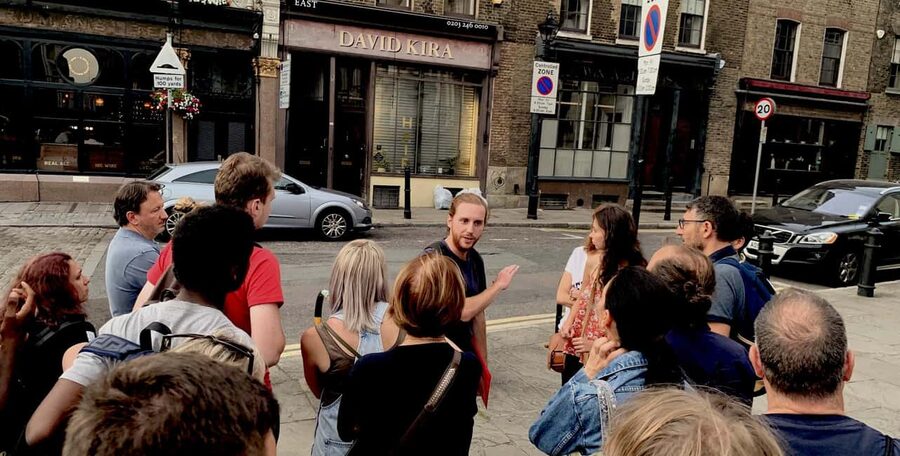
The tour begins with the central mystery: why did Jack the Ripper operate in Whitechapel during the autumn of 1888? You’ll look at the neighborhood where the victims and the suspected killer moved through the same streets, then consider how the conditions of Victorian London shaped the case.
This is important because the tour is not built only around a famous criminal name. It also asks who the victims were, what their lives were like, and how the district functioned. The social and historical setting gives the investigation more weight than a simple list of murders.
The guide also examines how many victims were connected to the case and who they were. Since the tour is designed as an investigation, you’ll be encouraged to weigh evidence and possible suspects rather than receive one tidy answer.
I appreciate that approach. Jack the Ripper remains famous partly because the identity behind the name has never been settled. A good walking tour should leave room for uncertainty, and this one uses questions, photographs, and documents to let you follow the case step by step.
The subject is dark. The route concerns violent crimes, and the tour is not suitable for children under 12. If you prefer lighter sightseeing, this is not the right choice. If you want difficult history presented in a focused way, the subject matter is part of the value.
More Jack the Ripper Tours in London
- London: The Original Jack the Ripper Walking Tour
★ 4.7 · 7,833 reviews - London Jack the Ripper Guided Tour with Ripper-Vision
★ 4.5 · 4,840 reviews - London: Jack the Ripper Small Group Tour
★ 4.7 · 3,159 reviews
Starting at Jack the Chipper on Whitechapel High Street
The meeting point is in front of the long black wall outside Jack the Chipper restaurant at 96 Whitechapel High Street. The guide will be holding a document pouch, which gives you a clear visual marker in a busy part of London.
The location is near Aldgate East Tube station, making it practical to reach by public transport. You should arrive with enough time to identify the restaurant and gather before the walking portion begins. The tour does not begin inside a museum or a private room, so your first task is simply finding the correct section of Whitechapel High Street.
The opening guided segment lasts about 10 minutes. That short introduction helps set the scene before the route moves through the neighborhood. Expect the guide to establish the timeline, explain the investigation, and introduce the main questions that will return throughout the walk.
Because the tour takes place outside, clothing matters. Bring warm layers and comfortable shoes. Even in mild weather, two and a half hours on London pavement can feel long in thin shoes or clothing that does not handle wind and rain.
Gunthorpe Street and the streets of the case
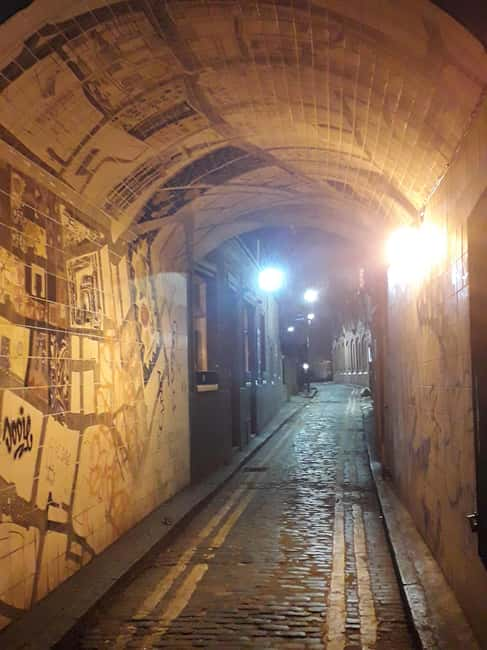
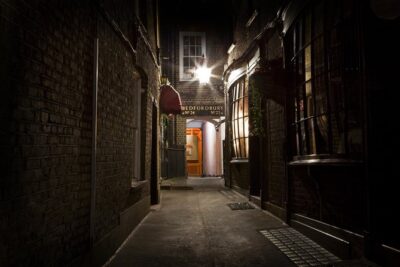
The route includes the chilling alleyway of Gunthorpe Street. This is one of the places where the character of the tour becomes clear. You are not only standing near a landmark and hearing a short fact. You are moving through the kind of narrow historic street that helps explain the atmosphere of the case.
The guide uses the setting to connect the physical neighborhood with the evidence. You’ll consider where people lived, worked, and passed through, and how the killer and victims could have moved around the area. The exact street is valuable because it helps you picture the case at street level.
A walking route also has limits. Streets change, buildings are altered, and modern London continues around you. The tour cannot recreate 1888, and it does not claim to. Instead, the value comes from comparing the present street layout with the historical accounts and documents shown by the guide.
I find that more useful than a polished attraction built only to look old. You get a living district with layers of time, though you should expect an urban walking environment rather than a staged crime scene.
Brick Lane and the changing East End
Brick Lane is one of the major stops, with about 10 minutes of guided explanation. Today it is one of East London’s best-known streets, but on this tour it becomes part of the larger Whitechapel story.
The stop gives the guide a chance to discuss the district’s social setting and the Victorian era. You’ll hear how the neighborhood related to the case, the people connected to it, and the public fear that spread across London in 1888.
Brick Lane can be busy, and you may need to stay close to the guide. The walking group is limited to 15 to 20 people, which helps, but this is still a public street rather than a quiet lecture room. Keep your attention on the guide and be prepared to pause at the side of the route.
The short stop also means the tour keeps moving. You are unlikely to spend a long time at any single point. That suits you if you want a connected story across several streets. It may feel quick if you prefer extended time for photographs or private exploration.
Same streets, a very different kind of fright:
- Ghost, Ghouls and Gallows Tour : Guided Tour with Boat Ride
★ 4.5 · 3,212 reviews - London Jack The Ripper Guided Walking Tour
★ 5.0 · 3,131 reviews - London: Comedy Horror Ghost Tour on a Bus
★ 4.4 · 2,084 reviews - London: Jack the Ripper Tour with Immersive Ripper Vision
★ 4.5 · 1,840 reviews
Fournier Street and Victorian details
The Fournier Street conservation area brings another change of mood. Here, the historic buildings help you picture the physical setting of Victorian Whitechapel. The guide can use the architecture and street plan to explain the period rather than treating the crimes as an isolated puzzle.
One of the tour’s strongest features is its attention to Victorian details. The case sits within a specific time, with its own social divisions, press culture, police methods, and public fears. The tour asks how the press reacted, how the police responded, and how the story became a national sensation.
Those questions matter because the Jack the Ripper name was shaped by communication as much as by crime. You’ll learn where the infamous stage name came from and consider who might have been hiding behind it. The guide’s documents and photographs give these questions something concrete to work with.
The area is also useful for understanding why a walking tour works here. A book can describe streets, but standing in them gives you a better sense of distance, scale, and connection. You can see how one lane leads toward another and how quickly the route shifts from a larger street to a narrow passage.
The Ten Bells and the human side of the story
The Ten Bells pub is included because at least one victim was known to have frequented it. The stop links a recognizable place with the people at the center of the case.
This part deserves a careful tone. The pub is not simply a spooky prop, and the victims should not be reduced to names in a murder mystery. The guide’s focus on who they were and the world they lived in helps keep the history grounded.
You should also expect a pub viewed from the perspective of the tour route, not necessarily a meal or drinking stop. Food and drinks are not included, and the experience is primarily a walking investigation. If you want to enter for a drink, treat that as separate from the tour and do not assume there will be time for it.
The Ten Bells is one of the better-known points on the route, so it may attract interest beyond the group. The small tour size helps you hear the guide, but you’ll still be in a public part of London. The guide’s document pouch and French commentary help keep the group together.
Evidence, documents, and the interactive investigation
The tour includes an entrance to a building where evidence was found. This stop shifts attention from general atmosphere to the mechanics of the investigation. You’ll consider what was discovered, how it mattered, and how evidence was interpreted in a case surrounded by fear and rumor.
The included photographs and period documents are especially useful here. They keep the presentation tied to historical material instead of relying only on dramatic storytelling. The fact that some content is shown in its original language may appeal to you if you want to see the period material without every detail being modernized.
The interactive activity gives the walk a clear purpose. Rather than listening passively for 150 minutes, you’ll be asked to follow clues and think about possible explanations. The exact format of the activity is not specified, so you should not expect a formal escape-room game or a theatrical performance. Think of it as a guided attempt to assess the case.
This approach works best when you enjoy uncertainty. The tour explores suspects and evidence, but it does not promise a final solution to one of London’s most famous unsolved crimes.
Artillery Passage and the walk to Liverpool Street
Artillery Passage is another historic alley on the route. The guided portion here is brief, listed at about two minutes, but its inclusion adds another old passage to the sequence of streets.
Short stops are not necessarily a weakness. They help the tour maintain a steady rhythm, especially when the main goal is to connect several locations. Still, you should keep your expectations realistic. You will not receive a long lecture at every place, and the route is designed as one continuous story.
The tour finishes at 222 Bishopsgate, London EC2M 4QD, near Liverpool Street station. That ending is useful if you want to continue sightseeing in the City of London or connect to public transport. It also means the tour is not a loop, so plan your day around finishing at Liverpool Street rather than returning to Whitechapel.
The route crosses from the Whitechapel starting point toward the Liverpool Street area. You should be ready for a full urban walk, not a short circuit around one landmark.
What the $26 price includes
At $26 per person, this is priced like a focused walking experience rather than a major attraction. The fee includes the expert Ripperologist guide, the 2.5-hour French-language tour, and the interactive activity. It does not include food or drinks.
I see the best value in the combination of specialist storytelling and a route through real streets. You are paying for interpretation, not admission to a building. The guide’s ability to connect Whitechapel, Victorian society, police work, press coverage, and the physical streets is what determines whether the price feels worthwhile.
The small group also matters. A group limited to 15 to 20 people gives you a better chance to hear the French commentary and ask questions than a large city tour would. The available feedback describes the explanations as detailed, which matches the tour’s strongest selling point.
The value is less clear if you already know the case well or want a general East London walking tour. This experience is tightly focused on Jack the Ripper. You will not be getting a broad survey of London attractions, and the food and drink costs are extra.
Who should book this French-language walk
I would recommend this tour if you:
- Understand French well enough to follow a two-and-a-half-hour spoken presentation
- Have a serious interest in Jack the Ripper and Victorian London
- Prefer streets, documents, and discussion to a museum display
- Are comfortable with disturbing historical subject matter
- Want a small group rather than a large guided crowd
- Can manage a long outdoor walk in London weather
It is also a good fit for French-speaking visitors who want to explore a less polished side of London. Whitechapel is not presented as a postcard district. The tour uses its streets, alleys, and historic buildings as evidence in a story.
I would hesitate if you are traveling with children under 12, dislike crime history, or need frequent indoor breaks. The tour is wheelchair accessible, but the supplied details do not explain the condition of every street or alley on the route. If you have specific mobility concerns, confirm the route details before booking.
Free cancellation is available up to 24 hours in advance, and you can reserve now and pay later. Those options are useful when London weather or a changing sightseeing schedule is a concern.
Should you book the Jack the Ripper tour in French?
Book it if you want a focused, French-language investigation that connects the Jack the Ripper case to the actual streets of Whitechapel. The period photographs, documents, small group, and detailed explanations give the experience more substance than a simple spooky walk.
Skip it if you want a light evening activity, a general tour of East London, or a short route with plenty of indoor time. The subject is grim, the walk lasts 2.5 hours, and the experience depends heavily on your interest in Victorian crime history.
For the right audience, $26 is a fair price. You get a specialist guide, a carefully linked route through Gunthorpe Street, Brick Lane, Fournier Street, the Ten Bells, and Artillery Passage, plus an interactive way to think through the evidence. Wear warm clothes, arrive at the black wall outside Jack the Chipper, and be ready to follow the case all the way to Liverpool Street.
FAQ
What language is the Jack the Ripper tour conducted in?
The tour is conducted in French by a native French-speaking guide.
How long does the tour last?
The walking tour lasts 2.5 hours.
How much does the tour cost?
The listed price is $26 per person.
Where does the tour begin?
It begins outside Jack the Chipper at 96 Whitechapel High Street, near Aldgate East Tube station.
How will I recognize the guide?
The guide will be waiting in front of the long black wall outside the restaurant and will be holding a document pouch.
Where does the tour finish?
The tour ends at 222 Bishopsgate, London EC2M 4QD, near Liverpool Street station.
What places are included along the route?
The route includes Whitechapel streets, Gunthorpe Street, Brick Lane, the Fournier Street conservation area, the Ten Bells pub, a building entrance connected with evidence, and Artillery Passage.
Are food and drinks included?
No. Food and drinks are not included in the tour price.
Is the tour suitable for children?
No. The tour is not suitable for children under 12.
What should I bring?
Bring warm clothes and comfortable shoes because the experience is a 2.5-hour outdoor walking tour.
Just added in London
- Visit Jack the Ripper in French★ 5.0 · 33 reviews
- Wicked Whitechapel: Where Now’s Jack The Ripper Audio Tour★ 5.0 · 2 reviews
- Ghosts, Gore & Other Ghasty Stories in the City of London★ 5.0 · 7 reviews
- Afternoon Jack the Ripper : Guided Tour★ 5.0 · 183 reviews
- The Ghosts of the secret alleyways of old London town★ 5.0 · 2 reviews
- The Fading Light London Ghost Walk★ 5.0 · 35 reviews
- The Haunted Pubs of Old London: Small Group Tour★ 5.0 · 38 reviews
- Dark History of the Tudors: Private Tour of Hampton Court Palace★ 5.0 · 10 reviews
Jack the Ripper Tours, compared.
London Jack the Ripper Guided Tour with Ripper-Vision
Read our review →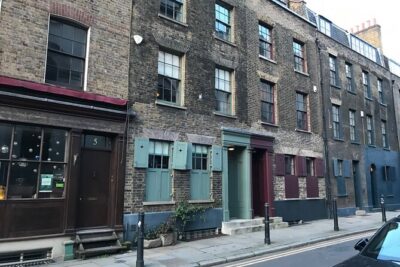
Jack the Ripper Tour with Immersive Ripper Vision
Read our review →
German Language : Original Jack the Ripper Tour
Read our review →
Ultimate Jack the Ripper : Guided Tour of London
Read our review →
Browse the lists this tour appears in