
Review · SALEM
Historian’s Guide to the Salem Witch Trials
Salem’s witch trials become far more disturbing when you leave the ghost stories behind and follow the real people, places, and power struggles. On this two-hour walking tour, historian Krystina Yeager connects the Witch House, the old jail sites, Bridget Bishop, Giles Corey, and the Salem Witch Trials Memorial into one clear story.
I like two things right away: you get serious historical context instead of spooky filler, and the route keeps you in the actual streets where the events unfolded. Krystina’s humor and willingness to answer detailed questions also help keep a difficult subject moving.
The tradeoff is simple: this is an outdoor tour with several periods of standing, and there is no indoor entry at the stops. Rain can shorten the experience, so check the forecast and wear sensible shoes.
Key points to know before booking
- A focused route through seven Salem sites: Start across from the Witch House and finish at the Salem Witch Trials Memorial.
- Krystina Yeager leads the walk: Her style combines documented history, clear explanations, humor, and attention to the victims’ experiences.
- No haunted-house theatrics: The emphasis is on witchcraft accusations, court actions, jail conditions, corruption, and executions.
- Adults-only subject matter: The tour deals with violence, death, imprisonment, and the darker side of Salem’s past.
- Expect two hours outdoors: You will walk between sites and stand for several talks, with no entry into the Witch House, First Church, or other buildings.
- A good value at $30: You get a full historical walk led by a specialist, but not admission to attractions, food, transportation, or other extras.
Why this Salem witch trials tour feels different
Salem offers plenty of witch-themed activities, but this one is built around explanation rather than spectacle. Krystina Yeager presents the trials as a human and political crisis, not as a collection of ghost stories. That distinction matters because the documented facts are grim enough without embellishment.
You’ll hear about curses and witchcraft, but the larger focus is on how accusations gained force, how local officials handled them, and how ordinary disputes could become deadly. The story includes the people accused, the people making accusations, church leaders, jail officials, and Sheriff George Corwin.
I especially like the attention given to individual victims. Bridget Bishop is not just a name in a timeline. She becomes part of the discussion about how the trials began and how the first execution shaped what followed. Giles Corey receives similar treatment, including a correction to the commonly repeated idea about where he was killed.
This is also a tour for people who want context. You are not simply shown a plaque, given a date, and sent to the next stop. The guide explains what led to the trials and how the town’s institutions helped create the conditions for panic.
More Witch Tours in Salem
- Bewitched Walking Tour of Salem
★ 5.0 · 1,895 reviews - The Salem Witch Walk
★ 4.5 · 1,301 reviews - Wicked Awesome Tours: Witch Trial History and Salem Haunts!
★ 5.0 · 1,032 reviews
Starting at Captain William Driver Park and the Witch House
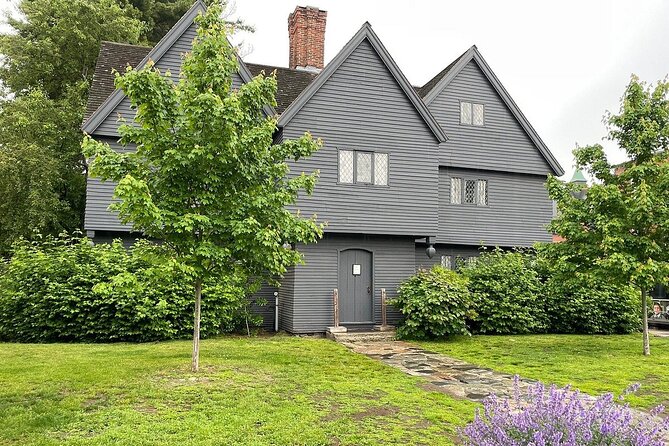
The meeting point is Captain William Driver Park at 309 Essex Street, directly across from the Witch House. This is a practical place to begin because the Witch House gives you an immediate visual connection to Salem’s 1692 story.
You will not enter the Witch House. Instead, the park serves as an outdoor classroom while Krystina sets the scene and explains the background to the trials. The first discussion lasts about 20 minutes, so you get a proper introduction rather than a quick opening speech.
That arrangement is useful if you have already visited, or plan to visit, the Witch House separately. The tour does not duplicate an indoor museum visit. It gives you the setting and the surrounding context, then moves into the wider town.
Arrive on time if you can. One late arrival was helped back into the group, but catching up is easier when you are present for the opening explanation. You will get more from the rest of the walk if you understand the local tensions introduced here.
First Church and the road to the accusations
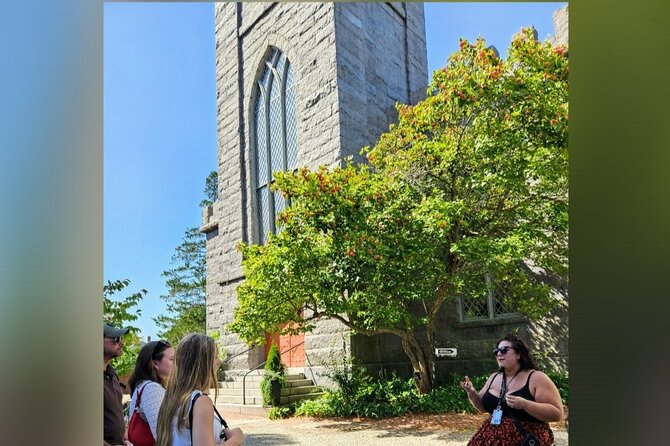
The next stop is First Church in Salem. Again, you do not go inside. The group spends about 20 minutes discussing what led to the trials, making this one of the most important stops for understanding cause and effect.
A quick tour can make Salem’s witch trials seem to appear out of nowhere. This section helps prevent that. You will hear about the forces and disputes that prepared the ground for accusations, rather than treating the outbreak as a sudden burst of supernatural fear.
The church setting also gives the talk a strong sense of place. Religious belief was central to the society being discussed, and the building provides a natural point for explaining how spiritual concerns shaped public life.
You should expect a lecture-style stop here. There is no indoor visit or performance. If you prefer a tour with constant movement, this is one of the points to keep in mind. If you want the reasons behind the events, the time is well used.
Bridget Bishop at Lyceum Hall

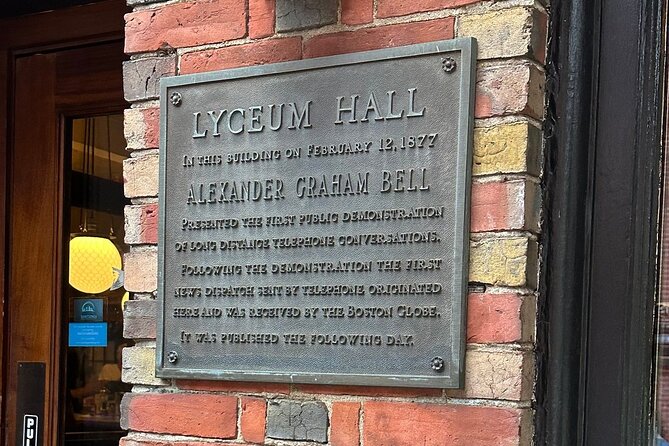
At Turner’s Seafood at Lyceum Hall, the conversation turns to the beginning of the witch trials and Bridget Bishop, identified as the first victim. The stop lasts about 20 minutes.
This is where the broad background becomes a personal story. Bridget Bishop’s place in the sequence helps you follow how suspicion moved from general fear to specific accusations and official action.
The location also shows how Salem’s present-day streets sit on top of layers of earlier history. You are discussing a site connected to the period while standing in a modern commercial part of town. That contrast is part of the value of a walking tour: the past is not kept in one museum room.
There is no admission included at this stop, and the tour does not promise a meal or a restaurant visit. The reference to Turner’s Seafood at Lyceum Hall identifies the location for the talk. Plan to eat before or after the tour, not during it.
More Witch Tours in the USA
- Best Salem Witch Trials Historical Walking Tour
★ 4.0 · 743 reviews - Salem Ghost Tour: Witches & Wicked Whispers
★ 4.5 · 571 reviews - Salem Uncovered: The Salem Witch Trials Tour
★ 4.5 · 471 reviews - Salem Ghost Tours: Witches & Wicked Whispers
★ 4.2 · 436 reviews
The Old Witch Gaol and the reality of imprisonment
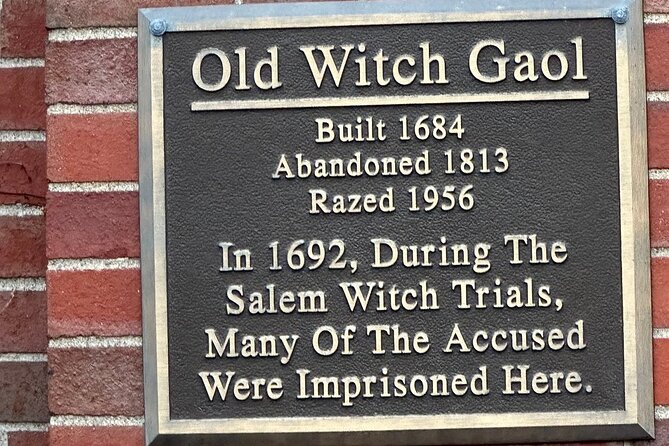
The stop at 10 Federal Street marks the site of the Old Witch Gaol, where some of the accused were held. The discussion takes about 20 minutes, and admission is free because the tour remains outside.
This stop adds a needed change of focus. The accusations were not only courtroom claims or frightening stories. They led to confinement, separation from family, and harsh conditions for people who had not been proven guilty in any modern sense.
I find this part valuable because it keeps the tour grounded in consequences. Salem’s witch trials are often packaged as a curious chapter of local folklore. A jail site reminds you that the people involved faced real physical danger and loss of freedom.
The exact remains of the old jail are not presented as an indoor attraction here. You are learning through the location and the guide’s explanation. That makes Krystina’s command of the subject especially important, since the place itself may not tell the whole story without interpretation.
Old Salem Jail Lot and the Giles Corey correction
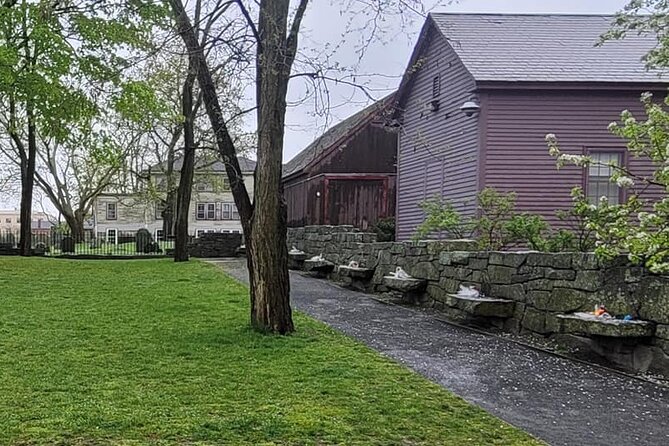
The Old Salem Jail Lot is another key stop. The talk lasts about 15 minutes and covers the old jail, along with the disputed location connected to Giles Corey’s death.
This is one of the tour’s more useful moments for sorting fact from popular retelling. The commonly assumed spot for Giles Corey’s killing is not correct, and Krystina explains that distinction. If you have heard the story elsewhere in Salem, this correction can change how you understand the city’s memorial culture.
The stop is shorter than several others, but it carries a lot of weight. Giles Corey’s case is one of the most horrifying episodes connected to the trials, and the jail lot provides a place to discuss the legal and physical pressures surrounding it.
You will be standing outdoors, and the stop is not a visit to a preserved jail interior. Think of it as a serious historical explanation at a disputed urban site. That format suits you if accuracy matters more than theatrical presentation.
Sheriff George Corwin and the role of authority
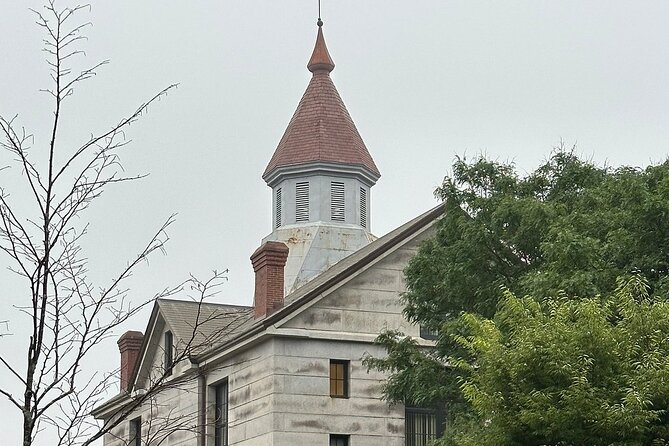
The five-minute stop at St. Peter’s-San Pedro Episcopal Church focuses on Sheriff George Corwin and corruption. It is brief, but it broadens the story beyond accused individuals and religious fear.
Officials mattered. The trials required people with authority to arrest, hold, transport, question, and manage the accused. By discussing Corwin, the tour examines how personal interests and official power could affect the treatment of people caught in the crisis.
Because this is a short stop, do not expect a long standalone talk. Instead, it works as a sharp link between the jail discussions and the final memorial. It reminds you that Salem’s story involves systems and choices, not only superstition.
Ending at the Salem Witch Trials Memorial
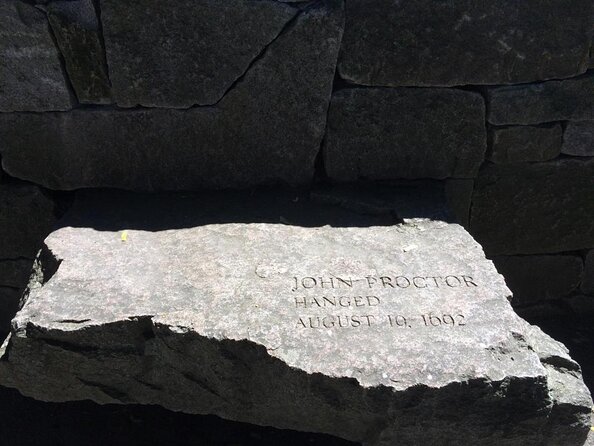
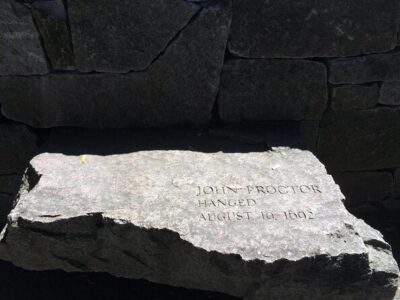
The walk ends at the Salem Witch Trials Memorial at 24 Liberty Street. The final discussion lasts about 20 minutes and returns to the trials, the victims, and the meaning of the memorial.
This is a fitting end because the memorial is designed for reflection rather than entertainment. You will have heard about specific people and events by this point, so the names and memorial setting carry more weight than they might at the start of the walk.
The memorial sits directly beside one of the oldest cemeteries in the United States. You do not need a separate attraction ticket for the outdoor memorial portion of the tour. The cemetery adds another layer to the final stop, but the scheduled discussion remains centered on the witch trials and their victims.
The tour officially finishes here, so pay attention to the endpoint when planning the rest of your Salem day. You will not return to the starting park.
What the guide’s style is like
Krystina Yeager is the main reason this tour works as a detailed history walk rather than a basic sightseeing loop. Her approach is direct, personal, and often funny without making light of the subject. She explains difficult material in plain terms, then gives you room to ask questions.
Her background as a historian shows in the breadth of the discussion. The tour covers the trials themselves, but also Salem’s wider past and the people connected to the crisis. She has handled detailed questions from adults and teenagers, and she can place individual stories into a larger setting.
You should also expect a feminist perspective in parts of the presentation, especially when discussing the victims and the ways accusations affected women. That will appeal to you if you want attention paid to personal experience and power, not only dates and famous names.
The adults-only format is important. The material includes imprisonment, executions, corruption, and the real suffering behind the folklore. It is not designed as a children’s activity or a light Halloween walk.
Price, group size, and the practical tradeoffs
At $30 per person, I consider this a fair price for a two-hour tour led by a specialist. You are paying for the guide’s research, storytelling, and ability to connect several scattered sites. You are not paying for admission to buildings, food, drinks, transportation, or souvenirs.
The group can include up to 29 people. That is not a private tour, but it is still limited enough for questions to be possible. Group size can affect how easily you hear the guide, especially on a busy Salem day, so staying near her is sensible.
The tour is offered in English and uses mobile tickets. Confirmation arrives when you book. The route is near public transportation, and service animals are allowed. Most people can participate, but you should be comfortable walking between downtown sites and standing for extended talks.
The weather policy deserves attention. The tour needs good weather, and rain has affected the length of some walks. Wear weather-ready clothing and shoes, but know that a cancellation caused by poor weather offers you another date or a full refund.
You can cancel for a full refund up to 24 hours before the start time. Changes or cancellations inside that 24-hour window are not accepted for a refund. A minimum number of participants is also required, with another date or a full refund offered if the tour is canceled for that reason.
How to get the most from the two hours
Arrive at Captain William Driver Park before the scheduled start. The opening talk provides the framework for everything that follows, and being late means you may need to catch up while the group is already moving.
Wear comfortable shoes and plan for outdoor standing. The tour has seven listed stops, with talks ranging from five to 20 minutes. You are not walking nonstop, but you are also not sitting in a theater.
Keep your expectations clear. The tour does not enter the Witch House, First Church, or the other sites. If you want to see those interiors, arrange separate visits around this walk. The tour’s strength is the guide’s interpretation of places, not admission access.
Bring questions. Krystina’s ability to respond to specific questions is one of the best reasons to choose a historian-led walk. The subject can become confusing because many Salem stories repeat the same names and events. Asking for clarification can help you build a cleaner timeline.
Give yourself time after the memorial if you want to think, explore the nearby cemetery, or continue visiting Salem. The route ends in a useful central location, but the experience itself is more reflective than entertaining.
Who should book this Salem walking tour?
I would choose this tour if you want the documented story of the Salem witch trials, a local guide with a strong command of the subject, and a manageable two-hour route. It suits adults who enjoy history, difficult questions, and stories about how institutions and communities behave under pressure.
It is also a good first activity in Salem because it gives you a framework for later visits. After hearing about the Witch House, jail sites, church context, and memorial, other attractions can make more sense.
I would choose something else if you want indoor access, a ghost tour, a family-friendly program, or a ride instead of a walk. The listing includes no admission, no food, and no extras. It is a focused history lesson outdoors.
Should you book it?
Book it if accuracy, context, and a strong guide matter more to you than theatrical scares. Krystina Yeager’s tour gives Salem’s witch trials a human scale, corrects familiar myths, and makes good use of real locations without pretending they are amusement rides.
Skip it if standing for two hours or listening to detailed historical explanations sounds tiring. For the right audience, though, $30 buys a clear, serious introduction to Salem’s darkest chapter, with enough personality to keep the subject from becoming a dry list of dates.
FAQ
How long is the Historian’s Guide to the Salem Witch Trials?
The tour lasts approximately two hours.
How much does the tour cost?
The price is $30 per person.
Where does the tour begin?
It begins at Captain William Driver Park, 309 Essex Street, Salem, Massachusetts 01970, directly across from the Witch House.
Where does the tour end?
It ends at the Salem Witch Trials Memorial at 24 Liberty Street, Salem, Massachusetts 01970.
Does the tour enter the Witch House or First Church?
No. The tour discusses both locations from outside and does not enter them.
Is the tour offered in English?
Yes. The experience is offered in English.
Is this an adults-only tour?
Yes. The tour is described as adults-only and covers dark material involving accusations, imprisonment, executions, and other crimes.
What happens if the weather is poor?
The experience requires good weather. If it is canceled because of poor weather, you will be offered a different date or a full refund.
Just added in Salem
- Salem: Voodoo, Vampires, and Ghosts Guided Walking Tour★ 4.8 · 206 reviews
- [ESP] History of Salem Witch Trials★ 4.0 · 5 reviews
- Wandering Witches★ 4.5 · 33 reviews
- Witch Costume Photo Shoot – Witch Cottage theatrical set★ 5.0 · 149 reviews
- Witch City Broom Making Workshop in Salem★ 5.0 · 105 reviews
- Ultimate Historic Salem and Witch Trials Self-Guided Walking Tour★ 4.5 · 67 reviews
- Vampire Ghost Adventures and Haunted Objects Walking Tour★ 4.5 · 34 reviews
- Private Walking Salem Legends Tour Professional Guide★ 5.0 · 3 reviews
Witch Trial & Witchcraft Tours, compared.

Wicked Awesome Tours: Witch Trial History and Salem Haunts!
Read our review →
Best Salem Witch Trials Historical Walking Tour
Read our review →
Browse the lists this tour appears in