
Review · SALEM
Salem Uncovered: The Salem Witch Trials Tour
The most useful thing about this Salem walk is its focus: you move through the actual streets tied to the 1692 witch trials, from the former courthouse site to the jail area and memorial. This is not a haunted-house attraction or a museum visit. It is a guided outdoor history lesson.
I like the strong route through trial sites and the fact that every guide is licensed by the city of Salem. I also like the mix of law, religion, social fear, and personal stories, especially when guides such as Jeffrey explain how people with little power became targets. The main drawback is simple: you do not enter any of the buildings, and the quality depends heavily on how engaging your guide is.
Key points at a glance
- A 90-minute walking route: Seven stops connect Salem’s old civic, religious, legal, prison, and memorial sites.
- Jeffrey is a memorable guide when scheduled: He is described as funny, warm, passionate, and willing to discuss the darker parts of the story.
- No indoor admissions: You stop outside each place, so this tour works best as a history walk rather than a building tour.
- The end point matters: The walk finishes at the Salem Witch Trials Memorial beside Charter Street Burying Point.
- Good value at $26: You are paying for a guided interpretation of Salem, not entry tickets or a full museum experience.
- Weather and crowds matter: The walk requires good weather and may include up to 44 people.
Why Salem’s witch trials make sense on foot
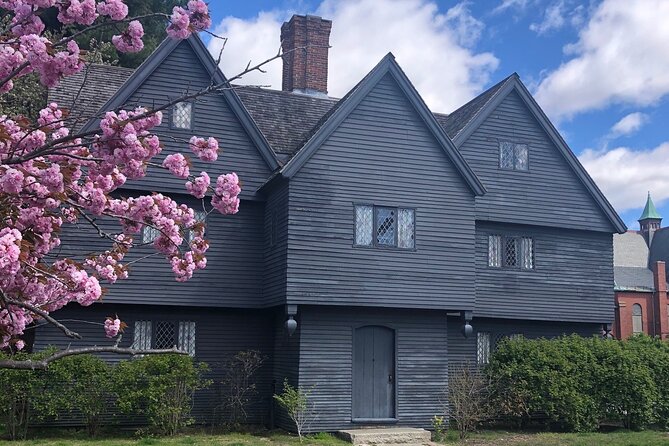
Salem’s witch trials are often reduced to a few names, accusations, and spooky stories. This walk gives you a better frame. The accusations did not happen in an abstract past. They moved through homes, meeting places, legal offices, a courthouse, a jail, and streets where ordinary people lived.
That physical route is the main reason I find this experience useful. You can connect the actions of officials to the places where those actions took place. Sheriff George Corwin, for example, was not simply a name in a textbook. The tour stops near the John Ward House, the site associated with his home, where he served as a warrant issuer, interrogator, and torturer.
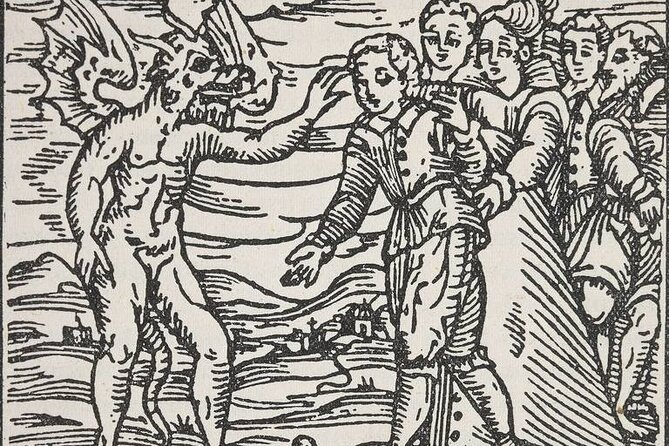
The guides also bring in the wider pressures that shaped Salem. Expect discussion of Puritan religious beliefs, fear of the Devil, conflict within the community, and the treatment of people who lacked power. Some sessions also include ghost stories, but the strongest moments keep the human cost in view rather than turning the tragedy into a Halloween joke.
That balance is important. Salem has plenty of supernatural branding, especially around Halloween. This tour is better suited to you if you want the atmosphere but also want a serious account of how suspicion, authority, religion, and social division damaged real lives.
More Witch Tours in Salem
- Bewitched Walking Tour of Salem
★ 5.0 · 1,895 reviews - The Salem Witch Walk
★ 4.5 · 1,301 reviews - Wicked Awesome Tours: Witch Trial History and Salem Haunts!
★ 5.0 · 1,032 reviews
Old Town Hall starts the story
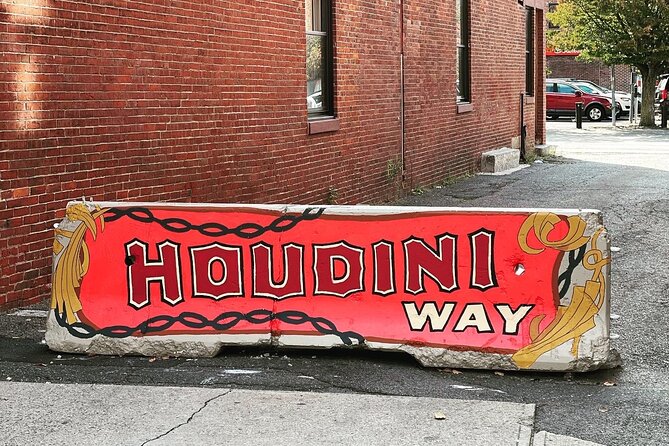
The meeting point is at 1 Houdini Way, near Salem Old Town Hall. The building is a fitting opening stop for two reasons. It is an old civic structure in its own right, and it was used as a filming location for Hocus Pocus, giving fans of the movie an immediate Salem connection.
You do not go inside. The guide uses the exterior as a place to set the scene and begin the walk. That means you should not expect an architectural tour of the hall or a movie-site admission. You get about 10 minutes here, enough to orient the group and establish Salem’s historical setting.
I like this as a starting point because it eases you into the subject without pretending that the building itself is a witch-trial museum. If your main goal is indoor access or film memorabilia, this stop will feel brief. If you want a clear meeting place and a quick introduction, it works well.
The John Ward House and the machinery of accusation
The next stop takes you near the John Ward House, associated with Sheriff George Corwin. About 330 years ago, this was the site of Corwin’s house. His role in the trials was serious and practical: he issued warrants, questioned accused people, and took part in the harsh treatment that preceded trial.
You remain outside for roughly 15 minutes. The value here comes from the guide’s explanation, not from entering the structure. This is where the tour can move beyond the familiar story of accused women and show you how the legal system helped turn suspicion into imprisonment and prosecution.
A good guide will also help you see why this stop matters. Witchcraft accusations needed more than frightened neighbors. They required officials, paperwork, questioning, confinement, and a court system willing to accept weak evidence. The Corwin stop gives the walk a useful focus on institutional power.
The tone can vary. Jeffrey, who receives especially strong praise for his humor and passion, is known for keeping the group involved while not softening the darker facts. Another guide may present the same material in a more formal way. Since the group can reach 44 people, staying close and speaking up when you have a question will help.
Rockafellas marks Salem’s former meeting place
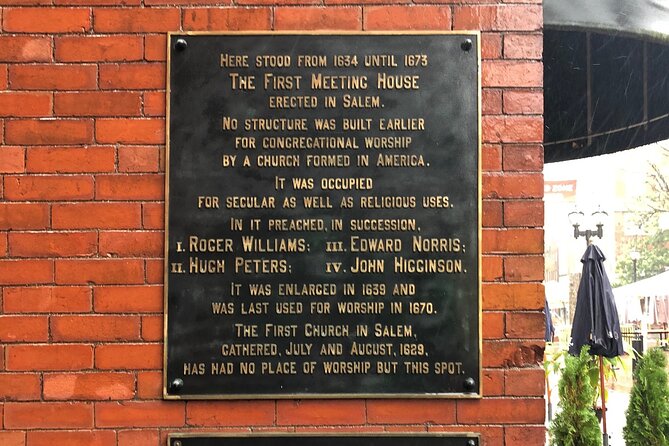
The third stop is outside Rockafellas Restaurant, on the site of Salem’s First Church and the city meeting house in 1692. The restaurant is a modern business, but the ground beneath it connects to the civic and religious life of the town during the trials.
You spend about 15 minutes here, again without entering. This is a useful pause because the trials were tied closely to community life. The meeting house was not simply a place for private worship. It was part of the public world where disputes, beliefs, and local decisions took shape.
For me, this stop helps explain why the accusations spread so widely. A town meeting place is a reminder that religious fear and civic authority were closely linked. It also shows the limits of what remains in Salem. Several important buildings are gone, so the tour relies on street position, explanation, and imagination rather than intact interiors.
That can disappoint you if you expect a preserved 1692 town. It can also be one of the walk’s strengths. The guide is not selling a perfect historical set. The route shows you what remains, what has vanished, and how modern Salem sits on top of its earlier story.
More Witch Tours in the USA
- Best Salem Witch Trials Historical Walking Tour
★ 4.0 · 743 reviews - Salem Ghost Tour: Witches & Wicked Whispers
★ 4.5 · 571 reviews - Salem Ghost Tours: Witches & Wicked Whispers
★ 4.2 · 436 reviews - Salem Witch Museum Admission Ticket
★ 3.9 · 417 reviews
Finding the lost courthouse at 93 Washington Street
At 93 Washington Street, the guide points out the road near the former Salem Courthouse. The courthouse itself is long gone, but this was where the trials took place. The group spends about 15 minutes here.
This is one of the most important stops, even though there is no building to enter. It gives you a precise setting for the proceedings that are often discussed as if they happened in one vague corner of Salem. Standing near the former courthouse site helps separate the legal process from later folklore.
The lack of visible remains is also worth understanding before you book. You will not walk into a courtroom, see original furniture, or view trial documents at this stop. Instead, you depend on the guide to explain what happened and why the court accepted accusations that should have been treated with suspicion.
I would pay close attention here to the difference between accusation and proof. The tour is at its best when it explains how fear became official action, rather than simply repeating a list of names and dates.
Bridget Bishop’s connection at Lyceum Hall
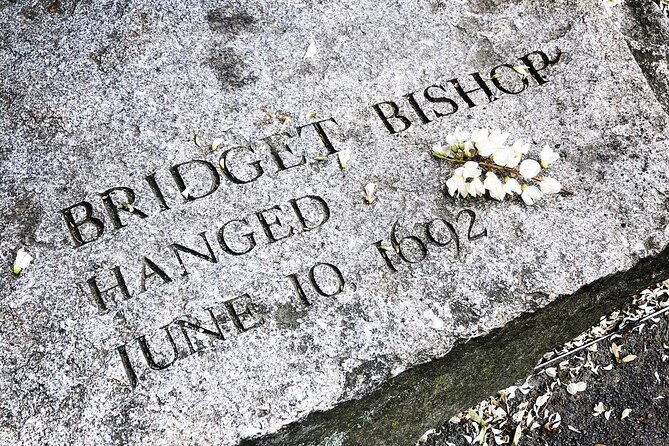
The fifth stop is outside Turners Seafood at Lyceum Hall. The building occupies land once owned by Bridget Bishop, the first person executed in the Salem witchcraft trials. The location also relates to the old Lyceum Hall.
You spend roughly 15 minutes here, with no restaurant admission included. The site brings the story down to one individual. Bridget Bishop was not merely part of a large group of accused people. She was the first person put to death in the episode, and her property links the legal story to a specific person and place.
This is also a practical point in the walk. Because the stop is at a restaurant, you may be tempted to treat it as a meal break. It is not. Food is not included, and the schedule is built around storytelling. If you plan to eat at Turners, do so before or after the tour rather than assuming the group will stop for lunch.
The location also reinforces a recurring theme: modern businesses and streets cover much of the old town. The guide’s words do the work that missing buildings cannot.
The old jail site and the cost of waiting
Near 10 Federal Street, the group stops close to the site of the old Salem jail. Accused people spent months waiting for trial in conditions described as radically inhumane. You stay outside for about 15 minutes.
This may be the most sobering section of the route. The familiar image of the trials often focuses on courtroom drama, but imprisonment was its own punishment. People could remain confined while cases dragged on, with poor conditions and little protection from the system that had accused them.
The jail stop gives you a clearer sense of time. A person was not simply accused one morning and tried that afternoon. Waiting, confinement, illness, fear, and uncertainty were part of the ordeal. That context makes the story more than a parade of courtroom names.
The stop is free, and there is no admission. It is best approached as a place for careful explanation rather than a photo opportunity. If you are visiting with children, the subject may need a little preparation. The tour deals with persecution, imprisonment, torture, and execution, even when the guide uses humor to keep the group attentive.
Ending at the Salem Witch Trials Memorial
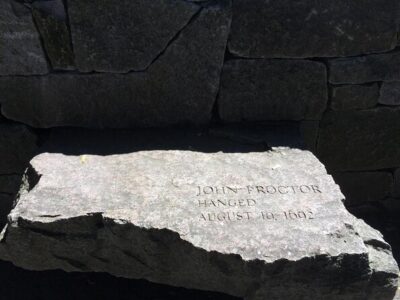
The route ends at the Salem Witch Trials Memorial at 24 Liberty Street, next to Charter Street Burying Point. The final stop lasts about 10 minutes. The memorial was dedicated in 1993 to those who died in the trials, none of whom received a formal burial.
This is the right place to finish. After stops connected to officials, churches, courts, property, and jail, the walk turns toward remembrance. The memorial gives you a quiet point to consider the human cost rather than ending on a ghost story or a movie reference.
You do not enter a building here, and the time is short. One person wished for more time at the memorial, which is a fair consideration if this is the part of Salem that matters most to you. You may want to remain afterward on your own, especially if you prefer a slower visit.
Because the tour ends here, it is easy to continue exploring the nearby area. The end point is beside the historic burial ground, but the tour itself does not include additional admission or a guided visit inside another attraction.
What $26 buys you
At $26 per person, the price is reasonable if you want a focused explanation of Salem’s trial sites. You get about 90 minutes with a professional storyteller and a guide licensed by the city. That is a fair rate for a local walking tour, particularly if the guide adds context that you would not get from reading plaques as you walk.
The value drops if you expect admission to historic buildings. No entry tickets are included. You will stop outside Old Town Hall, the John Ward House, Rockafellas, the former courthouse site, Lyceum Hall, the old jail area, and the memorial.
Think of the fee as payment for interpretation and route planning. You are not buying a museum pass. If you want interiors, exhibits, or artifacts, you will need separate attractions beyond this walk.
The tour has a 4.7 rating from 471 ratings, with 92 percent recommending it. That strong overall response fits the best use of the tour: a well-led introduction to Salem’s 1692 story. Still, the range of reactions shows why the guide matters. Some sessions are praised as factual, funny, and engaging. A few people find the pace slow, the guide too opinionated, or the content less fresh than expected.
That last point deserves attention. If you already know a great deal about the trials, you may find the basic stops familiar. The stronger guides add value by discussing subjects such as religious extremism, the idea of the Devil, social out-groups, and why people with little power were vulnerable to accusation.
Timing, group size, and practical comfort
Plan for an outdoor walk of about an hour and a half. Wear shoes you can comfortably use on Salem streets, and check the forecast before you go. The experience requires good weather, and the operator offers another date or a full refund if poor weather forces cancellation.
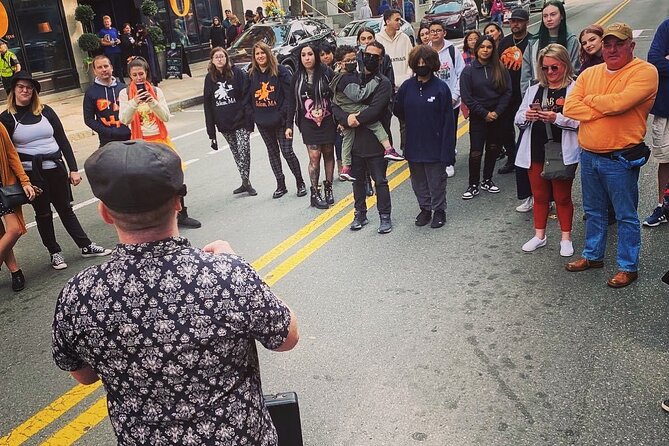
The maximum group size is 44 people. That is not an intimate private walk, so your experience will depend partly on where you stand and how clearly the guide projects. Arrive ready to stay with the group and ask questions during natural pauses.
The tour is offered in English and uses a mobile ticket. It is near public transportation, service animals are allowed, and most people can participate. There is no stated indoor access, so keep the outdoor format in mind when planning clothing and timing.
You can cancel for a full refund up to 24 hours before the start time. Changes or cancellations made inside that window are not accepted for a refund, except when the operator cancels because of weather.
Who should book this Salem walk
I would recommend it to a first-time Salem visitor who wants the witch trials explained in place, without spending a full day in museums. It also suits history-minded families, couples, and friends who enjoy a little humor alongside serious material.
It is a good match for you if you want:
- A clear route through several trial-related locations
- A licensed local guide rather than a self-guided walk
- Context about law, religion, fear, and power
- A final stop at the memorial
- A short experience that leaves time for Salem shops and restaurants
I would be more cautious if you need indoor access, dislike group walks, or already know the trial story in detail. A guide who wanders too far from the subject can make the 90 minutes feel slow, and some sessions may lean more heavily into opinion or side stories than you prefer.
Should you book Salem Uncovered?
Book it if you want a practical introduction to Salem’s witch trials and understand that the streets are the exhibit. The route is well chosen, the price is fair, and the best guides, especially Jeffrey, bring warmth, humor, and serious attention to the people harmed by the trials.
Skip it if you expect preserved interiors, artifacts, or a private small-group experience. For most first-time visitors, though, this is a sensible way to put Salem’s famous story on a map before exploring the city on your own.
FAQ
How long is the Salem Witch Trials Tour?
The walking tour lasts approximately 90 minutes.
How much does the tour cost?
The price is $26 per person.
Where does the tour begin?
The tour begins at 1 Houdini Way, Salem, Massachusetts 01970, near Salem Old Town Hall.
Where does the tour end?
It ends at the Salem Witch Trials Memorial, 24 Liberty Street, next to Charter Street Burying Point.
Are admission tickets to the buildings included?
No. This is a walking tour, and the group stops outside the listed locations. No building admission is included.
Is the tour offered in English?
Yes. The tour is offered in English.
How large can the tour group be?
The activity has a maximum group size of 44 people.
Can I cancel for a refund?
Yes. You can cancel at least 24 hours before the start time for a full refund. Cancellations or changes made less than 24 hours before the start time are not accepted for a refund.
Just added in Salem
- Self-Guided Smartphone Ghost Walking Tour in Salem★ 4.5 · 225 reviews
- The Ghosts of Salem Walking Tour★ 4.5 · 261 reviews
- Salem’s Spooky Spectres Walking Ghost Tour★ 4.5 · 272 reviews
- Salem: 1692 Witchcraft Trials Walk★ 4.2 · 271 reviews
- Salem Uncovered: Dark Stories of Salem Tour★ 4.5 · 307 reviews
- Black Cat Ghostly Night Tour in Salem★ 5.0 · 344 reviews
- Salem Booze and Brews Haunted Pub Crawl by US Ghost Adventures★ 4.5 · 413 reviews
- Salem Ghost Tours: Witches & Wicked Whispers★ 4.2 · 436 reviews
Witch Trial & Witchcraft Tours, compared.

Wicked Awesome Tours: Witch Trial History and Salem Haunts!
Read our review →
Best Salem Witch Trials Historical Walking Tour
Read our review →
Browse the lists this tour appears in