Review · RALEIGH
Rust, Rebels & Ruins: Raleigh Ghost Tours
Raleigh’s ghost stories are tied to real buildings, political figures, old homes, and the city’s uneasy past. This one-hour walk takes you from the State Capitol through downtown, with stops at places such as Haywood Hall, the Executive Mansion, Nash Square, and the former funeral-home site now occupied by Death and Taxes. I like the compact route and the way the tour mixes documented history with supernatural tales.
I also like that the best guides, including Chris, Wendy, Cora, Tyland, and Mary-Ryan, bring different strengths: clear storytelling, local knowledge, humor, or a more serious spooky mood. The main concern is consistency. Some tours have been hard to hear on noisy streets, and the ghost stories may feel mild if you want jump scares or access inside every building.
At a glance: what makes this walk worth considering
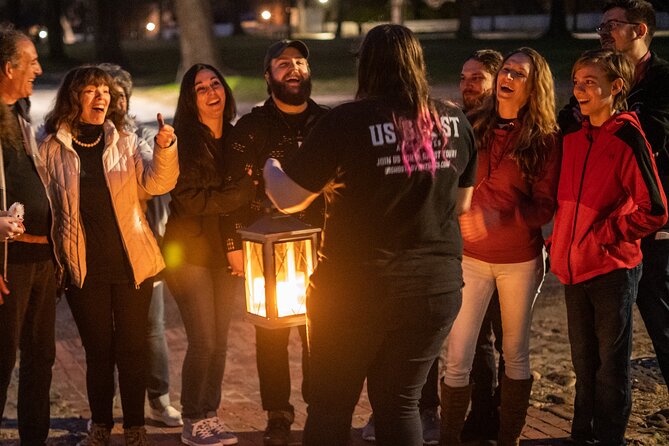
- Eight downtown stops: The route links the Capitol, historic houses, Nash Square, Death and Taxes, and the City of Raleigh Museum.
- History comes first: You’ll hear about Raleigh’s early leaders, old residences, political figures, and buildings that survived major changes.
- Guide quality matters: Chris, Wendy, Cora, Tyland, Alexa, Miranda, Catherine, and Mary-Ryan have all been singled out for strong storytelling or friendly presentation.
- A short evening activity: The tour lasts about an hour and covers roughly a mile, making it easy to fit into a night downtown.
- The scare factor is moderate: Expect spoken stories and eerie legends more than theatrical effects or guaranteed paranormal activity.
- Audio can be an issue: Traffic, group size, and weak amplification have made it difficult for some people to follow every word.
Raleigh ghosts with a side of city history
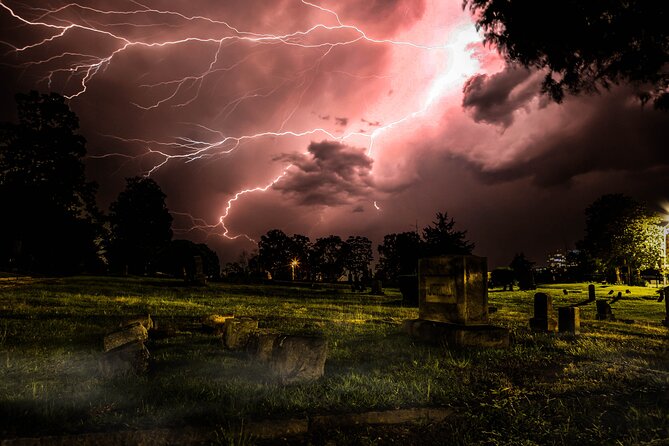
This is not a haunted-house attraction. You won’t be led through dark rooms with actors waiting behind doors. Instead, you walk through central Raleigh while a guide connects visible landmarks to stories of death, political tension, unexplained sounds, and reported apparitions.
That format works best if you enjoy learning how a city developed. The ghost material gives the walk its mood, but the historical setting gives it substance. You may hear about a governor, an early mayor, a post-Civil War home, or an old commercial building before the guide turns to the unsettling part.
I like this balance. A ghost story can fade quickly when it is told without context. Here, the buildings and public spaces give each tale a physical anchor. You can look at the place being discussed, even when the group does not enter it.
The route is about one hour, with stops lasting roughly seven or eight minutes each. That means the guide needs to keep moving and tell a focused story. Strong guides do this well. Less confident guides may sound as if they are reading a list of facts, which can make the hour feel flat.
More ghost tours in the USA
- New Orleans Premier Ghost, Voodoo and Vampire Walking Tour
★ 4.5 · 12,856 reviews - Chicago: Gangsters and Ghosts Walking Tour
★ 5.0 · 7,155 reviews - Adults-Only New Orleans Ghost, Crime, Voodoo, and Vampire Tour
★ 5.0 · 6,545 reviews
Starting at the North Carolina State Capitol
The meeting point is the North Carolina State Capitol at 1 E Edenton St. This is a sensible place to begin because it puts politics, power, and old Raleigh at the center of the story.
The stop lasts about seven minutes. The supernatural angle includes hidden tunnels and footsteps attributed to restless spirits. Treat that as folklore, not a promise of an encounter. The greater value is the setting itself and the chance to connect Raleigh’s civic past with the stories that developed around it.
One memorable version of the tour has included a story from a State Capitol police officer about ghostly experiences inside the building. That kind of firsthand local detail can give the opening extra weight, though it should not be treated as a guaranteed part of every departure.
The Capitol is also where you will notice the first practical challenge: this is an outdoor tour in a working city. Traffic, passing pedestrians, and street noise can compete with the guide. If you have trouble hearing, move closer to the guide rather than lingering at the back.
211 New Bern Place and the White-Holman House
The next stop is 211 New Bern Place, associated with the White-Holman House and William White, a former Secretary of State. The house is presented as an elegant historic residence with a particularly classic ghost-story feature: a mysterious figure reported on the staircase.
This is a good example of how the tour works. You are not touring the interior or climbing the staircase. You are hearing the story from outside and using the building’s appearance to imagine the scene.
That limitation matters. One person who enjoyed the presentation still wished the group could visit the interiors of the supposedly haunted places. If you need to enter every building, this walk may disappoint. If you are happy to hear the account while viewing the exterior, the stop provides a useful glimpse of old residential Raleigh.
Haywood Hall, Raleigh’s oldest original-site residence
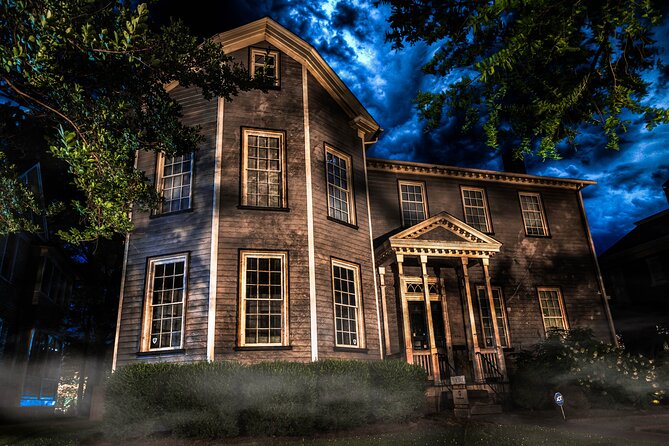
Haywood Hall and Gardens is one of the most important stops for understanding early Raleigh. Built by John Haywood, the city’s first mayor, it is described as the oldest residence still on its original plot within Raleigh’s historic city limits.
The stop lasts about eight minutes. The guide ties the home’s age and early civic connections to reports of lingering spirits. I find this pairing more effective than a random ghost tale because the building has a clear place in the city’s story.
The stop also gives the tour a change of pace. After the public authority of the Capitol and the formal character of the White-Holman House, Haywood Hall brings the focus back to domestic life and Raleigh’s earliest years.
You should expect an exterior account rather than a house tour. The appeal is the setting, the age of the property, and the way the guide explains why old homes collect legends. A guide with a dry sense of humor can make this part memorable without overselling the supernatural claim.
Same streets, a very different kind of fright:
- Salem’s Best Ghost Tour
★ 4.5 · 4,186 reviews - Haunted Evening Horse and Carriage Tour of Charleston
★ 4.5 · 3,678 reviews - New Orleans Adults-Only Ghost, Voodoo and Vampire Tour
★ 5.0 · 3,291 reviews - Savannah History and Haunts Candlelit Ghost Walking Tour
★ 5.0 · 3,235 reviews
The Executive Mansion and Governor Fowle’s knocks
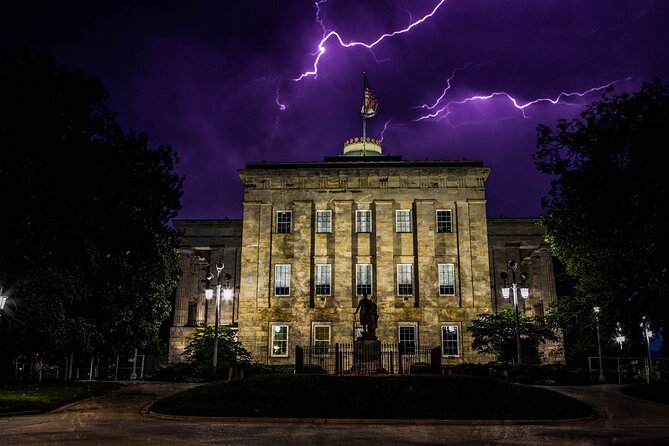
The Executive Mansion adds a political ghost to the route. This Queen Anne-style residence was completed in 1891, and the story here centers on Governor Fowle, whose presence is linked to unexplained knocks.
The eight-minute stop has a simple structure: learn what the house is, hear about its political importance, then consider why knocks and other sounds became part of its legend. It is less about visual spectacle than atmosphere and storytelling.
This is one of the stops where guide style makes a major difference. A strong presenter can pause at the right moment and let a small sound feel unsettling. A guide who rushes through the account may leave you with only a fact about a former governor.
I would rate this stop as more intriguing than frightening. It suits you if you enjoy historical mysteries and old-house folklore. It may not satisfy you if you expect something to appear in a window or make contact with the group.
The Heck-Andrews House and Raleigh after the Civil War
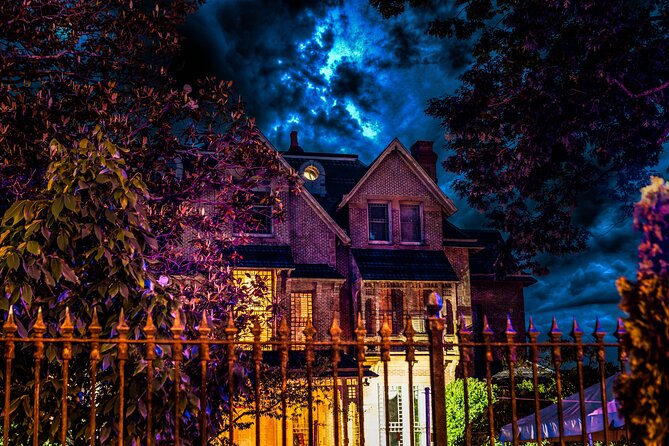
The Heck-Andrews House dates to 1870 and is described as one of Raleigh’s earliest post-Civil War residences. Its story connects the city’s recovery and growth with reports of spectral figures and unexplained events.
This stop helps the tour move beyond a simple collection of spooky anecdotes. The period after the Civil War was unsettled, and old residences often carry stories shaped by family loss, social change, and difficult memories. The ghost elements may be uncertain, but the historical setting is solid enough to make the stop worthwhile.
You will spend about seven minutes here. Look for a guide who explains the house rather than simply announcing that it is haunted. The strongest tours use the reported activity as a reason to talk about the people and events associated with the property.
Nash Square after dark
Nash Square provides a different kind of haunted setting. Instead of an old house, you get an open public green space in the middle of downtown. The local legend involves shadowy figures crossing the lawn after dark.
This stop lasts about eight minutes and gives the group room to imagine movement in the darkness. It is also a practical reminder that the tour takes place outdoors. Lighting, traffic, weather, and the time of sunset will affect the mood.
One useful warning comes from an early tour experience that ended while it was still fairly light outside. If you are booking specifically for nighttime atmosphere, check the departure time and season. A walk that begins before full darkness will feel more like a history stroll with ghost stories than a genuinely eerie outing.
Death and Taxes, from funeral home to restaurant
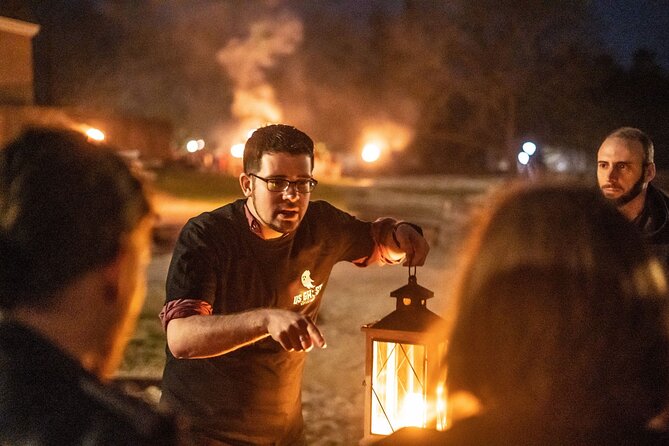
Death and Taxes is perhaps the most naturally unsettling name on the route. The restaurant formerly operated as a coffin store and funeral home, and the stories here involve spirits connected with its earlier use.
This seven-minute stop gives the guide an easy way to explain how a building’s purpose shapes its reputation. A former funeral business already carries a serious association with death, so the supernatural stories feel closely tied to the site rather than added at random.
The stop is also a reminder that downtown Raleigh keeps changing. Buildings can become restaurants, shops, or offices while retaining older layers of memory. I like that this tour uses a current business to explain an earlier chapter of the city.
Do not expect to go inside for a paranormal investigation. The point is to hear the account outside and connect the present-day address with its former life.
The City of Raleigh Museum and the child on the stairs
The final stop is the City of Raleigh Museum, housed in the historic Briggs Hardware Building. The building is described as the only largely unaltered 19th-century commercial structure remaining in downtown Raleigh.
The reported activity here is more specific than at some other stops: childlike laughter and the sound of small feet on the stairs. That detail gives the story a clear image and makes it a fitting finale.
The seven-minute stop also brings the route back to preservation and city history. You are not simply looking at an old façade. You are hearing how a commercial building survived while much of downtown changed around it.
As with the other locations, the experience depends on the guide’s delivery. A calm, measured account can make the quiet sounds more effective than an exaggerated performance. If you prefer documented architecture and local stories with a ghostly edge, this is likely one of the better stops for you.
The guides can make or break the evening
The most useful way to judge this tour is to separate the route from the guide. The stops are fixed, but the tone changes with the person leading the group.
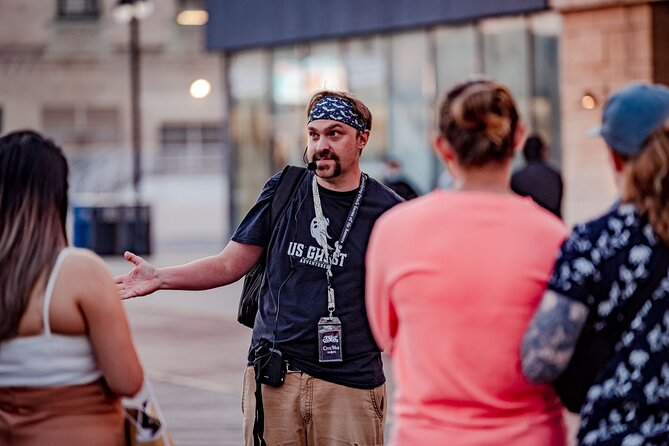
Chris has been praised for being engaging, answering questions, and adjusting the experience when the group was very small. Wendy has been noted for local knowledge, personal interaction, and keeping everyone involved. Cora has been described as both fun and well informed, while Tyland received praise for focusing on the darker side of real history.
Mary-Ryan has been appreciated for combining seriousness with comedy. Alexa has been recognized for explaining the history of each location, and Miranda for speaking clearly and keeping the group together. Catherine has also been praised for turning the hour into an enjoyable evening of storytelling.
That is a strong list of guide strengths, but the experience is not perfectly uniform. Some departures have suffered from dull delivery, disorganized storytelling, weak volume, or poor attention to crosswalk safety. If your guide does not introduce the group clearly or keep everyone together, the tour can feel much less polished.
The best advice is practical: arrive ready to stand near the guide, speak up if you cannot hear, and keep the group’s pace. A group of 26 has already felt too large for some people, even though the stated maximum is 35.
Is $32 a fair price?
At $32 per person, this is reasonably priced for a one-hour guided walk, but the value depends on what you want. You are paying for a researched route, a guide, and a compact introduction to several central Raleigh landmarks. You are not paying for admission to the buildings, special effects, or a paranormal investigation.
I think the price works best for first-time visitors who want an evening activity and for local residents who enjoy learning new stories about familiar streets. Several people who already knew Raleigh well still found unfamiliar tales along the route.
The value drops if you have taken many ghost walks and want a more theatrical production. It also drops if you expect to enter the sites, see apparitions, or hear frightening stories at every stop.
The tour is offered in English, uses a mobile ticket, and allows service animals. It is near public transportation, and most people can participate, but you should be comfortable walking about a mile and standing outdoors for an hour.
How to get the most from the one-hour route
Arrive at the State Capitol with enough time to find the group. The listed starting point is 1 E Edenton St, and the tour returns there at the end.
Wear shoes suited to city walking. The distance is not extreme, but the pace includes multiple crossings and stops. Pay attention when the group moves across streets, and do not assume the guide will always wait for every person before continuing.
The tour can accommodate up to 35 people. A smaller departure may feel more personal and make it easier to ask questions. A larger group may create more energy, but you should position yourself close to the guide if hearing is important.
The tour is available with free cancellation up to 24 hours before the start time. Inside that window, cancellations and changes are not accepted for a refund. Confirmation arrives within 48 hours, subject to availability.
Who should book Raleigh Ghosts?
I would choose this walk if you want a short, central introduction to Raleigh after dark. It suits couples, families with older children, solo visitors, and locals who enjoy architecture, civic history, and ghost lore in equal measure.
It is especially appealing for a date night. The route gives you something to discuss afterward, and the mix of humor and eerie stories can work well for a small group.
I would be more cautious if you are seeking intense scares. The tour’s strongest material is spoken storytelling, not staged fear. Some people have found the stories fun but not especially frightening, while others have felt the guide lacked enough energy.
Should you book this Raleigh ghost walk?
Book it if you value local history with a supernatural edge, want a manageable one-hour walk, and are willing to judge the experience by the guide’s storytelling rather than by paranormal proof.
I would skip it if you need indoor access, dramatic effects, or a reliably terrifying night. The route is worthwhile for its buildings and stories, but the presentation can vary, and street noise can interfere.
At $32, this is a fair choice for a relaxed downtown activity. Go in expecting Raleigh history, old buildings, reported hauntings, and a few good chills. Expecting a full haunted attraction is the quickest way to come away disappointed.
FAQ
How long does the Raleigh Ghosts tour last?
The tour lasts approximately one hour.
Where does the tour begin?
It begins at the North Carolina State Capitol, 1 E Edenton St, Raleigh, NC 27601.
Where does the tour end?
The tour ends back at the meeting point near the North Carolina State Capitol.
How much does the tour cost?
The listed price is $32 per person.
What locations are included?
Stops include the North Carolina State Capitol, 211 New Bern Place and the White-Holman House, Haywood Hall House and Gardens, the Executive Mansion, the Heck-Andrews House, Nash Square, Death and Taxes, and the City of Raleigh Museum.
Is the tour offered in English?
Yes. The experience is offered in English.
How large can the group be?
The maximum group size is 35 people.
Can I cancel for a refund?
Yes. You can cancel at least 24 hours before the start time for a full refund. Cancellations or changes made within 24 hours are not accepted for a refund.
Just added in the USA
- Haunted Alexandria Booze and Boos Ghost Walking Tour★ 5.0 · 157 reviews
- Ghost and Graveyard Tour★ 5.0 · 187 reviews
- Dreaded Dead Descent of the District: DC Ghost Tour★ 4.2 · 186 reviews
- Phantoms of the Potomac: Old Town Alexandria Ghost Tour★ 4.0 · 56 reviews
- Alexandria Ghosts Spirits & Spirits Haunted Pub Crawl★ 5.0 · 26 reviews
- Haunted Tampa Booze and Boos Ghost Walking Tour – Ybor City★ 4.5 · 147 reviews
- Ghost Investigation Tour Interactive Paranormal Experience 18Plus★ 5.0 · 47 reviews
- The Official Downtown Tampa Ghost Tour★ 4.5 · 82 reviews
USA Ghost Tours, compared.
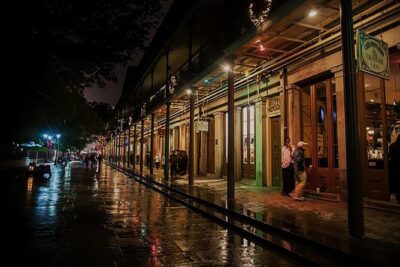
New Orleans Premier Ghost, Voodoo and Vampire Walking Tour
Read our review →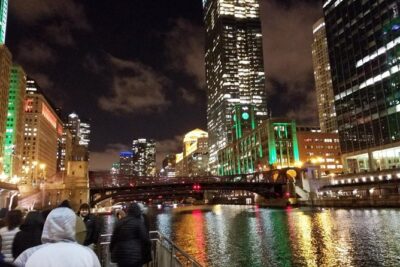
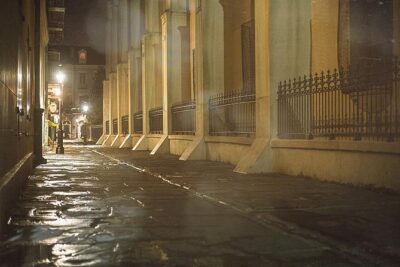
Adults-Only New Orleans Ghost, Crime, Voodoo, and Vampire Tour
Read our review →
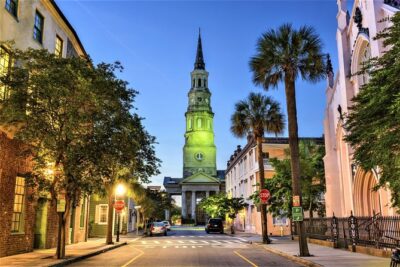
Haunted Evening Horse and Carriage Tour of Charleston
Read our review →
New Orleans Adults-Only Ghost, Voodoo and Vampire Tour
Read our review →
Savannah History and Haunts Candlelit Ghost Walking Tour
Read our review →