
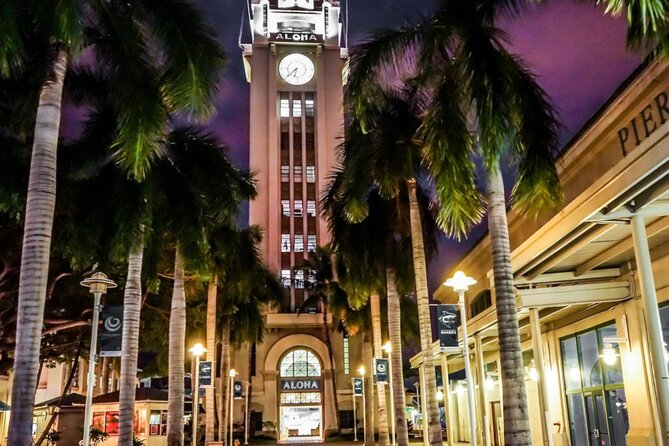
Review · OAHU
Honolulu Night Marchers Ghost Tour
Downtown Honolulu takes on a different character after dark, when office towers, old streets, and sacred places become the setting for stories of night marchers, restless spirits, and unexplained events. Guide Lopaka Kapanui brings these tales together with Hawaiian history and family traditions, making this more than a standard haunted walk.
I like the Native Hawaiian perspective and the use of eyewitness accounts, photos, and videos rather than a string of generic ghost stories. I also like the reasonable $35 price for a 90-minute walk that combines culture, folklore, and local history. The main drawback is that storytelling style matters here. One attendee found the tales hard to follow, and arriving late can mean missing the introduction.
Key points to know before booking
- Night marcher stories are tied to real Honolulu places, including old paths said to lead toward Pakaka, an ancient sacrificial heiau.
- Lopaka Kapanui leads the tour, sharing Hawaiian legends, family stories, and accounts of paranormal activity.
- The walk begins at 7:00 pm by the King Kamehameha I Statue and returns there after about 90 minutes.
- The $35 fee includes admission, but food and drinks are not included.
- This is a cultural tour with a supernatural twist, not simply a jump-scare attraction.
- Good walking shoes help, and the group can include up to 50 people.
Why Honolulu’s night marcher legends matter
The central story of the tour is the huakaʻi po, commonly known in English as the night marchers. These ghostly processions are linked to ancient Hawaiian warriors and chiefs who are said to travel at night along established routes.
The tour places those stories in Downtown Honolulu, where modern buildings and paved streets cover older layers of Hawaiian history. Several paths are said to have led toward Pakaka, an ancient heiau, or temple, that once occupied the area. You will not be walking through an untouched archaeological site. You will be moving through present-day Honolulu while listening for traces of what came before.
That contrast is the heart of the experience. A glass office building may look ordinary in daylight, yet local stories connect parts of downtown with moving shadows, objects shifting by themselves, strange feelings, and sightings of night marchers. The tour asks you to consider how a city can carry memory, belief, and fear long after its original sacred places have changed.
I appreciate that the supernatural material is connected to Hawaiian culture instead of being treated as a collection of spooky decorations. The stories have meaning beyond the question of whether ghosts exist. They touch on respect for sacred ground, family traditions, and the way older beliefs continue alongside modern life.
More evening outings in the USA
- Haunted Evening Horse and Carriage Tour of Charleston
★ 4.5 · 3,678 reviews - Ghosts of Charleston Night-Time Walking Tour with Unitarian Church Graveyard
★ 4.5 · 2,835 reviews - Savannah’s Ghost City “Dead of Night” Walking Night Tour
★ 4.5 · 2,482 reviews
Meeting Lopaka Kapanui at 7:00 pm
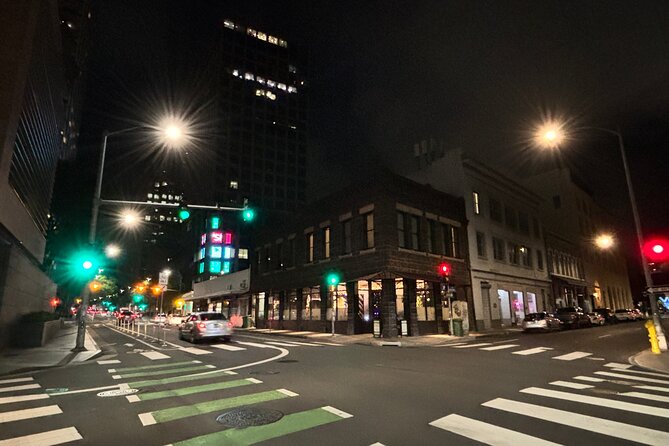
The tour begins at the King Kamehameha I Statue, 447 South King Street. The start time is 7:00 pm, a useful hour for a night activity that does not take up your entire evening. You return to the same meeting point at the end.
Lopaka Kapanui is the experience’s main storyteller. His role is important because the tour depends on voice, pacing, and context more than on scenery. He shares stories passed down through his family, including material connected with his mother, and combines those accounts with Hawaiian legends and local history.
The tone is not strictly solemn. Lopaka uses humor, including a dry and occasionally sarcastic style, to keep the group engaged. That can make the evening feel relaxed, but it also means you should expect a conversational storytelling event rather than a formal lecture.
One practical point matters: arrive on time. The introduction lays down the background for the later stories, and missing it can make the rest of the walk harder to follow. The tour includes group activities and questions, so it helps to settle in from the start.
Walking through Downtown Honolulu after dark
The itinerary centers on Downtown Honolulu rather than a long list of separate attractions. That keeps the focus on the stories and lets the guide explain how modern streets relate to older Hawaiian places.
You may hear accounts from people who work in downtown buildings and describe unusual events in their offices. These include shadows moving, objects being relocated, and the uneasy feeling locals sometimes call chicken skin. The tour also covers reported encounters with night marchers and other paranormal activity.
The appeal is not that every building comes with a neat ghost story. The appeal is the uncertainty. An ordinary office or street can become unsettling when you learn what people claim to have seen there. The guide uses eyewitness accounts, photographs, and videos to give the stories a more personal feel.
This is also why the tour may not suit someone looking for a tightly scripted haunted-house production. The material is rooted in conversation, local lore, and interpretation. Some people will enjoy the room to ask questions and connect the stories. Others may prefer a more linear presentation with clearer transitions between locations.
The route is described as a walking tour of about 90 minutes. Wear comfortable shoes, as one attendee specifically offered that advice. The tour is near public transportation, and most people can participate. Service animals are allowed. The maximum group size is 50, so the experience can range from intimate to fairly busy depending on the booking.
Pakaka and the older sacred ground beneath the city
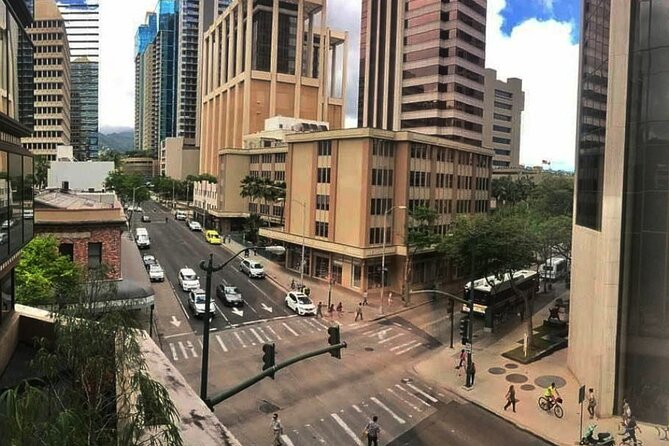
Pakaka gives the tour a stronger sense of place. The site was an ancient sacrificial heiau, and many of the night marcher paths are said to end there. You are not simply hearing that a random downtown building is haunted. You are hearing stories connected to a sacred place that shaped the area before the current streets and structures existed.
That context gives the legends more weight. Hawaiian spiritual traditions are not just a set of frightening characters for entertainment. Places, ancestors, ceremonies, and proper conduct matter. The tour works best when you listen with that respect in mind.
The walk does not appear to include every nearby site. One family attendee wished the group had crossed the street to a cemetery, so the route may leave you wanting to explore more on your own. That is not necessarily a flaw, but it is useful to know if you expect a broad survey of every haunted location in central Honolulu.
The focus stays on Downtown Honolulu and the night marcher paths tied to Pakaka. It is a concentrated story rather than a citywide tour.
More ghost tours in the USA
- New Orleans Premier Ghost, Voodoo and Vampire Walking Tour
★ 4.5 · 12,856 reviews - Chicago: Gangsters and Ghosts Walking Tour
★ 5.0 · 7,155 reviews - Adults-Only New Orleans Ghost, Crime, Voodoo, and Vampire Tour
★ 5.0 · 6,545 reviews - Salem’s Best Ghost Tour
★ 4.5 · 4,186 reviews
What makes this a cultural experience, not just a ghost walk
The strongest feature is the mixture of Hawaiian culture, local history, and paranormal storytelling. You learn about supernatural beliefs while also hearing how those beliefs fit into the history of Oahu.
Lopaka’s family connection adds a personal layer. Stories passed through families can feel different from material lifted from a general folklore book. They carry details about who told them, how they were remembered, and why they still matter.
That does not mean you need to accept every haunting as fact. You can enjoy the experience as folklore, oral history, or a study of how people understand unusual events. The tour presents documented accounts of hauntings and paranormal activity, along with photos and videos that are meant to make you reconsider your assumptions. You can decide for yourself how convincing the evidence seems.
I would approach the evening with curiosity rather than a demand for proof. If you want only verified historical facts, parts of the tour may feel speculative. If you enjoy hearing how local people explain strange events, the mix should hold your attention.
The evidence, stories, and group interaction
Photos and videos are part of the presentation, and the guide uses them to support the tales. One attendee described taking clear photographs during the walk that later appeared mysteriously blurry. That kind of personal detail fits the tone of the tour, though it is also a reminder that the evening invites interpretation.
The guide also encourages interaction. Families have found the stories accessible, and group activities can get people talking with one another. The experience is not designed only for serious paranormal enthusiasts. Children and adults can follow it, and one attendee who used a sit-down walker found it enjoyable and manageable.
At the same time, the tour’s success depends heavily on Lopaka’s delivery and on your willingness to listen. One critical account described the stories as broken and difficult to follow. The guide’s response noted that the person arrived late and missed the introduction. That exchange points to a practical lesson: the opening matters, and this is not a walk where you can casually join halfway through without losing context.
A group of up to 50 can also affect the mood. A large crowd may make it harder to hear or ask questions, while a smaller group may feel more personal. The listing does not promise a small-group format, so book with realistic expectations.
Is $35 a fair price for 90 minutes?
At $35 per person, this tour sits at a reasonable price for an evening walking activity in Honolulu. The fee covers about an hour and a half of guided storytelling, with admission included. You are paying for the guide’s local knowledge, preparation, and ability to connect history with place, not for food, transportation, or a theatrical production.
The value is strongest if you want several experiences in one: a downtown walk, Hawaiian cultural context, local legends, and ghost stories. A conventional sightseeing tour might explain buildings and political history. A basic ghost tour might focus on scares. This experience tries to connect both sides.
The value is weaker if you want a large number of stops or a polished show with actors, special effects, and constant surprises. The itinerary centers on one downtown area, and the experience is driven by storytelling.
For many visitors, the timing also helps. At 7:00 pm, you can fit the tour after daytime sightseeing, then continue your evening afterward. Since it ends where it begins, you do not need to arrange a separate pickup at another part of the city.
Who should book this Honolulu ghost tour?
I would recommend it to you if you enjoy local stories and want a more cultural angle on a supernatural tour. It suits couples, families, and friends, and the subject matter can appeal to people who are interested in Hawaiian traditions even if they are not committed ghost hunters.
It is also a good pick for anyone who values a local guide. Lopaka’s family stories, Native Hawaiian background, and personal delivery are central to the experience. You are not simply following a script about haunted buildings.
You may want to choose another activity if you dislike walking, prefer a quiet and highly structured tour, or want a stop-by-stop examination of many cemeteries and historic sites. The route is urban, the group may be sizable, and the stories require attention.
Comfortable footwear is the simple preparation that matters most. The tour is near public transportation, service animals are allowed, and most people can take part. Food and drinks are not included, so plan those separately.
Weather, cancellation, and booking timing
The tour requires good weather. If poor weather cancels it, you will be offered another date or a full refund. You can cancel for a full refund up to 24 hours before the 7:00 pm start time. Cancellations or changes made less than 24 hours ahead are not accepted for a refund.
The experience is often booked about 27 days ahead. That does not mean you must reserve a month early, but it is useful information if your Oahu dates are fixed. The tour has also received a 4.8 rating, with 96 percent of customers recommending it, and it was voted the USA Today 10Best Readers’ Choice top ghost tour for three straight years from 2023 through 2025.
Those honors do not guarantee that every person will enjoy the storytelling style. They do show that the tour has built a strong reputation, especially among people looking for a cultural and supernatural evening rather than a standard attraction.
Should you book the Honolulu Night Marchers Ghost Tour?
Book it if you want to hear Hawaiian legends from a Native Hawaiian guide while walking through a real downtown setting after dark. Lopaka Kapanui’s storytelling, family connections, and use of eyewitness accounts give the tour more substance than a generic ghost walk.
Skip it if you need a fast-moving route packed with dramatic effects, or if you prefer only firmly documented history. The experience leaves room for belief, interpretation, and conversation.
For $35, I think it is a sensible choice for an evening in Honolulu, especially if you arrive on time, wear good shoes, and treat the night marcher stories with cultural respect. The best reason to book is not the promise of seeing a ghost. It is the chance to understand how Hawaiian history, sacred places, and modern Honolulu remain connected in the stories people still tell.
FAQ
How long is the Honolulu Night Marchers Ghost Tour?
The tour lasts approximately 1 hour and 30 minutes.
What time does the tour start?
The tour starts at 7:00 pm.
Where does the tour begin?
It begins at the King Kamehameha I Statue at 447 South King Street, Honolulu, Hawaii 96813.
Where does the tour end?
The activity ends back at the King Kamehameha I Statue, the same place where it begins.
How much does the tour cost?
The price is $35 per person.
What language is the tour offered in?
The tour is offered in English.
Is food or drink included?
No. Food and drinks are not included.
What happens if bad weather cancels the tour?
You will be offered a different date or a full refund if the activity is canceled because of poor weather.
Just added in the USA
- Zion: Harry Potter-Inspired Zion Ghost Tour with Sunset View★ 5.0 · 8 reviews
- Wraiths of the West Texas Wind: El Paso Ghost Tour★ 4.5 · 9 reviews
- Wraiths & Wicked Whispers: Wilmington Ghost Tour★ 4.2 · 25 reviews
- Witches, Widows, & Wraiths: Wichita Ghost Tours★ 5.0 · 2 reviews
- Williamsburg: Dead of Night Tour with Paranormal Equipment★ 4.6 · 3 reviews
- Wilmington: Boos and Booze Haunted Pub Crawl★ 4.0 · 8 reviews
- Williamsburg: Haunted Ghosts, Witches, and Pirates Tour★ 4.5 · 107 reviews
- Williamsburg: Dead of Night Paranormal investigations Tour★ 5.0 · 4 reviews
Evening Experiences, compared.
Haunted Evening Horse and Carriage Tour of Charleston
Read our review →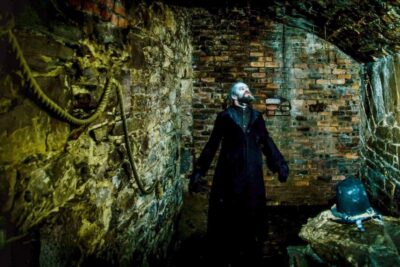
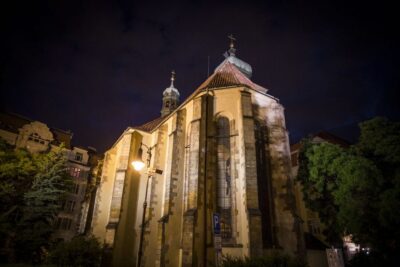
Ghosts and Legends of the Old Town Evening Tour
Read our review →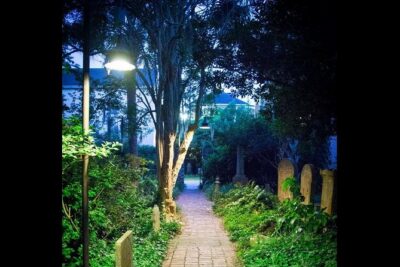
Ghosts of Charleston Night-Time Walking Tour with Unitarian Church Graveyard
Read our review →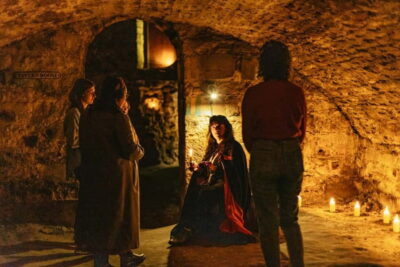
Underground Vaults Evening Ghost Tour with Whisky
Read our review →
Savannah’s Ghost City “Dead of Night” Walking Night Tour
Read our review →
New Orleans Dead of Night Ghosts and Cemetery Bus Tour
Read our review →
Browse the lists this tour appears in