
Review · MALTA
The Dark History of Valletta – Walking Tour
Valletta’s dark side is full of odd turns: a dead knight who reportedly threw parties in the 1990s, a lovesick man’s final letter before murder, and more than a hundred boys who entered a church but never came out. This two-hour evening walk uses those tales to show you a side of Malta’s capital that ordinary sightseeing can miss.
I like the sharp storytelling and the useful route. You start at Tritons’ Fountain, then finish beside the Grand Master’s Palace, right in Valletta’s center. I also like that the guide connects separate stories with cliffhangers, a style that helped one family stay engaged from one stop to the next. The catch is the steep walking, including a descent to the bottom of the city and a climb back up.
Key points to know before booking
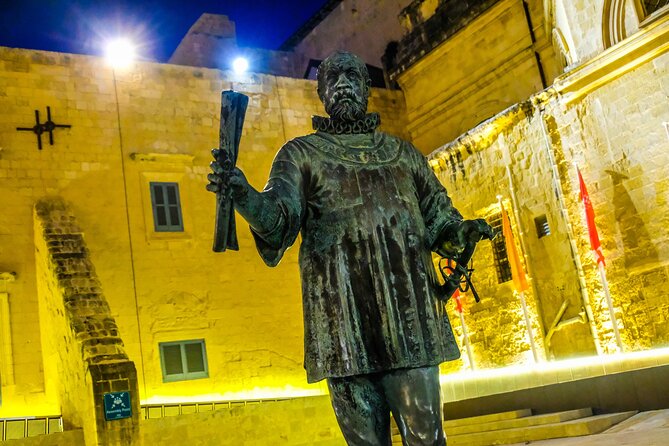
- Oliver Starkey’s ghost: Hear how a 16th-century knight supposedly caused a stir with parties held long after his death.
- A murder told through a letter: One of the tour’s most unsettling stories centers on a lovesick man and a letter sent shortly before he killed his lover.
- Valletta’s hills matter: You walk down and back up, so comfortable shoes and reasonable fitness are important.
- A guide-led story route: Mario is specifically praised for his storytelling and for linking each tale to the next location.
- A central finish: The walk ends at the Grand Master’s Palace, close to bars and restaurants.
- Small enough to stay manageable: The group can include up to 35 people, with a mobile ticket and English commentary.
Why Valletta’s dark stories work so well
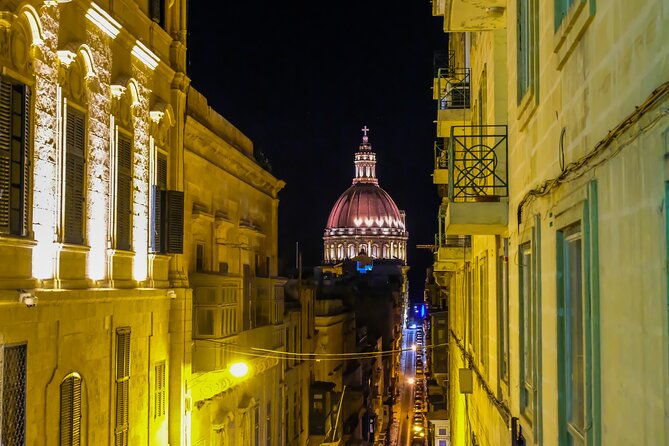
Valletta is compact, but it is not a flat, simple city to walk. Its streets rise and fall toward the water, and that physical movement gives this tour a useful shape. You are not only standing in one square listening to old tales. You move through the capital, go down toward the lower part of town, and then work your way back up.
I like that the stories sound strange before they sound historical. A ghost holding parties in the 1990s is an immediate attention grabber. So is the question of why more than a hundred boys entered a church and never came out. These are the kinds of openings that make you want to hear the explanation rather than simply collect dates and names.
The tone is darker than a standard city walk, but the tour is still built around real places in Valletta. The stories give you a reason to look up, notice a statue, think about a church, or reconsider the reputation of a famous founder. That makes the experience useful for a first visit, but also for someone who has already seen the main sights.
This is not a museum tour with formal exhibits or a visit inside a series of buildings. The focus is on the streets, the guide’s narration, and the connections between Valletta’s people, monuments, legends, and crimes. If you prefer a quiet architectural walk, this may feel too theatrical. If you enjoy a well-timed story, the format should suit you.
More Dark History Tours in the world
- Adults-Only New Orleans Ghost, Crime, Voodoo, and Vampire Tour
★ 5.0 · 6,545 reviews - Edinburgh: Dark Secrets of the Old Town Ghost Walking Tour
★ 4.6 · 1,671 reviews - New Orleans Adults-Only True Crime and Ghost Walking Tour
★ 5.0 · 1,666 reviews
Starting at Tritons’ Fountain in Floriana
The meeting point is Tritons’ Fountain on Vjal Nelson in Floriana, just outside Valletta. This matters because you should allow time to reach the correct side of the city before the walk begins. The tour does not start at the Grand Master’s Palace, so do not head straight into central Valletta and expect to find the group there.
Starting near the fountain gives the walk a clear sense of movement. You begin outside the main concentration of Valletta’s central streets, then make your way into the capital as the stories unfold. The exact order of each tale may vary with the guide, but the supplied route centers on Valletta itself and ends near the Grand Master’s Palace.
I would arrive with your ticket ready on your phone. The booking includes a mobile ticket, and confirmation is provided at the time of booking. The tour is offered in English, so you should be comfortable following spoken storytelling for about two hours.
One useful detail comes from a family who arrived late because of heavy traffic connected with an event. Guide Mario called to check on their location and held the group while sharing extra stories. That does not guarantee every guide can wait, but it shows why you should keep the meeting details handy and contact the operator if plans go wrong.
Oliver Starkey and the ghost who would not leave
The Oliver Starkey story is one of the tour’s best hooks. Starkey was a 16th-century knight, yet the tale reaches into the 1990s, when his ghost reportedly threw parties that disturbed nearby residents. The unusual time gap gives the story its bite. This is not just a medieval legend sealed away in the past. It is presented as a haunting that caused trouble in a much more recent period.
The final twist is practical and faintly comic: the ghost was eventually persuaded to stop disturbing the neighbors. That detail keeps the story from becoming a string of grim events. Valletta’s dark history, as presented here, includes the bizarre and the almost domestic, not only murder and tragedy.
I like this kind of story because it gives you a different way to see old streets. Instead of picturing knights only as figures from a distant siege, you begin to imagine how local legends can remain part of daily life. The tour uses that contrast well.
You should also expect the guide to build suspense rather than explain everything at once. Mario is described as leaving each story on a cliffhanger before bringing the group to the next spot. That method gives the route a natural rhythm and helps the two hours pass quickly.
The murder letter and Valletta’s more disturbing side
The tour also deals with a lovesick man who sent a shocking letter to his lover shortly before murdering her. This is a darker story than the ghost of Oliver Starkey, and it may not suit every audience. The subject matter is serious, so you should choose this experience because you want crime, death, and unsettling local tales, not because you expect a gentle folklore walk.
The letter adds a personal element that can make the story more disturbing. Rather than hearing only a general account of violence, you are given a connection between the killer and his victim shortly before the crime. The tour’s appeal comes partly from this shift between legend, documented events, and the human choices behind them.
I appreciate that the route does not seem to rely on spooky atmosphere alone. The stories have specific people and actions attached to them. That gives the walk more substance than simply pointing out dark corners and asking you to imagine ghosts.
Still, the experience is not described as a formal crime-history lecture. The value comes from the guide’s delivery and the way each account fits the surrounding city. If you want dates, documents, and a detailed academic treatment of each case, you may find the storytelling format less exact than a specialist historical seminar.
More Ghost Walking Tours in the world
- New Orleans Premier Ghost, Voodoo and Vampire Walking Tour
★ 4.5 · 12,856 reviews - Chicago: Gangsters and Ghosts Walking Tour
★ 5.0 · 7,155 reviews - Prague: Ghost Walking Tour Where Legends Come To Life
★ 4.4 · 5,253 reviews - Savannah History and Haunts Candlelit Ghost Walking Tour
★ 5.0 · 3,235 reviews
The church mystery involving more than a hundred boys
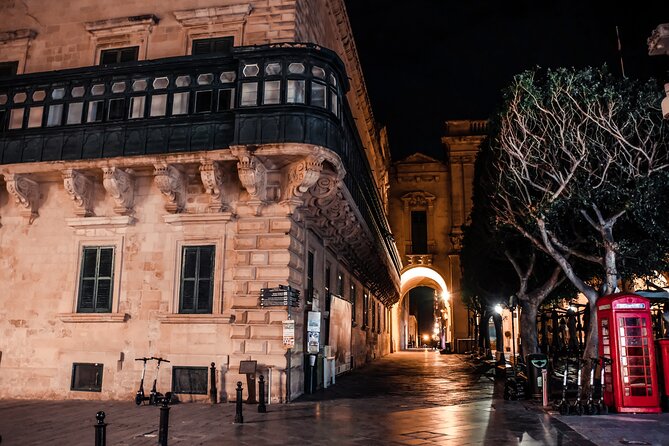
One of the tour’s strongest questions is why more than a hundred boys entered a church but never came out. The wording alone creates suspense, and the answer is part of the walk’s promise. You will need to hear the guide’s explanation on site, rather than expecting the mystery to be resolved in advance.
This story shows how the tour uses familiar public places in an unfamiliar way. A church can be a major architectural sight during the day, yet the guide may use it to raise questions about fear, ritual, tragedy, or a disturbing event. That change in context is one of the better reasons to take a themed walk after seeing Valletta’s main sights.
I would pay close attention to the transition between this story and the next. The guide’s style is built around holding back the conclusion and linking locations. That means the experience works best when you stay with the group and listen instead of treating each stop as a quick photo opportunity.
The supplied information does not identify the church or explain the event in advance. That is useful to remember when deciding how to prepare. You are booking a guided reveal, not a self-guided list of solved mysteries.
Jean de Valette beyond the usual founder story
You will also hear about Jean de Valette, the founder of Malta’s capital. Most city walks introduce him as the person whose name Valletta carries, but this tour promises to examine the truth behind his story rather than offering only a polished founder’s portrait.
That angle can add value if you already know the basic outline of Malta’s capital. One person specifically joined after visiting Malta often and still learned new information. I would not assume the walk will overturn every accepted account, but it should give you a less familiar way to think about the city’s beginnings.
This is where the tour can appeal to repeat visitors. You do not need to be new to Valletta to benefit from a different theme. The route turns streets and landmarks into prompts for questions about power, reputation, memory, and the stories a city chooses to preserve.
The treatment of Jean de Valette is part of the broader balance of the walk. You get ghosts and murder, but also a historical figure tied to the city’s foundation. That mix prevents the experience from becoming a simple parade of supernatural claims.
The grotesque statue above Valletta’s streets
Another promised stop concerns a grotesque statue that watches over the people of Valletta, high above their heads. The tour explains its hidden meanings, so you should be ready to look up. This is a small but important reminder that much of the city’s visual language may be overhead rather than directly at eye level.
I like this detail because it asks you to read the city, not just photograph it. A grotesque figure can look like decoration until someone explains why it is there and what it may represent. The guide gives you a reason to notice features you might otherwise pass without a thought.
The information provided does not name the statue or give its exact position. That is not a flaw in the experience, but it means you should not expect a published checklist of every stop. Part of the appeal is finding the detail in place and hearing its meaning from the guide.
For anyone interested in churches, carved stone, and public symbols, this may be one of the most rewarding parts of the walk. It also offers a break from the more upsetting stories and brings the focus back to Valletta’s buildings.
Hills, timing, and the practical side of the walk
The tour lasts about two hours. That is enough time for several stories without taking up an entire evening, and the end point is well placed for continuing your night in Valletta. You finish at the Grand Master’s Palace, close to bars and restaurants, so you can plan a drink or meal afterward.
The route is not flat. One detailed account warns that you walk right down to the bottom of Valletta and then back up. I would treat that as the main practical issue, especially if you have trouble with hills or want a slow, easy stroll.
Wear shoes you can walk in comfortably and avoid scheduling a demanding activity immediately afterward. The group size can reach 35 people, which is not an intimate private walk, but it is still a defined group rather than an open crowd. A larger group may make it harder to hear if you drift behind, so stay near the guide.
Most people can participate, and service animals are allowed. The start is near public transportation. The supplied details do not specify the exact accessibility of every street or the number of stairs, so anyone with mobility concerns should ask Dark Malta Tours before booking.
The tour requires good weather. If poor weather cancels it, you are offered another date or a full refund. For your own plans, keep the weather condition in mind, especially if this walk is one of the few fixed activities in your Malta schedule.
Is $24.03 a fair price?
At $24.03 per person, I see the value mainly in the guide’s storytelling and the route through the city. You are not paying for admission to a major attraction. The tour’s product is the interpretation: someone takes you from place to place, supplies the context, and shapes the evening around stories you would be unlikely to encounter in a standard walk.
That makes the price easier to justify if you enjoy guided history and local legends. It is less compelling if you are happy to wander Valletta alone with a guidebook or audio tour. The experience depends heavily on the guide’s energy, pacing, and command of the material.
The available rating is 4.9 from 50 ratings, and the recommendation level is 100 percent. More important than the numbers is the specific pattern in the feedback: Mario is praised for storytelling, for building suspense, and for helping a late-arriving family join the group. One repeat visitor also learned new material, which suggests the tour is not only for first-time visitors.
The maximum group size of 35 means you should not expect the private attention of a one-to-one guide. At the same time, the tour’s two-hour length and central finish keep the commitment reasonable. I would call it good value for an evening activity if the subject matter and hills suit you.
Who should book the Dark History of Valletta?
I would choose this walk if you enjoy local legends, crime stories, unusual historical details, and guides who tell a story in stages. It is also a good option for repeat visitors who have already seen Valletta’s main monuments and want a fresh reason to walk its streets.
Families can take it, but the murder story and other dark subjects may not suit young children. The group experience also works best for people who enjoy listening as they walk rather than stopping for long independent exploration at each site.
You should think twice if you dislike suspense, disturbing subjects, or uneven city walking. The route’s hills are not a minor footnote. You go down and back up, and the tour is designed around movement through Valletta.
Book at least a little ahead if possible. The experience is booked an average of 19 days in advance, which suggests that leaving it until the last evening could be risky during a busy visit. You can cancel for a full refund up to 24 hours before the start time. Changes or cancellations made later are not accepted for a refund.
My booking call
I would book the Dark History of Valletta if you want a lively, story-led way to see the capital after the usual sightseeing hours. The ghost of Oliver Starkey, the murder letter, the church mystery, Jean de Valette, and the grotesque statue give the walk a strong mix of strange, serious, and visually memorable material.
The main question is not the subject matter. It is your comfort with hills and dark stories. If you can manage the walk and want a guide who builds suspense, the $24.03 price is reasonable, especially with a finish near Valletta’s restaurants and bars. If you need a flat route or prefer quiet architectural commentary, choose another city walk.
FAQ
Where does the Dark History of Valletta tour start?
The tour starts at Tritons’ Fountain, at Vjal Nelson in Floriana, Malta.
Where does the tour end?
It ends at the Grand Master’s Palace in Valletta, close to bars and restaurants.
How long does the walking tour last?
The tour lasts approximately two hours.
What language is the tour offered in?
The tour is offered in English.
Is the tour suitable for people with limited mobility?
Most people can participate, and service animals are allowed, but the route is hilly. You walk down to the bottom of Valletta and back up, so good mobility and fitness are important.
What happens if bad weather cancels the tour?
The experience requires good weather. If it is canceled because of poor weather, you can choose a different date or receive a full refund.
More history tours in the world
- Stockholm: Ghost Walk and Historical Tour
★ 4.7 · 2,685 reviews - New Orleans Small-Group Haunted History Carriage Tour
★ 4.5 · 2,289 reviews - New Orleans Haunted History Ghost Tour
★ 4.5 · 2,084 reviews - Genteel and Bard’s Savannah Dark History and Ghost Encounter Walking Tour
★ 5.0 · 1,546 reviews
Just added in the world
- Zion: Harry Potter-Inspired Zion Ghost Tour with Sunset View★ 5.0 · 8 reviews
- Your evening in Venice – Legends&Ghosts&Aperitif★ 4.7 · 79 reviews
- York’s Haunted Heart : Ghost, Ghouls and Gallows★ 4.6 · 82 reviews
- Wraiths of the West Texas Wind: El Paso Ghost Tour★ 4.5 · 9 reviews
- York : Private Ghost Hunt★ 5.0 · 3 reviews
- Witches, ghosts and executioners / Mystical North Hesse★ 4.4 · 4 reviews
- Wraiths & Wicked Whispers: Wilmington Ghost Tour★ 4.2 · 25 reviews
- Witches, Widows, & Wraiths: Wichita Ghost Tours★ 5.0 · 2 reviews
Dark History & True Crime Tours, compared.
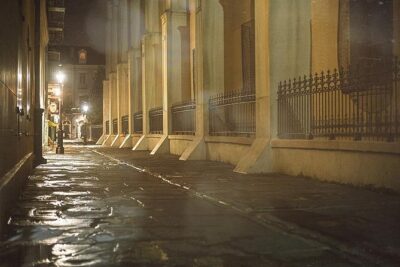
Adults-Only New Orleans Ghost, Crime, Voodoo, and Vampire Tour
Read our review →
Dark Secrets of the Old Town Ghost Walking Tour
Read our review →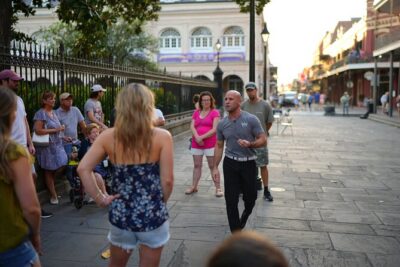
New Orleans Adults-Only True Crime and Ghost Walking Tour
Read our review →
Genteel and Bard’s Savannah Dark History and Ghost Encounter Walking Tour
Read our review →
Buda Castle District Dark History, Legends and Vampire Night Tour
Read our review →
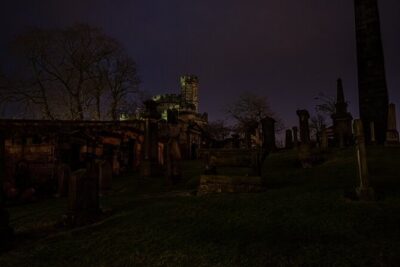
Edinburgh Ghost Tour: Mysteries, Legends and Murders
Read our review →Browse the lists this tour appears in