
Review · LONDON
London’s Ghosts & Gruesome Past Nighttime Walking Tour
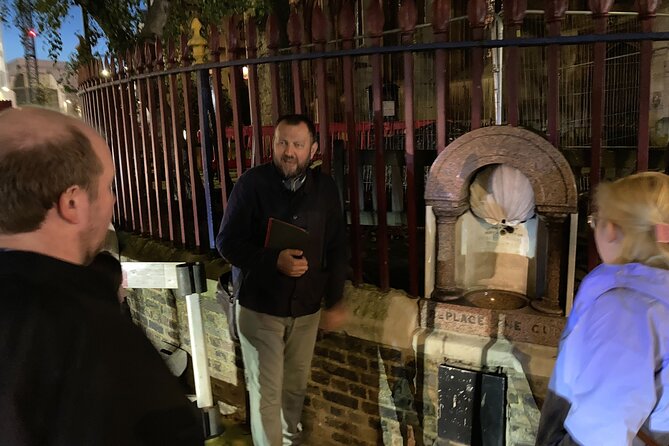
London’s past gets especially creepy after dark. This two-hour walk links Farringdon, Smithfield, Charterhouse Square, St. Bartholomew’s church and hospital, and the Old Bailey through stories of ghosts, executions, plague, body snatching, and murder. The history is not invented for atmosphere. Much of the unease comes from standing in the actual places where these events unfolded.
I like the small maximum of 20 people, since a ghost story is hard to hear when you are lost in a large crowd. I also like the mix of supernatural tales and hard historical facts, including the truth behind William Wallace and the grim past of medical treatment. The main drawback is simple: this is an outdoor walking tour at night, so drizzle, cold, street noise, and uneven attention at busy sites can affect the mood.
Key points
- A 6:00 pm start at Farringdon: Meet outside Cafe Pronto by Farringdon Station, then begin with a local ghost story.
- Nine atmospheric stops: The route covers Smithfield Market, plague pits, old churches, a hospital, and the Old Bailey.
- History beyond ghosts: Expect public executions, body snatching, brutal surgery, and the real story of William Wallace.
- Guides who tell the stories well: Matt is praised for his pace, patience, detail, and clear communication. Carolina is also noted for her enthusiasm.
- A compact evening walk: The tour lasts about two hours and ends near St. Paul’s Underground Station.
- Good value for story lovers: At $49 per person, you are paying for a guided route through places you could visit alone, plus the context that makes them meaningful.
Why London’s darkest stories work best after sunset
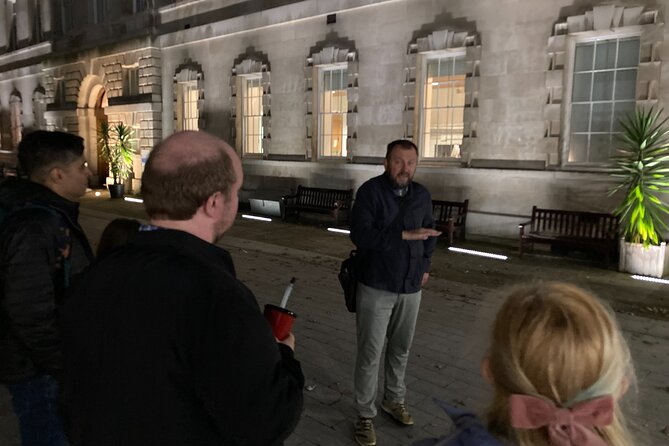
This tour is not a haunted-house show with actors leaping from doorways. Its effect comes from location and storytelling. You walk through ordinary city streets, then learn what happened there when London was smaller, dirtier, harsher, and far less safe.
The opening ghost story at Farringdon sets the tone. You hear about a girl from the 18th century who suffered badly in life and, according to local lore, continued to haunt the station after death. It is an effective first stop because the modern station remains busy and noisy. You have to listen closely, which makes the story feel less like a staged performance and more like a strange layer beneath the city you see today.
That mix is the tour’s strength. You get alleged hauntings, but you also get courtrooms, churches, hospitals, plague sites, and documented public punishment. If you prefer history with a dark edge to pure ghost entertainment, this route should suit you well.
More Ghost Walking Tours in London
- London: The Original Jack the Ripper Walking Tour
★ 4.7 · 7,833 reviews - London Jack The Ripper Guided Walking Tour
★ 5.0 · 3,131 reviews - London: Jack the Ripper Evening Walking Tour
★ 4.9 · 1,449 reviews
Farringdon begins with a ghost and a practical meeting point
The meeting point is Cafe ProntoFarringdon Station at 43 Cowcross Street. The start time is 6:00 pm, so you begin as daylight fades, depending on the season. That timing matters. In winter, the walk will feel properly nocturnal from the start. In summer, some of the early route may still have light.
Your guide introduces the story of the ghost said to haunt Farringdon Station. You will hear what happened to the girl in the 18th century and why people claim she can still be seen or heard. The guide also encourages you to think about what you might notice if you came after midnight, though the tour itself begins much earlier.
This is a short stop, about 10 minutes. The station area can be noisy, so stand close enough to hear the guide. Matt has been praised for speaking clearly, keeping a pleasant pace, and handling questions patiently. Those qualities matter here, where modern traffic and commuters can compete with the story.
Smithfield Market reveals London’s public execution ground
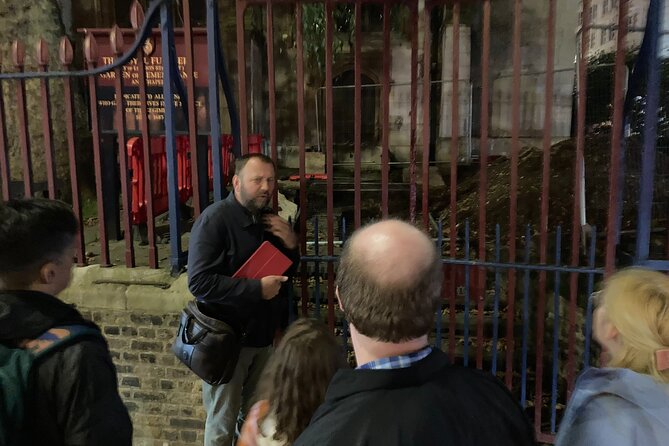
At Smithfield Market, the subject shifts from ghosts to state violence. The market is now associated with meat, but the area also served for centuries as a site of public executions.
The guide asks you to picture the place before modern London covered much of its past. You hear about the torture and killing of people described as heroes, martyrs, criminals, or innocent victims. The methods used by executioners were often elaborate and cruel, and the guide does not soften that reality.
This 15-minute stop gives the tour a useful historical backbone. Public executions were not private acts hidden away from society. They were public events, intended to frighten, punish, and entertain. Standing in a functioning part of the city while hearing about that older purpose makes the change in London especially clear.
The material is grim, so this is not a good choice if you want a gentle folklore walk. The detail is part of the appeal, but it can be intense.
Charterhouse Square sits above London’s plague pits
Charterhouse Square provides a quieter setting. The park feels calmer than the market and station, but the ground beneath it carries a darker story. The guide explains how repeated outbreaks of plague changed London, how doctors responded, and what happened to people who survived.
The mention of plague pits gives this stop its physical impact. You are not just hearing about disease in the abstract. You are standing in an area associated with mass burials and the pressure that epidemics placed on an old city.
The tour also uses dark humor here, warning you to watch where you step and joking about snakes beneath the benches. That tone can make difficult material easier to follow, though it will not appeal to everyone. The stop lasts about 15 minutes, enough time to give context without turning the walk into a lecture.
I like this part because it connects fear to ordinary public health. The threat was not a mysterious spirit. It was infection, poor sanitation, limited medical knowledge, and a city struggling to cope.
More Ghost Walking Tours in the UK
- London: Ghost Walk and River Thames Boat Ride
★ 4.5 · 1,251 reviews - London Jack The Ripper Small-Group Walking Tour
★ 5.0 · 1,013 reviews - Ghastly Ghost Walking Tour in London
★ 5.0 · 878 reviews - London: Ghastly Ghosts 2-Hour Walking Tour
★ 4.9 · 794 reviews
Cloth Fair links a pub stop to public punishment
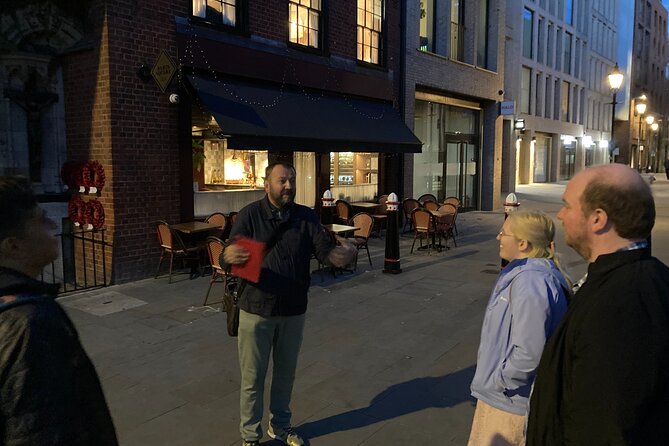
Cloth Fair is a brief 10-minute pause in the route. The guide points out where you could get a drink before attending a public execution, linking everyday social life with the spectacle of punishment.
That detail is revealing. It shows how executions could become part of a day out rather than a rare event viewed with solemn silence. People could eat, drink, gather with others, and watch someone die.
This is a short stop, but it helps connect Smithfield Market with the next section of the walk. It also gives you a moment to reset before entering the older churchyard near St. Bartholomew’s.
St. Bartholomew the Great brings ghosts into a churchyard
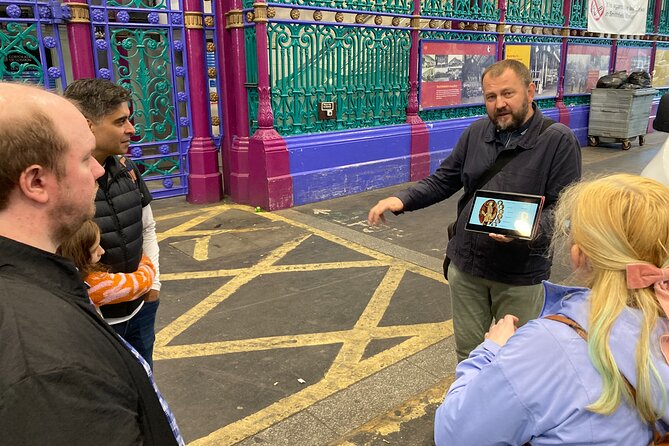
St. Bartholomew the Great is one of the route’s most atmospheric locations. You pass through narrow passages and old streets before reaching the church and its graveyard, a peaceful setting with centuries of religious and burial history.
The church has served London’s living and dead for roughly 900 years. The guide focuses on stories connected with the church’s founder, including the disturbance of his burial place, what was taken from him, and the revenge story that followed.
This is the kind of stop where the setting does much of the work. Old tombstones, tight lanes, and limited light create a stronger mood than a modern street corner could. You are still hearing stories, but the surroundings make them easier to picture.
The stop lasts about 15 minutes. Stay close to the guide and listen for changes in volume, since quiet churchyards can still carry sound unevenly. The setting is tranquil, but the subject matter is not.
William Wallace gets a correction from the movies
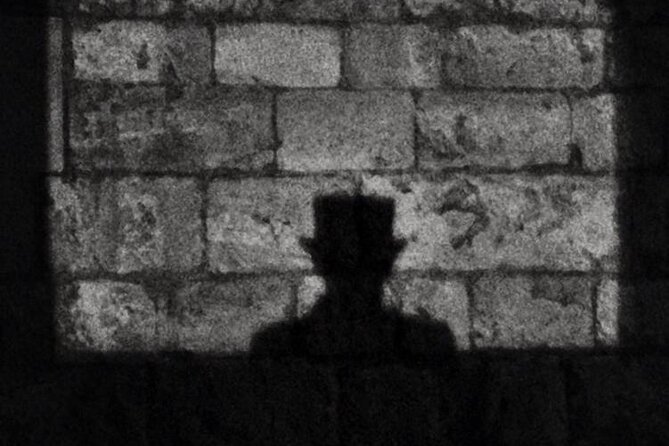
At the William Wallace Memorial, the tour moves away from London’s local ghosts and into the conflict between England and Scotland. You hear the story of Wallace’s capture and triple execution, along with the later consequences for Britain.
The guide also explains where the film version of Wallace takes liberties. That makes this more than a quick mention of a famous figure. You get a reminder that popular movies often combine real names and events with invented details.
This stop lasts about 10 minutes. It works well as a change of subject after the churchyard stories, and it adds a political and military chapter to the evening. If your knowledge of Wallace comes mainly from the cinema, expect a sharper, less romantic account.
St. Bartholomew’s Hospital shows how frightening old medicine was
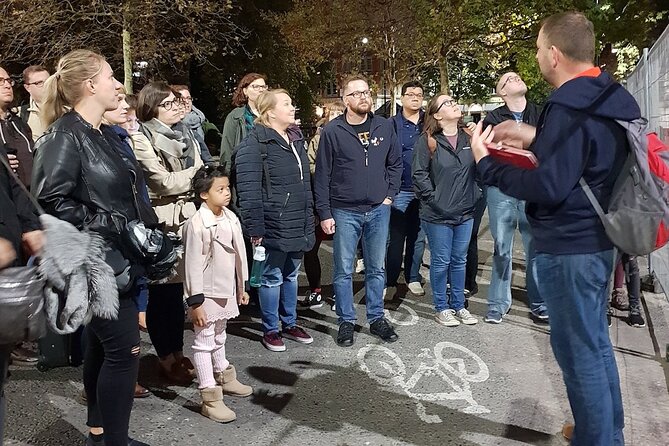
The hospital section may be the most disturbing part for some people. At St. Bartholomew’s Hospital Museum and its surrounding yard, you hear about earlier medical treatment, old tools, poor hygiene, shared beds, and surgery performed in front of an audience.
The guide describes treatments involving things patients had to drink, eat, or rub on their bodies. You also hear about doctors who did not wash their hands and operations that could attract spectators. Even watching surgery carried risks in an age when infection was poorly understood.
This 15-minute stop gives the tour a valuable sense of scale. The past was not only frightening because of ghosts or executioners. Ordinary illness could be terrifying, and medical care could sometimes make matters worse.
I also like the connection between the hospital and the nearby stories about graves and body snatching. The route gradually shows how the demand for medical knowledge created a market for corpses, leading directly to the next stop.
Holy Sepulchre explains the business of body snatching
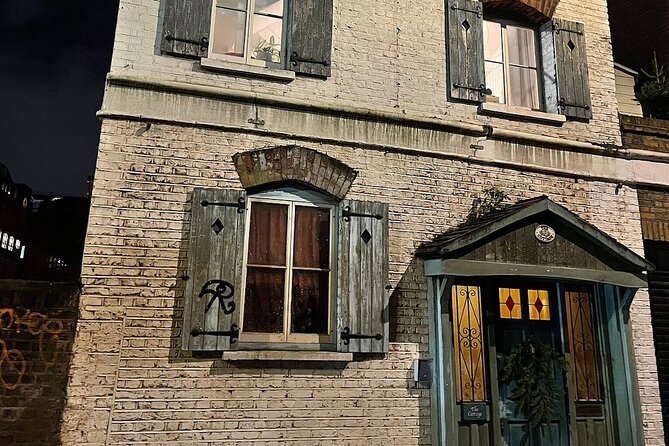
At Holy Sepulchre London, the guide points out an old church and graveyard where the absence of graves becomes part of the story. The empty pits recall a time when people could make money by removing bodies and selling them.
The important question is not only who took the bodies. It is who bought them. After visiting the hospital, you can connect the demand for anatomical study with the trade in recently buried people. The nearby pub reference adds another link between drinking, public life, and the people who profited from executions or corpses.
The guide explores the uneasy difference between taking and stealing, along with the legal questions surrounding the trade. You also hear how the practice ended and why a book with a disturbing cover became part of the story.
This is another 15-minute stop. It may be the strongest example of the tour’s method: start with a familiar place, uncover an unpleasant fact, then connect it to another part of London’s past.
The Old Bailey ends the walk with a notorious killer
The final stop is outside the Old Bailey, a famous courthouse built on the site of a former prison. The guide saves one of the darkest stories for the end, introducing a woman described as England’s worst serial killer, rather than defaulting to the more familiar name of Jack the Ripper.
The story involves an ordinary-looking woman with a deadly touch who targeted innocent people and made money from their deaths. It becomes even more disturbing because she was caught twice and allowed to continue. Her own daughter adds another personal layer to an already grim account.
The stop lasts about 15 minutes. Ending at the Old Bailey gives the tour a strong sense of place. You are outside a building linked with crime and punishment, hearing about a killer whose story is tied to the prison that once occupied the site.
The walk finishes at 19 Old Bailey, within walking distance of St. Paul’s Underground Station. That makes the end point useful if you want to continue your evening elsewhere, though the tour itself does not include entry to the courthouse.
What the $49 price really gives you
At $49 per person, this is not the cheapest way to spend two hours in London. You can walk past many of these locations without paying anything. The value comes from the guide’s route, research, timing, and ability to connect scattered sites into one story.
You are paying for nine stops covering several subjects: ghosts, executions, plague, religious burial, Scottish resistance, medicine, body snatching, and murder. Without a guide, most of those locations would simply look like streets, a park, a market, or old buildings.
The maximum group size of 20 helps protect that value. A smaller group makes it easier to hear the stories and ask questions. Matt is specifically praised for knowing extra details and for keeping a pleasant pace. Carolina is also praised for bringing strong enthusiasm to the stories. Since the guide can affect the tone, these details are worth considering.
The price makes the most sense if you enjoy guided storytelling and want an evening activity with a clear theme. It is less appealing if you mainly want interior access, museum visits, or a quiet historical walk without graphic material.
Weather, walking pace, and practical planning
This is a walking tour with mobile ticketing and no listed indoor alternative. Wear shoes you can walk in for two hours, and check the forecast before leaving. A little drizzle may add to the atmosphere, but wet weather can also make listening and standing outdoors less comfortable.
The route moves through stations, markets, parks, streets, churchyards, and hospital grounds. Most people can participate, and service animals are allowed. The tour is near public transportation, with the start at Farringdon and the finish close to St. Paul’s Underground Station.
The tour requires a minimum number of participants. If that minimum is not reached and the operator cancels, you are offered another date or experience, or a full refund. You can also cancel for a full refund up to 24 hours before the start time. Changes or cancellations made later are not accepted for a refund.
Who should book this nighttime walk
You should book if you like real history told through unsettling stories. The route suits people who want more than a standard sightseeing circuit and who enjoy hearing how old London handled disease, punishment, death, and medical care.
It is also a good choice for fans of ghost stories who do not mind learning that some tales are alleged rather than proven. The supernatural material is only one part of the evening. Much of the route deals with documented social practices and historical conditions.
Families with older children might enjoy it, but the graphic subjects deserve thought before booking. The tour discusses executions, torture, disease, corpses, surgery, and murder. It is not designed as a mild family ghost walk.
Halloween can add extra atmosphere, especially if the guide dresses for the occasion. One guide has used a mask and cape, which suits the theme, but the tour does not depend on costumes to work. The locations and stories carry most of the effect.
Should you book London’s Ghosts and Gruesome Past?
Book this tour if you want a guided night walk that connects London’s streets with its most uncomfortable stories. The route is well chosen, the two-hour length is manageable, and the group cap of 20 gives the guide room to tell the stories properly.
Skip it if you dislike graphic history, outdoor evening activities, or stories about corpses and public executions. You should also know that the experience is mainly a walking and storytelling tour, not a series of building entries.
For the right audience, $49 is fair. You get a focused route, named historic locations, a local guide, and a memorable look at the city beneath its modern surface. Just bring sensible shoes, arrive ready to listen, and expect London to feel rather different by the time you reach the Old Bailey.
FAQ
How long does the tour last?
The tour lasts approximately two hours.
What time does the tour start?
The tour starts at 6:00 pm.
Where does the tour begin?
The meeting point is Cafe ProntoFarringdon Station at 43 Cowcross Street, London EC1M 6BY, UK.
Where does the tour end?
The tour ends at 19 Old Bailey, within walking distance of St. Paul’s Underground Station.
How many people can join the tour?
The maximum group size is 20 people.
What is included in the price?
An entertaining walking tour with a local guide is included. The listed price is $49 per person.
Which places does the tour visit?
The route includes Farringdon, Smithfield Market, Charterhouse Square, Cloth Fair, St. Bartholomew the Great, the William Wallace Memorial, St. Bartholomew’s Hospital Museum, Holy Sepulchre London, and the Old Bailey.
Is the tour suitable for most people?
Most people can participate. The tour is near public transportation, and service animals are allowed.
Can I cancel for a full refund?
Yes. You can cancel at least 24 hours before the experience start time for a full refund. Cancellations or changes made less than 24 hours before the start time are not refunded.
Just added in London
- Visit Jack the Ripper in French★ 5.0 · 33 reviews
- Afternoon Jack the Ripper : Guided Tour★ 5.0 · 183 reviews
- Wicked Whitechapel: Where Now’s Jack The Ripper Audio Tour★ 5.0 · 2 reviews
- Ghosts, Gore & Other Ghasty Stories in the City of London★ 5.0 · 7 reviews
- The Ghosts of the secret alleyways of old London town★ 5.0 · 2 reviews
- The Fading Light London Ghost Walk★ 5.0 · 35 reviews
- The Haunted Pubs of Old London: Small Group Tour★ 5.0 · 38 reviews
- Dark History of the Tudors: Private Tour of Hampton Court Palace★ 5.0 · 10 reviews
Ghost Walking Tours, compared.
New Orleans Premier Ghost, Voodoo and Vampire Walking Tour
Read our review →

Ghost Walking Tour Where Legends Come To Life
Read our review →
Savannah History and Haunts Candlelit Ghost Walking Tour
Read our review →
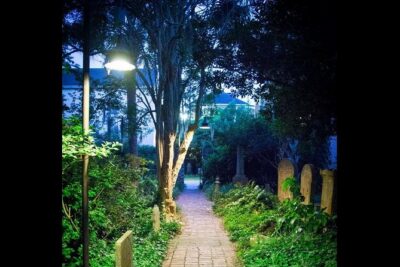
Ghosts of Charleston Night-Time Walking Tour with Unitarian Church Graveyard
Read our review →
New Orleans Haunted Ghost, Voodoo & Vampire Walking Tour
Read our review →Browse the lists this tour appears in