
Review · LONDON
Jack the Ripper Private Immersive Tour
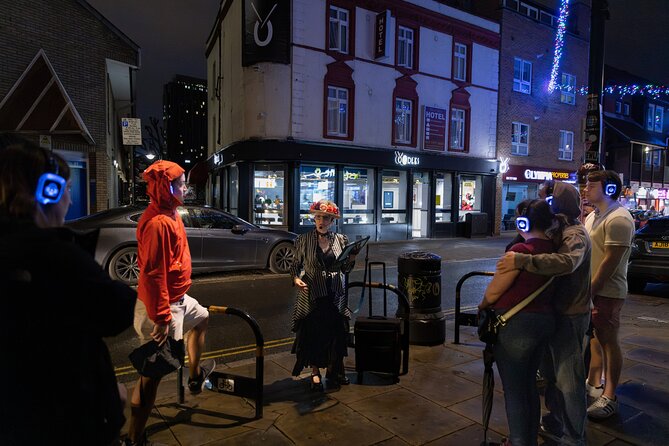
Jack the Ripper’s murders are only part of this private Whitechapel walking tour. The stronger subject is the world around them: common lodging houses, workhouses, hunger, prostitution, police confusion, newspaper panic, and the sharp divide between the City of London and the Metropolitan Police. You move through the actual streets while period photos and recorded sound help connect today’s East London with 1888.
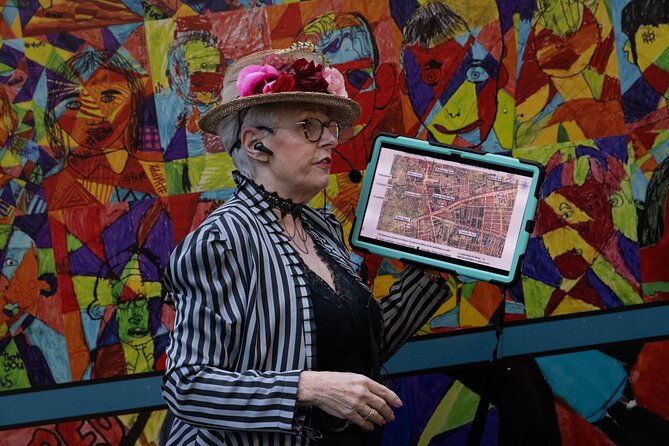
I like the way guide Jenny puts social conditions beside the crimes, rather than treating the victims as names on a murder list. I also like the practical visual aids, including a 14-inch tablet with photographs that can be seen after dark. The main concern is the two-and-a-half-hour walk with no scheduled break, plus some uncertainty about which audio equipment will be used.
Key points to know before booking
- A private walk through Aldgate, Whitechapel, and Spitalfields: Only your group takes part, so you can ask as many questions as you like.
- The crimes are tied to everyday Victorian life: Poverty, lodging houses, workhouses, unemployment, and street life receive serious attention.
- Photographs support the storytelling: Jenny uses a tablet to show victims, locations, letters, and older views of the streets.
- The route covers 15 stops: You visit sites linked with Elizabeth Stride, Catherine Eddowes, Polly Nichols, Annie Chapman, and Mary Kelly.
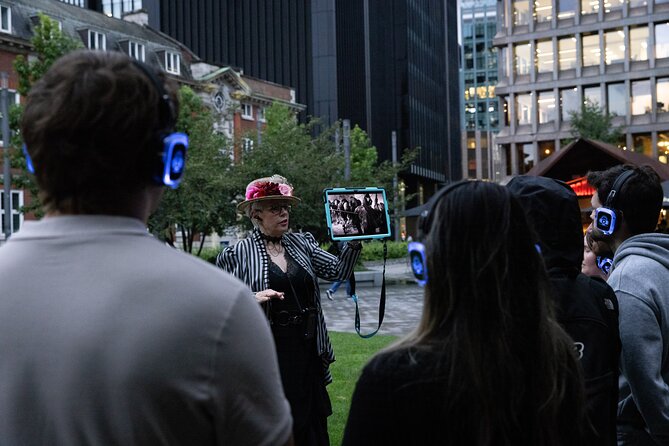
- The audio setup deserves a quick check: Headphones are included in the tour details, but one booking experienced a guide microphone and speaker instead, so confirm the arrangement before you go.
- Allow a full 2 hours 30 minutes on foot: The walk ends near Bell Lane, with directions given toward Liverpool Street Station.
Whitechapel at dusk, before the first murder story
The walk begins near Aldgate Station, outside the Dorsett City Hotel. This is a useful starting point because Aldgate places you close to the edge between the City of London and Whitechapel, two areas that had different police forces in 1888 and still do today.
The opening is brief, about six minutes, but it sets the case in place. You receive an introduction to Jack the Ripper and the area as it looked at the time. The tour does not begin with gore. It begins with geography, which matters here because the distance between one street and the next shaped the police response and the way the murders unfolded.
At St Botolph’s Aldgate, the focus shifts to ordinary life. On the green, you hear about homelessness, common lodging houses, workhouses, and the shortage of employment. This is one of the most worthwhile parts of the walk because it explains why people were out late, why a few pennies could matter, and why finding a bed for the night could be an urgent problem.
Jenny uses photographs on a large tablet at this stop. That is more useful than a small phone screen, especially in the dark. You can expect about eight minutes here, so the material is selective rather than a full lecture on Victorian London.
More Private Ghost Tours in London
- The Ultimate Jack the Ripper Tour (Private Group Booking)
★ 5.0 · 199 reviews - Private Tour of Haunted London in a Black Cab
★ 5.0 · 21 reviews - Jack the Ripper Private Day Time Walking Tour
★ 5.0 · 16 reviews
Mitre Street and the double murder night
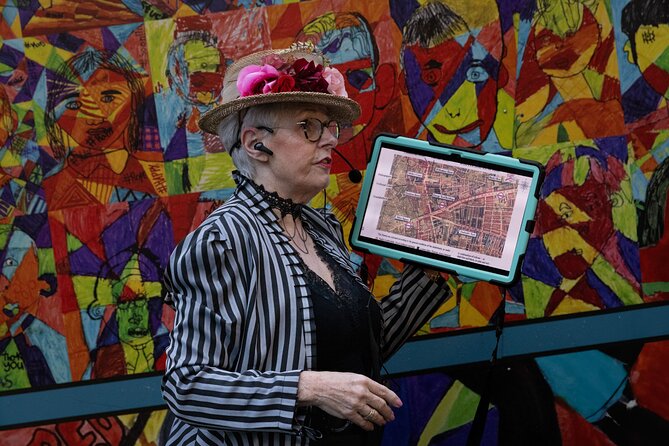
At Mitre Street, the story turns to Elizabeth Stride. You hear about the hours before her death and how Louis Diemschütz found her body at the entrance to Dutfield’s Yard. Photographs of the location and victim accompany the account.
This stop lasts about nine minutes. The value comes from the time line. The story is not simply that a woman was killed in a particular place. It is also about what happened immediately before the discovery, who arrived, and how a location that now looks ordinary became central to the investigation.
A short walk leads to Mitre Square, where Catherine Eddowes was found dead and mutilated on August 30, 1888. The tour explains how her murder came less than an hour after Stride’s, then follows the response of Police Constable Edmund Watkins and the search for the killer.
This is one of the more police-focused stops. You follow the route taken by officers and learn where the only possible clue was found. The discussion also introduces the complicated relationship between the City of London Police and the Metropolitan Police. Those forces had separate responsibilities then, and they remain separate today.
The stop takes about 12 minutes. Expect disturbing subject matter, presented in direct detail. If you prefer a lighter sightseeing walk, this is not the right outing.
Goulston Street and the case’s most disputed clue
Opposite 108 to 119 Goulston Street, the guide points out the doorway connected with the famous clue found after the Mitre Square murder. The writing was discovered on a wall, and the decision about what to do with it became a major issue because officials feared it might inflame anti-Jewish feeling.
The tour explains what happened after the clue was found and returns to the two police forces. This makes the stop useful even if you already know the basic Jack the Ripper story. You are looking at questions of evidence, authority, and public order, not just asking who committed the crimes.
The visit lasts around nine minutes. The location is viewed from outside, and photographs help show how the area has changed.
Wentworth Street and the debate over the victim list
At Wentworth Street, the tour goes back to an earlier murder involving a woman who is not part of the traditional canonical five. The guide discusses Professor David Wilson’s view that she was likely a Ripper victim.
This is a good example of the tour’s willingness to present debate rather than treat every popular claim as settled fact. You hear what happened, see photographs of the site and victim, and consider why some researchers include her while others do not.
The stop takes about eight minutes. If you know the standard list of five victims, this section gives you something less familiar to think about.
More Private Ghost Tours in the UK
- Private Ghosts and Gore Walking Tour of London
★ 5.0 · 13 reviews - Dark History of the Tudors: Private Tour of Hampton Court Palace
★ 5.0 · 10 reviews - Private Jack the Ripper Walking Tour of Whitechapel and Brick Lane
★ 5.0 · 10 reviews - Jack the Ripper London Private Taxi Tour
★ 5.0 · 10 reviews
Osborn Street and the sound of Victorian nightlife
As you turn toward Brick Lane, the tour adds music that would have been heard from pubs and music halls in 1888. This portion lasts only about three minutes, but it changes the pace.
Sound is especially useful on a walking tour because it gives you a sense of the streets as social spaces. The area was not silent or empty. People drank, worked, sold goods, sought lodging, and moved through the streets at all hours. That background makes the murders feel less like isolated scenes and more like events within a crowded neighborhood.
Polly Nichols, money, and the cost of a bed
Near the Frying Pan pub on Brick Lane, you hear about Polly Nichols. The stop covers her last drink there, her need to find money for lodging, and the circumstances that led to her death.
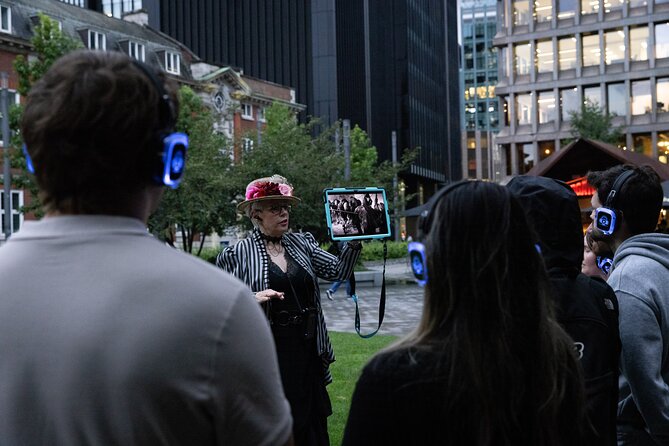
The tour also explains how two men found her body in Berner’s Street and sent for the police. Photographs of Nichols and the murder site appear on the tablet. The account connects her death with the wider problem introduced earlier: if you could not pay for a bed, you might have nowhere safe to go.
After leaving Polly’s story, the tour adds the sounds of street vendors and the early police questioning of local residents. This six-minute section helps restore the human activity around the crime. You hear about a community reacting to fear and trying to identify suspicious men, rather than simply moving from one crime scene to another.
Hanbury Street and Annie Chapman’s final hours
At Hanbury Street, the walk reaches the site associated with Annie Chapman’s murder. You hear about her life, the events leading to September 8, 1888, and the sighting by Mrs Long less than an hour before the killing.
The guide describes the man seen with Chapman, how she was enticed into the backyard of number 29 with promises of money, and how she was murdered there. A suspect who was later discounted also enters the discussion. Photographs show the victim and the location.
This is one of the longer stops, at about 10 minutes, and one of the most difficult. The details are graphic. I would not choose this tour for young children or anyone who wants only a general London walk.
Wilkes Street, newspaper panic, and old houses
On Wilkes Street, the subject widens again. By this point, the murders had caused serious alarm in the neighborhood. Newspapers fed that fear with lurid reports, while local residents faced the practical danger of living among overcrowded housing and uncertain work.
The guide also points out houses dating from the 1700s and explains who built them and why. This is a welcome architectural pause. You get a better sense of the older street fabric and the forces that shaped it, rather than seeing every building only as a backdrop to a crime.
The walk takes about five minutes here. It is a shorter stop, but it helps tie together the area’s buildings, its residents, and the newspaper-driven panic.
Puma Court and the letters that shaped the legend
At Puma Court, the tour examines one of the letters sent to the press during the murder scare. More than 1,000 letters were sent to police and newspapers, but the guide explains why this one, along with the Lusk letter later in the walk, is treated as especially important.
Newspaper boys and men shouting lurid headlines provide another sound element as you leave. This supports the point that fear was being sold as news. The killer’s legend grew not only from the crimes but also from the public’s appetite for shocking detail.
The stop lasts about seven minutes. You should keep in mind that the letters are part of the mystery and media story, not proof of the writer’s identity.
The Ten Bells, Spitalfields, and Mary Kelly’s neighborhood
On Commercial Street, opposite the Ten Bells, the guide discusses the pub associated with Mary Kelly and explains what the area was like at the time. You also hear about Spitalfields Market and Christchurch Graveyard, including the role such places played for people without stable housing.
This stop includes a useful detail about daily survival. Items that seem basic to us could be scarce or valuable to someone living on the street, and disputes over them could turn into fights. That kind of information gives the walk social weight.
The guide also returns to the controversy that has surrounded Jack the Ripper over the years. You will hear how the case became a subject of competing theories, changing reputations, and ongoing argument.
The Lusk letter and the last approach to Mary Kelly
At the entrance to the London Fruit and Wool Exchange on Brushfield Street, the tour examines the Lusk letter. It arrived in a box with an article that may have come from one of the victims. You see photographs of the letter and its recipient.
Again, the strength here is the mix of evidence and uncertainty. The guide explains what made the letter important without turning an unproven clue into a fact. For anyone interested in crime investigation, this is one of the sharper sections of the walk.
The final stop is in the central courtyard of the London Fruit and Wool Exchange. It is the closest point on the route to the place where Mary Kelly was killed in her room. The tour explains the events leading up to her death and presents the murder in graphic detail.
Kelly was the youngest of the five canonical victims and the only one killed indoors. That difference changed the crime scene and helped fuel later speculation. You hear about suspects from the period, modern theories, and Jenny’s own view of who may have been responsible.
This final section lasts about 15 minutes. At the end, the guide gives you the shortest route to Liverpool Street Station, which is helpful after a long walk through unfamiliar streets.
What the $47.52 price gives you
At $47.52 per person, the price is reasonable if you value a focused private guide, visual material, and a route built around specific evidence. You are not paying for entry to a museum or attraction. The value is in Jenny’s narration, the route design, the photographs, the sound effects, and the chance to ask questions throughout.
A private group matters here. You can stop to clarify a police detail, ask about a suspect, or request more context about Victorian housing without following a large public group. That flexibility is especially useful for true crime enthusiasts who already know the basic case.
The price is less compelling if you only want a quick look at famous locations. The tour spends about 150 minutes on foot and includes graphic descriptions. You should choose it for the storytelling, not simply for seeing Whitechapel.
Audio equipment, timing, and practical advice
The tour includes hi-tech headphones, and the audio design is intended to keep you connected to the guide while walking. Music, street vendors, and newspaper cries are part of the presentation.
There has been some confusion over equipment and booking information. One person experienced a guide microphone and a speaker rather than personal headphones, while other descriptions specifically praise the headphones. An incorrect confirmation has also caused confusion between this private walk and a different tour described as an immersive experience for groups of five or more. I recommend confirming the exact tour and audio setup before arrival, especially if you have hearing difficulties.
The walk starts at Aldgate Station and ends on Bell Lane, with directions onward to Liverpool Street Station. It runs Monday through Thursday from 3 PM to 9 PM during the listed operating period, from February 26, 2026, through March 18, 2027.
Wear comfortable shoes and bring water. Bottled water is not provided. There is no scheduled break, and the tour is not recommended if you have difficulty walking or standing for two and a half hours. Service animals are allowed, and the start is near public transportation.
You receive booking confirmation at the time of purchase. Free cancellation is available until 24 hours before the start time. Poor weather or failure to meet the minimum number of participants can lead to a cancellation, with another date or a full refund offered.
Should you book this Whitechapel walk?
Book it if you want a detailed Jack the Ripper investigation tied to real streets, and if you enjoy social history, police procedure, disputed evidence, and graphic crime storytelling. Jenny’s energy, photographs, sound effects, and willingness to discuss theories make the experience more than a simple pub-to-pub ghost walk.
Think twice if you need frequent rests, dislike gruesome detail, or expect a polished museum-style attraction. Confirm the headphones and the exact tour name before you go. For a true crime enthusiast who can handle the walking and subject matter, the private format and close look at Victorian Whitechapel make the $47.52 fare a fair buy.
FAQ
Where does the Jack the Ripper tour start?
The tour starts at Aldgate Station in London, near Aldgate, London EC3A, UK.
Where does the tour end?
The walk ends on Bell Lane in London. The guide provides directions to the shortest route toward Liverpool Street Station.
How long does the tour last?
The tour lasts approximately 2 hours and 30 minutes.
What days and times is the tour available?
It is listed for Monday through Thursday, from 3 PM to 9 PM, during the operating period of February 26, 2026, through March 18, 2027.
Is this a private tour?
Yes. Only your group participates in the private activity.
Who guides the tour?
The guide identified in the tour information and comments is Jenny.
Are headphones included?
Hi-tech headphones are included in the tour details. Because the audio equipment used can vary, confirm the setup with the provider before booking if clear hearing is important to you.
Is the tour suitable for people with walking difficulties?
No. The tour is not recommended for people who have difficulty walking or standing because it lasts 2.5 hours without a break. A moderate level of physical fitness is advised.
Can I cancel for a full refund?
Yes. You can cancel at least 24 hours before the start time for a full refund. Changes or cancellations made less than 24 hours before the start are not accepted for a refund.
More Jack the Ripper Tours in London
- London: The Original Jack the Ripper Walking Tour
★ 4.7 · 7,833 reviews - London Jack the Ripper Guided Tour with Ripper-Vision
★ 4.5 · 4,840 reviews - London: Jack the Ripper Small Group Tour
★ 4.7 · 3,159 reviews - London Jack The Ripper Guided Walking Tour
★ 5.0 · 3,131 reviews
Just added in London
- Visit Jack the Ripper in French★ 5.0 · 33 reviews
- Afternoon Jack the Ripper : Guided Tour★ 5.0 · 183 reviews
- Wicked Whitechapel: Where Now’s Jack The Ripper Audio Tour★ 5.0 · 2 reviews
- Ghosts, Gore & Other Ghasty Stories in the City of London★ 5.0 · 7 reviews
- The Fading Light London Ghost Walk★ 5.0 · 35 reviews
- The Haunted Pubs of Old London: Small Group Tour★ 5.0 · 38 reviews
- The Ghosts of the secret alleyways of old London town★ 5.0 · 2 reviews
- Dark History of the Tudors: Private Tour of Hampton Court Palace★ 5.0 · 10 reviews
Jack the Ripper Tours, compared.
London Jack the Ripper Guided Tour with Ripper-Vision
Read our review →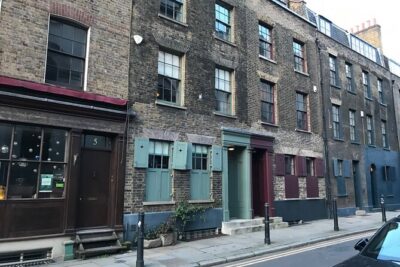
Jack the Ripper Tour with Immersive Ripper Vision
Read our review →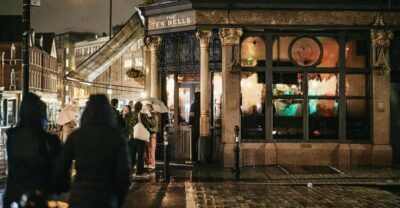
German Language : Original Jack the Ripper Tour
Read our review →
Ultimate Jack the Ripper : Guided Tour of London
Read our review →
Browse the lists this tour appears in