
Review · LONDON
Interactive Jack the Ripper Night Walk: London’s Murder Mystery
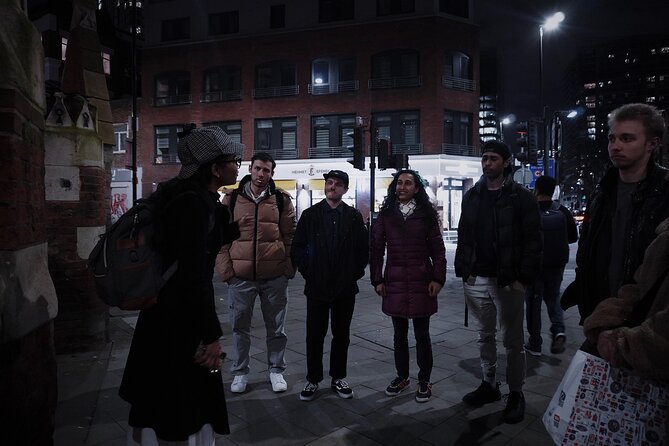
The most gripping part of this London walk is not simply chasing Jack the Ripper. It is seeing how Victorian poverty, crowded streets, and fear shaped Whitechapel, then weighing the clues for yourself as you move from alley to alley. Brick Lane, Princelet Street, the Ten Bells, and Mitre Square give the story a real sense of place.
I like the route’s strong human focus, especially the attention given to Annie Chapman, Martha Tabram, and Catherine Eddowes. I also like the mix of crime evidence and neighborhood history, plus the fact that guides such as Tyson, Lisa, Sadie, and Jess bring different styles to the walk. The main drawback is practical: you finish at Mitre Square, not where you started, and one past participant found it hard to hear the guide at times.
Key points to know before you book
- The route ends at Mitre Square: Plan your return journey before setting out, since you do not walk back to St Marys Whitechapel Church.
- The women’s stories matter: The walk gives attention to the lives and final hours of the women linked to the case, rather than treating them as mere clues.
- Seven named stops shape the evening: Brick Lane, Princelet Street, Puma Court, the Ten Bells, Gunthorpe Street, Goulston Street, and St Botolph’s Aldgate each add a different piece.
- The group can reach 25 people: That keeps the cost low, but it may affect how easily you hear the guide in narrow streets.
- The mystery remains unresolved: You examine evidence and competing ideas, but the tour does not pretend to prove who Jack the Ripper was.
- Private and group options are available: The standard price is $22.99 per person, with group discounts and a private upgrade offered.
Why this Whitechapel walk works after dark
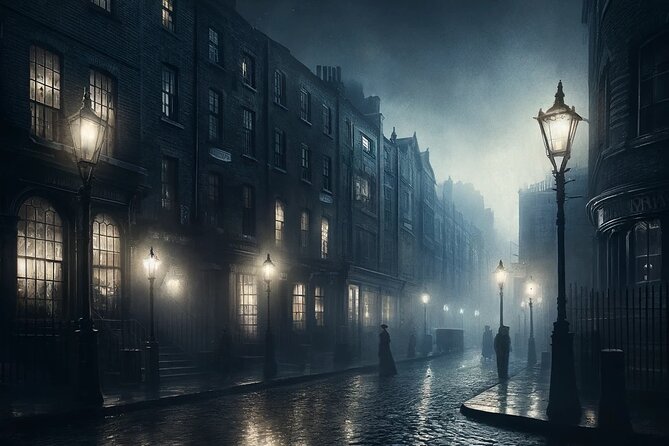
This experience uses London itself as the stage. You are not sitting in a room looking at old photographs. You are walking through the East End, where the route connects known locations, debated clues, and the harsh conditions of 1880s life.
The evening setting adds tension, though it is worth keeping your expectations in check. Modern London surrounds these places, so you will not find a perfectly preserved Victorian set. Still, narrow passages, old streets, and the shift from busy Brick Lane to quieter corners can help you picture why the area felt so different to people living there in 1888.
I especially like that the walk does not treat the case as a simple puzzle with one neat answer. You hear about evidence, witness accounts, and theories, then decide how convincing each piece seems. The mystery is still open, and the best part is the process of sorting fact from speculation.
At $22.99, the tour is fairly priced for two and a half hours of guiding in central London. You are paying for a structured route, a live storyteller, and access to material such as old pictures and reports. If you only want a quick photo stop outside the Ten Bells, this is too long. If you want a focused evening activity with history and atmosphere, the price makes sense.
More Dark History Tours in London
- Jack the Ripper: Night Murder Mystery Walking Tour in London
★ 5.0 · 79 reviews - Jack the Ripper Tour: Murder, Mystery, & the Women of Whitechapel
★ 5.0 · 40 reviews - Jack the Ripper: Solve the Crime Walking Tour (Kids Free!)
★ 4.5 · 36 reviews
Starting at St Marys Whitechapel Church
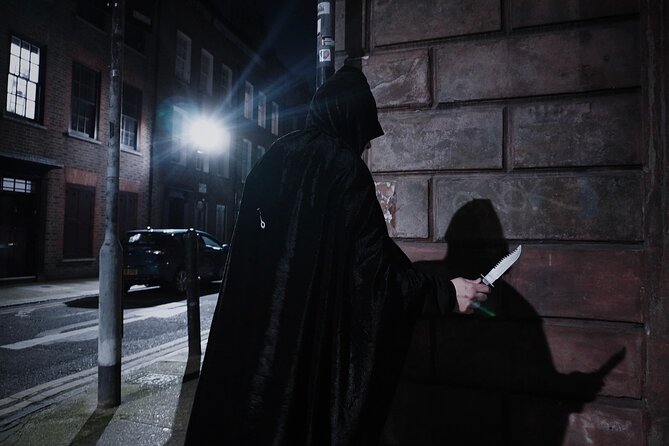
The walk begins at St Marys Whitechapel Church Memorial on an unnamed road in London E1 1FE. This puts you near the Whitechapel area, where the story’s setting begins to feel more immediate.
The opening matters because the case cannot be understood apart from the neighborhood. The tour introduces a part of East London shaped by low wages, overcrowding, crime, and desperation. Those conditions do not excuse the murders, but they explain why women living on the edge of society were so vulnerable and why the police faced such difficulty.
The meeting point is not the final stop, so arrive with a basic plan for getting back afterward. The walk finishes in a different part of the City of London. A map on your phone should be enough to help you orient yourself, but do not assume you will simply return to the church with the group.
Brick Lane and the neighborhood behind the headlines
Brick Lane is now known for street art and curry houses. The tour uses that familiar street to show how sharply the area has changed since the late Victorian period.
Here, the focus is on the old slum conditions that shaped daily life. You hear about poverty, crime, and the choices available to people with very little money or protection. This is one of the more useful stops because it moves the story beyond a famous killer. You begin to see the wider social problem around the murders.
The scheduled stop lasts about 17 minutes. That is long enough for a clear explanation without asking you to linger in one place for too long. Brick Lane can also be a lively urban setting, so keep close to the guide and pay attention when the group moves on.
Princelet Street and Annie Chapman’s world
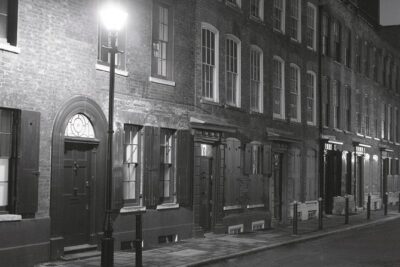
Princelet Street offers a very different mood. Its cobbles and older-looking buildings help you picture East London in the 1880s, even though the present-day setting is not frozen in time.
The connection here is Annie Chapman and the movements associated with the case. The stop looks at her life and the circumstances around her death, giving the story a personal focus. I value this shift because it keeps the women at the center of the narrative.
A good guide should make clear what is documented and what remains uncertain. This is where an engaging storyteller can add real value. Sadie, for example, is described as bringing a spirited and empowering approach to the women’s stories, while Jess is noted for combining humor with attention to each scene. Those styles may differ, but both can help prevent the walk from becoming a list of grisly details.
More Dark History Tours in the UK
- Edinburgh: Dark Secrets of the Old Town Ghost Walking Tour
★ 4.6 · 1,671 reviews - Edinburgh – Dark History
★ 5.0 · 814 reviews - Edinburgh Ghost Tour: Mysteries, Legends and Murders
★ 5.0 · 762 reviews - Edinburgh: Dark History Royal Mile Walking Tour
★ 4.8 · 271 reviews
Puma Court and the fear of narrow alleys
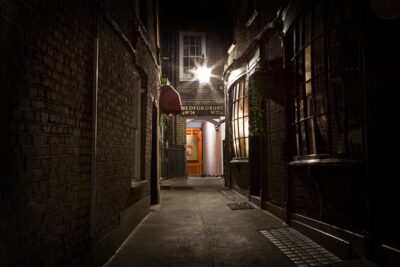
Puma Court is presented as one of Spitalfields’ eeriest passages. Its importance is less about a single definitive clue and more about the physical setting.
In a dim, narrow lane, you can better understand how exposed the victims were. A quiet passage offered privacy to a killer and few safeguards to anyone walking alone. The stop asks you to think about vulnerability rather than simply admire an old street.
This is also where the group format may matter most. Puma Court is narrow, and a group of up to 25 people needs to stay together without blocking the passage. Listen for instructions and stand where you can see the guide. If you have difficulty hearing in outdoor settings, you may prefer a private booking or a smaller group when available.
The Ten Bells and the last known movements
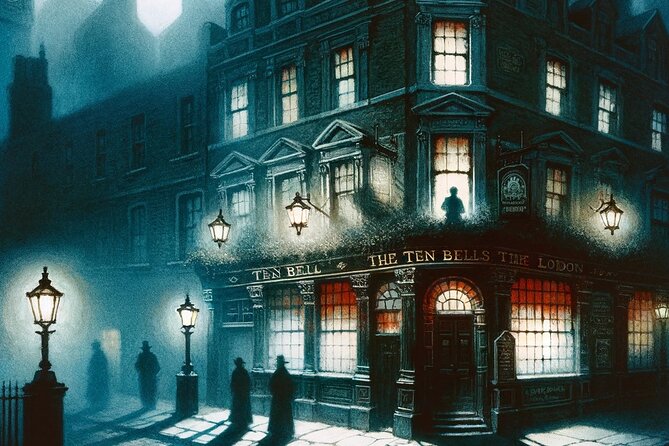
The Ten Bells is one of the most recognizable locations on the route. The historic pub is linked with several women who were reportedly seen there before their deaths.
The guide gathers the group outside and recounts the final hours connected with the case. The stop can feel powerful because it links an ordinary public place with events that became part of London’s criminal history. At the same time, it is important to remember that the pub is a real business, not a museum built solely around the murders. The tour takes place outside, according to the route provided.
This is a stop where a good storyteller has to keep the tone respectful. The strongest approach is not theatrical gore. It is careful explanation of what is known, what was reported at the time, and what later stories may have added.
Gunthorpe Street and Martha Tabram
Gunthorpe Street is connected with Martha Tabram, who was killed there. She is not officially included among the canonical Ripper victims, but many people believe she may have been the first.
That uncertainty makes this one of the more interesting stops. The tour can show you how the boundaries of the case were formed and why some killings are included in popular accounts while others remain disputed.
You should expect questions rather than a final answer. Was Tabram killed by the same man? Does the method suggest a connection, or is the link based mainly on timing and location? The point is to examine the argument without pretending that a theory is proof.
This stop also reinforces the route’s wider message: the women involved were not simply names in a detective story. The walk connects the case to the dangers faced by women who had few safe choices and little official protection.
Goulston Street and the disputed clue
Goulston Street brings the group to one of the case’s most debated pieces of evidence. After the double murder, a bloodied fragment of apron was found, along with a chalk message that caused fierce arguments among investigators and later writers.
This is the kind of stop that gives the tour more substance than a basic haunted walk. You are not just hearing where something happened. You are considering how evidence was found, interpreted, and possibly misunderstood.
The clue raises several questions. Was the apron fragment connected to the killer? Was the message written by the murderer, or did it have another source? How much can historians safely build on a detail whose meaning remains unclear?
You will not solve the mystery in 17 minutes, but the stop gives you a useful way to think about the case. It shows why the identity of Jack the Ripper remains uncertain despite more than a century of books, theories, and speculation.
St Botolph’s Aldgate and a place of safety
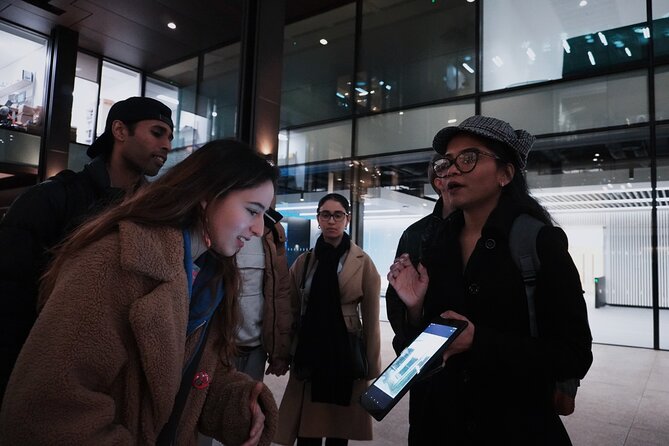
St Botolph’s Aldgate adds an important counterpoint to the darker stops. The church stood at the edge of Whitechapel and offered shelter to many women during the Victorian period.
That detail changes the emotional balance of the walk. The route is not only about murder scenes and police clues. It also looks at the small forms of support available to women living in difficult conditions.
The church’s location, just steps from danger, makes the contrast especially clear. A place of safety could exist close to a place of violence, but access to help did not remove the wider risks. I find this kind of context more useful than another round of killer speculation because it explains the daily world around the case.
Ending at Mitre Square with Catherine Eddowes
The final stop is Mitre Square, where Catherine Eddowes was murdered. The violence there shocked London and became one of the bleakest episodes associated with the case.
Ending here gives the walk a serious final note. You have moved through streets connected with poverty, pubs, alleys, police clues, and possible shelter. Mitre Square brings those threads back to the human cost.
Because the route finishes here, you should not treat the end point as a minor detail. You need to arrange your own onward journey. The good news is that ending in a different location gives you a chance to continue exploring London, but you will need to orient yourself rather than simply follow the group back.
The guides make a real difference
The supplied guide names include Tyson, Lisa, Sadie, and Jess, and their strengths appear to differ. Tyson is described as entertaining and well prepared, with a knack for remembering names and using them to keep people involved. Lisa has been helpful with both the walking route and broader questions. Sadie brings a spirited, empowering tone to the women’s stories. Jess combines humor, patience, and attention to each scene.
That variety matters because the route depends heavily on delivery. The streets provide atmosphere, but the guide must explain the evidence clearly and keep the group together. A strong guide can turn a familiar story into a thoughtful discussion. A weaker presentation would leave you with little more than spooky alleys and repeated legends.
One practical concern is volume. At least one participant found it difficult to hear everything at times. Outdoor walking tours have traffic, pedestrians, and group noise to contend with, so stay near the guide when possible. If hearing every detail is especially important to you, a private upgrade may offer a more controlled experience.
Group size, private options, and who will enjoy it
The standard tour allows up to 25 people. That is a reasonable limit for keeping the price at $22.99, but it is not an intimate walk for two or three. You may need to position yourself near the guide, especially at busy streets or narrow passages.
A private tour is available if you want a more personal format. The information provided does not specify the private price or exact group limit, so check those details before booking. The upgrade makes the most sense for a family, couple, or small group that wants more opportunity to ask questions and a better chance of hearing every explanation.
The walk suits you best if you:
- Enjoy true crime presented with historical context
- Like evening walks through central London
- Want to visit several connected locations in one outing
- Prefer a guide who can explain evidence and uncertainty
- Are comfortable with a 2.5-hour walk that ends away from the start
It may not suit you if you want a short sightseeing stop, dislike grim subject matter, or need a tour that returns to its starting point.
Most people can participate, and the activity is offered in English. The booking includes a mobile ticket, group discounts are available, and confirmation arrives when you book. Free cancellation applies if you cancel at least 24 hours before the start time. Inside that window, the payment is not refunded, and changes are not accepted.
Is $22.99 good value for this London evening?
For two and a half hours, $22.99 is a solid price. You get seven planned stops, a guide, a focused subject, and a route that links Whitechapel with Spitalfields and the City. The old photographs and reports supplied as part of the experience add useful detail, especially if you want more than spoken anecdotes.
The value depends on your interest. Jack the Ripper has been covered so often that some details may sound familiar. The benefit here is the physical route and the chance to ask questions as you move through it. You are also getting social and historical context that a quick internet search will not provide in the same order or setting.
The score of 4.9 from 171 ratings, with 97 percent recommending it, points to a consistently strong experience. Still, those numbers cannot remove the two main variables: the guide you receive and how clearly you can hear in the group. Tyson, Lisa, Sadie, and Jess have each been singled out for different strengths, so the provider appears to have several capable presenters.
Should you book this Jack the Ripper walk?
Book it if you want an evening activity that mixes London streets, Victorian social history, and an unresolved crime. The route is strongest when it focuses on the women, the neighborhood, and the limits of the evidence. It gives you a more grounded experience than a simple spooky stroll.
Think twice if you want a quiet, private conversation or a route that returns to its starting point. A group of up to 25 can feel lively, and the walk ends at Mitre Square. For the best chance of hearing every detail, stay close to the guide or consider the private option.
At $22.99, I would choose this walk for a first visit to Whitechapel or for anyone who wants to examine the Ripper case in the places tied to it. Just bring comfortable shoes, keep your onward route in mind, and expect a mystery rather than a solved crime.
FAQ
How long is the Jack the Ripper night walk?
The walk lasts approximately 2 hours and 30 minutes.
Where does the tour begin?
It begins at St Marys Whitechapel Church Memorial, on an unnamed road in London E1 1FE, United Kingdom.
Where does the tour finish?
The final stop is Mitre Square, London EC3A 5DE, where the murder of Catherine Eddowes took place.
How much does the experience cost?
The listed price is $22.99 per person. Group discounts and a private tour upgrade are available.
Is the tour offered in English, and how large is the group?
The tour is offered in English and can include a maximum of 25 people.
Can I cancel for a full refund?
Yes. You can cancel at least 24 hours before the start time for a full refund. Cancellations or changes made less than 24 hours before the experience are not refunded or accepted.
More murder mystery games in London
- Jack the Ripper Escape Room Game for Private Group
★ 5.0 · 253 reviews - DTLA Murder Mystery Ghost Tour
★ 4.5 · 64 reviews
More Jack the Ripper Tours in London
- London: The Original Jack the Ripper Walking Tour
★ 4.7 · 7,833 reviews - London Jack the Ripper Guided Tour with Ripper-Vision
★ 4.5 · 4,840 reviews - London: Jack the Ripper Small Group Tour
★ 4.7 · 3,159 reviews - London Jack The Ripper Guided Walking Tour
★ 5.0 · 3,131 reviews
Just added in London
- Private Ghosts and Gore Walking Tour of London★ 5.0 · 13 reviews
- Jack the Ripper Private Day Time Walking Tour★ 5.0 · 16 reviews
- Private Tour of Haunted London in a Black Cab★ 5.0 · 21 reviews
- The Ultimate Jack the Ripper Tour (Private Group Booking)★ 5.0 · 199 reviews
- Jack the Ripper: Solve the Crime Walking Tour (Kids Free!)★ 4.5 · 36 reviews
- Jack the Ripper: Night Murder Mystery Walking Tour in London★ 5.0 · 79 reviews
- Jack the Ripper Tour: Murder, Mystery, & the Women of Whitechapel★ 5.0 · 40 reviews
- Jack the Ripper Walking Tour in London★ 4.5 · 281 reviews
Jack the Ripper Tours, compared.
London Jack the Ripper Guided Tour with Ripper-Vision
Read our review →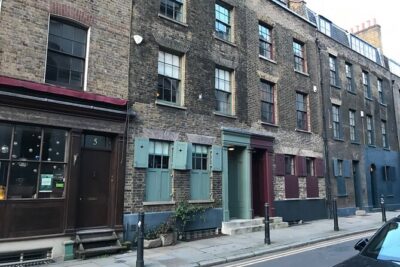
Jack the Ripper Tour with Immersive Ripper Vision
Read our review →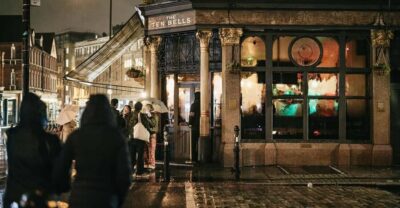
German Language : Original Jack the Ripper Tour
Read our review →
Ultimate Jack the Ripper : Guided Tour of London
Read our review →
Browse the lists this tour appears in