Review · LONDON
Jack the Ripper: Night Murder Mystery Walking Tour in London
Jack the Ripper’s story is best understood on foot, after dark, in the narrow streets of Whitechapel. This tour connects the murders to the poverty, overcrowding, pubs, churches, and shadowy passages of Victorian London instead of treating the case as a simple killer puzzle. You follow the events in chronological order and visit places tied to victims, clues, and competing theories.
I like two things in particular. First, the tour gives real attention to the women who were killed, not just to the man whose name became famous. Second, the guides bring useful local context and personal style. Tyson is praised for keeping spirits up in bad weather, while Kory, Dougal, Korhan, and Hadi are noted for strong storytelling and careful historical detail.
The main drawback is practical: this is a full 2.5-hour walk with few places to sit before the end. Some commentary can also be hard to hear when the guide turns away or street noise rises, so stay close to the group and dress for London weather.
Key points to know before booking
- The route follows the murders in sequence: The order helps you understand how the case unfolded instead of hearing disconnected crime stories.
- Victims receive serious attention: Annie Chapman, Catherine Eddowes, Martha Tabram, and other women are discussed as people living in difficult conditions, not just names in a murder case.
- The Ten Bells is an exterior stop: You learn about the pub’s link to the victims, but the tour information does not promise an inside visit.
- The guides shape the experience: Tyson, Kory, Dougal, Hadi, Korhan, and others have been praised for humor, care, historical detail, and theories about the killer.
- Expect a small-to-medium group: The maximum is 25 people, which is manageable but not especially intimate.
- The $22.93 price is fair for the length: You get a guided evening walk lasting about two and a half hours, with no separate admission fees at the stops.
Why a night walk makes Whitechapel feel different
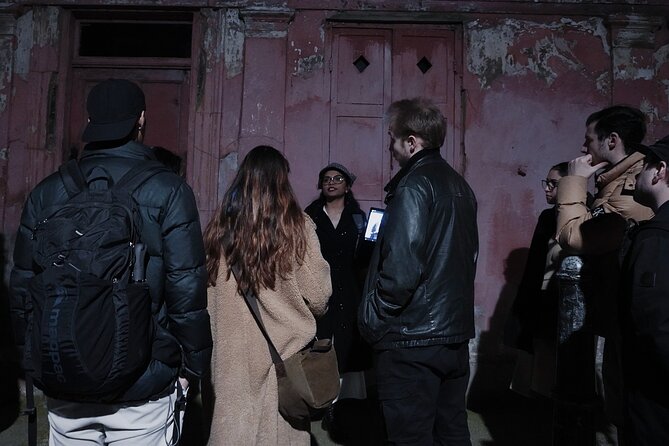
This is not a tour built around grand buildings or polished city views. Its appeal comes from atmosphere and context. Whitechapel after dark gives the subject a natural setting, while the guide explains what the neighborhood was like when poverty and overcrowding shaped daily life.
That atmosphere can be effective without turning the evening into cheap horror. The strongest parts of the tour place the murders beside the lives of the women involved, the limits of Victorian society, and the difficult choices faced by people with little money or protection.
The experience is also interactive. You are asked to look at locations, weigh clues, and consider theories rather than simply listen to a fixed script. The mystery element makes the walk lively, but the better guides keep the focus on what is known, what is disputed, and what remains impossible to prove.
At night, you should expect a serious tone with occasional humor. Tyson has been praised for keeping a group engaged on a cold evening and even during torrential rain. Hadi’s approach has been described as calm and respectful, with light humor used carefully around a grim subject. Those details matter because the quality of a walking tour depends heavily on the person holding the group together.
More Dark History Tours in London
- Interactive Jack the Ripper Night Walk: London’s Murder Mystery
★ 5.0 · 171 reviews - Jack the Ripper Tour: Murder, Mystery, & the Women of Whitechapel
★ 5.0 · 40 reviews - Jack the Ripper: Solve the Crime Walking Tour (Kids Free!)
★ 4.5 · 36 reviews
Starting at St Mary’s Whitechapel Church
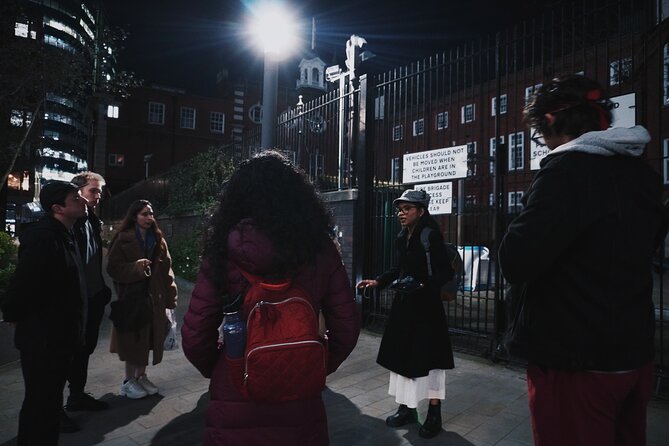
The walk begins at the St Mary’s Whitechapel Church Memorial on Whitechapel Road, in the E1 1FE area. Arrive with enough time to find the meeting point and locate your guide. The tour is offered in English, and confirmation is provided when you book.
This starting point sets up the social story before the murders begin. You hear about Victorian slum life, including poverty, crowded housing, and the desperation that made women especially exposed to violence. That background is important. Without it, the case can feel like a string of lurid incidents. With it, you begin to see the streets as places where people worked, drank, sought shelter, and tried to survive.
The group can include as many as 25 people. That is large enough to create a social evening, but small enough for the guide to keep an eye on the route. Wear shoes suited to pavement and narrow streets. There is no promise of regular indoor breaks, so a warm layer and weatherproof clothing are sensible choices.
Brick Lane and the poverty behind the headlines
The first stop is Brick Lane, now known for food, markets, and street culture. The tour uses it as a way into the social conditions of nineteenth-century Whitechapel.
You learn about overcrowding, poverty, and the lack of security that affected the people living here. This is one of the most valuable parts of the experience because it shifts attention away from the romantic idea of a mysterious killer stalking a picturesque old London. The reality was harsher and more ordinary: poor housing, vulnerable workers, and limited help for women in danger.
The stop lasts about 17 minutes. That time is long enough for a proper explanation but short enough to keep the walk moving. If you want a tour focused only on famous murder details, this social background may feel slow at first. I think it improves the rest of the evening, since each later location has more meaning once you understand the area’s conditions.
Princelet Street and the lives behind the case
Princelet Street is narrow and quiet, with an atmosphere that contrasts sharply with the noise of modern London. Here the guide connects the neighborhood to the Ripper case and discusses the living conditions faced by women such as Annie Chapman.
This is where the tour’s attention to victims becomes especially useful. Annie Chapman is not treated merely as a name attached to a date and location. Her circumstances are placed within the wider pressures facing working-class women in Whitechapel.
You should listen for the distinction between documented facts and later theories. A strong guide will tell you what records show, then explain where historians and Ripper specialists disagree. Kory and Korhan have been praised for knowing names, dates, and details, while also bringing wider London history into the discussion.
Princelet Street is also a good reminder that the area is not a museum set. People live and work here today. Be respectful with photography, keep voices down near homes, and follow the guide rather than blocking the pavement.
More Dark History Tours in the UK
- Edinburgh: Dark Secrets of the Old Town Ghost Walking Tour
★ 4.6 · 1,671 reviews - Edinburgh – Dark History
★ 5.0 · 814 reviews - Edinburgh Ghost Tour: Mysteries, Legends and Murders
★ 5.0 · 762 reviews - Edinburgh: Dark History Royal Mile Walking Tour
★ 4.8 · 271 reviews
Puma Court and the power of a narrow passage
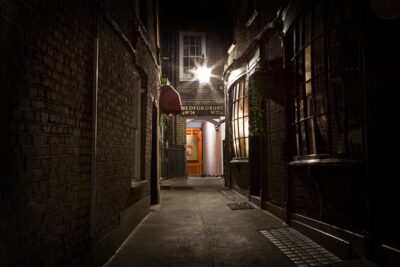
Puma Court is described as remaining almost unchanged since the nineteenth century. Its narrow form gives the guide a chance to explain how quickly a person could vanish from view in a dense urban area.
You do not need theatrical effects to understand why the location matters. The physical space does much of the work. A confined passage, limited visibility, and the confusion of a crowded district help explain the fear and uncertainty surrounding the crimes.
This stop is also useful for the interactive side of the tour. You are encouraged to consider how the location may have affected witnesses, police work, and later interpretations of the case. The setting cannot prove a theory, of course, but it helps you think about the practical details rather than only the famous name.
If you have trouble hearing, move toward the front before the explanation begins. One person specifically found some commentary difficult to catch when the guide looked away, and narrow streets can make it harder for a larger group to hear every word.
The Ten Bells and the pub connection
The Ten Bells is one of the best-known places on the route. The tour stops outside the pub and explains its connection to several of the women associated with the case, including the belief that some victims visited shortly before their deaths.
Do not book this expecting a guaranteed pub stop with drinks or reserved seating. The information provided describes an exterior visit and a discussion of the building’s place in the story. That is still worthwhile, since the pub helps you picture the social world of Whitechapel, where people sought warmth, company, and a temporary escape from difficult lives.
This is also a good point to consider how legends grow. A location connected to a famous crime can gather stories that are stronger than the surviving evidence. The guide’s job is to separate established links from later claims. Several guides have been praised for presenting theories while taking the subject seriously, which is exactly what you want here.
The tour does not necessarily finish at this stop. Think of the Ten Bells as an important chapter in the route, not the final destination.
Gunthorpe Street and Martha Tabram’s disputed place in the case
Gunthorpe Street is linked to the murder of Martha Tabram, who may have been Jack the Ripper’s first victim. The word may is important. Her death is part of the debate, but not every expert includes her among the canonical victims.
This stop gives the tour its strongest mystery element. You examine the evidence and the reasons some researchers connect Tabram’s murder to the later killings. The guide can explain similarities, differences, and the limits of the case without pretending that an uncertain theory is settled fact.
The location itself is narrow and atmospheric. You can imagine how difficult it would have been to see clearly or follow events in such a setting, especially at night. Still, remember that atmosphere is not evidence. A dark passage can feel convincing while telling you little about who committed a crime.
That balance between mood and proof is one of the reasons the guide matters so much. Tyson, Kory, and Dougal have all been praised for keeping the history engaging while giving enough detail for you to understand the arguments.
Goulston Street and the apron clue
Goulston Street brings you to one of the case’s most debated clues: a bloody piece of apron associated with Catherine Eddowes. Nearby, a chalk message became the center of controversy and later conspiracy theories.
This is a good section for anyone who enjoys detective work. The guide lays out what was found, why it mattered, and how the message shaped police thinking. You are not simply given a neat solution. Instead, you get a case built from partial evidence, uncertain interpretations, and decisions made under pressure.
Catherine Eddowes receives attention here as a person caught in a frightening sequence of events, not only as the source of a famous clue. That approach helps keep the evening grounded.
The stop also shows why the Ripper case has lasted so long in popular culture. There are enough surviving details to invite theories, but not enough to settle the central question. A good guide will leave room for doubt. Korhan, Kory, and other guides have been praised for adding newspaper accounts and historic images, which can help you compare the old neighborhood with the streets around you now.
St Botolph without Aldgate and the human cost
At St Botolph without Aldgate, the tour pauses near a church associated with women seeking refuge. This is one of the most reflective stops because it turns the focus toward the systems that failed the victims.
The church represents more than a backdrop. It points to the limited options available to vulnerable women, many of whom had little money, unstable housing, and few safe places to go. The guide discusses Victorian society and the ways it left these women exposed.
This section may appeal even if you are less interested in crime solving. It gives the tour moral weight and prevents the murders from becoming a game of guesswork. Karen’s description of the walk captures the value of this approach: the focus is partly on the Ripper, but primarily on the lives of the women who are often reduced to side notes.
You may find this part quieter than the earlier clue-based stops. That is a good thing. The subject needs space for reflection.
Ending near Mitre Square
The walk ends at Mitre Square, in the EC3A 5DE area, after tracing the events in sequence. The final location brings the route to its most serious point and gives the guide a chance to discuss the last stages of the case, the victims, and the theories that still surround the murders.
The tour description connects the ending with Mary Jane Kelly, although the exact historical associations discussed at this location can be complex. The important practical point is that you finish in the City of London rather than returning to the starting point. Plan your onward route before the walk begins.
Some guides stay after the formal ending to discuss theories. Tyson, Kory, and others have been praised for answering questions and continuing the conversation. That extra time can be valuable if you want to weigh possible suspects or ask about the difference between popular ideas and documented evidence.
There is no promise of a final pub drink, but the route ends in an area with transport and dining options nearby. Check your own return plans, especially if tube closures or late-night changes affect your evening.
Guides, group size, and the overall tone
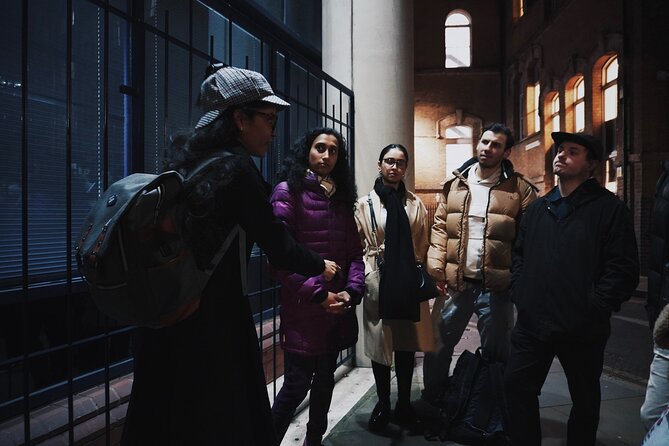
The guide is the heart of this experience. The strongest feedback centers on clear storytelling, careful pacing, and respect for the victims. Kory is praised for adding building and neighborhood history. Dougal is noted for painting a detailed picture of nineteenth-century London. Hadi is described as welcoming, calm, and thoughtful with heavy material.
The experience is not tied to one named guide every time, so your guide may be Tyson, Kory, Dougal, Hadi, Lisa, Anahita, Korhan, Kody, or another member of the team. That means the style may vary. The common expectation is an English-language walk led by someone who knows the case and can explain competing theories.
A group of up to 25 is reasonable for a city walk, though it is not the same as a private tour. Stay near the guide, especially at crossings and crowded corners. The route can be harder to follow if you drift behind.
The tone is dark but not intended to be gratuitous. The best version of the tour treats the victims with care, uses humor sparingly, and lets the setting create the mood.
Is $22.93 good value for 2.5 hours?
At $22.93 per person, this is a solid-value evening activity if you enjoy guided walking tours. The price covers about two and a half hours, a seven-stop route, an English-speaking guide, historical explanation, and an interactive mystery format. The locations themselves have no admission charge, so you are paying for the research, storytelling, route planning, and group leadership.
The value improves if you would not feel comfortable finding these streets and connecting the sites on your own. A guide gives the route structure and helps you understand why each location matters. It also saves you from reading scattered accounts while trying to navigate at night.
Group discounts may be available. Free cancellation applies when you cancel at least 24 hours before the start time. Cancellations within 24 hours are not refunded, and changes in that period are not accepted.
Who should book this walk?
I would book it for people who enjoy dark history, true crime, Victorian London, or guided neighborhood walks. It also suits anyone who wants an evening activity that is more unusual than a standard sightseeing circuit.
You should be comfortable walking for most of the evening, standing during explanations, and hearing serious material about murder and hardship. This is not a relaxed pub crawl, and it is not ideal if you need frequent seating.
Families should consider the subject matter carefully. The tour is open to most people, and service animals are allowed, but the content is adult and sometimes disturbing.
Should you book the Jack the Ripper night tour?
Book it if you want a well-paced Whitechapel walk that combines crime clues with the lives of the women affected by them. The chronological route, the narrow streets, the Ten Bells connection, and the discussion of disputed evidence give you more than a collection of spooky anecdotes.
Skip it if you want indoor comfort, a short walk, or a firm answer about the killer’s identity. The case remains unresolved, the weather can make the route demanding, and a group walk may not suit you if hearing every word is essential.
For most history and mystery fans, the $22.93 price is reasonable. Wear good shoes, bring a coat, stay close to the guide, and choose a date when you can give the full two and a half hours to the streets of Whitechapel.
FAQ
How long does the Jack the Ripper walking tour last?
The tour lasts approximately 2 hours and 30 minutes.
Where does the tour begin?
It begins at the St Mary’s Whitechapel Church Memorial, in the Whitechapel area of London, E1 1FE.
Where does the tour finish?
The tour ends at Mitre Square, London EC3A 5DE.
Is the tour offered in English?
Yes. The experience is offered in English.
How many people can join the tour?
The maximum group size is 25 people.
Are service animals allowed?
Yes, service animals are allowed.
What is the cancellation policy?
You can receive a full refund if you cancel at least 24 hours before the experience start time. Cancellations or changes made less than 24 hours before the start time are not accepted for a refund.
More Ghost Walking Tours in the UK
- London Jack The Ripper Small-Group Walking Tour
★ 5.0 · 1,013 reviews - Ghastly Ghost Walking Tour in London
★ 5.0 · 878 reviews - London: Ghastly Ghosts 2-Hour Walking Tour
★ 4.9 · 794 reviews - London: Jack the Ripper Walking Tour
★ 4.2 · 410 reviews
More Ghost Walking Tours in London
- London: The Original Jack the Ripper Walking Tour
★ 4.7 · 7,833 reviews - London Jack The Ripper Guided Walking Tour
★ 5.0 · 3,131 reviews - London: Jack the Ripper Evening Walking Tour
★ 4.9 · 1,449 reviews - London: Ghost Walk and River Thames Boat Ride
★ 4.5 · 1,251 reviews
Just added in London
- Private Tour of Haunted London in a Black Cab★ 5.0 · 21 reviews
- Private Ghosts and Gore Walking Tour of London★ 5.0 · 13 reviews
- Jack the Ripper Private Day Time Walking Tour★ 5.0 · 16 reviews
- The Ultimate Jack the Ripper Tour (Private Group Booking)★ 5.0 · 199 reviews
- Jack the Ripper: Solve the Crime Walking Tour (Kids Free!)★ 4.5 · 36 reviews
- Interactive Jack the Ripper Night Walk: London’s Murder Mystery★ 5.0 · 171 reviews
- Jack the Ripper Tour: Murder, Mystery, & the Women of Whitechapel★ 5.0 · 40 reviews
- Jack the Ripper Walking Tour in London★ 4.5 · 281 reviews
Jack the Ripper Tours, compared.
London Jack the Ripper Guided Tour with Ripper-Vision
Read our review →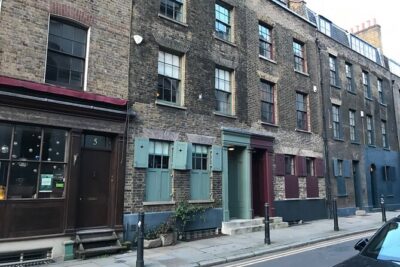
Jack the Ripper Tour with Immersive Ripper Vision
Read our review →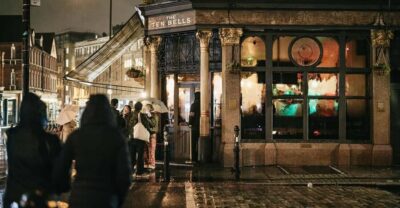
German Language : Original Jack the Ripper Tour
Read our review →
Ultimate Jack the Ripper : Guided Tour of London
Read our review →