
Review · CARCASSONNE
Medieval Carcassonne: Interactive Ghost Story & City Game
Carcassonne’s medieval citadel is easy to admire and surprisingly hard to understand from a quick walk. This phone-based ghost story gives you a reason to study the walls, gates, churches, and old streets instead of simply photographing them. I like the route’s mix of the Lower Town and the Cité, and I like that you can stop whenever you wish. The main concern is the app setup, which has caused real frustration for some players.
At about $6 per person, this is a low-cost way to add structure to your sightseeing. Just remember that it is not a guided tour or audio guide. You need a charged phone, the Questo app, and enough patience to get the game running before you set off.
Key points to know before you start
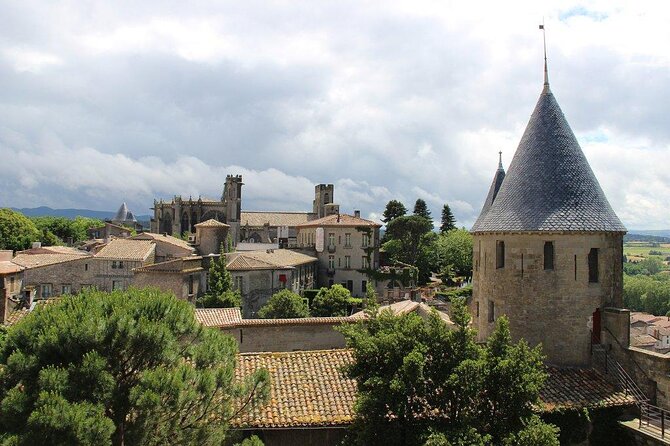
- Ten puzzles cover roughly 3 kilometers, linking Carcassonne’s Lower Town with its medieval citadel.
- Square Gambetta is the starting point, across the Aude from the famous walled Cité.
- The route ends at Château Comtal, with stops near Saint-Gimer Church, Porte de l’Aude, and the Inquisition Museum.
- You control the schedule, starting any time between 6 a.m. and 11:30 p.m., then pausing and returning later.
- The game is offered in English only, and it uses written clues rather than a human guide or standard audio commentary.
- Monument admission is extra, so treat this as an outdoor city game, not a ticket to the castle or museums.
A low-cost way to see Carcassonne with a purpose
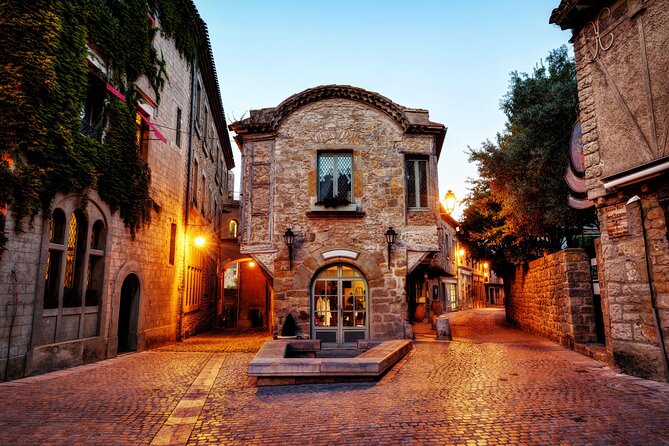
This experience turns sightseeing into a small investigation. Instead of following a guide holding a flag, you use your phone to find clues and answer questions at each location. The next stop appears only after you solve the current challenge, so you pay closer attention to carvings, façades, gates, and details that are easy to miss.
The story draws on Carcassonne’s difficult past, including the Cathars, medieval religious persecution, disease, military power, and the Inquisition. The tone is aimed at families and casual sightseers rather than academic historians. You will get short pieces of local history at each stop, then move on to the next puzzle.
The activity costs $6 per person. That is excellent value if you want an inexpensive way to organize a walk through the city, especially for a private group. The price is less attractive if you expect a narrated tour, personal explanations, or entry into the major sights.
The game is private and contactless. Only your group participates, with no set departure time and no need to keep pace with strangers. For independent visitors, that freedom is the biggest selling point.
More Self-Guided Ghost Tours in France
- Lyon Ghost Hunt: Follow the Shadows Exploration Game
★ 4.5 · 26 reviews - Nice Old Town: Artists & Ghosts Self-Guided Walking Adventure
★ 4.5 · 15 reviews - Medieval Torture Museum Ticket with Audio Guide and Ghost Hunting
★ 5.0 · 962 reviews
Starting across the river at Square Gambetta
Square Gambetta lies in the Lower Town, across the Aude from the famous fortified Cité. It is a useful starting point because it puts the grand medieval walls in context. Carcassonne is not only the hilltop fortress that appears on postcards. The lower city, known as La Bastide de Saint Louis, was built under King Louis IX and has its own urban story.
Your first task is to look around the square and find the answer to a challenge. This is a simple but important introduction to how the game works. You are not merely walking from one landmark to another. You must inspect your surroundings and use what you see.
Give yourself extra time here if you are unfamiliar with city games. The first steps in the app are not as clear as they could be, and some people have spent a long time trying to get the game started. Downloading the necessary app before arriving, checking your booking details, and making sure your phone is charged can save you from wasting the first part of the experience.
Square Gambetta is also a practical meeting point because it is near public transportation. The route then leads toward the Aude and the older fortified quarter.
Notre Dame de la Santé and the plague years
The next section brings you toward the small chapel of Notre Dame de la Santé. According to the historical account attached to the site, Jean de Saix left money for the chapel in 1527, and it was built as a hospital for people suffering from the plague.
The location mattered. The chapel stood near a narrow passage between fortified buildings, making it part of the defensive approach to the city as well as a place of care. This is one of the route’s more useful stops because it shows how religious buildings, health crises, and military planning could overlap.
The puzzle encourages you to look carefully rather than rush straight to the next landmark. That works well here, where a small building can be overshadowed by the larger walls and towers nearby. The game’s written history gives you enough context to understand why the chapel was placed here.
The treatment of disease is not as extensive as the title and promotional material might lead you to expect. If plague history is your main reason for booking, keep your expectations modest. The stop is interesting, but it is one piece of a broader story about Carcassonne.
The old cloth factory near Pont-Vieux
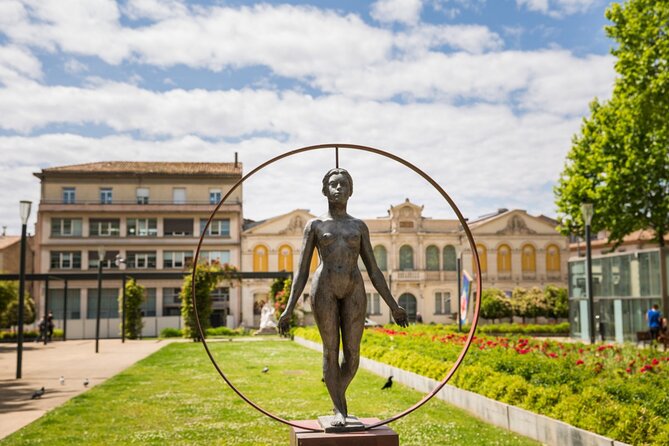
At the foot of the Pont-Vieux, you reach a façade connected with Carcassonne’s prosperous textile trade. The building was once the home of a noble Carcassonne family. In 1694, it was bought by a person close to Jean-Baptiste Colbert, the powerful minister of Louis XIV, and converted into a cloth factory.
The factory received the title Manufacture Royale in 1696. The owner’s residence is the surviving building from that period, and its design resembles structures from the 18th-century Lower Town.
This stop helps break up the idea that Carcassonne is only a medieval military town. The city’s economy continued to develop long after the original fortifications were built. Cloth production, royal support, and wealthy local families all shaped the city you see today.
The Pont-Vieux itself is a memorable part of the route, with views toward the Cité and the Aude. The game does not turn the bridge into a formal photo stop, so take your own time here. Because you can pause the activity, you can stop for photographs, sit by the river, or wait for your group to catch up without losing the route.
More Ghost Story Tours in France
- Paris by Night Walking Tour: Ghosts, Mysteries and Legends
★ 4.5 · 924 reviews - Paris: Ghosts, Legends & Mysteries Evening Walking Tour
★ 4.5 · 241 reviews - Enigmatic Ghosts, Crimes, & haunting Tales of dark Bordeaux
★ 5.0 · 13 reviews - Dark Bordeaux: Ghosts, True Crimes, Eternal haunting Tales
★ 5.0 · 6 reviews
Saint-Gimer Church and Viollet-le-Duc’s later vision
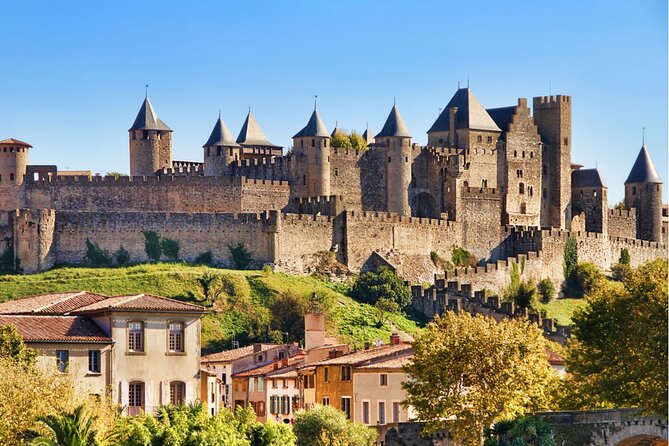
Saint-Gimer Church gives the route a sharp change in period. It was built between 1854 and 1859 by Eugène Viollet-le-Duc, the architect responsible for much of the restoration work that shaped modern Carcassonne.
The church was designed with modesty in mind. It has a nave, two aisles, a polygonal apse, two vestries, and a porch. The building is not as instantly famous as the citadel, but it offers a useful look at how 19th-century architects interpreted medieval surroundings.
This is a good stop for anyone interested in architecture. You can compare the church’s relatively restrained design with the more theatrical towers and walls of the Cité. The route also makes clear that Carcassonne is not a single-period attraction. Ancient, medieval, early modern, and 19th-century buildings sit within the same walk.
Families should know that the game depends on everyone stopping to read and examine details. Children who are eager to race ahead may find the pace slow, while older children who enjoy clues and competition may have fun searching for the answers.
Entering the Cité through Porte de l’Aude
Porte de l’Aude is one of the strongest visual moments on the route. This preserved gate overlooks the river and forms part of the medieval walled city. Approaching it from below helps you see the defensive logic of the site, not just the postcard view from inside the walls.
The gate is a natural place for a city game. Its stonework, passageways, and position beside the river give you plenty to examine while solving the next challenge. The app leads you step by step, but you still need to pay attention to the actual surroundings.
This approach can also be physically more demanding than a simple stroll through the Cité. The full route is about 3 kilometers, and the path moves between the Lower Town, the river, and the fortified quarter. Most people can take part, but comfortable shoes are sensible.
Porte de l’Aude is also where the experience begins to feel more like a medieval story. The fortified entrance, narrow routes, and high walls create the right setting for tales of conflict, persecution, and hidden movement.
The Inquisition Museum, with admission kept separate
The route passes the Inquisition Museum, located in a large 17th-century building. The museum covers instruments of torture from the 12th century through the French Revolution, along with biographies of important figures, information about Cathar castles, and the history of the Inquisition.
The game uses the area as a historical setting and puzzle stop. It does not include admission to the museum. If you want to see the collection inside, you must buy a separate ticket and plan enough time for it.
That distinction matters. The experience gives you short stories and clues at each location, but it is not a substitute for a full museum visit. The subject matter can also be heavy, particularly for younger children. The game is family-friendly in format, but the themes include persecution, disease, imprisonment, and torture.
For adults and older children interested in the darker side of medieval history, this stop adds useful context. It also explains why Carcassonne’s story is more complicated than a tale of handsome walls and heroic knights.
Château Comtal and the medieval heart of the route
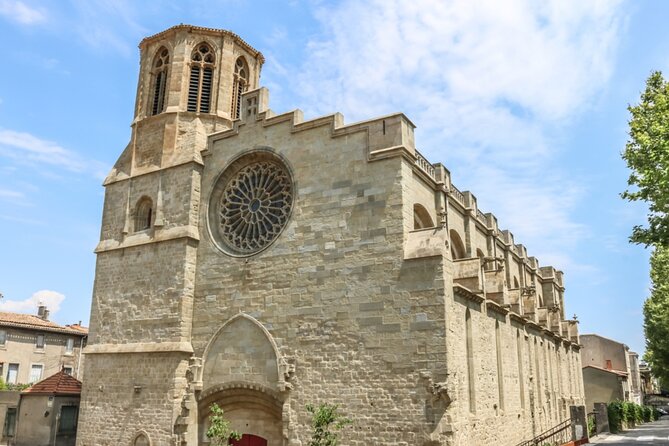
The final stop is Château Comtal, the castle within the fortified Cité. Its construction began in the 12th century under Bernard Aton Trencavel, built over the western section of the Roman walls.
The route also points you toward the present Romanesque cathedral, begun in June 1096. Later additions included a Lady Chapel in the early 15th century, near an infirmary and chapel built by Bishop Radulph in the 1260s.
These details show how the Cité changed over centuries. Roman foundations, medieval noble power, church building, and later restoration all overlap in this compact area. The final puzzle gives the walk a clear finish at one of Carcassonne’s most important landmarks.
Entry to Château Comtal is not included. You can complete the game at the castle and then decide if you want to visit inside separately. That is convenient if your group has different interests, although you should not assume that completing the game gives you access beyond the public outdoor areas.
How the Questo app works in practice
The app is the guide, the map, and the puzzle book. At each stop, you receive instructions and a question. You search the area for the answer, enter it into the app, and then receive the next location and story.
The format is private, so you can solve the puzzles together on one phone. One person can handle the app while the rest of the group searches the buildings and streets. This also means you may not need to pay separately for every person if only one device is being used, a point worth checking when comparing the total cost for your group.
The activity is offered in English. It does not provide a standard audio guide, and there is no named guide or live host. If someone in your group is more comfortable in Spanish, French, German, or another language, translation may slow things down. The lack of more language choices has been a problem for some participants.
Starting the game is the weak point. Some people have had trouble downloading the app, entering the booking information, or getting the correct quest to appear. Support is available through the app chat and by email at [email protected]. I would handle setup before reaching Square Gambetta, rather than standing at the meeting point trying to solve a technical problem.
Timing, breaks, and practical value
The advertised duration is about 1 hour and 40 minutes, but your actual time can vary. The route covers around 3 kilometers and includes ten puzzles, so a quick group may finish close to the estimate. A family stopping for photos, snacks, or extra sightseeing may take longer.
The useful feature is that you can pause the game and resume later. One participant was able to continue more than 24 hours after starting, which makes the activity unusually forgiving if your phone battery runs low or your schedule changes.
The stated operating window runs daily from 6 a.m. to 11:30 p.m. You can choose a quiet early hour or fit the game between other plans. The broad schedule does not mean every monument is open at those times, but the outdoor route can be followed independently.
Free cancellation is available up to 24 hours before the local start time. Changes or cancellations inside that window are not refundable.
Who should book this Carcassonne game?
I would recommend it most to independent visitors who enjoy clues, short walks, and learning by looking closely. It works particularly well for a couple or small private group that wants a flexible activity without paying for a personal guide.
Families may enjoy the game, but the youngest children may lose interest while adults read the historical sections. Older children and teenagers who like puzzles can give the walk more energy. The darker themes near the Inquisition Museum may not suit every child.
Architecture fans will find more here than the ghost-story label suggests. Saint-Gimer Church, the Pont-Vieux area, Porte de l’Aude, and the castle each represent a different layer of the city. People looking for a detailed account of medieval politics or Cathar belief should pair the game with a museum visit or a live guide.
I would skip it if you want a polished audio tour, a personal storyteller, or guaranteed trouble-free technology. The low price reduces the risk, but it does not remove the need to manage the app yourself.
Should you book it?
Book this experience if you want an inexpensive, flexible way to connect Carcassonne’s Lower Town, riverfront, and medieval Cité. The best features are the private format, the ability to pause, and the way the puzzles make you inspect places such as Notre Dame de la Santé and the old cloth factory.
Before paying, make sure English works for everyone in your group, prepare the app in advance, and bring a charged phone. Remember that Château Comtal, the Inquisition Museum, and other paid attractions are not included.
At $6 per person, this is a good add-on for curious walkers and families who enjoy games. It is not a replacement for a guide, but it can turn a standard sightseeing route into a more active hour and 40 minutes.
FAQ
Where does the Carcassonne ghost story game start?
It starts at Square Gambetta, in the Lower Town across the Aude from the famous fortified Cité.
Where does the game end?
The route ends at Château Comtal. The Questo app provides step-by-step directions from the starting point.
How long is the experience?
The planned duration is approximately 1 hour and 40 minutes. The route covers about 3 kilometers and includes 10 interactive puzzles.
Is a guide included?
No. This is a private, self-guided mobile experience. There is no physical tour guide, and it is not a standard audio guide.
Are entry tickets to Château Comtal or the Inquisition Museum included?
No. The price covers access to the mobile game only. Entry tickets to monuments and attractions must be purchased separately.
Can I pause the game and continue later?
Yes. You can start at a time that suits you, pause whenever needed, and resume later. The activity is available daily from 6 a.m. to 11:30 p.m.
Just added in France
- Paris Ghosts and Dark Stories Tour★ 4.0 · 10 reviews
- Père Lachaise’s Cemetery Celebrities and Ghosts Mystery Tour★ 4.5 · 31 reviews
- Ghost & Haunted Walking Tour in Eiffel Tower Exterior at Night★ 3.5 · 3 reviews
- Haunted Walking Tour of Père Lachaise Cemetery★ 3.0 · 2 reviews
- Paris Mysterious and Dark Stories Walking Tour – Small Group★ 5.0 · 10 reviews
- Nice Old Town: Artists & Ghosts Self-Guided Walking Adventure★ 4.5 · 15 reviews
- Lyon Ghost Hunt: Follow the Shadows Exploration Game★ 4.5 · 26 reviews
- Enigmatic Ghosts, Crimes, & haunting Tales of dark Bordeaux★ 5.0 · 13 reviews
Self-Guided Ghost Hunts, compared.
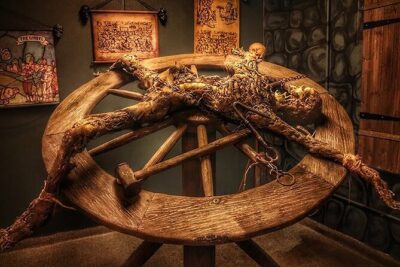
Medieval Torture Museum Ticket with Audio Guide and Ghost Hunting
Read our review →
Self-Guided Smartphone Ghost Walking Tour in Salem
Read our review →
Glasgow Ghost Hunt: The Soul That Got Away Exploration Game
Read our review →
Ultimate Historic Salem and Witch Trials Self-Guided Walking Tour
Read our review →
Self Guided Haunted Walking Tour in Portsmouth APP/GPS/EMF Reader
Read our review →
Cologne Haunted Quest: The Witch Self-Guided Tour
Read our review →Browse the lists this tour appears in